4) Kuntres Beis Iyar, 5751: Why Concealment

4) Kuntres Beis Iyar, 5751: Why Concealment

[The discourse presented here was edited by the Rebbe and printed for Beis Iyar 5751 (1991), and in retrospect we can see how it is meant to guide us and strengthen us through the present time (even more so than when it was published), as will be explained, בעז”ה.]

The haftorah that is read when Shabbos falls out in Erev Rosh Chodesh (the day before the new month when the moon is completely concealed) begins with the verse: “Yehonosan said to him: tomorrow is [Rosh] Chodesh and you will be remembered (נפקדת) because your place will be vacant (כי יפקד מושבך).”

The words of this verse demand explanation: why are words from the same root — נפקדת and כי יפקוד — used for completely opposite concepts? “You will be remembered” is seemingly quite the opposite from “your place will be vacant”, which implies that he will be missing?!  To explain this, the Rebbe mentions several concepts which we will touch upon here only superficially (but the wise will investigate and find deeper things…).

Firstly, the Rebbe explains that the entire “drama” in this haftorah involving Shaul Hamelech, his son Yehonosan, and Dovid Hamelech are, on a deeper level, referring to the unification of the 6 higher sefiros and the 7th (in the language of kabbalah Z”A and Malchus (ז”א ומלכות) which are likened to husband and wife) .  Thus, the word נפקדת also means the union which can bring forth children, relating to the union of husband and wife.  This unification of the sefiros takes place through the intellectual attribute of Bina, which is from a higher level.  This can be read as a hint to what the Rebbe describes as the “direct way” to bring the Geuloh in actuality: by learning and understanding (the power of Bina) the subjects of Moshiach and Geuloh.

Further, the Rebbe explains how the name נתן (last three letters of Yehonosan) refer to Malchus on the level described as sea (ים, which conceals the sefiros), whereas Dovid is Malchus on the level described as dry land (ארץ, where things are revealed).  The verse “Yehonosan said to him [to Dovid]…” refers to transforming the sea to dry land (as occurred at the spitting of the sea).

(Interesting to note that the gematria of the words in the verse of crossing the sea — ויבֹאו בני ישראל בתוך הים ביבשה — has the same value as the declaration יחי אדוננו מורנו ורבינו מלך המשיח לעולם ועד, which was declared before the Rebbe for the first time on the Shabbos following the release of this maamor in 5751!)

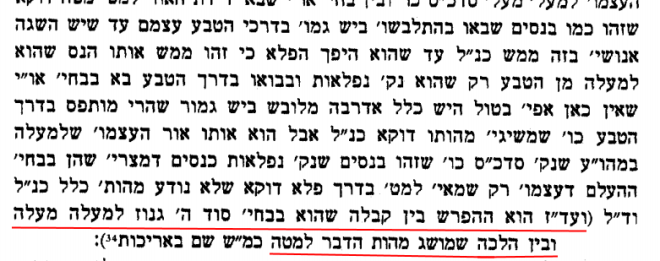
All of the above is in connection with Erev Rosh Chodesh, when the moon is concealed. This reflects a state of complete self-nullification (bittul) which brings about the birth of the new moon on the following day: the unification of the sun and the moon (mashpia and mekabel).  How can the bittul of Erev Rosh Chodesh accomplish this amazing unification?  Because the bittul of the time when the moon is concealed draws down from the level of Kesser (כתר), the level which is entirely above the chain of worlds (סדר השתלשלות).

Look closely: a period of concealment (which appears to be quite a negative phenomenon) is actually a time when the highest levels are being drawn down!  This is in order to bring about the Divinely desired unification of mashpia and mekabel (Hashem and Yisroel; the Rebbe and Chassidim) through the power of Bina (learning and understanding).  This learning and understanding brings about the internalization of the lofty levels that are drawn down at the time of concealment — an experience which is likened to the splitting of the sea, when the concealment itself is transformed to revelation (with the same gematria as “Yechi Hamelech…”)

(Perhaps we can sense that the Rebbe is explaining for us what is happening b’pnimiyus as we live through the “Erev Rosh Chodesh” of the post Gimmel Tammuz era?)

Returning to the maamor, the verse starts with the words “And Yehonosan said” (the drawing down of the lofty lights of Atzilus) and then is followed by “tomorrow is [Rosh] Chodesh”. This is Erev Rosh Chodesh, when the moon is in a state of concealment. First, the lofty lights are given over; after that, the concealment takes place.

(We can see how the lofty lights given over in the Sichos of 5751-52 serve as a preparation for the concealments of 27 Adar and 3 Tammuz….)

In fact, the Rebbe explains that in the path from coming out of Mitzrayim (in the month of Nissan) to Matan Torah (in the month of Sivan) we encounter Erev Rosh Chodesh twice: for the months of Iyar and Sivan. Erev Rosh Chodesh Sivan is a giving of power (נתינת כוח)  for the union (נפקדת) that occurs via the giving of the Torah. Erev Rosh Chodesh Iyar (when this discourse was originally said) is a נתינת כוח giving of power for ויפקד מושבך — the time of concealment, as described at length above.

Learning the discourse itself will surely help the reader to put all these concepts in their proper place, and understand how the Rebbe (in this discourse and in many of the Sichos of this period) is preparing us for the crucial avoidah that takes place in a situation of concealment — avoidah that brings about a revelation of the unification of the mashpia and the mekabel and an end to that very concealment itself!

Image by wirestock on Freepik

3) Kuntres 18 Nissan: Guarding the Intellectual Soul

What is easier: keeping a powerful beast like a cow or a bull locked up in it’s pen, or a bird?  Which requires “additional guarding”?

Although a bird possesses nothing of the power that the bull has, it has an additional ability that even the most powerful beast lacks — the power of flight. Thus, fences are sufficient to keep a mighty bull locked up, but a tiny bird is not properly guarded unless the walls are capped by a roof.

In Halocho this expresses itself in the laws regarding courtyards — that a large courtyard that is not covered by a roof is considered a carmelis (by Rabbinic decree, even though according to Torah it is a private domain (reshus hayochid)), but if it is covered with a roof then it remains a private domain according to Rabbinic opinion as well.

The maamor printed for 18 Nissan, 5751 (anniversary of the Rebbe’s Bris Mila)  explains this in terms of our Divine service: the animal for which fences are sufficient is our animal soul; the bird that requires a roof is our Intellectual Soul (Nefesh Hasichlis).  The animal soul, while powerful, has four legs on the ground and looks down — it’s only attraction and interest is gashmiyus.  It is enough to build fences to pen it in.  But the Nefesh Hasichlis, while it is a human intellect which relates to worldly things, possesses an inclination to “fly away” to contemplate things which are of a higher nature. Thus it needs a roof as well.

What is this roof?

In our Divine service, the “roof” is the wonderment (הפלאה) we feel when contemplating and realizing that the lofty things we are studying (and through study, grasping) are in fact beyond our grasp because they are G-dliness. G-dliness is without bounds, but whatever we understand with our human intellect (the Nefesh Hasichlis) is limited, and thus or understanding is not the “real thing”.  Keeping this in mind puts a “roof” of self-nullification (bittul) on our intellectual efforts so they don’t get carried away with themselves and “fly off” from the realm of the Oneness of Hashem (reshus hayochid) and enter the realm of self-importance and pride (ישות וגאווה).

How does this relate to our Sichos of 5751-52?

The avodah of Chassidim since the revelation of Chasidus was primarily in the realm of emotional attributes (midos) — battling and striving to transform the animal soul. Learning Chassidus was a major component of this avodah, but the revelations of Chassidus kept to the boundaries of Torah and Mitzvos — Tikkun.

In the Sichos of 5751-52, when the Rebbe will demand “do all that you can to draw down the lights of Tohu (but in a way of vessels of Tikkun)”, the revelations cross the border from the Torah and Mitzvos of the time of golus (limited, but familiar to our human outlook and understanding) to the first stage of the Messianic era (ימות המשיח) and elevate us to a new (and unfamiliar) level of understanding and a new outlook.

The work of transforming the animal soul, the Rebbe informs us, is completed (and if we don’t see this, it is only because we haven’t made the proper effort to reveal it), and we begin the shift to transforming our consciousness, the realm of the Intellectual Soul.

So right from the beginning of this seismic shift in the pnimiyus of our avodah, the Rebbe published this maamar to give us a “heads up” that while keeping the behema (the animal soul) only required fences, the next step of “opening the eyes” of the Intellectual Soul requires a roof as well if we are to keep ourselves within the private realm, the “reshus hayochid“.

Internalizing concepts such as: we can now “fill our mouths with laughter”; we have reached the time for receiving the reward of our Divine service; Yidden and Hashem are really One thing; Mitzvos will be nullified in the future; the created “yesh” is in essence the true “Yesh” of Hashem’s essence; etc., require one to “cover” his intellectual efforts in these concepts with a “roof” of bittul so that his Intellectual Soul will not “fly away” and take these ideas to the wrong place.

(We could further say that through this discourse the Rebbe gave Chassidim the power to do this lechatchila, and to understand the Sichos in the proper way, consistent with Halacha, as we see is the case across Lubavitch!)

Image by wirestock on Freepik

2) Kuntres Yud Alef Nissan 5751: Prayer of the Rich Man

2) Kuntres Yud Alef Nissan 5751: Prayer of the Rich Man

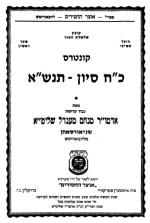
This discourse of the Rebbe was edited and printed for distribution for the Rebbe’s birthday, 11 Nissan, 5751.  A lengthy and deep discourse, we mention here only the main points, reflecting the themes of the Dvar Malchus sichos from the same period.

Tefilla leMoshe” is called by our sages the prayer of a rich man, and “Tefilla leDovid” is the prayer of a poor man.  Since tefilla is defined as our asking for our needs, what is a rich man’s prayer?  What does he need?

We find that according to Torah one must fill the needs of the poor man.  This doesn’t only mean those necessities required by every person, it means we are obligated also to fill his personal needs.  If he had previously been wealthy and was accustomed to a servant and a horse to run before him, then for him such a thing is lacking and we must provide it for him.  One is obligated to fill what he lacks, but one is not obligated to make him rich.  Thus, it comes out that even having a servant and a horse running before him (i.e. to be not lacking anything) is still not wealthy.

Wealthy, explains the Rebbe, is “superabundance”, which is more than just that nothing is lacking.  Furthermore, it means that this abundance is not received from another source (and thus could be cut off or taken away); rather, it is inherently his — making him rich in essence (עשיר בעצם).   This is why our sages say “there is no one wealthy except in da’as (knowledge)”.  Rich (in knowledge) means that what he has learned has become unified with him and part of him as a result of his own effort (as opposed to remaining on the level of what others taught him).

Back to the question: one who is rich has superabundance — what, then, is his prayer?!  The Rebbe answers: he prays for others.  His tefilla is for the needs of others.  This is Moshe Rabbeinu, who lacked nothing and needed nothing (not in the realm of da’as (as he is the one who gave us the Torah), and surely not materially) — his prayer was for the needs of the Jewish people (which corresponds spiritually to the attribute of Malchus).

But if Moshe Rabbeinu, the rich man, feels the lack of Israel so intensely, then he himself is lacking!  And if he is lacking, then he is not rich!  The truth is, explains the Rebbe, that since he is “rich in essence” it is not possible for him to be lacking anything.  While he does feel for Israel, this is not the same as lacking something.  More than that, from the perspective of “rich in essence” there is nothing lacking whatsoever in Hashem’s world nor by any of His creations. Thus, from Moshe Rabbeinu’s perspective, the Jewish people are also “rich in essence” and not lacking anything.  If so, what was his prayer for?  His prayer was that this fact that Israel are in truth “rich in essence” should be felt in an open and revealed way by them.  No one lacks anything other than the da’as, the knowledge to recognize. When one’s knowledge broadens, he reveals to himself that he is in fact rich in essence.

The discourse concludes by connecting all of this with the inyan of tefilla. It is precisely prayer that draws down these revelations.  As our sages say about Moshe Rabbeinu that he was “ish Elo-kim” — a G-dly man: when he went up the mountain he was a man, when he descended he was Elo-kim.  This is tefilla, prayer, that one “ascends the mountain” to reach Hashem, and draws this “down below” into his daily life so that this shleimus, perfection, is revealed in his behavior — when a Jew does this he causes the same thing in the attribute of Malchus, which brings about the true and complete Geuloh.

Moshiach Now!

View the original discourse here

Image by bearfotos on Freepik

1) Kuntres Beis Nissan 5751: To Give and To Receive

A Chassidic discourse, called a maamor, was edited by the Rebbe and published in honor of the Hillula of the Rebbe Rashab, Beis Nissan, 5751.  This was the day after Shabbos Vayikra, the very beginning of the cycle of Dvar Malchus.  We are going to extract a small section of this maamor which stands out boldly as a descriptive explanation of the sharp and shocking words of the Rebbe on 28 Nissan (a few weeks after this maamor was released): “I’ve done all I can do, now I give it over to you to do all that you can do to bring Moshiach in actuality”.

The section of the maamor we will look at states as follow:

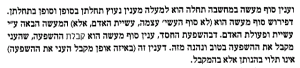
The Rebbe Rashab explains the difference between two inyonim: “its beginning is wedged into its end and its end into its beginning” (נעוץ תחילתן בסופן וסופן בתחילתן) and [the similar expression that] “the end of the deed was first in thought” (סוף מעשה במחשבה תחילה).  The difference between them is that “it’s end” (סופן) refers to the end and completion of the thought, wedged into the beginning of that which is being given (ההמשכה).  And a moshol is brought for this from the giving of tzedaka.  That the beginning (of the giving) is the mercy (רחמים) that is awakened towards the poor man.

The concept that “its end is wedged into its beginning” is that the main intent in the awakening of mercy (“its beginning”) is that there should be actual giving to the poor man (“its end”).  And if there will not be any actual giving, then the main thing is lacking.  Its end is wedged into its beginning: the intent (of giving) which is wedged into its beginning (the awakening of mercy (רחמים) for the poor man)….

The inyan of “the end of the deed was first in thought” (סוף מעשה במחשבה תחילה) is higher than the inyan of “its beginning is wedged into its end and its end in its beginning” (נעוץ תחילתן בסופן וסופן בתחילתן).  This is because the meaning of the expression “end of the deed” (סוף מעשה) is not the end of the act of performing the deed itself, the action of the person.  Rather, it means the action that comes as a result of the actions performed by the person.  In our moshol, the giving of chesed: the “end of the deed” (סוף מעשה) is when that which is being given is accepted — that the poor man should accept that which is being given to him with a good feeling (מקבל את ההשפעה בטוב) and that he should benefit from what he received. 

This aspect — the manner in which the poor man accepts that which is given to him — is not dependent on the giver, but rather on the recipient….  Thus, the pleasure that the giver has from the acceptance of what he gives (the poor man accepting with a good feeling that which he has been given) is a greater pleasure than the pleasure from the “giving” alone.

This brief moshol, when we take a moment to contemplate what it is telling us, resolves a lot of questions.  It also eliminates much of the anxiety raised by the sicha of 28 Nissan (which has been magnified by the state of affairs we find ourselves in for over 20 years, ר“ל, when do not receive new sichos or maamorim).

View the Rebbe’s renown sicha of 28 Nissan in light of this kuntres.  The Rebbe telling the Chassidim “I have done everything in my power to do”, corresponds to giving to the “poor man”.*  Having succeeded in completing the act of giving, he now has to wait until “the poor man should accept that which is being given to him with a good feeling and to benefit from it”, because “this is not dependent on the giver, but rather on the recipient”.

The Rebbe is sharing with us a most vital piece information: you, the Jewish people, have been given everything you need!  It’s the reality: “the money is in the bank,” and the Geuloh is in the bank!  But it is up to you yourselves to accept it, to realize what you have received, to put it to good use and benefit from it!

All the sichos and maamorim the Rebbe spoke, all the seforim the Rebbe instructed to print, all of the brocha and hatzlocha, guidance and direction that the Rebbe has poured and continues to pour on the Jewish people and the world…this is not just a coin in the poor man’s cup — this is true wealth!

But as long as it remains in the cup (and all the more so if we don’t realize that it’s even there), then we remain in a golus of poverty — poverty in our own perception of reality.  We need to accept what the Rebbe has given us, put it to use in shaping our reality, and in this way we ourselves will realize that not only do we have the potential to no longer be poor, but that we are in fact rich in actuality — the true and complete Geuloh!

The matter was given over to us by the Rebbe and is completely in our hands!  So, now, let’s ask ourselves the question: Ad mosai?!!


* We should note that in Kuntres Yud Alef Nissan, the maamor printed for the Rebbe’s 90th birthday, the Rebbe explains that the Jewish people are not really poor except in awareness, and the “prayer of the rich man” (Moshe Rabbeinu) is that the Yidden should realize that they are in fact rich.  Nonetheless, one who sees himself as poor really is poor — “there is no poverty except for knowledge” (איו עני אלא בדעת).

Maamorim: The Big Picture

Interesting to note the sequence of the maamorim that were printed in 5751, the beginning of the year of Dvar Malchus:

Purim — The level of Purim: an awakening that leads to the downfall of the enemies of Israel (Haman, Stalin in 5713 after this maamor was said, Sadaam Hussein in 5751 when it was edited and printed), and ushers in the period of the ascendency of Mordechai, Esther, and the Jewish nation–while still in the place of exile.

25 Adar — The transmission of the essence from mashpia to mekabel, and it’s revelation, occurs specifically without garments (in a simple, Halachic sense, and also the revelations of thought, speech, and action).

Beis Nissan — The act of tzedoko is completed by actually giving money to the poor man; but the initial desire is only fulfilled when the recipient actually accepts the tzedoko and benefits from it.

11 Nissan — Tefilla leMoshe, the prayer of Moshe, is the prayer of a rich man who lacks nothing and possesses tremendous abundance.  If so, then what does he daven for? He davens that Yisroel (Malchus) should realize that they themselves are rich (spiritually, and from that is drawn down wealth into physicality as well).

18 Nissan — According to Halacha, birds require an additional degree of guarding than animals (not only walls, but also a roof) because they are able to “fly away”.  Similarly, the conceptions of the intellectual soul can also “fly away” to undesirable places, and therefore an additional level of caution is required (a degree that is unnecessary while guarding the animal soul).


tmp_7502-Screenshot_2018-03-15-12-31-53-1-1316922761