2) Kuntres Yud Alef Nissan 5751: Prayer of the Rich Man

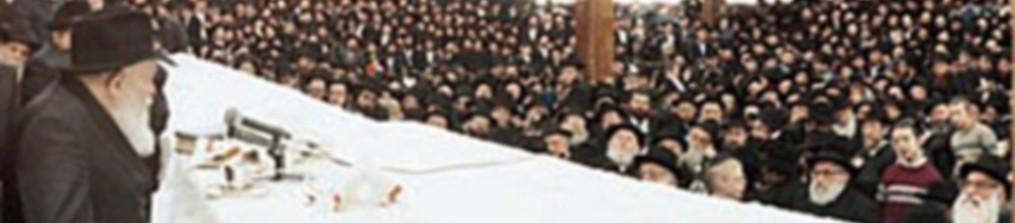
This discourse of the Rebbe was edited and printed for distribution for the Rebbe’s birthday, 11 Nissan, 5751.  A lengthy and deep discourse, we mention here only the main points, reflecting the themes of the Dvar Malchus sichos from the same period.

“Tefilla leMoshe” is called by our sages the prayer of a rich man, and “Tefilla leDovid” is the prayer of a poor man.  Since tefilla is defined as our asking for our needs, what is a rich man’s prayer?  What does he need?

We find that according to Torah one must fill the needs of the poor man.  This doesn’t only mean those necessities required by every person, it means we are obligated also to fill his personal needs.  If he had previously been wealthy and was accustomed to a servant and a horse to run before him, then for him such a thing is lacking and we must provide it for him.  One is obligated to fill what he lacks, but one is not obligated to make him rich.  Thus, it comes out that even having a servant and a horse running before him (i.e. to be not lacking anything) is still not wealthy.

Wealthy, explains the Rebbe, is “superabundance”, which is more than just that nothing is lacking.  Furthermore, it means that this abundance is not received from another source (and thus could be cut off or taken away); rather, it is inherently his — making him rich in essence (עשיר בעצם).   This is why our sages say “there is no one wealthy except in da’as (knowledge)”.  Rich (in knowledge) means that what he has learned has become unified with him and part of him as a result of his own effort (as opposed to remaining on the level of what others taught him).

Back to the question: one who is rich has superabundance — what, then, is his prayer?!  The Rebbe answers: Continue reading

VIDEO: The Poor Man Must Accept the Gift

Based on the Maamar in Kuntres Beis Nissan 5751: The Rebbe gives the moshol of giving to a poor man. The “initial thought” is not the giving of the tzedakah, but that the poor man should accept it and benefit from it, which is not in the power of the giver, only the recipient.

What does this mean for Dor Hashvii and the Rebbe’s assertion that “I’ve done all I can do, now I give it over to you…”

1) Kuntres Beis Nissan 5751: To Give and To Receive

A Chassidic discourse (maamor) was edited by the Rebbe and published in honor of the Hillula of the Rebbe Rashab, Beis Nissan, 5751.  This was the day after Shabbos Vayikra, the very beginning of the cycle of Dvar Malchus.  We are going to extract a small section of this maamor which stands out boldly as a descriptive explanation of the sharp and shocking words of the Rebbe on 28 Nissan (a few weeks after this maamor was released): “I’ve done all I can do, now I give it over to you to do all that you can do to bring Moshiach in actuality”.

The section of the maamor we will look at states as follow:


The Rebbe Rashab explains the difference between two inyonim: “its beginning is wedged into its end and its end into its beginning” (נעוץ תחילתן בסופן וסופן בתחילתן) and [the similar expression that] “the end of the deed was first in thought” (סוף מעשה במחשבה תחילה).  The difference between them is that “it’s end” (סופן) refers to the end and completion of the thought, wedged into the beginning of that which is being given (ההמשכה).  And a moshol is brought for this from the giving of tzedaka.  That the beginning (of the giving) is the mercy (רחמים) that is awakened towards the poor man.

The concept that “its end is wedged into its beginning” is that the main intent in the awakening of mercy (“its beginning”) is that there should be actual giving to the poor man (“its end”).  And if there will not be any actual giving, then the main thing is lacking.  Its end is wedged into its beginning: the intent (of giving) which is wedged into its beginning (the awakening of mercy (רחמים) for the poor man)….

The inyan of “the end of the deed was first in thought” (סוף מעשה במחשבה תחילה) is higher than the inyan of “its beginning is wedged into its end and its end in its beginning” (נעוץ תחילתן בסופן וסופן בתחילתן).  This is because the meaning of the expression “end of the deed” (סוף מעשה) is not the end of the act of performing the deed itself, the action of the person.  Rather, it means the action that comes as a result of the actions performed by the person.  In our moshol, the giving of chesed: the “end of the deed” (סוף מעשה) is when that which is being given is accepted — that the poor man should accept that which is being given to him with a good feeling (מקבל את ההשפעה בטוב) and that he should benefit from what he received. 

This aspect — the manner in which the poor man accepts that which is given to him — is not dependent on the giver, but rather on the recipient….  Thus, the pleasure that the giver has from the acceptance of what he gives (the poor man accepting with a good feeling that which he has been given) is a greater pleasure than the pleasure from the “giving” alone.

This brief moshol, when we take a moment to contemplate what it is telling us, resolves a lot of questions.  It also eliminates Continue reading

2) Kuntres Yud Alef Nissan 5751: Prayer of the Rich Man

This discourse of the Rebbe was edited and printed for distribution for the Rebbe’s birthday, 11 Nissan, 5751.  A lengthy and deep discourse, we mention here only the main points, reflecting the themes of the Dvar Malchus sichos from the same period.

“Tefilla leMoshe” is called by our sages the prayer of a rich man, and “Tefilla leDovid” is the prayer of a poor man.  Since tefilla is defined as our asking for our needs, what is a rich man’s prayer?  What does he need?

We find that according to Torah one must fill the needs of the poor man.  This doesn’t only mean those necessities required by every person, it means we are obligated also to fill his personal needs.  If he had previously been wealthy and was accustomed to a servant and a horse to run before him, then for him such a thing is lacking and we must provide it for him.  One is obligated to fill what he lacks, but one is not obligated to make him rich.  Thus, it comes out that even having a servant and a horse running before him (i.e. to be not lacking anything) is still not wealthy.

Wealthy, explains the Rebbe, is “superabundance”, which is more than just that nothing is lacking.  Furthermore, it means that this abundance is not received from another source (and thus could be cut off or taken away); rather, it is inherently his — making him rich in essence (עשיר בעצם).   This is why our sages say “there is no one wealthy except in da’as (knowledge)”.  Rich (in knowledge) means that what he has learned has become unified with him and part of him as a result of his own effort (as opposed to remaining on the level of what others taught him).

Back to the question: one who is rich has superabundance — what, then, is his prayer?!  The Rebbe answers: Continue reading

VIDEO: The Poor Man Must Accept the Gift

Based on the Maamar in Kuntres Beis Nissan 5751: The Rebbe gives the moshol of giving to a poor man. The “initial thought” is not the giving of the tzedakah, but that the poor man should accept it and benefit from it, which is not in the power of the giver, only the recipient.

What does this mean for Dor Hashvii and the Rebbe’s assertion that “I’ve done all I can do, now I give it over to you…”

1) Kuntres Beis Nissan 5751: To Give and To Receive

A Chassidic discourse, called a maamor, was edited by the Rebbe and published in honor of the Hillula of the Rebbe Rashab, Beis Nissan, 5751.  This was the day after Shabbos Vayikra, the very beginning of the cycle of Dvar Malchus.  We are going to extract a small section of this maamor which stands out boldly as a descriptive explanation of the sharp and shocking words of the Rebbe on 28 Nissan (a few weeks after this maamor was released): “I’ve done all I can do, now I give it over to you to do all that you can do to bring Moshiach in actuality”.

The section of the maamor we will look at states as follows:

The Rebbe Rashab explains the difference between two inyonim: “its beginning is wedged into its end and its end into its beginning” (נעוץ תחילתן בסופן וסופן בתחילתן) and [the similar expression that] “the end of the deed was first in thought” (סוף מעשה במחשבה תחילה).  The difference between them is that “it’s end” (סופן) refers to the end and completion of the thought, wedged into the beginning of that which is being given (ההמשכה).  And a moshol is brought for this from the giving of tzedaka.  That the beginning (of the giving) is the mercy (רחמים) that is awakened towards the poor man.

The concept that “its end is wedged into its beginning” is that the main intent in the awakening of mercy (“its beginning”) is

Continue reading

VIDEO: The Poor Man Must Accept the Gift

Based on the Maamar in Kuntres Beis Nissan 5751: The Rebbe gives the moshol of giving to a poor man. The “initial thought” is not the giving of the tzedakah, but that the poor man should accept it and benefit from it, which is not in the power of the giver, only the recipient.

What does this mean for Dor Hashvii and the Rebbe’s assertion that “I’ve done all I can do, now I give it over to you…”