Emor: Understanding “Above Intellect”

The sages tell us that there is no joy like the joy of resolving a doubt (Zevachim 90a).  Simply put: we don’t enjoy the state of uncertainty, of not understanding.  There is one level of inability to understand that comes from us: we are capable of understanding the matter in question, but we haven’t yet implemented our intellect sufficiently and haven’t understood the matter properly.  By putting in the requisite effort, we will understand.

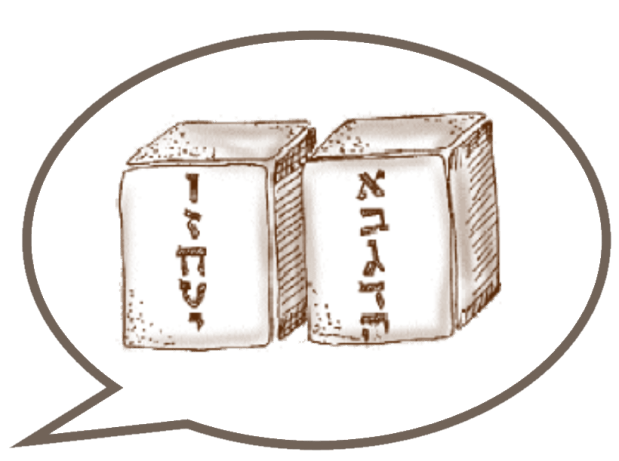
Additionally, there are things which we don’t understand because these things are simply not comprehensible.  This is called, in the language of Chassidus, “above the intellect”.  This is the level of Kesser, the crown which is above the brain (the place of the intellect) which is in the head.  This is also the level of “peleh” (פלא), which means “wonder” — something beyond understanding, which we can only gaze at with wonder.  Clearly, the level of Kesser, the crown, is connected with Moshiach (the King) and Geuloh (“I will show you wonders”).

In English, the word “wonder” carries a totally positive connotation, as in “wonderful”.  We find that the word “peleh” in loshon hakodesh relates to the fact that the matter is incomprehensible, regardless if we find it to be “wonderful” or not.  The dimension of “peleh” (the 3rd aspect of the letter “alef” which the Rebbe tells us we must insert into Gola to make Geuloh) refers to those things which are not understood, but in the Geuloh we will say about them “thank You Hashem because You were angry with me”.  How do reach the level where the “peleh“, which appeared to us as Hashem’s anger, is revealed as something that we are actually thankful for?!  Explains the Rebbe: this is accomplished through learning Chassidus, Pnimiyus Hatorah (the inner dimension of Torah):

It is not enough to reveal in “Gola” the aspect of “the Master of the World” [the recognition that all is from Hashem]…we need to also reveal the aspect of “learning” via learning Torah, and even further — the aspect of “peleh“, via learning Pnimiyus Hatorah (the wonders that are in Torah)…

Through revealing the “peleh” in Torah by learning the inner dimension of Torah, we reveal Continue reading

Achrei-Kedoshim: Geuloh is Made From Golus

Achrei-Kedoshim: Geuloh is Made From Golus

Geuloh is made from Golus (Exile)

At this stage in the Dvar Malchus sichos, one who learns them can actually begin to feel what the Rebbe is existing — that we are truly on the cusp of the coming of Moshiach and the revelations of the true and complete Geuloh. Such excitement and anticipation for Moshiach could possibly degenerate to a desire to throw off the responsibilities of Golus and charge head-first and full-speed into Geuloh. For example: abandoning one’s job in order to devote 24 hours a day to spreading besuros haGeuloh and learning the subject of Moshiach and Geuloh. (After all, the Rebbe said in the previous sicha that this learning is the direct path to bringing the Geuloh, so why delay it by attending to earthly needs such as a job and a house?).

The Rebbe explains that such “over-the-top”  behavior is not the way to bring Moshiach.  Similarly from the other direction: one could be worried that all of one’s efforts in worldly matters will go to waste with the coming of Moshiach.  Such fear is also put to rest in this sicha.

As mentioned in the previous sichos, the Geuloh (redemption) is the word exile (“Gola”) with the addition of the letter “alef”. This represents the revelation of Hashem in the exile itself.  This is the concept of the Rambam that with the coming of Moshiach (in the first stage, at least) nothing will change in the conduct of the world — the world will conduct itself naturally .  The only difference is that we will not be subjugated to physicality and the laws of nature as before.  However, this itself is no small matter!  What is means is that Continue reading

4) Kuntres Beis Iyar, 5751: Why Concealment

4) Kuntres Beis Iyar, 5751: Why Concealment

[The discourse presented here was edited by the Rebbe and printed for Beis Iyar 5751 (1991), and in retrospect we can see how it is meant to guide us and strengthen us through the present time (even more so than when it was published), as will be explained, בעז”ה.]

The haftorah that is read when Shabbos falls out in Erev Rosh Chodesh (the day before the new month when the moon is completely concealed) begins with the verse: “Yehonosan said to him: tomorrow is [Rosh] Chodesh and you will be remembered (נפקדת) because your place will be vacant (כי יפקד מושבך).”

The words of this verse demand explanation: why are words from the same root — נפקדת and כי יפקד — used for completely opposite concepts? “You will be remembered” is seemingly quite the opposite from “your place will be vacant”, which implies that he will be missing?!  To explain this, the Rebbe Continue reading

Tazria-Metzora 5751: The “Geuloh Illness”

Tazria-Metzora 5751: The “Geuloh Illness”

Moshiach in Exile is Called “Metzora

In many years the Torah portions of Tazria and Metzora are read together on the same Shabbos.  Parshas Tazria begins with the words “a woman who gives seed and gives birth to a male” — according to Chassidus, this hints at the birth (revelation) of the soul of Moshiach.  Giving seed refers to our deeds and effort (“avodah”) in the time of exile, followed immediately by the sprouting — the complete Geuloh.

Metzora refers to Moshiach; as our sages say: he bears our sicknesses.  The name of Moshiach in the time of exile is “Metzora” (one suffering from the spiritual skin ailment called Tzoraas).  The opening words of this parsha, “This is the Torah of the metzora on the day of his purification” — the day of his purification, the day that the nega on his skin is healed, meaning when he (Moshiach) is revealed and redeems the children of Israel in the true and complete Geuloh.

What is the connection?  Tazria is birth, meaning the eternal Geuloh; Metzora is one who needs to be brought to purification.  Seemingly, if the eternal Geuloh is “born”, it is not related in any way to the state of a metzora, who is connected with illness and exile.  However, the content of parshas Tazria is all about the various types of lesions of a metzora, which pertains to exile.  And, parshas Metzora actually teaches the laws of the purification of the metzora, the inyan of Geuloh.  Seemingly, it should be reversed?!

Tzora’as — Illness After Completing Everything

It turns out that the order is of the parshiyos and their subjects is exact.  The illness of tzora’as becomes relevant only at the very end of golus.  The verse that begins to describe the illness of tzora’as states “A man [‘Adam’] who has a on the skin of his flesh…”, and the Zohar states that “Adam is a great level, the perfection of everything”.  If so, how could he be subject to illness?!  The answer is: although he has rectified everything Continue reading

Shemini 5751: Unifying the Limited and the Unlimited

Shemini 5751: Unifying the Limited and the Unlimited

Periodically parshas Shemini (“Eighth”, referring to the 8th day of setting up the Mishkan in the desert) is read 8 times (this occurs outside of Eretz Yisroel in a non-leap year when Pesach falls out on Shabbos).  This gives rise to the expression “Shemini Shmoneh Shmeina”, meaning “[When parshas] Shemini (“Eighth”) [is read] Shmoneh [eight times, then the year will be] Shmeina [fat]” — with material and spiritual abundance.  (And is drawn into all the coming years until the next time it will be read 8 times.)

The “eighth” that is mentioned in this parsha is the beginning of the indwelling of the Shechina in the Mishkan. The world derives from 7,  which represents G-dly light as it is enclothed in the Creation. The number 8 represents the G-dly light above Creation, and it is specifically on the 8th day that we find the Shechina being revealed in the Mishkan.

Ultimate Purpose of Creation

Hashem’s intent in creating the world is that the G-dly light that is above the world (represented by Shemini, 8th) will not remain separate but rather will be drawn down to be revealed in the world in a way that the world, on its own terms, will be able to receive this revelation.  This means the revelation above limitation being unified with limitation itself. When these two aspects are unified, the recipient beomes a vessel to accept this revelation in an internalized way — the revelation of Continue reading

Tzav 5751: Moshe “the G-dly Man” Has Power to Redeem Us

Tzav 5751: Moshe “the G-dly Man” Has Power to Redeem Us

The sicha opens by mentioning that this Shabbos was Shabbos Hagadol, the Shabbos when we commemorate what the Shulchan Aruch calls “the beginning of the Geuloh and the miracles”.  This does not refer to the 10 plagues (9 of which already occurred by this time), but to the armed revolt of the first-born Egyptians who demanded from Pharoah and the elders of Mitzrayim that they let the Bnei Yisroel leave Egypt.  When Pharoah refused, the first-born took up arms and killed 600,000 Egyptians.  The Rebbe is connecting this with the Gulf War (which ended 2 weeks before Shabbos Parshas Tzav), when the “first-born” (the strongest nations) took up arms against a tyrant who was threatening the Jewish nation.  Recall the words of the Shulchan Aruch: “the beginning of the Geuloh and the miracles”.

But the focus of this sicha is on the redeemer, on Moshe Rabbeinu.  What makes him singularly capable of redeeming the Yidden from golus Mitzrayim?  (And since “the first redeemer is the last redeemer” (Moshiach) — this applies also to the final redemption.)

The Rebbe explains that Moshe is uniquely qualified, and endowed with the ability, to bring the Geuloh.   To understand this, the Rebbe Continue reading

Vayikra 5751: Miraculous Conduct

Vayikra 5751: Miraculous Conduct

The sicha of Parshas Vayikra is the first sicha of the Dvar Malchus cycle (from Vayikra 5751 through Vayakhel 5752).  The focus of this sicha is a recurring theme in all the sichos from these 12 months: drawing the miraculous (which transcends nature) into the natural order of things.

The demonstration of this in our sicha is the special occurrence that occurs once in a few years: Rosh Chodesh Nissan comes out on Shabbos.  In such a year, three Sefer Torahs are removed from the Aron Kodesh to be read: the regular Sefer for the parsha, a second sefer for Rosh Chodesh, and a third sefer for the annual reading of  “Parshas Parah” prior to Pesach. The only other times 3 sefer Torahs are taken out are Simchas Torah (every year) and Shabbos Chanukah or parshas Shekalim that fall out on Rosh Chodesh (not the case every year).

The 3 sefer Torahs of Simchas Torah are described by the Rebbe as “t’midin“, a regular offering in the consistent, fixed order of things.  The 3 sefer Torahs of Shabbos Rosh Chodesh Nissan in such a year as 5751, an infrequent occurrence, is in the category of “musafin“, something “additional” to the usual order of things. It is also implicit in the nature of the readings on those days: on Simchas Torah we read “Bereishis”, Hashem creating the world as it conducts itself according to nature; and, on Rosh Chodesh Nissan the first mitzva (counting the months) “החודש הזה לכם”, which the Rebbe refers to as the miraculous conduct of the world.  Not only that, but Nissan is called “the month of Redemption”, implying also a Redemption from conduct in accordance with nature, transcending those limitations and proceeding to miraculous conduct.

The Rebbe, as one might expect, emphasizes the unification of these two dimensions:

“the ‘miraculous conduct’ is drawn down and permeates (also) in the matters of the world in actual action… that the avoidah of actual deed in the matters of the world is not in the usual way, like natural conduct, but rather like miraculous conduct, above his nature and the manner to which he is accustomed.”

The Rebbe, before our very eyes, has Continue reading

Introduction to the cycle of Dvar Malchus

Introduction to the cycle of Dvar Malchus

Introduction to the cycle of Dvar Malchus

“Rav Asi asked, ‘Why do little school children begin their Chumash learning with Vayikra and not with Bereishis? It is because little children are pure and unblemished, and the sacrifices are pure and unblemished. The pure ones begin their learning with the study of the pure.'” (Vayikra Rabbah, Tzav 7:3)

The cycle of Dvar Malchus refers to the twelve months of sichos which the Rebbe said between 5751-52 (1991-92), the latest words (“Mishna achrona”) that we have from the Rebbe.  Notably, the cycle begins with the sicha of Parashas Vayikra, 5751.  Although the Torah of Moshiach will only be revealed to us together with the revelations of the true and complete Geulah, these sichos are a “taste” of the “new Torah that will come forth from Me” (Yeshayahu 51:4; Vayikra Rabbah 13:3) and fittingly we start learning from parshas Vayikra.  Furthermore, the sicha describes a connection to Simchas Torah, which is the day when we begin reading the Torah anew (finishing with “V’zos Habrocha” and beginning with “Bereishis”).

Some background: The year 5750 (1990-91) was termed by the Rebbe “it will be a year of miracles” based on the letters that form the Hebrew year.  The year 1990 saw the beginning of the disintegration of the Soviet Union and the outbreak of the first Gulf War.  The year 5751 received the name “it will be year of ‘I will show wonders’”. 

By the time we reach Parshas Vayikra, 5751 (March 1991), the Gulf War has ended (on Purim, two weeks earlier); the events in the disintegration of the Soviet Union will lead, in June (Rosh Chodesh Tammuz), to the election of Boris Yeltsin and the end of the Communist Regime, effectively ceasing to exist upon the resignation of President Gorbachev in late August (Shabbos Ki Seitze).  This new reality — the defeat of Sadaam Hussein in Iraq (and the overt miracles witnessed in Israel during that war) and the collapse of the Soviet Union (bringing an end to the Cold War and the nuclear arms race) — is the background to these sichos.

As the Rebbe often explains, events in the physical world are a consequence of what occurs spiritually, the realm of the Jewish souls.  If we see the fall of the earthly “iron curtain” it is because the spiritual “iron curtain” (“mechitza shel barzel”) which separated Israel from their Father in Heaven has fallen.  If an evil dictator who threatened to annihilate, G-d forbid, Jews young and old is defeated and rendered powerless without a Jew firing a weapon, this is because the same drama is playing out spiritually.  These sichos are to guide us in this “new world order” — a new earthly world order, reflecting a new spiritual world order. Continue reading

Behar-Bechukosai: A Dwelling Place — Below

Behar-Bechukosai: A Dwelling Place — Below

Consistent with the theme that runs through almost all the Sichos of Dvar Malchus, the Rebbe address in this Sicha the split between Above and Below, “Oneness” and multiplicity. Paraphrasing the Mishna in Pirkei Avos: the dimension of “one utterance” and that of “ten utterances”.

The aspect of “one utterance” (through which the world could have been created) refers to the higher dimension, where the simple Oneness of G-dliness is the only reality, and any created entity is completely nullified to that Oneness, losing all individual importance.

The aspect of “ten utterances” (through which the world was created) refers to the lower reality where every entity has it’s own role and unique importance distinct from the greater unity and Oneness. This dimension of reality, however, can impose upon — and even conceal — the Oneness that underlies and permeates Creation.

In other words, “one utterance” brings a complete nullification of the world, whereas the “ten utterances” are what generate the reality of world (although in a way where the world is permeated with Holiness drawn down from Above).  The “problem” here is that each one cancels out the other, which is not the Divine intent.  Says the Rebbe:

..the true perfection is the combination of the two together — that also the level of G-dliness that is above the world (“one utterance”) is drawn down and revealed and permeates the multiplicity of the individual created begins (“ten utterances”).  Through this the intent of Creation is fulfilled, that the Holy One desired a dwelling place in the lower realms.

What is the true definition of the famous expression דירה בתחתונים (a “dwelling place in the lower realms”)?  It is the unification of Continue reading

Keep Your Eyes on the Rebbe!

In the sicha of Parshas Emor, that Rebbe makes the following enigmatic statement:

[The Geulah and building of the 3rd Beis Hamikdash] will be hastened through the study of Torah, and of Chassidus in particular. This also includes looking into the face of your Rebbe, which helps one’s understanding…

This concept is found in the Gemara (as brought in the sicha of Emor), and the Rebbe himself wrote (in the early years of his leadership) that a person should imagine the face of the Previous Rebbe or look at his photo, explaining the benefits that come from this.  So why mention it seemingly “out of context” in a sicha in 5751?

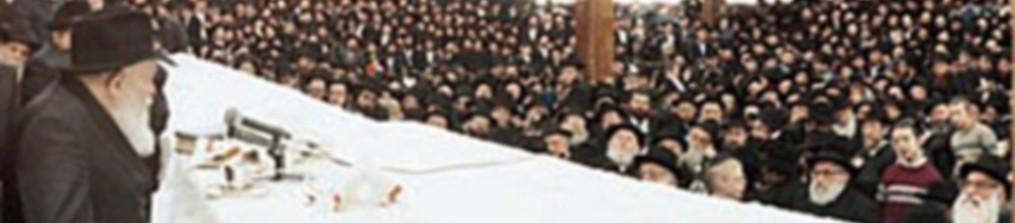
It can be understood that the Rebbe is not only saying to look at the Rebbe’s visage, whether in person or via a photo, but something more than this.  The Rebbe is giving us advice how to better understand these sichos of 5751-52, where the Rebbe is speaking openly about Moshiach in unprecedented ways: when we are learning here about Moshiach, we need to know whom we are talking about; that this is not just “learning Torah lishmah“, but has very practical ramifications. How will we properly understand what the Rebbe is trying to tell us about the identify of Moshiach, and whether we are waiting for him to come or if he has already come? Simple: Keep your eyes on the Rebbe!

Read the following words from the sicha of Behar-Bechukosai as they are without “looking at the face of the Rebbe”, then read them again with the Rebbe in mind — you will understand very well the “enigmatic” advice “which helps one’s understanding“:

Immediately we will see that Moshiach is already found among us, and every single Jew will point with his finger and say “Behold, this one (is the Melech haMoshiach, and he already) came”.

20180511_005203-1