28 Sivan a Preparation for Gimmel Tammuz?

We find that the Rebbe teaches a firm principle: the flow of the year is a continuum.  This means to say that each holiday or commemoration day is a preparation for the one that follows it on the calendar.  For example: Pesach (coming out of Egypt) is a preparation for Matan Torah on Shavuos; the day of Yud Kislev (the redemption of the Mitteler Rebbe) is a  preparation for Yud-Tes Kislev (the day of redemption 29 years earlier of his father, the Alter Rebbe).  The year that things happened in history is of much less significance than the order that they happen on the calendar.

From this we understand that since 28 Sivan precedes Gimmel Tammuz by 5 days — according to the Rebbe’s principle it serves as a preparation for Gimmel Tammuz.  In what do we see this?  On 28 Sivan we celebrate the Rebbe coming to America, being miraculously saved from the “valley of tears” of war-torn Europe.  Gimmel Tammuz is marks the end of the era (until now, at least) when we could see and hear the Rebbe in the usual ways.  What sort of preparation is this one for that one?

The day of 28 Sivan is noted in the “Shalsheles Hayachas” printed (at the Rebbe’s behest) at the beginning of the sefer Hayom Yom.  It begins with the Maharal of Prague, indicating the 7 generations to the Alter Rebbe.  Then it lists by year the major events and accomplishments of each of the Rebbeim of Chabad, concluding with the Rebbe.  For the Rebbe it states (after the year he was born and married) that in “5701 — Sivan — came to the city of New York”.  Not “arrived” (as a refugee) but “came” (purposefully).  A few comments about the Rebbe’s coming to New York:

Firstly, in the farbrengen of Shavuos 5701, about 10 days before the Rebbe and the Rebbetzin would set sail for America, the Previous Rebbe said:

According to universal custom, preparations for an important guest begin well in advance.  Every corner in the house is cleaned two weeks in advance, the family talks about the upcoming visit, and the neighbors are duly updated. He’s arriving soon. It’s now close to the time when Mashiach will come. It’s time to prepare for his arrival….  

Many see in this a hint to the arrival to America of the Rebbe, Melech HaMoshiach.  The old-timers who were in New York at the time tell that from the moment the Rebbe arrived, “everything changed”.  In fact, the Rebbe even testified on himself that something changed when he arrived to the USA.  At a farbrengen (Chol haMoed Pesach, 5748), the Rebbe addressed his arousal to cry out “Ad Mosai” (“until when” must we remain in golus):

I never heard this from my father, and certainly not from my grandfather. Even from myself, I never heard such talk before I arrived here in the United States…

So even the Rebbe’s impatience for Geuloh started when the Rebbe came to America (on 28 Sivan)!

We could say that 28 Sivan is an aspect of Moshiach being revealed.  Revealed to the Chassidim in America, revealed to the Rebbe himself, revealed in the new activities of Lubavitch that began only after the Rebbe’s arrival.

Based on this, we can see how 28 Sivan is a preparation for Gimmel Tammuz: on 28 Sivan Moshiach is revealed, on Gimmel Tammuz Moshiach is concealed.  As Rashi brings from on Daniel 12:12:

“in the future our Moshiach will be concealed after he has been revealed and will return and be revealed [again]” (שעתיד משיחנו להתכסות אחר שנגלה וישוב ויתגלה)

In order to fulfill the second step of being concealed (with the great value of the Divine service of the period of concealment, as discussed, for example, in the Kuntres of Rosh Chodesh Kislev, 5751 which addresses the concealment of Erev Rosh Chodesh), there must be the preparation of Moshiach being revealed.  The aspect of revelation of 28 Sivan precedes and prepares for the aspect of concealment of Gimmel Tammuz (and it’s connected to Erev Rosh Chodesh, which is the day after 28 Sivan).  Of course Gimmel Tammuz is not an end in itself — it leads to the ultimate redemption of 12-13 Tammuz.  And as the Rebbe says many times: the Geuloh of 12-13 Tammuz showed in retrospect how Gimmel Tammuz itself was “the beginning of the Geuloh”.  May we bring it about now!
Chof-Ches Sivan, 5751: Where is the Beis Hamikdash Now?

Chof-Ches Sivan, 5751: Where is the Beis Hamikdash Now?

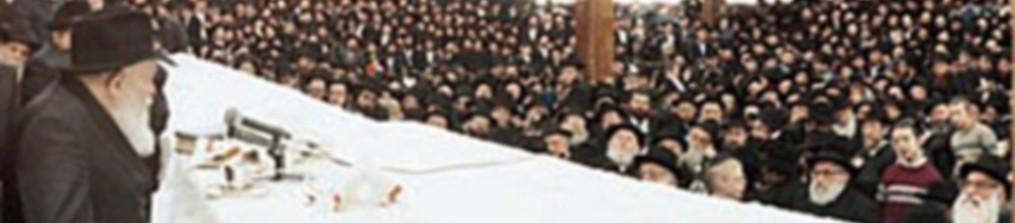
The Rebbe spoke this sicha on the 50th anniversary of his arriving safely to the shores of America (together with the Rebbetzin) from war-torn Europe in 5701 (1941).  America is identified in Chassidus as a place where Matan Torah did not take place (in a revealed way), and is referred to as the “lower half of the world” (חצי כדור התחתון).  It is, in this regard, the lowliest place.  But specifically from the lowest place one can elevate everything (like a lever  positioned under a building, which can lift up the entire building).

Here, in the lower half of the world, the Previous Rebbe settled in 5700 (1940), joined by the Rebbe and the Rebbetzin a year later.  The (now-famous) building at 770 Eastern Parkway was acquired as the home, shul, and study-hall of the Previous Rebbe, and the Rebbe explains the significance of this number.  (This sicha is one of the talks that would be compiled into the unprecedented sicha of “Beis Rabbeinu sh’b’Bavel“.)

As is know, there are 7 sefiros, from Chesed to Malchus.  The state of perfection is represented by 10, so the ultimate perfection of 70 is 700, and of 7 is 70, both of which combine to make 770.  The completion of the task of refining the sefiros.  This is not just number-play, as the Rebbe goes on to explain:

And from this place the Geuloh begins, and the building of the Beis Hamikdosh, “the Sanctuary of G-d, which Your hands established” (מקדש אדנ”י כוננו ידיך)… Even though its place is in the Holy Land, in Yerushalayim, on the Holy Mountain, [but the work of achieving this] is done via our avoidah in the time of golus, so we have in this place, specifically in this place, the entire preparation for the “Sanctuary of G-d”…until in this place will be the revelation of “the Sanctuary of G-d”, in this place (770).

The Rebbe continues to say that this refers to the entire building (of the Beis Hamikdosh), including the roof, as the Midrash states “Melech Hamoshiach stands on the roof of the Beis Hamikdosh and announces to Yisroel: the time of your redemption has arrived”.

Immediately, all Jews will find themselves standing (איבערגעשטעלט) in our Holy Land together with the third Beis Hamikdosh WHICH WE HAVE HERE (וואס מ’האט דא)…

Those words have been translated in capital letters to draw attention to their significance.  In this and other sichos, one could arrive at the mistaken understanding that 770 is merely the “small sanctuary in the time of golus” where, “at some point in the future”, the 3rd Beis Hamikdosh will be revealed first (see Kuntres “Beis Rabbeinu sh’b’Bavel”).

It is correct that 770 is that place where the 3rd Beis Hamikdosh will be revealed first.  But only the revelation to you and me is in the future; because the essential presence of the 3rd Beis Hamikdosh we have here מ’האט דא (present tense)!  This is a critical point to grasp, which enables many things to be understood.  For example: the Rebbe’s assertion (parshas Vayakhel) that the ingathering of the Exiles has begun.  This is something which comes about, as the Rebbe himself explains elsewhere, through the 3rd Beis Hamikdosh (and not merely the “small sanctuary in the time of golus”)!  We have it here!

The Rebbe continues and says that Eybershter agrees to the words and requests of Yidden, revealing His love for them down below in this low world, that everything in the world is working for Geuloh.  And further: the 28th of Sivan leads into the 29th, which is Erev Rosh Chodesh, when the moon is not visible.  This aspect of “your place will be empty” (יפקד מושבך) brings to “you are remembered” (see Kuntres Beis Iyar for more explanation), a term which also refers to the intimacy of husband and wife — the unification with the Eybershter, becoming “one reality”, “one flesh”.

Finally, the Rebbe makes a statement that, if understood, resolves all of the difficulties as to whether the Rebbe is really saying (here and elsewhere) that the Geuloh is here, which is contrary to what we see, or if we have to bring it.  The Rebbe states that:

The Eybershter “needs” (so to speak) the partnership of every Yid, specifically as soul in a body; and through our deeds and avoidah comes the Geuloh.  The Yid must come to agree that not only the time of your redemption has arrived, but more than that: the Geuloh b’pashtus is already here…Geuloh from the root that means revelation (through the avoidah of a Yid in Golus)…

Reading this closely, we note that the Rebbe is saying that what is needed in order to BRING the redemption (in the future, even if only the next moment) is that a Jew who is still in GOLUS (present tense, meaning that he has not yet experienced the Geuloh) nonetheless will AGREE and PROCLAIM that the Geuloh is ALREADY here “b’pashtus”!  To agree, and to go so far as to proclaim, that the Geuloh is already here while you yourself are still in golus — this what brings the Geuloh.

Furthermore, we can note the Rebbe’s exacting choice of words: “agree” (מסכים), which has a different meaning than “acknowledge” (מודה).  Agree means that the Yid, with his own level of understanding, comes to the same conclusion — agrees — with what the Rebbe is saying.  This is the “partnership” with the Eybershter the Rebbe is speaking about.  Because if we did not need to reach this through our own intellect and understanding, if it would be sufficient to simply to believe what the Rebbe is saying (that the Geuloh is already here b’pashtus), or to accept it unconditionally as a loyal Chosid, then the Rebbe would not have chosen the word “agree” (מסכים).  To reach the level of “agreement”, one has to learn and understand and on his level reach the same conclusion — much like a Rov who must rule according to his own understanding and not because he has unconditional acceptance of one who is greater than him.  (As the Gemara* tells about Rebbe Meir — that in his generation he was acknowledged as being uniquely great, but the sages did not rule the halacha according to his opinion because they could not understand the depth of his reasoning.)

We can readily grasp how the direct path to our “agreement” is learning about the subject of Moshiach and Geuloh, especially in the Rebbe’s teachings.  Only in this way can we do more than merely acknowledge the Rebbe’s words — we will be able to truly agree!

* Eruvin 13b:

גלוי וידוע לפני מי שאמר והיה העולם שאין בדורו כמותו. ומפני מה לא קבעו הלכה כמוהו? שלא יכלו חבריו לעמוד על סוף דעתו.

9) Kuntres 28 Sivan: I Will Show You Wonders Behind the Miracles

9) Kuntres 28 Sivan: I Will Show You Wonders Behind the Miracles

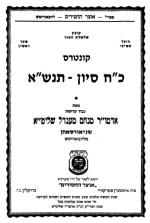
A Chassidic discourse on the verse “As in the days when you came out from Mitzrayim, I will show you wonders” was edited and distributed by the Rebbe on 28 Sivan, 5751 (50th anniversary of the Rebbe’s arrival to America together with the Rebbetzin).  The subject is the nature and varying levels of miracles and wonders in general, and particularly as they will be in the Messianic age.  This not only shares an obvious connection with the miraculous escape of the Rebbe and Rebbetzin from Europe to America 50 years earlier, but also with the year 5751 תנש”א, which the Rebbe repeatedly referred to as the year of “I will show you wonders” (the letters of the Jewish year — Nun-Alef — standing for the  Hebrew words in our verse “I will show you wonders.”)

First, we need to understand the varying levels of miracles: there are miracles above nature (transforming water into blood, splitting the sea), and also miracles enclothed in nature.  Miracles enclothed in nature themselves divide into 3 types: recognizable miracles (Purim, Chanukah); miracles concealed by nature but there is still a recognition that something out of the ordinary occurred for which one is obligated to thank Hashem (an ill person who is healed, a prisoner who is freed, etc); the third and lowest level is where nature so completely obscures the miracle to the point that one doesn’t even recognize that a miracle occurred (אין בעל הנס מכיר בניסו).

The Rebbe proceeds to explain that the last type of miracle, unrecognizable from the ordinary process of nature, is actually the highest in it’s source. As the verse states עושה נפלאות גדולות לבדו, Hadhem performs great wonders “alone”, no one knows about them.  It is from this level that the great wonders of the Messianic age will come, which will be wonders even compared to the wonders of Mitzrayim.  This can explain why regarding the Messianic wonders it states “I will show you wonders” — because they will come from the high level which today are unrecognizable.  Hashem will have to “show” us that they are wonders.

But, the Rebbe explains, this verse of “showing wonders” doesn’t only apply to miracles enclothed in nature, but also miracles above nature.  Those miracles will be wonders even in comparison to the wonders that were seen in coming out of Mitzrayim.  But we are left with a question: what need is there to “show” the wonder of a miracle so above nature that it is already a wonder?  The answer the Rebbe gives is amazing.  But to reach that answer, we have to first understand the following:

First, the difference between these miracles is the degree to which they are grasped by human intellect.  A wonder like the splitting of the sea is so beyond human comprehension that we cannot grasp it at all, we can only gaze at it speechlessly.  The more the miracle is enclothed in nature, the more we can grasp it intellectually; to understand not only what happened, but how it happened.  The Rebbe gives examples: we don’t understand how a dead person is brought back to life, we only know that before he was dead and now he is alive.  But looking at the miracle of Purim, for example, we can see exactly how the decree was abolished, or when a sick person is healed we can grasp how it was brought about through certain drugs.  From this out comes out that being enclothed in nature is really what reveals the miracle, making it accessible to the human intellect.  The ultimate form are the miracles that we don’t even recognize — they are so fully grasped by our intellect that there is no sense of wonder that would cause us to notice something unusual has happened, which would cause us to give thanks to Hashem.

Mitteler Rebbe asks a question on the miracles that are unrecognizable: since they derive from the lofty level of “Him alone” (לבדו), then how is or possible for anything to conceal them?  He answers that, in fact, nothing can conceal them.  They are so fully and seamlessly revealed by nature that we can’t even recognize that something out of the ordinary has occurred!

But really, all miracles come from the Ohr Ein Sof; the difference of whether that are enclothed in nature or not depends on whether they are from the aspect of concealment within the Ohr Ein Sof (למעלה מעלה עד אין קץ), or the aspect of revelation (למטה מטה עד אין תכתית).  And all the wonders of the Messianic era will revealed, including those that derive from the aspect of concealment.

So, the wonders of the Messianic era will come from the highest levels, and will also be revealed even into the human intellect.  But more than that, the Rebbe explains that even the miracles of the Messianic era that will not be enclothed in nature (like the future splitting of the sea and the river) will be in the following manner: not only the splitting of the sea down here will be seen openly, but the revelation [of Elokus] that brings about the splitting of the sea will be seen openly! (As by the splitting of the sea upon coming out of Mitzrayim, when everyone pointed with a finger and said “this is my G-d” (זה א-לי ואנוהו). While by Yetzias Mitzrayim this was a one-time event, in the Messianic era it will be the ongoing reality!)

So we find that the miracles of the Messianic era will be wonders, from a higher level than even the wonders of Yetzias Mitzrayim, and at the same time they will be able to be grasped by human intellect.  (And they will be seen in a way where the Divine revelation itself will be perceived!)  But how will nature — which derives from the Divine name Elokim which conceals the level of G-dliness that is above world — be able to accommodate such a degree of revelation?  The Rebbe explains that  through avoidas habirurim, refining the Divine sparks that fell in physicality, the Jewish people effect a refinement of nature.  Nature itself becomes elevated  (עלית הטבע), so that instead of obscuring the level of G-dliness that is above the world, it becomes a vessel for that G-dliness to be revealed!

It will be interesting to note (for those who have learned the Sicha explaining the “New Torah That Will Go Forth From Me”) that the Rebbe references chapter 16 in Shaar HoEmuna by the Mitteler Rebbe.  There, the Mitteler Rebbe explains this same subject of miracles, and also the difference between the aspect of concealment within the Ohr Ein Sof (למעלה מעלה עד אין קץ), and the aspect of revelation (למטה מטה עד אין תכתית).  He brings out that these two aspects correspond to Halacha (revelation to the lowest levels) and Kabbala (hidden secrets above revelation). Through this reference we can tie together everything in our maamor (which seems to be speaking only about miracles and wonders in physical objects) with the concepts discussed in the Sicha explaining the “New Torah That Will Go Forth From Me” — the ability of Moshiach to draw down the loftiest secrets of Torah to the point where they become Halacha! 

But what is the connection between the secrets of Kabbala, rulings in Halacha, and miracles in the physical world?  As explained by the Rebbe elsewhere, a Halacha ruling (psak din) has an affect on the world, and thus we can understand that when Moshiach draws down the secrets of Torah into Halacha (unifying the aspect of concealment in Torah with that of revelation) that this causes the same effect in the physical world.  This results in miracles and wonders which themselves unify the levels of concealment and revelation — above nature and within nature, as explained in this maamor of 28 Sivan!

Shaar Hayichud, Mitteler Rebbe, Ch. 15

The Hidden Connection: 28 Sivan and July 4th

The Hidden Connection: 28 Sivan and July 4th

The year 5751 marked the 50th anniversary of the Rebbe’s arrival to the United States (together with the Rebbetzin).  That year, the Rebbe received well-wishes from then-President of the United States, George Bush, in honor of the anniversary of the Rebbe’s arrival.  We have the Rebbe’s response to President Bush, dated the 3rd of Elul, 5751 (13 August, 1991)1.  After the formal pleasantries, the Rebbe writes something that perhaps conceals more than it reveals.  The Rebbe writes:

“By Divine Providence your kind letter was dated on the morrow of the anniversary of the Nation’s birthday.  It is well to remember that the founders of this Nation considered Independence Day as ‘a day of deliverance, by solemn acts of devotion to G-d Al-mighty.’  By Divine Providence also my arrival in the United States in 1941 coincided with the declaration by Congress that year, making July 4th a legal public holiday.”

“The Nation’s birthday” is considered July 4th, the day in 1776 that the original 13 British colonies in America declared independence from the British Crown.  Unlike the famous story of the Pilgrims who came to America for freedom of worship, the Declaration of Independence presents a list of grievances against the British rulership of the colonies, completely political and economic in nature.  It speaks of liberty and freedom and happiness, without mentioning the matter of religion at all.  Nonetheless, the Rebbe chooses a quote from one of the “founders of this Nation”2 that does speak in religious terminology: “a day of deliverance, by solemn acts of devotion to G-d Al-mighty”.3

Here it is interesting to note that this quote is not from any official declaration.  It was written by John Adams (later to serve as the 2nd President of the United States) in a personal letter to his wife.  The Rebbe seems to have chosen to quote it because of its open expression of devotion to G-d Al-mighty. 

FIRST THE FACTS

Let’s examine the next statement in the Rebbe’s letter: 

By Divine Providence also my arrival in the United States in 1941 coincided with the declaration by Congress that year, making July 4th a legal public holiday.

We need to understand what is meant by referring to 1941 as the year that July 4th became a legal public holiday.  Let’s look at the historical facts:

Public records show that in 1870 Congress already established the July 4th as a holiday for the District of Columbia.4  It became a paid holiday for Federal employees in 1938.5  All this occurred in earlier years – why does the Rebbe say it became a legal public holiday in 1941?  The answer might give us deeper insight into the way the Rebbe views things.

In early 1941 it was brought to the attention of the responsible authorities that the resolution of Congress in 1938 (which made July 4th a paid holiday for employees of the Federal government) did not mention municipal employees of the District of Columbia.  (Unlike every other city in the United States which is under state law, the District of Columbia (aka Washington, DC) is not part of any state and is thus subject directly to Federal law.)  Meaning that a postal worker in California or South Dakota (employees of the Federal government) would have a paid day off on July 4th, but a Washington, DC schoolteacher or clerk still had an unpaid holiday.  A corrective resolution (adding a few words to the 1938 resolution) was passed in May, 19416 to include employees of the District of Columbia.  How many people were affected by these resolutions?

Public records indicate that in 1940 there were 1 million Federal employees nationwide7, who received July 4th as a paid holiday in 1938.  The number of municipal employees in the District of Columbia at that time was 9,7858.  Less than 1% of the total people affected by the resolution.  And when looking at the entire American workforce of the time – approximately 45 million9 (who were under state laws and not affected by these resolutions) – the resolution of 1941 affected merely 0.022% of the entire workforce.  That’s less than ⅕ of 1%!  And this the Rebbe refers to as a “declaration by Congress making July 4th a legal public holiday”!

INSIGHTS INTO THE REBBE’S WORDS

Most probably, the Rebbe did not intend for President George Bush to delve into the deeper meaning of the Rebbe’s words.  But from Chassidim it is expected that every expression of the Rebbe, even in a protocol letter to a gentile leader, should be “turned over and turned over”.  As our sages tell us, even mundane things mentioned by Talmidei Chachomim need to be learned10, so let us now examine what the Rebbe might be trying to teach us.

To review the events: 

  1. In 1870 there was a resolution of Congress to make July 4th a holiday (without pay) in Washington, DC; 
  2. In 1938 a resolution to make it a paid holiday for a million Federal employees;
  3. In 1941 a resolution to include another 9,000 DC municipal employees in the paid holiday.

“PUT YOUR MONEY WHERE YOUR MOUTH IS”

The resolution of 1870 doesn’t seem to interest the Rebbe at all.  The Rebbe considers July 4th to have been declared a legal public holiday by the fact that it became a paid holiday.  A case of “put your money where your mouth is”?  Or perhaps connected with the ruling of the Alter Rebbe regarding Birkas Cohanim11: according to Ashkenazi custom the Cohanim do not bless the congregation on Shabbos because they are troubled from losing a day’s income.  If Cohanim are troubled because they are missing the profits in the marketplace, so certainly, lehavdil, a gentile employee (and surely there were a few Jewish employees here, as well) could feel like it’s raining on his July 4th parade.12

RESOLUTION OF DECLARATION?

This may be connected with the Rebbe’s choice of expression: a “declaration by Congress”.  In fact, this was a “resolution” and not a “declaration”.  But, if we follow the Rebbe’s emphasis that “the action is the main thing” and that a person must be a “living example”, then we understand that only concrete action serves as a meaningful declaration.  Words without action, especially in the political arena, are generally dvorim bateilim.  Practical action is the true declaration.  Thus, the Rebbe terms this resolution of Congress (backed by a day’s pay) to be a “declaration”.

IT AIN’T OVER ‘TIL IT’S OVER

The resolution of 1941, as pointed out, resulted in a minor correction of less than 1% of workers who were left out of the 1938 resolution.  Yet the Rebbe refers to it not as a correction but as the act itself.  Perhaps along the lines of “everything follows the sealing”13 or “the end of the action was in the initial thought”14.

This also shows the Rebbe’s approach that even if 99% has been achieved – the task has not been accomplished.  There is no such thing as “almost finished”.  Such as a kli that is not subject to tuma’a until it is completed (gmar melacha).15

THE EDICT WAS GIVEN IN SHUSHAN THE CAPITAL16

The final element of interest is that the significance of the 1941 resolution is that it affected only Washington DC municipal employees.  The million Federal employees who received a paid holiday in 1938 didn’t qualify in the Rebbe’s eyes as declaring it a legal public holiday.  The fact that even after the resolution of 1941 there remained about 45 million workers nationwide most of whom did not yet receive this benefit from their state and local governments – not a concern.  But a few thousand municipal employees of the capital city of Washington, DC – this is what tilted the scale for the Rebbe.  From this we can perhaps see a hint to the significance of a nation’s capital in ruchniyus.  

For example: by a farbrengen in 575217 the Rebbe made mention of “the state of Russia had a revolution and collapse, with the change of the capital city”.  A few months later18 the Rebbe refers to the significance of the name “Shushan Purim”  – that it indicates \the refinement of “the capital city of the le’umas zeh”.  A paid holiday for employees of the capital of the USA seems to tilt the scales against all the other millions of American workers.

WHAT REALLY HAPPENED IN 1941

On a deeper, and more speculative note, it seems that the Rebbe is hinting at something even more substantive.  According to what we have seen, 150 years of July 4th celebrations (whether solemn or otherwise) did not qualify to make July 4th a legal public holiday in the Rebbe’s eyes.  Nor did the Congressional resolutions of 1870 and 1938.  If we will read the Rebbe’s words with a slightly different teitch, perhaps we can understand what the Rebbe is really saying here:

By Divine Providence also my arrival in the United States in 1941 coincided with the declaration by Congress that year, making July 4th a legal public holiday.

It was not the “declaration by Congress that year” that made July 4th (celebrating the establishment of the USA as a nation) into a legal public holiday.  Read it again.  It was the fact that it coincided with “…my arrival in the United States in 1941…” – this is what gave the celebration of July 4th legal status!  (And also halachic status, since dina d’malchusa dina in monetary matters.)  Meaning that celebrating the establishment of this particular nation is given its kiyum and tokef only when, in 194119, it fulfilled its tachlis by opening its doors to Melech HaMoshiach!20

To strengthen that concept, we will bring something told in the name of R’ Yehuda Leib Hoffman (a highly-esteemed Chosid of the Rebbe Maharash and Rebbe Rashab who was considered a master of Kabbalah) which relates to the statement of the Alter Rebbe that the Western Hemisphere (America – chatzi kadur hatachton) did not experience Matan Torah:

R’ Leib foresaw that the Rebbeim would one day end up in the Western Hemisphere. He explained that matan Torah did not occur there since that hemisphere is related to the highest of spiritual levels that cannot be ordinarily related to. However, since Moshiach will reveal these lofty levels, one of the Rebbeim would surely end up there.21

From this it would seem that in addition to a freilechen and shturemdik farbrengen on 28 Sivan, it might be appropriate also to say lechayim on July 4th22.  Since we see that the founding of the United States was a preparatory step in enabling Melech Hamoshiach to come to fulfill his shlichus of making a dira b’tachtonim and bringing the true and complete Geuloh! 

Lechayim!

יחי אדוננו מורנו ורבינו מלך המשיח לעולם ועד!

  1.  Attached as appendix I. ↩︎
  2. See farbrengen of 19 Kislev, 5747 (1986) which came out on “Thanksgiving” – the Rebbe speaks in strongly positive terms about the Pilgrims (the Rebbe refers to them in English as “founding fathers”) who came to America to worship the Creator without government or church interference.  Generally, American history does not refer to the Pilgrims as the “founding fathers” but rather reserves that title for the political and ideological founders of the United States (such as John Adams, author of the words the Rebbe quotes), who were active 150 years after the Pilgrims came.  The Rebbe evidently does not want to distinguish between the religious goals of the Pilgrims and the national goals of the signatories of the Declaration of Independence. ↩︎
  3. Also interesting to note that the letter is dated July 3rd, 1776, the day after he and most of the colonial delegates signed the Declaration of Independence.  The next day, the 4th of July, it was officially ratified.  In his letter Adams refers to celebrating the 2nd of July, as that was the day of the signing.  The Rebbe refrains from mentioning the continuation of Adam’s letter: “It ought to be solemized [sic] with pomp and parade, with shows, games, sports, guns, bells, bonfires, and illuminations, from one end of this continent to the other.“ ↩︎
  4. Resolution of Congress (16 Stat 168 CH.167), approved June 28, 1870 (29th of Sivan, 5630).  Appendix 2. Click to view Statue 16 ↩︎
  5. Resolution of Congress (52 Stat. 1246), approved June 29, 1938 (30 Sivan, 5698). Appendix 3. Click to view Statute 52 ↩︎
  6. Appendix 4. ↩︎
  7. …wiki/United_States_federal_civil_service ↩︎
  8. Click to view 1940 census detail ↩︎
  9. Click to view 1940 labor detail ↩︎
  10. Sukkah 21b:  אמר רב אחא בר אדא אמר רב המנונא אמר רב מנין שאפי’ שיחת תלמידי חכמים צריכה לימוד שנאמר (תהלים א, ג) ועלהו לא יבול.  רש”י שם (ד”ה משיחתו) לשון שיחת חולין ↩︎
  11. Alter Rebbe’s Shulchan Aruch, Hilchos Birkas Cohanim 128:57: “The custom in all these lands is that the Priestly Blessing is conferred only on a Yom-Tov, because then people are in a joyful and festive mood — and “only one who is glad of heart shall bless.”  On other days, by contrast, even on Shabbos, [the kohanim] are preoccupied with their livelihood and their loss of working hours and they are not in a happy state of mind.” ↩︎
  12. See Hayom Yom for 28 Sivan that by helping a Jew in his parnosa (“even 70 Russian kopeks”) all the supernal chambers are opened before him. ↩︎
  13. הכל הולך אחר החתום, Brochos 12a ↩︎
  14. סוף מעשה במחשבה תחילה from piyut kabbolos Shabbos “Lecho Dodi”, R’ Shlomo Alkabetz. ↩︎
  15. Hilchos Keilim, 8:1.  כָּל כְּלֵי מַתְּכוֹת – אֵינָן מְקַבְּלִין טֻמְאָה עַד שֶׁתִּגָּמֵר מְלַאכְתָּן כֻּלָּהּ, וְלֹא יִהְיֶה הַכְּלִי מְחֻסַּר מַעֲשֶׂה כְּלָל ↩︎
  16. Esther 3:15 וְהַדָּ֥ת נִתְּנָ֖ה בְּשׁוּשַׁ֣ן הַבִּירָ֑ה. ↩︎
  17. Shabbos Vayigash, 7 Teives, 5752, footnote 85: “נעשית המהפכב והנפילה של מדינת רוסי’ת בשינוי עיר הבירה וכו’” ↩︎
  18. Ki Sisa, 5752, footnote 166. ↩︎
  19. As the Midrash says that Hashem made a condition when He created the sea, that it would split for Moshe Rabbeinu (Shemos Rabba, 21:6). ↩︎
  20. See Hayom Yom for 3 Elul, the date of the Rebbe’s letter: “a soul needs to refine and rectify a certain place, or also from the time of the creation of the world – the item needing refinement or rectification is waiting for that very neshoma to come and refine it or rectify it.  And also this neshoma since it was emanated and created it is waiting for the time of its descent to refine and rectify that which it has been assigned.” (!) ↩︎
  21. The Weekly Farbrengen #815, Merkaz Anash (from Reshimas Devorim (Chitrik)). In original (free translation): “HaRav HaTomim R’ Yisroel Levin heard from the Chosid R’ Leib Hoffman from Tsasnik: It’s known that the letters in the Torah are ‘ohr haKav’ which is drawn down after the tzimtzum, and the parchment is the unlimited Divine light which is before the tzimtzum. Being that the Torah was given in the upper half of the world, meaning that that the revelation that occurred in the upper half of the world is only a revelation of the “kav” which is after the tzimtzum. And in the lower half of the world [=western hemisphere], where the Torah was not given — this is like the parchment, which is the infinite Divine light from before the tzimtzum. Being that Moshiach will reveal the infinite Divine light from before the tzimtzum — it will be necessary for one of the Chabad Rebbeim to come to the United States, to America, because there the infinite Divine light from before the tzimtzum will be revealed.” ↩︎
  22. Note that July 4th, 1776 fell on the day of the fast of 17 Tammuz!  But see the sicha of Shlach, 5749 (ois 10) where the Rebbe states that 28 Sivan gives power to transform the entire month of Tammuz to be a chodesh hageuloh. ↩︎

28 Sivan a Preparation for Gimmel Tammuz?

We find that the Rebbe teaches a firm principle: the flow of the year is a continuum.  This means to say that each holiday or commemoration day is a preparation for the one that follows it on the calendar.  For example: Pesach (coming out of Egypt) is a preparation for Matan Torah on Shavuos; the day of Yud Kislev (the redemption of the Mitteler Rebbe) is a  preparation for Yud-Tes Kislev (the day of redemption 29 years earlier of his father, the Alter Rebbe).  The year that things happened in history is of much less significance than the order that they happen on the calendar.

From this we understand that since 28 Sivan precedes Gimmel Tammuz by 5 days — according to the Rebbe’s principle it serves as a preparation for Gimmel Tammuz.  In what do we see this?  On 28 Sivan we celebrate the Rebbe coming to America, being miraculously saved from the “valley of tears” of war-torn Europe.  Gimmel Tammuz is marks the end of the era (until now, at least) when we could see and hear the Rebbe in the usual ways.  What sort of preparation is this one for that one?

The day of 28 Sivan is noted in the “Shalsheles Hayachas” printed (at the Rebbe’s behest) at the beginning of the sefer Hayom Yom.  It begins with the Maharal of Prague, indicating the 7 generations to the Alter Rebbe.  Then it lists by year the major events and accomplishments of each of the Rebbeim of Chabad, concluding with the Rebbe.  For the Rebbe it states (after the year he was born and married) that in “5701 — Sivan — came to the city of New York”.  Not “arrived” (as a refugee) but “came” (purposefully).  A few comments about the Rebbe’s coming to New York:

Firstly, in the farbrengen of Shavuos 5701, about 10 days before the Rebbe and the Rebbetzin would set sail for America, the Previous Rebbe said:

According to universal custom, preparations for an important guest begin well in advance.  Every corner in the house is cleaned two weeks in advance, the family talks about the upcoming visit, and the neighbors are duly updated. He’s arriving soon. It’s now close to the time when Mashiach will come. It’s time to prepare for his arrival….  

Many see in this a hint to the arrival to America of the Rebbe, Melech HaMoshiach.  The old-timers who were in New York at the time tell that from the moment the Rebbe arrived, “everything changed”.  In fact, the Rebbe even testified on himself that something changed when he arrived to the USA.  At a farbrengen (Chol haMoed Pesach, 5748), the Rebbe addressed his arousal to cry out “Ad Mosai” (“until when” must we remain in golus):

I never heard this from my father, and certainly not from my grandfather. Even from myself, I never heard such talk before I arrived here in the United States…

So even the Rebbe’s impatience for Geuloh started when the Rebbe came to America (on 28 Sivan)!

We could say that 28 Sivan is an aspect of Moshiach being revealed.  Revealed to the Chassidim in America, revealed to the Rebbe himself, revealed in the new activities of Lubavitch that began only after the Rebbe’s arrival.

Based on this, we can see how 28 Sivan is a preparation for Gimmel Tammuz: on 28 Sivan Moshiach is revealed, on Gimmel Tammuz Moshiach is concealed.  As Rashi brings from on Daniel 12:12:

“in the future our Moshiach will be concealed after he has been revealed and will return and be revealed [again]” (שעתיד משיחנו להתכסות אחר שנגלה וישוב ויתגלה)

In order to fulfill the second step of being concealed (with the great value of the Divine service of the period of concealment, as discussed, for example, in the Kuntres of Rosh Chodesh Kislev, 5751 which addresses the concealment of Erev Rosh Chodesh), there must be the preparation of Moshiach being revealed.  The aspect of revelation of 28 Sivan precedes and prepares for the aspect of concealment of Gimmel Tammuz (and it’s connected to Erev Rosh Chodesh, which is the day after 28 Sivan).  Of course Gimmel Tammuz is not an end in itself — it leads to the ultimate redemption of 12-13 Tammuz.  And as the Rebbe says many times: the Geuloh of 12-13 Tammuz showed in retrospect how Gimmel Tammuz itself was “the beginning of the Geuloh”.  May we bring it about now!

Chof-Ches Sivan, 5751: Where is the Beis Hamikdash Now?

Chof-Ches Sivan, 5751: Where is the Beis Hamikdash Now?

The Rebbe spoke this sicha on the 50th anniversary of his arriving safely to the shores of America (together with the Rebbetzin) from war-torn Europe in 1941/5701.  America is identified in Chassidus as a place where Matan Torah did not take place (in a revealed way), and is referred to as the “lower half of the world” (חצי כדור התחתון).  It is, in this regard, the lowliest place.  But specifically from the lowest place one can elevate everything (like a lever  positioned under a building, which can lift up the entire building).

Here, in the lower half of the world, the Previous Rebbe settled in 1940/5700, to be joined by the Rebbe and the Rebbetzin a year later.  The (now-famous) building at 770 Eastern Parkway was acquired as the home, shul, and study-hall of the Previous Rebbe, and the Rebbe explains the significance of this number.  (This sicha is one of the talks that would be compiled into the unprecedented sicha of “Beis Rabbeinu sh’b’Bavel“.)

As is know, there are 7 sefiros, from Chesed to Malchus.  The state of perfection is represented by 10, so the ultimate perfection of 70 is 700, and of 7 is 70, both of which combine to make 770.  The completion of the task of Continue reading

9) Kuntres 28 Sivan: I Will Show You Wonders Behind the Miracles

9) Kuntres 28 Sivan: I Will Show You Wonders Behind the Miracles

A Chassidic discourse on the verse “As in the days when you came out from Mitzrayim, I will show you wonders” was edited and distributed by the Rebbe on 28 Sivan, 5751 (50th anniversary of the Rebbe’s arrival to America together with the Rebbetzin).  The subject is the nature and varying levels of miracles and wonders in general, and particularly as they will be in the Messianic age.  This not only shares an obvious connection with the miraculous escape of the Rebbe and Rebbetzin from Europe to America 50 years earlier, but also with the year 5751 תנש”א, which the Rebbe repeatedly referred to as the year of “I will show you wonders” (the letters of the Jewish year — Nun-Alef — standing for the  Hebrew words in our verse “I will show you wonders.”)

First, we need to understand the varying levels of miracles: miracles above nature (transforming water into blood, splitting the sea), and miracles enclothed in nature.  Miracles enclothed in nature themselves divide into 3 types: where the miracle is recognizable (Purim, Chanukah); where nature conceals the miracle but there is still a recognition that something out of the ordinary occurred and one is obligated to thank Hashem (an ill person who is healed, a prisoner who is freed, etc); and the lowest level, where nature so completely obscures the miracle to the point that one doesn’t even recognize that a miracle occurred (אין בעל הנס מכיר בניסו).

The Rebbe proceeds to explain that the last type of miracle, unrecognizable from the ordinary process of nature, is actually the Continue reading