
Bo 5752: G-dliness Revealed Without Histalkus

Bo 5752: G-dliness Revealed Without Histalkus

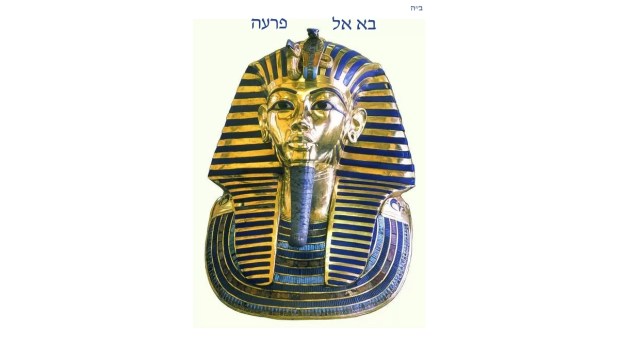
Our parsha begins with Hashem’s instruction to Moshe Rabbeinu “Come to Pharaoh”.  The question is asked: why “come to Pharaoh” and not “go to Pharaoh” (as stated in other verses)?  Furthermore, being that the Torah is eternal, what is the relevance of going to Pharaoh, King of Egypt, when we are standing at the end of golus — long after Egypt was rendered helpless and nothing remains of Pharaoh — at a time when the birurim of the klipah of Pharaoh are finished (as mentioned many times)?

CONFRONTING PHARAOH

The commentaries explain that Moshe Rabbeinu was afraid to go to the inner chambers of Pharaoh, and therefore Hashem said “Come [with Me] to Pharaoh” to ease Moshe’s fear of confronting Pharaoh alone.

However, our question becomes stronger when we learn, based on the Zohar, that the evil Pharaoh that we encountered in Egypt has his source in the “Pharaoh of kedusha (holiness)”, which refers to the revelation of G-dliness.  Why was Moshe afraid to go to the Pharoah of holiness, so much so that he needed a direct command from Hashem to “come” together with Hashem?! Continue reading

Erev Shabbos: Time of Techiyas Hameisim

Erev Shabbos: Time of Techiyas Hameisim

In addition to the radical chiddushim in the plain understanding of the second sicha of Parshas Va’era 5752, one can also find a number of hints and suggestions that give even deeper insight into the ground-shaking ideas the Rebbe is revealing.

In the explanation as to how the “good sign” of one who dies on Erev Shabbos applies to our era (the last quarter of the 6th millennium, “Erev Shabbos” of the entire creation), the Rebbe refers to the concept of “nesira” (“cutting”). This “nesira” describes what happened to Adam Harishon on the day of his creation: Hashem put him to sleep in order to separate Chava. From being a “back to back” entity they gained the ability to be “face to face”, and to bring into existence limitless future generations. While his sleep was one-sixtieth of death, it was completely a positive matter: in order to bring about an immeasurable improvement, specifically the ability to give birth to all future generations.

The Rebbe references the writings of the Arizal as a source for the Kabbalistic explanation of this concept of Nesira. In the writings of the Arizal (Shaar Hapsukim, p.17) one finds that the Arizal writes that “this matter is that the moichin (intellect) which is in the head of Z”A (the six sefiros) go out from it via this sleeping, and then they are given to the female (Malchus).” This brings about that Malchus grows from a point to her full development. Reading this, especially in the original language, seems to hint at the state of affairs after the events of 27 Adar and 3 Tammuz, when the Rebbe (the head — “Rosh Bnei Yisroel”) is not seen, and Malchus (the Jewish souls) receive and develop their potential via the intellectual power bestowed upon them by the head (“now I give it over to you, do all that you can to bring Moshiach in actuality” [sicha of 28 Nissan 5751]).

The Rebbe also brings (footnote 40) from “Kuntres Sfas Emes (at the end of Emes L’Yaakov)” that there is a “nesira” every Rosh Hashana which is the most difficult and requires Continue reading

Va’era 5752: The Rectification of Death

Va’era 5752: The Rectification of Death

In the second sicha printed for parshas Va’era 5752, the Rebbe elaborates on the statement of the sages that “one who dies on Erev Shabbos, it is a good sign for him”.

The Gemara describes that when R’ Yehuda haNosi took ill, R’ Chiya visited him and found him crying.  He asked him why he was crying (assuming that he was afraid of death).  R’ Chiya proceeded to give him a list of signs that portend well for the fate of a person after death (and their opposite): Dying amidst laughter is a good sign, while crying is a not good; one who dies on Erev Shabbos is a good sign, after Shabbos is not good.  (And several others.)

R’ Yehuda haNosi responded that he was crying (not from a fear of his fate after death, but rather) because of the Torah and Mitzvos he would no longer be able to perform.  Seemingly, the list of good signs brought by R’ Chiya (several of which applied to R’ Yehuda haNosi and were meant to comfort him), do not help the reason given by R’ Yehuda for his crying, because seemingly being unable to perform Torah and Mitzvos after ones passing is not affected by the good signs of how a person passes away.  (The Rebbe brings a proof for this from the story in the Gemara about Dovid haMelech, who asked to pass away on Erev Shabbos (because then one is not subject to “chibut hakever“), and Hashem refused him, telling him that even one day of his Torah learning was more dear to Him.)

Furthermore, the Rebbe asks on this whole discussion a fundamental question:

“How is it possible to truthfully say (in Toras Emes, the Torah of truth) that “one who dies on Erev Shabbos it is a good sign for him” — a “good sign” in relation to the occurrence of death, the opposite of life, the ultimate opposite of good according to Torah?!”  

Since the Torah defines “good” as fulfilling the will of Hashem through the performance of Torah and Mitzvos as a soul in a body, then death is the opposite of Good, Continue reading

Shemos 5752: To Bring to the Days of Moshiach

Shemos 5752: To Bring to the Days of Moshiach

This parsha, following the passing of Yaakov, Yosef, and the brothers, is the beginning of a new era in the history of Bnei Yisroel — the beginning of the Egyptian exile.  “These are the names of Bnei Yisroel who came to Egypt” — the first exile.

The midrash states that the reason for the subsequent redemption from Egypt was “due to the fact that [Bnei Yisroel] did not change their names…they went down as Reuvain and Shimon and they came up as Reuvain and Shimon.”  This is a comment on the name (and initial verse) of our parsha: Shemos (meaning, “names”), which refers to the beginning of the exile in Egypt, as mentioned.

The Rebbe derives from this that the verse “these are the names of Bnei Yisroel who came to Egypt” is also emphasizing the merit for which they were ultimately redeemed from Egypt (“that they didn’t change their names”).  In other words — it is referring both to the beginning of the golus and also to the future Geuloh from that golus.

The whole idea of “coming to Egypt” is in truth the “Geuloh of Yisroel”.  The descent which occurs in the meantime [until the Geuloh comes] is on the superficial level (בחיצוניות), but on a deeper level (בפנימיות), the descent itself is (not only for the sake that through it will come the ascent that occurs through the redemption from Egypt, but more than that–) a part of the ascent and the Geuloh itself, until we reach the ascent of the true and complete Geuloh…the future Geuloh.

In other words, not only is there a “descent for the sake of an ascent”, which makes the descent worthwhile in the end; here the Rebbe is saying something much greater: the descent itself is already part of the ultimate ascent!

At this point, the Rebbe turns to explain the familiar statement: Continue reading

Vayechi 5752: Using Iron for Holiness

Vayechi 5752: Using Iron for Holiness

Our parsha begins with the words “Vayechi Yaakov” (“Yaakov lived”).  And although in the parsha we read about Yaakov’s passing, nonetheless our sages teach us that “Yaakov Avinu didn’t die — just as his children are alive, so too he is alive”.  Explains the Rebbe:

The life of Yaakov is eternal life through this that it is drawn to to his children and their descendants until the end of all of the generations.  “His children are alive” meaning true life through learning and fulfilling the Torah.  [Although we mention his children], nonetheless the name of the parsha is named after the life of Yaakov (“Vayechi Yaakov”) — since the truth of the life of Yaakov, eternal life, is expressed in the life of his children.

This means that Yaakov himself lives eternally (soul in a body, as explained elsewhere), and since the material eyes see that “they embalmed him and buried him, etc” his eternal life must therefore be expressed through the life of his children: they are alive because he is alive. (Similarly, he is alive because they are alive — he is the reason Continue reading

Didan Notzach and Geuloh

Didan Notzach and Geuloh

The excitement surrounding the Rebbe’s victory of the seforim (5 Teives, 5747) is so intense that it begins even while we are still celebrating Chanukah. The day which the Rebbe referred to as “our side wins” (“Didan Notzach”) is a powerful dor hashvi’i celebration that rightly sweeps through Lubavitch. But beyond the farbrengens and the purchasing of seforim, the events of Didan Notzach and the sichos surrounding it deserve proper attention in order to understand at least something of the true magnitude of the victory. In particular, to recognize how 5 Teives represents the culmination in this physical world of the battle that has been going on since the times of the Alter Rebbe — the battle to bring the Geuloh.

The War of the Alter Rebbe

Hey Teives arrives a few days after the end of the month of Kislev, when everyone is still saturated with the story of the kitrug against the Alter Rebbe and against spreading Chassidus, Continue reading

19) Kuntres Hey Teves, 5752: How to Give

19) Kuntres Hey Teves, 5752: How to Give

The Kuntres printed for Hey Teves (ה’ טבת) in the year 5752 is a Chassidic Discourse the Rebbe said on parshas Vayigash, 5732, edited for publication under the supervision of the Rebbe himself.  The discourse explains some deep concepts in Chassidus, which we will not attempt to explain here; rather, we will take one point in the discourse.

The parsha begins with Yehuda approaching Yosef.  As is known, Yosef was dressed as an Egyptian, his brothers had no idea that this was their brother that they had sold into slavery so many years earlier.  This “Egyptian” was demanding that their brother Binyomin remain with him as a slave, because of the “theft”  of his goblet (which Yosef himself orchestrated).  Yehuda fearlessly approaches Yosef and asks — and even demands —  that the “Egyptian” let Binyomin return to his father (of whom he says “his soul is bound up with his soul”) and enslave one of the other brothers in his place.

This act of selflessness on the part of Yehuda represents the rectification of the original sale of Yosef, as is known.  But as explained according to Chassidus, there are even loftier things occurring here.

To summarize these loftier things, without elaboration: Yosef represents the level of Z”A and Yesod, the mashpia who gives spiritual influence; Yehuda represents the level of Malchus, the mekabel who receives from the mashpia.  Yehuda is requesting from Yosef to give over to him the spiritual influence.  And more than that, he is asking to receive this, reflecting the active participation of the mekabel.

Obviously, the mashpia (giver) is higher than the mekabel (receiver).  But in their source, it is reversed: the source of the mekabel (receiver) is on the level of Kesser (the “crown”) which is far above the source of the mashpia (giver).

Chassidus explains that when the mashpia gives over to the mekabel (who actually has a higher source in Kesser) then the mashpia also receives this level of Kesser.  That by giving, the mashpia also receives something even greater from the mekabel.

That said, the Rebbe explains the words of Yehuda “בי אדני” which are usually translated as “please, my lord” or “please, my master”.  But the word בי is unusual, it means “in me”, and there the verse would make perfect sense without it.  So why is it there?  The Rebbe explains as follows:

This that Z”A wants to give over to Malchus (because any bestowal of spiritual influence is only through a desire for such) is because it feels the lofty level of the source of Malchus, which is mainly that by giving over to Malchus the result will be the perfection of that which is drawn down into Z”A.  Thus, Yehuda said to Yosef “in me, my lord” בי אדוני, that the spiritual influence drawn down from Z”A to Malchus should be (not for the perfection of Z”A, but rather) in order that this spiritual influence should be drawn down to Malchus, “in me, my lord”.

In other words: one who is in a position to give/teach to others can do it with the consideration of how this is part of his own rectification and perfection, and he is correct.  “Helping others is good for you”.  But an even higher level is reached when — and this is the Supernal desire — that it should be done without that consideration, but rather only for the sake of and the benefit of the mekabel, the receiver!

After this, Yosef could no longer hold himself back and he revealed himself to his brothers, which is the model for Hashem revealing Himself to us in the true and complete Geuloh!

Vayigash 5752: The World’s Limitations Are No Obstacle

Vayigash 5752: The World’s Limitations Are No Obstacle

In our parsha we read about Yehuda approaching Yosef despite the fact that Yosef was second in command to Pharaoh (and not knowing this was really his brother).  Yehuda fearlessly, but respectfully, demands that the youngest brother, Binyomin, be set free.  Although he spoke respectfully, he did not ask permission to approach (as is customary) and was prepared to fight if necessary.  All this in order to free Binyomin.

Who was mightier: Yosef or Yehuda?  We know that Yosef was second only to Pharaoh, and everyone had to do exactly what he commanded.  Yehuda, on the other hand, was a visitor with no rights, who had previously bowed in deference to Yosef.  Despite this, Yehuda “broke protocol” and — recognizing that the life of Binyomin was at stake — confronted the Egyptian viceroy with mesirus nefesh (hardly imagining that this was really his brother Yosef who still loves him) .

To understand this, the Rebbe explains two approaches to dealing with the world:

a) to be limited by the world and its limitations (of physicality, of customs and “protocol”), to go “in the way of the world”; and

b) to be completely above the world and its limitations, not reckoning with it.

The Rebbe then makes an analogy to the feast of Achashverosh (in the times of the Purim story), which was conducted according to “the desire of each and every person”.  The Midrash says “each and every person” means Mordechai and Haman, and asks how can one fulfill their desires — completely opposite desires — simultaneously?  The answer: to a flesh and blood king this is impossible, but in the future Hashem will do exactly that.

How so?  Mordechai’s desire, as the name “Mordechai HaYehudi” suggests, is not to bow down to any idolatry, any aspect of worldly life which is not fulfilling the will of Hashem (even if it is permitted according to Torah) — he desires that everything be for the sake of Heaven, lesheim shomayim.  Haman, on the other hand, claims that since one is found in the world, in golus, then one must reckon with its limitations.  These are completely opposite desires!  But, explains the Rebbe, when you are connected with the Eybershter, you are above the conduct of the world and thus you have the ability to unify opposites: to be in the world and in golus, and yet “not to bow down” and to stand entirely higher than it all.

The question, however, remains: how can one (even if he has the “power” to do so) do two opposite things (practically speaking)?  To “not bow down” to golus, and at the same time to in fact conduct himself in accordance with the limitations of golus?

The answer is that now, in our generation — the final generation of golus and the first generation of Geuloh — it is possible to do so, because the world is a different world.  In previous generations there were various limitations placed on the Jewish people from the outside: decrees, r”l, which impacted Yiddishkeit and did not leave room for a Yid to stand above golus.  Today, however “in our generation this is entirely dependent on a Jew’s will.

From the above we can understand that the might of Yehuda is in fact greater than that of Yosef.  Because Yosef’s might is connected with the kingdom of Egypt and its limitations, including the conduct of a state.  Yehuda, on the other hand, “did not ask permission” and represents a higher level of “might”, the level of breaking boundaries.  It is specifically Yehuda’s actions that bring to the Jewish people settling in Mitzrayim in a way where they flourish.  When a Jew stands with “forthrightness” (breitkeit), he brings about that even the King of Egypt assists him!

We find that in all the generations there were limitations from the outside, coming from the nations of the world and their decrees against Yidden, r”l, which did not always leave Yidden to conduct themselves with full forthrightness and balabatishkeit.

This is not the case in our generation and in our time, as we see in actuality that we do not have the confusions of the past, and the nations of the world leave Jews to conduct themselves as they please, and the matter is dependent only on the desire of the Yidden to conduct themselves with full forthrightness and balabatishkeit.

Today, not only are the nations of the world not imposing restrictions on Yidden and Yiddishkeit — they even assist.  They enable Jews to spread Yiddishkeit and Torah and Mitzvos, and also that which pertains to the nations of the world themselves: the 7 Noahide laws.  Today a Jew can “go in the way of the world” and still conduct himself as a Jew with full forthrightness and balabatishkeit: fulfilling the desire of both Mordechai (above limitations of the world) and Haman (within the way of the world)!

The Rebbe continues and states that the Frierdicker Rebbe has already informed us that:

all preparations for Geuloh have been completed, and now we must draw down the Geuloh into actuality in the physicality and materiality of the world (materiality which is transformed into physicality*), in a revealed way in the eyes of all flesh…the entire world demands that every Yid should already be standing in the state of the true and complete Geuloh …and the matter is not dependent on anything other than their desire”

Thus, each one of us must conduct himself and herself with forthrightness and balabatishkeit that “the world was created for me” to fulfill Torah and Mitzvos.  There is no need to hide or to outsmart the system (“kuntzen“) because today the world enables a Jew to fulfill Torah and Mitzvos, and to bring Geuloh — if he wants, if he stands firm about it.  The Geuloh is here, waiting for us to reveal it in our actions — without asking permission!

* Chassidus defines “physicality” as that which conceals G-dliness, whereas “materiality” not only conceals but asserts a contrary reality.

18) Kuntres Chanukah, 5752

18) Kuntres Chanukah, 5752

The lofty level of the Chanukah lights, as explained in the teachings of Chassidus, is connected with the self-sacrifice of the Maccabees, and through this they succeeded to impact and “light up” the public domain (reshus harabim).  We see this in the mitzvah of Chanukah candles, which are intended to publicize the miracle specifically in the public domain.  (The reason that the custom is to light inside the home, not in the public domain, is beyond the scope of this post.)

But why is this only by Chanukah, and not by Purim?  The miracle of Purim, also, was brought about by self-sacrifice; and not only by a small group (Mattisyahu and his children), but by the entire Jewish people.  So why don’t the mitzvas of Purim impact the public domain?

In order to explain this, the Rebbe first explains the three levels stated in Chassidus: Tzaddik, Yoshar, and Chossid, each one on a higher level than the previous.  A Tzaddik has the power to “overrule” the Holy One, blessed be He, as our sages say “The Holy One decrees, and the Tzaddik nullifies the decree”, or “the Tzaddik decrees, and the Holy One fulfills it”.  Yet, the level of Chassidim is even higher, as the verse in Tehillim states: “All your handiwork will thank You, and Your Chassidim will bless you” (Tehillim 145:10), meaning that the blessing of Chassidim draws down from a level which the “your handiwork will thank you” cannot reach.

The level of Chassidim is the level of serving Hashem with bittul (self-nullification) which is from the aspect of etzem (the essence), a level higher than one’s own existence.  In the words of our sages: “Who is a Chosid? One who performs Chesed (giving) with his owner.”  Explains the Rebbe:

Among the reasons that one whose Divine service is (not for himself, but rather) for the sake of Above is called by the name Chosid (from the word chesed, giving) is that since his avodah is with the ultimate self-nullification (bittul), above his own existence, it follows that what he draws down through this avodah is from the [highest of levels, the] level of “Pnimiyus Atik”.

Correspondingly, this level is also reached through the teachings of Chassidus:

The teachings of Chassidus are the aspect of Pnimiyus Atik.  Thus, through the study of teachings of Chassidus and following the ways of Chassidus, the natural powers of the soul (of the one who is involved in Chassidus) become G-dly powers.  Because via what comes down and is revealed from Pnimiyus Atik, he feels (at least in a concealed way) that the true [Divine] existence is his existence.

This revelation which is higher than the limitations of the world (למעלה מהשתלשלות) therefore transcends the boundaries of the world and is found in every place equally.  This is the concept of the lights of Chanukah illuminating the public domain, because they draw down from “Pnimiyus Atik” which is present in all places.

And from this we can understand why the self-sacrifice of Purim did not reach the public domain but on Chanukah it did:

Because the self-sacrifice of Matisyahu and his sons was that despite that they were weak and few; nevertheless, they battled against the mighty and the numerous.  The fact that they performed actions in the natural way (a war) in order to defeat the Greeks, even though according to the natural order there is no chance for the weak and the few to defeat the might and numerous, is because it was taken for granted by them that even nature (of this lowly world where klipos are powerful) is G-dliness.  This deeply ingrained premise derives from the feeling that His Divine True Existence is the existence of all entities.  And because of this, they drew down from the level of Pnimiyus Atik.

What is the lesson here for us?  To serve Hashem as Chassidim, not for our own benefit (whether it be material or spiritual benefit, including the pleasure of “slaking ones thirst for G-dliness”), but rather in a state of self-nullification to do what is needed of us; in a way where we realize that all of existence is, inherently, G-dliness, and therefore we can accomplish our mission even in the “public domain” because it does not really have any separate existence from G-dliness.  Like the Chanukah lights, we can even reveal G-dliness in the public domain that seemingly has an independent existence, for in fact it does not!

This itself is the state of “the time to come”, the true and complete Geuloh!

Miketz (Chanukah) 5752: Oil and the Annointed One

Miketz (Chanukah) 5752: Oil and the Annointed One

Chanukah commemorates and publicizes the miracle of the oil which lasted for eight days.  Oil is unique in that it is an edible substance, but it is never consumed alone.  We add oil to foods, and it enhances them, but oil by itself is harmful to a person.  Thus, it is demands explanation why the festival of Chanukah is celebrated with oil and not with a festive meal (consisting of bread, wine, and water) as all other festivals are (including Purim, which is similar to Chanukah in many ways).

Let us examine these substances, all of which serve as a moshol for Torah:

Bread and water are a perquisite for life — a person must have bread to eat and water to drink in order to survive. This refers to the revealed Torah, which is necessary for a Jew in order to know how to fulfill the mitzvos.

Wine is a luxury, one can subsist without it.  Nonetheless, it adds enthusiasm and pleasure to the meal.  This corresponds to the secrets of Torah.

Oil is also not essential, but is only consumed in very small quantities that are added to other foods.  The oil refers to the “secrets of the secrets” of the Torah.

Chanukah is commemorated with oil because it is the first step in the revelation of Pnimiyus Hatorah, the inner dimension of Torah which was first “squeezed out of the olives” through the self-sacrifice of the Maccabees as they stood firm and battled the Yavanim, the Greeks (and their Jewish Hellenist supporters) who accepted only the most superficial perspective of Torah.  (And in fact, the oil is commemorated through the candles, and not through eating; the Jewish custom of eating foods cooked in oil (latkes and sufganyiot) shows the inclination and desire to internalize this aspect of Torah which evolved in subsequent generations.)

Oil, the “secrets of the secrets” of Torah, became progressively more revealed: first through Rabbi Shimon bar Yochai and the Zohar; later through the teachings of the Arizal; next came the revelations of Chassidus through the Baal Shem Tov; and then Chassidus Chabad, which brings the teachings of Pnimiyus Hatorah in a way which can be consumed and internalized (and not just observed, like candles).  This progressive development in the revelation of the inner dimension of Torah is associated with Moshiach, for the term Moshiach itself means “anointed” (with oil).

Oil can be burned to provide light which illuminates the darkness.  As the darkness of exile increases, there is a greater need for a greater amount of oil (meaning an increase in the learning of Pnimiyus Hatorah).  In these last moments of exile, when the darkness is greatest, there is a greater need than ever for oil, to the point where the Rebbe says that oil is in fact a necessity in our times.  In fact, as far as fighting darkness goes, Pnimiyus Hatorah is more necessary than the revealed Torah.

The revelation of the “oil” of Torah at Chanukah and (even more so on) Yud Tes Kislev is (not only due to the need  that is generated by the increasing darkness of the world, but rather) also and primarily due to the fact that we are proceeding and coming closer to the coming of Moshiach Tzidkeinu, who is called “Moshiach” because he is “anointed” with oil…and through him comes the main and complete revelation of the oil (secrets of the secrets) of Torah…for the main study in the days of Moshiach will be in the secrets of the secrets of Torah.  (As stated in Igeres Hakodesh 26: “They will know all the fundamentals of the revealed plane of the Torah from Pnimiyus Hatorah“.)

Not only is the implication that the “oil” of Torah is coming as an antidote to the increasing darkness, but the Rebbe notes that:

Our approach to the coming of Moshiach Tzidkeinu is also the reason for the strengthening of the darkness in the world — because it is due to the strengthening of holiness that there comes about a strengthening of the opposing side, which opposes the coming of Moshiach Tzidkeinu, and there is a need to fight with the opponent, and this is the idea that “he [Moshiach] fights the wars of Hashem” until “he is victorious”.

The wars of Moshiach are fought by “the soldiers of the house of Dovid“, which in recent generations was the intent of the foundation of Yeshivas Tomchei Temimim by the Rebbe Rashab.  They go out to war against “those who scoff at the footsteps of your anointed one” and are victorious, bringing about the revelation of Dovid, Malka Meshicha.  “And especially in our generation, when all the matters have already been completed, and we need only to ‘open up the eyes’ and to see that ‘behold, this one (Melech Hamoshiach) comes’.”

The Rebbe also touches on the distinction between “ketz haYamim” and “ketz haYamin” (see Tazria-Metzora) the “end” of days (of exile) and the “end” (meaning the beginning) of the “right side” (of the Geuloh).  These correspond with the two reasons for the dissemination of the “oil” of Torah stated above: the strengthening of the darkness and the approach of the coming of Moshiach (and also with this week’s parsha, Mikeitz).  This issue of the “ketz” takes us out of exile and into Geuloh, which is the subject of the sequence of the Torah portions from last week, Vayeishev, through the next three weeks into Vayechi:

…[these parshas] are connected with the subject of the Geuloh: “Vayeshev Yaakov”, that Yaakov sought to settle in tranquility — the ultimate tranquility of the Messianic Era, since from his side he was already prepared for the Geuloh.  [Footnote 96: As emphasized in parshas Vayishlach — that Yaakov sent messengers to Esav his brother to inform him that the birurim were already finished and the time has arrived that they go together towards the Geuloh…to such a degree that even after the messengers informed him that Esav was not yet refined at all, nonetheless he did not involve himself in “avodas habirurim” but rather he sent an offering, “halaas ma’n to elicit ma’d of the makif of Tohu“, in order that he would have the ultimate state of the time-to-come when the transcendent level of Tohu will be drawn down and will be revealed b’pnimiyus in Tikkun.]

From this we proceed to parshas Vayechi, which refers to the “eternal life of Yaakov Avinu in the world of the resurrection.”  (And this includes every Jew, for they are named “Yisroel” after him.)

Even while Yaakov Avinu was in Egypt, and these are referred to as his best years, nonetheless he and his children were not satisfied with this, not satisfied with being that Pharaoh gave them the best land of Egypt, because the main thing by them was the Geuloh.  Thus, “even dwelling in Egypt for a period of time is only for the purpose of bringing the ultimate Geuloh, since through the refinement of Egypt the Geuloh will be in a loftier manner, in the ultimate perfection [in a way which includes the perfection of the intellect].”

The Rebbe concludes that we must strengthen our belief and our anticipation of the coming of Moshiach, to such a degree that he feels that as long as Moshiach Tzidkeinu still didn’t arrive in actuality and in a revealed way, one’s “days” are lacking.  And the main thing: to add in the study and dissemination of Pnimiyus Hatorah, the oil of Torah, in a way where it illuminates the outside (like Chanukah candles), until it brings about the end of “legs of the rebellious ones”.  In this way we can reach the time when “all the fasts will in the future be nullified to* the Days of Moshiach” (Rambam) and not only that, but they will become festival days and days of rejoicing.

* Interesting to note the exact language of the Rambam: that the fast days will be “nullified to” the days of Moshiach (לבטל לימות המשיח, rather than “nullified in”), perhaps implying that they will not be cancelled, but rather the great Divine revelations of the Messianic Era, especially the second stage which brings to Techiyas Hameisim when there is no eating or drinking, will nullify them even without there being any change in them.  This is close to the explanation of Chassidus on the words of the Sages that in the future to come the Festivals will be nullified — not cancelled (G-d-forbid, for they are part of Torah), but rather the Divine revelation which occurs on the festivals will be nullified to the greater revelations of Moshiach, to the point that they will be rendered inconsequential (without being cancelled, like a candle which is overwhelmed by a bonfire).