Gimmel Tammuz: What is the Moment When the Sun Stands Still?

Gimmel Tammuz: What is the Moment When the Sun Stands Still?

Would you like to know at what moment the sun stood still on Gimmel Tammuz, 5754?

In the sicha of parshas Korach, Gimmel Tammuz, 5751, the Rebbe explains at length the great miracle which occurred on Gimmel Tammuz in the days of Yehoshua bin Nun: the sun and the moon (and the entire cosmic system) stood still.  “Shemesh b’Givon dom“.

This miracle doesn’t seem to have such an obvious connection to the miraculous Geuloh of the Rebbe Rayatz in 5627 (the subject of the Rebbe’s farbrengen), but mashpiim find an obvious connection to the events of Gimmel Tammuz 5754: that just as it was by Yehoshua bin Nun, that he commanded the sun and the moon (and the entire cosmos) to stand still, causing time to “freeze” in order to enable the Yidden to win the war they were waging on their own effort, so too we are in a “frozen moment” where the Rebbe wants us to finish the war to end golus with our own effort.  But there is an even greater insight, as we hope to explain with Hashem’s help.

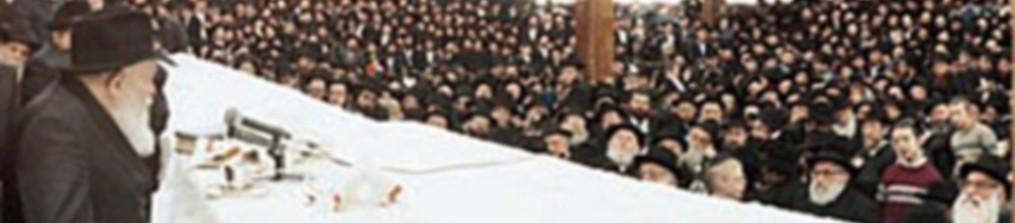
When Gimmel Tammuz comes around, half the farbrengens are on the theme of celebrating “as’chalta d’Geuloh” (the beginning of the Geuloh), and the other half are  on the theme of Hillula.  Come and hear an amazing reconciliation of this widespread confusion:

When Eliyahu HaNovi was preparing to ascend heavenward, he asked his disciple Elisha what he could do for him “before I will be taken from you.”  Elisha responds with a puzzling request: a double-portion of Eliyahu’s prophetic spirit should rest upon him.  Eliyahu replies that this is a difficult request — meaning it is impossible to give more than one has! (Rashi)  Nonetheless, Eliyahu adds that if he (Elisha) will see him being taken from him, then he can fulfill his request.

There are various answers given to the question: how could Eliyahu HaNovi give his disciple more than what he possesses.  The answer we will present here will open our eyes to something amazing: Continue reading
Yud Shevat: “Yohrzeit” of a Living Man

Yud Shevat: “Yohrzeit” of a Living Man

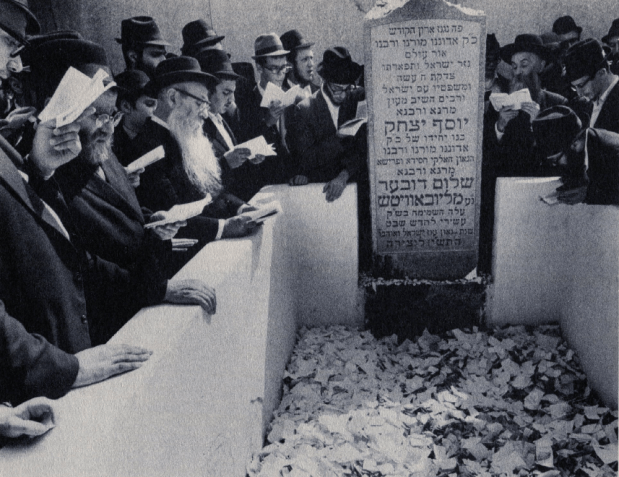
Yud Shevat marks the yohrzeit and Hillula (anniversary of the passing) of the Previous Rebbe in 5710 (1950), the father-in-law of the Rebbe MH”M.  His resting place is in Montefiore Cemetery in Cambria Heights, NY, commonly referred to as “the Ohel”.

The Rebbe, MH”M, oversaw all the details, wrote the text of the gravestone, and even designed the Ohel structure itself (in a way that Kohanim could enter and avoid the halachic prohibition of being in proximity to a grave).  The Rebbe visited the Ohel on a twice-weekly basis, and often more frequently than that.

At the same time, the Rebbe continued to refer to his father-in-law as “Nosi Doreinu”, the leader of the generation, and the “Moshiach of the generation“.  The Rebbe asserted that “hu bachayim” (“he is alive”), like Yaakov Avinu who did not die.  Each year on the Previous Rebbe’s birthday, the Rebbe spoke about his father-in-law’s new chapter of Tehillim, just like anyone else who has a birthday and begins a new year of life.  The Rebbe spoke sharply that his father-in-law does not have an issue of inheritance because he is “fresher and more lively” each passing year.

Yud Shevat is the yohrzeit of a living man, the Ohel is the gravesite of a living man.

If we don’t understand, the problem is ours to ponder and to research.  When we will understand how the gemora can state the “Moshe didn’t die” and “Yaakov didn’t die” and that after his passing Rebbi Yehuda Hanosi would appear at the home of his family on Shabbos night (and made Kiddush for them) — then perhaps we will begin understand the meaning of Yud Shevat.   To understand how eternal life is not contradicted by a yohrzeit nor by a gravestone.

יחי אדוננו מורנו ורבינו מלך המשיח לעולם ועד

Bo-Beshallach: Gathering Tzaddikim For a Greater Elevation

Bo-Beshallach: Gathering Tzaddikim For a Greater Elevation

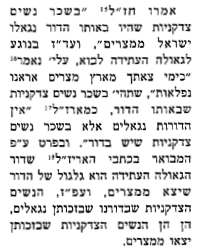
It is brought in the writings of the Arizal that the generation of the future Geuloh is a gilgul (reincarnation) of the generation that came out of Egypt, and according to this, we are redeemed in the merit of the righteous women in our generation, for they themselves are the righteous women in whose merit we came out of Egypt.
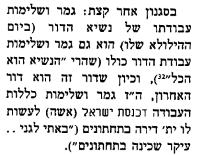
What makes our generation special?  It is rooted in Nosi Hador, the leader of the generation:

The completion and perfection of the avodah (spiritual mission) of the Nosi Hador (on his Yom Hahillula [day of his passing –Yud Shevat]) is the completion and perfection of the avodah of the entire generation (for “the Nosi is everything” [Rashi on Chukas 21:21]), and since this generation is the final generation, then this is the completion and perfection of all of the avodah of Knesses Yisroel (woman) to make a dwelling place down below for Hashem, may He be blessed.

This relates to the concept of the “disappearance (סלוק) of Tzaddikim” (yahrzeit and Hillula) upon the completion and perfection of their avodah, as the verse states “My beloved went down to his garden…to collect roses”, upon which the Midrash expounds: “to hide away (לסלק) the Tzaddikim that are among Yisroel” (which means that they have completed their souls through Torah and Mitzvos [commentaries “Yafeh Kol” and “Yadei Moshe” on this midrash]). More importantly: this “disappearance” (“סלוק”) is for a much greater elevation (incomparably so) which will be in the world of the resurrection, “those who dwell in the dust arise and sing”, and the Tzaddikim (the “roses”) at their head, souls in bodies in this physical world, in the true and complete Geulah.

The Rebbe proceeds to mention the inyan of Continue reading

Bo 5752: G-dliness Revealed Without Histalkus

Bo 5752: G-dliness Revealed Without Histalkus

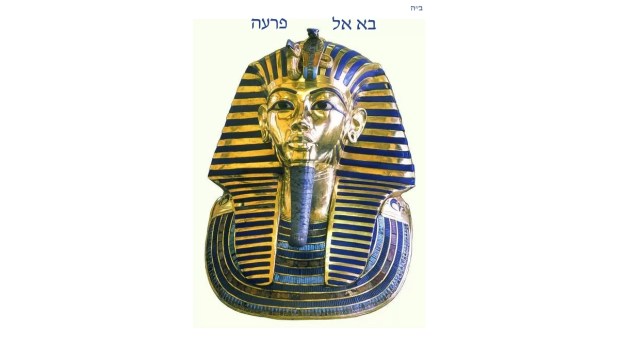
Our parsha begins with Hashem’s instruction to Moshe Rabbeinu “Come to Pharaoh”.  The question is asked: why “come to Pharaoh” and not “go to Pharaoh” (as stated in other verses)?  Furthermore, being that the Torah is eternal, what is the relevance of going to Pharaoh, King of Egypt, when we are standing at the end of golus — long after Egypt was rendered helpless and nothing remains of Pharaoh — at a time when the birurim of the klipah of Pharaoh are finished (as mentioned many times)?

CONFRONTING PHARAOH

The commentaries explain that Moshe Rabbeinu was afraid to go to the inner chambers of Pharaoh, and therefore Hashem said “Come [with Me] to Pharaoh” to ease Moshe’s fear of confronting Pharaoh alone.

However, our question becomes stronger when we learn, based on the Zohar, that the evil Pharaoh that we encountered in Egypt has his source in the “Pharaoh of kedusha (holiness)”, which refers to the revelation of G-dliness.  Why was Moshe afraid to go to the Pharoah of holiness, so much so that he needed a direct command from Hashem to “come” together with Hashem?! Continue reading

Va’era 5752: The Rectification of Death

Va’era 5752: The Rectification of Death

In the second sicha printed for parshas Va’era 5752, the Rebbe elaborates on the statement of the sages that “one who dies on Erev Shabbos, it is a good sign for him”.

The Gemara describes that when R’ Yehuda haNosi took ill, R’ Chiya visited him and found him crying.  He asked him why he was crying (assuming that he was afraid of death).  R’ Chiya proceeded to give him a list of signs that portend well for the fate of a person after death (and their opposite): Dying amidst laughter is a good sign, while crying is a not good; one who dies on Erev Shabbos is a good sign, after Shabbos is not good.  (And several others.)

R’ Yehuda haNosi responded that he was crying (not from a fear of his fate after death, but rather) because of the Torah and Mitzvos he would no longer be able to perform.  Seemingly, the list of good signs brought by R’ Chiya (several of which applied to R’ Yehuda haNosi and were meant to comfort him), do not help the reason given by R’ Yehuda for his crying, because seemingly being unable to perform Torah and Mitzvos after ones passing is not affected by the good signs of how a person passes away.  (The Rebbe brings a proof for this from the story in the Gemara about Dovid haMelech, who asked to pass away on Erev Shabbos (because then one is not subject to “chibut hakever“), and Hashem refused him, telling him that even one day of his Torah learning was more dear to Him.)

Furthermore, the Rebbe asks on this whole discussion a fundamental question:

“How is it possible to truthfully say (in Toras Emes, the Torah of truth) that “one who dies on Erev Shabbos it is a good sign for him” — a “good sign” in relation to the occurrence of death, the opposite of life, the ultimate opposite of good according to Torah?!”  

Since the Torah defines “good” as fulfilling the will of Hashem through the performance of Torah and Mitzvos as a soul in a body, then death is the opposite of Good, Continue reading

Gimmel Tammuz: What is the Moment When the Sun Stands Still?

Gimmel Tammuz: What is the Moment When the Sun Stands Still?

Would you like to know at what moment the sun stood still on Gimmel Tammuz, 5754?

In the sicha of parshas Korach, Gimmel Tammuz, 5751, the Rebbe explains at length the great miracle which occurred on Gimmel Tammuz in the days of Yehoshua bin Nun: the sun and the moon (and the entire cosmic system) stood still.  “Shemesh b’Givon dom“.

This miracle doesn’t seem to have such an obvious connection to the miraculous Geuloh of the Rebbe Rayatz in 5627 (the subject of the Rebbe’s farbrengen), but mashpiim find an obvious connection to the events of Gimmel Tammuz 5754: that just as it was by Yehoshua bin Nun, that he commanded the sun and the moon (and the entire cosmos) to stand still, causing time to “freeze” in order to enable the Yidden to win the war they were waging on their own effort, so too we are in a “frozen moment” where the Rebbe wants us to finish the war to end golus with our own effort.  But there is an even greater insight, as we hope to explain with Hashem’s help.

When Gimmel Tammuz comes around, half the farbrengens are on the theme of celebrating “as’chalta d’Geuloh” (the beginning of the Geuloh), and the other half are  on the theme of Hillula.  Confusion?  Denial?  Delusion?

Come and hear an amazing resolution of what might have seemed to be an irreconcilable dispute about reality.

When Eliyahu HaNovi was preparing to ascend heavenward, he asked Continue reading

Yud Shevat: “Yohrzeit” of a Living Man

Yud Shevat: “Yohrzeit” of a Living Man

Yud Shevat marks the yohrzeit and Hillula (anniversary of the passing) of the Previous Rebbe in 5710 (1950), the father-in-law of the Rebbe MH”M.  His resting place is in Montefiore Cemetery in Cambria Heights, NY, commonly referred to as “the Ohel”.

The Rebbe, MH”M, oversaw all the details, wrote the text of the gravestone, and even designed the Ohel structure itself (in a way that Kohanim could enter and avoid the halachic prohibition of being in proximity to a grave).  The Rebbe visited the Ohel on a twice-weekly basis, and often more frequently than that.

At the same time, the Rebbe continued to refer to his father-in-law as “Nosi Doreinu”, the leader of the generation, and the “Moshiach of the generation“.  The Rebbe asserted that “hu bachayim” (“he is alive”), like Yaakov Avinu who did not die.  Each year on the Previous Rebbe’s birthday, the Rebbe spoke about his father-in-law’s new chapter of Tehillim, just like anyone else who has a birthday and begins a new year of life.  The Rebbe spoke sharply that his father-in-law does not have an issue of inheritance because he is “fresher and more lively” each passing year.

Yud Shevat is the yohrzeit of a living man, the Ohel is the gravesite of a living man.

If we don’t understand, the problem is ours to ponder and to research.  When we will understand how the gemora can state the “Moshe didn’t die” and “Yaakov didn’t die” and that after his passing Rebbi Yehuda Hanosi would appear at the home of his family on Shabbos night (and made Kiddush for them) — then perhaps we will begin understand the meaning of Yud Shevat.   To understand how eternal life is not contradicted by a yohrzeit nor by a gravestone.

יחי אדוננו מורנו ורבינו מלך המשיח לעולם ועד

Bo-Beshallach, 5752: Gathering Tzaddikim For a Greater Elevation

Bo-Beshallach, 5752: Gathering Tzaddikim For a Greater Elevation

tmp_9129-BBsh_011603882386It is brought in the writings of the Arizal that the generation of the future Geuloh is a gilgul (reincarnation) of the generation that came out of Egypt, and according to this, we are redeemed in the merit of the righteous women in our generation, for they themselves are the righteous women in whose merit we came out of Egypt.

What makes our generation special?  It is rooted in Nosi Hador, the leader of the generation:

tmp_9129-BBsh_02-1548525365The completion and perfection of the avodah (spiritual mission) of the Nosi Hador (on his Yom Hahillula [day of his passing –Yud Shevat]) is the completion and perfection of the avodah of the entire generation (for “the Nosi is everything” [Rashi on Chukas 21:21]), and since this generation is the final generation, then this is the completion and perfection of all of the avodah of Knesses Yisroel (woman) to make a dwelling place down below for Hashem, may He be blessed.

This relates to the concept of the “disappearance (סלוק) of Tzaddikim” (yahrzeit and Hillula) upon the completion and perfection of their avodah, as the verse states “My beloved went down to his garden…to collect roses”, upon which the Midrash expounds: “to hide away (לסלק) the Tzaddikim that are among Yisroel” (which means that they have completed their souls through Torah and Mitzvos [commentaries “Yafeh Kol” and “Yadei Moshe” on this midrash]). More importantly: this “disappearance” (“סלוק”) is for a much greater elevation (incomparably so) which will be in the world of the resurrection, “those who dwell in the dust arise and sing”, and the Tzaddikim (the “roses”) at their head, souls in bodies in this physical world, in the true and complete Geulah.

The Rebbe proceeds to mention the inyan of Continue reading

Bo 5752: G-dliness Revealed Without Histalkus

Bo 5752: G-dliness Revealed Without Histalkus

Our parsha begins with Hashem’s instruction to Moshe Rabbeinu “Come to Pharaoh”.  The question is asked: why “come to Pharaoh” and not “go to Pharaoh” (as stated in other verses)?  Furthermore, being that the Torah is eternal, what is the relevance of going to Pharaoh, King of Egypt, when we are standing at the end of golus — long after Egypt was rendered helpless and nothing remains of Pharaoh — at a time when the birurim of the klipah of Pharaoh are finished (as mentioned many times)?

CONFRONTING PHARAOH

The commentaries explain that Moshe Rabbeinu was afraid to go to the inner chambers of Pharaoh, and therefore Hashem said “Come [with Me] to Pharaoh” to ease Moshe’s fear of confronting Pharaoh alone.

However, our question becomes stronger when we learn, based on the Zohar, that the evil Pharaoh that we encountered in Egypt has his source in the “Pharaoh of kedusha (holiness)”, which refers to the revelation of G-dliness.  Why was Moshe afraid to go to the Pharoah of holiness, so much so that he needed a direct command from Hashem to “come” together with Hashem?! Continue reading

Va’era 5752: The Rectification of Death

Va’era 5752: The Rectification of Death

In the second sicha printed for parshas Va’era 5752, the Rebbe elaborates on the statement of the sages that “one who dies on Erev Shabbos, it is a good sign for him”.

The Gemara describes that when R’ Yehuda haNosi took ill, R’ Chiya visited him and found him crying.  He asked him why he was crying (assuming that he was afraid of death).  R’ Chiya proceeded to give him a list of signs that portend well for the fate of a person after death (and their opposite): Dying amidst laughter is a good sign, while crying is a not good; one who dies on Erev Shabbos is a good sign, after Shabbos is not good.  (And several others.)

R’ Yehuda haNosi responded that he was crying (not from a fear of his fate after death, but rather) because of the Torah and Mitzvos he would no longer be able to perform.  Seemingly, the list of good signs brought by R’ Chiya (several of which applied to R’ Yehuda haNosi and were meant to comfort him), do not help the reason given by R’ Yehuda for his crying, because seemingly being unable to perform Torah and Mitzvos after ones passing is not affected by the good signs of how a person passes away.  (The Rebbe brings a proof for this from the story in the Gemara about Dovid haMelech, who asked to pass away on Erev Shabbos (because then one is not subject to “chibut hakever“), and Hashem refused him, telling him that even one day of his Torah learning was more dear to Him.)

Furthermore, the Rebbe asks on this whole discussion a fundamental question:

“How is it possible to truthfully say (in Toras Emes, the Torah of truth) that “one who dies on Erev Shabbos it is a good sign for him” — a “good sign” in relation to the occurrence of death, the opposite of life, the ultimate opposite of good according to Torah?!”  

Since the Torah defines “good” as fulfilling the will of Hashem through the performance of Torah and Mitzvos as a soul in a body, then death is the opposite of Good, Continue reading