Chof Zayin Adar: Revealing the Power of Concealment

Chof Zayin Adar: Revealing the Power of Concealment

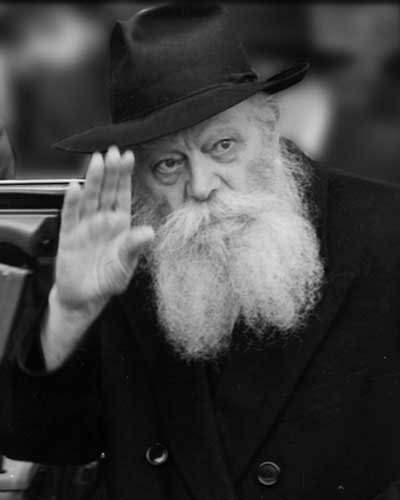
The day 27 Adar (כ”ז אדר ראשון) is not just a date in Lubavitch — it has become a title for the dramatic day that was the beginning of a new reality for Chassidim.  This is the day that the Rebbe had what the doctors call a stroke, and since then we have not heard from the Rebbe.  Gimmel Tammuz is another step, but the “silence” began on this day, Chof Zayin Adar.

The number 27 in Loshon Hakodesh is also the word “זך”, which means refined and purified.  In fact, the Rebbe connects this with the 27th day of the month, in a sicha of Parshas Pekudei 5750 (2 years to the day before the stroke).  Here the Rebbe explains that the 27th of the month possesses the special quality of:

…scouring and clarification and purification, as is written about the time of the Geuloh “many will be clarified and whitened and purified” (Daniel 12:10).  The ultimate scouring and purification is by revealing the intent in the Tzimtzum [contraction of G-dly revelation] and concealment of the Divine name Elokim itself.

This will be understood in light of what the Rebbe explained in the earlier parts of this sicha.  To summarize:

According to Torah, there are 7 names of Hashem that one is forbidden to erase due to their Holiness.  Of them, we primarily relate to two names: YKVK and Elokim, which represent the revelation of G-dliness (the name YKVK) and the concealment of that revelation (the name Elokim).  The name Elokim is the contraction and concealment of G-dly light — in other words: darkness.  We find a verse in Tehillim “the sun and its shield, YKVK Elokim”, explained to mean that Elokim (concealment) is like a shield or a filter that reduces the G-dly revelation of the name YKVK so that the worlds are not nullified out of existence.  According to this, the name Elokim, the contraction and concealment of G-dly light (the darkness), is for the sake of being able to reveal G-dliness within the limited ability of the worlds to receive.  Like smoked glass diminishes the light of the sun but this itself allows a person to be able to gaze at the sun without being blinded.  A concealment which has the intent of actually revealing that which is being concealed.

But, explains the Rebbe, there is another dimension: the quality of Continue reading

Pekudei 5752: The Missing Parsha

The Dvar Malchus begins with Vayikra 5751, but where does it end?  The Parshas Vayakhel sicha is unfinished, and parshas Pekudei is missing (actually, “missing” is one of the definitions of the word*, as in יפקד מושבך).  What is the message?

Firstly, we could take note that the start of our Dvar Malchus cycle is parshas Vayikra.  This hints at the division of the Chasidishe Parsha, Torah Ohr and Likkutei Torah — the former covering Bereishis to Vayakhel, the latter Vayikra through the end.  In an odd turn of hashgacha protis, parshas Pekudei is absent from Torah Ohr (which covers all of Shemos) and appears in the other volume.

But more to the point, the Rebbe generally explains these two parshiyos (Vayakhel and Pekudei, which in many years are read together) as reflecting two distinct angles:

  • Vayakhel means “gathering” and speaks of unity and generality, where the individual elements are subdued in the whole.
  • Pekudei implies making an accounting of the individual elements, and in fact it is here that we learn the details: this many talents of silver, that many hooks and boards, etc.

The fact that our Dvar Malchus has Vayakhel but lacks Pekudei (when looked at in light of the content of all the sichas) implies that from the collective side of things, everything is in a state of Geulah: the aspect of Above to below, the “Nosi is everything” (הנשיא הוא הכל) which nullifies all the elements to the greater whole. You can find this expressed many times in these sichos.

What remains to be completed is the aspect of Pekudei: the completion and perfection of the parts, not as they are nullified to the greater whole but their own intrinsic importance as unique elements. Meaning our avodah, individually.  In the Rebbe’s words: “do all that you can” — you, personally and as an individual!  (Of course, merging the individual effort with the unity of Vayakhel, which is the reason that most years the two parshiyos are read together.)

What is needed now is for each one of us to reveal his spark of Moshiach through our own efforts, and not to expect someone else, not even Melech HaMoshiach, to do it for us. Avodah b’koach atzmo“, to reveal individually what has already been accomplished collectively. To bring — each one of us — Moshiach in actuality!

(Not only will this complete the aspect of “Pekudei”, but it brings about the completion and perfection of “Vayak’hel”, because the “incomplete” Sicha of Vayak’hel hints that even the aspect of “Above to below” remains incomplete as long as the “Pekudei” is lacking.  Completing the task of the mekabel (from below) adds to the perfection of the mashpia (Above).)


* Another meaning of Pekudei is connected with childbearing and the marital union, as in “Hashem remembered Sarah” (to bless her with a child) (ה’ פקד את שרה), and “a man must be intimate with his wife [before seeing out on a lengthy journey]” (יפקוד את אשתו).  In fact, this second meaning is mentioned in the Alter Rebbe’s drush on this parsha in Likkutei Torah, strengthening the connection between the parsha and these words.  This fits as a hint that although Parshas Pekudei is “missing”, and it might seem to some that the “husband” has gone on a journey leaving his wife alone — even so he must “be intimate with his wife” before departing (these Sichos of Dvar Malchus)  and even to the point of making her “pregnant” through this intimacy: pregnant with the true an complete Geuloh.

The Decree is Nullified? But…

The Decree is Nullified? But…

What does it mean that a decree has been nullified?

In various sichos*, including the Dvar Malchus sicha of Tetzaveh, the Rebbe uses the expression that Haman’s decree was nullified (ביטול גזירת המן).  This expression is actually quite surprising: where in the Megillas Esther do we see that the King’s order containing Haman’s evil decree was rescinded?  The Megillah actually tells us the opposite: Haman’s decree was sealed with the King’s ring, and “a writ that is written in the name of the king and sealed with the king’s ring cannot be rescinded.”**  What actually happened was that the a follow-up decree was issued: the right of the Jews “to assemble and to protect themselves, to destroy, to slay, and to cause to perish the entire host of every people and province that oppress them.” (Esther 8:11).  The original decree of Haman remained in full force (“cannot be rescinded”), and still the Rebbe calls this the nullification of Haman’s decree?

If we examine this, we will see how it is very relevant to the Geuloh and the sichos of Dvar Malchus.

The question is: how can Haman’s decree be considered to have been nullified?  There are two aspects to the answer.

Firstly, the intention behind Haman’s decree was nullified via the issuing of the second decree.  By giving the Jews in his Kingdom the right to defend themselves and despoil their oppressors, the original intent of Haman’s decree has been nullified and replaced (even though the decree itself could not be rescinded).  The second way of explaining it is that nothing changed until the actual fighting and victory of the Jews on 13 Adar — up until that point it was all “theoretical”.  We look at the reality on the ground.

The greatness of Purim is explained by the Alter Rebbe in Torah Ohr as connected with the self-sacrifice (mesirus nefesh) of the Yidden over the course of an entire year.  Haman’s decree to “to destroy, kill, and cause to perish all the Jews” was decreed to take place “on one day, on the thirteenth day of the twelfth month, which is the month of Adar”.  From the time Haman’s decree was issued (in Nissan) until the following 13th of Adar was almost a full year.  The sword of destruction was held over their heads for full year, and yet nobody thought to deny his Jewishness in order to save himself — this mesirus nefesh is what the Alter Rebbe praises.

However, the “nullification” of Haman’s decree took place only two months after the original decree was issued: Continue reading

Mishpotim: The Roadmap from 27 Adar and 3 Tammuz to Geuloh

Mishpotim: The Roadmap from 27 Adar and 3 Tammuz to Geuloh

Towards the end of the sicha of parshas Mishpotim, the Rebbe elucidates on the meaning of the monthly dates of 25, 26, 27, 28, and erev Rosh Chodesh.  We can see how the Rebbe is in fact laying out a roadmap for the avoidah of Chassidim after 27 Adar (the medical event that occurred to the Rebbe one month after this sicha, which affected the Rebbe’s speech, etc.): 

  • 25th (כה) and 26th (כו) refer to Birkas Cohanim, giving Divine blessing (ונתינת כח) to the Yidden in the time of golus and also in the Beis Hamikdosh, when Hashem (gematria 26) is “before them” (hinting at having Hashem’s shliach, Nosi Doreinu, in front of us at the time the Sicha was said);
  • 27th (ז”ך) is associated with the verse “shemen zayis zach (ז”ך)”, which serves as the basis of the maamor the “V’Atah Tetzaveh”, which would be distributed by the Rebbe for Purim Koton.  This can be read as a hint at the avoidah in that maamor (being crushed from being in Golus, even when there is spiritual and material abundance) — the “crushing” that would begin on the 27th of the following month of Adar;
  • 28th (כח) is not only “adding strength”, but is also the gematria of “Yechi”, the declaration of Chassidim which took root after 27 Adar (with the repeated encouragement of the Rebbe);
  • 29th is erev Rosh Chodesh, the time of concealment (hinting at Gimmel Tammuz and thereafter) which precedes Rosh Chodesh (which refers to Geuloh).  In the  maamor of Beis Iyar the Rebbe explains how the concealment of the moon is actually the preparation for the unification of the Mashpia and the Mekabel on Rosh Chodesh, and in the maamor of Rosh Chodesh Kislev the Rebbe addresses the great level of the avoidah of the tachton at the time of concealment.

A roadmap of the avoidah from before and after 27 Adar, through Gimmel Tammuz, up to today: the giving of the power to succeed (25th, 26th);   the “crushing” that brings out the essence (27th); the declaration of Yechi (28th); until the complete concealment of erev Rosh Chodesh that brings about the highest avoidah and leads to the true redemption.

Although the trip has been longer than anyone expected, we have received clear directions, and know that the road leads to the true and complete Geuloh, so “step on it”!

21) Kuntres Chof-Beis Shevat: the Infinite Revealed

21) Kuntres Chof-Beis Shevat: the Infinite Revealed

This maamor begins with the verse of parshas Mishpotim: “These are the statues that you shall place before them: if you will acquire a Hebrew servant…”.  The Talmud Yerushalmi says that statues the verse is referring to are the secrets of Torah.  This raises a question, since the term “mishpotim” refers to the basic statutes of the Torah which the human mind can grasp (including the nations of the world), but not the Torah’s hidden secrets.  Furthermore, what is the connection with acquiring a Hebrew servant?

The defining element of a Hebrew servant is his acceptance of the yoke of servitude: his kabbolos ‘ol.  The reason this appears at the beginning of the Torah’s many “mishpotim” (statutes understood by the human mind) is to hint even when we fulfill the Torah’s laws which we understand — we must be fulfilling them [as well] out of kabbolos ‘ol, like a servant who does what he is told without understanding.  After all, the main thing about these laws is that they are the Will of Hashem, and Will is above reason and understanding.  But haven’t we defined the mishpotim as laws which our mind does understand?  In fact, it is not a contradiction: Continue reading

Yud Shevat: “Yohrzeit” of a Living Man

Yud Shevat: “Yohrzeit” of a Living Man

Yud Shevat marks the yohrzeit and Hillula (anniversary of the passing) of the Previous Rebbe in 5710 (1950), the father-in-law of the Rebbe MH”M.  His resting place is in Montefiore Cemetery in Cambria Heights, NY, commonly referred to as “the Ohel”.

The Rebbe, MH”M, oversaw all the details, wrote the text of the gravestone, and even designed the Ohel structure itself (in a way that Kohanim could enter and avoid the halachic prohibition of being in proximity to a grave).  The Rebbe visited the Ohel on a twice-weekly basis, and often more frequently than that.

At the same time, the Rebbe continued to refer to his father-in-law as “Nosi Doreinu”, the leader of the generation, and the “Moshiach of the generation“.  The Rebbe asserted that “hu bachayim” (“he is alive”), like Yaakov Avinu who did not die.  Each year on the Previous Rebbe’s birthday, the Rebbe spoke about his father-in-law’s new chapter of Tehillim, just like anyone else who has a birthday and begins a new year of life.  The Rebbe spoke sharply that his father-in-law does not have an issue of inheritance because he is “fresher and more lively” each passing year.

Yud Shevat is the yohrzeit of a living man, the Ohel is the gravesite of a living man.

If we don’t understand, the problem is ours to ponder and to research.  When we will understand how the gemora can state the “Moshe didn’t die” and “Yaakov didn’t die” and that after his passing Rebbi Yehuda Hanosi would appear at the home of his family on Shabbos night (and made Kiddush for them) — then perhaps we will begin understand the meaning of Yud Shevat.   To understand how eternal life is not contradicted by a yohrzeit nor by a gravestone.

יחי אדוננו מורנו ורבינו מלך המשיח לעולם ועד
Erev Shabbos: Time of Techiyas Hameisim

Erev Shabbos: Time of Techiyas Hameisim

In addition to the radical chiddushim in the plain understanding of the second sicha of Parshas Va’era 5752, one can also find a number of hints and suggestions that give even deeper insight into the ground-shaking ideas the Rebbe is revealing.

In the explanation as to how the “good sign” of one who dies on Erev Shabbos applies to our era (the last quarter of the 6th millennium, “Erev Shabbos” of the entire creation), the Rebbe refers to the concept of “nesira” (“cutting”). This “nesira” describes what happened to Adam Harishon on the day of his creation: Hashem put him to sleep in order to separate Chava. From being a “back to back” entity they gained the ability to be “face to face”, and to bring into existence limitless future generations. While his sleep was one-sixtieth of death, it was completely a positive matter: in order to bring about an immeasurable improvement, specifically the ability to give birth to all future generations.

The Rebbe references the writings of the Arizal as a source for the Kabbalistic explanation of this concept of Nesira. In the writings of the Arizal (Shaar Hapsukim, p.17) one finds that the Arizal writes that “this matter is that the moichin (intellect) which is in the head of Z”A (the six sefiros) go out from it via this sleeping, and then they are given to the female (Malchus).” This brings about that Malchus grows from a point to her full development. Reading this, especially in the original language, seems to hint at the state of affairs after the events of 27 Adar and 3 Tammuz, when the Rebbe (the head — “Rosh Bnei Yisroel”) is not seen, and Malchus (the Jewish souls) receive and develop their potential via the intellectual power bestowed upon them by the head (“now I give it over to you, do all that you can to bring Moshiach in actuality” [sicha of 28 Nissan 5751]).

The Rebbe also brings (footnote 40) from “Kuntres Sfas Emes (at the end of Emes L’Yaakov)” that there is a “nesira” every Rosh Hashana which is the most difficult and requires Continue reading

Didan Notzach and Geuloh

Didan Notzach and Geuloh

The excitement surrounding the Rebbe’s victory of the seforim (5 Teives, 5747) is so intense that it begins even while we are still celebrating Chanukah. The day which the Rebbe referred to as “our side wins” (“Didan Notzach”) is a powerful dor hashvi’i celebration that rightly sweeps through Lubavitch. But beyond the farbrengens and the purchasing of seforim, the events of Didan Notzach and the sichos surrounding it deserve proper attention in order to understand at least something of the true magnitude of the victory. In particular, to recognize how 5 Teives represents the culmination in this physical world of the battle that has been going on since the times of the Alter Rebbe — the battle to bring the Geuloh.

The War of the Alter Rebbe

Hey Teives arrives a few days after the end of the month of Kislev, when everyone is still saturated with the story of the kitrug against the Alter Rebbe and against spreading Chassidus, Continue reading

Chayei Sara: The Message Beyond the Sicha

Chayei Sara: The Message Beyond the Sicha

As we learned in the Dvar Malchus sicha of parshas Chayei Sarah, this parsha contains the first shilchus in Torah and that in our times shlichus has a new element: the acceptance and “kabbalas panim” of Moshiach.  In most years, it comes out to be the time when the International Gathering of the Rebbe’s shluchim is held.  The Rebbe often brings the words of the Shelah that everything is by hasgacha protis, and thus days and events which fall out near the Parsha are connected with that Parsha.  The Rebbe also speaks about the connection between the Torah portion and the daily section of Tanya, Tehillim, and Rambam.

If we look, we see a wonderful and eye-opening hasgacha protis as regards the Kinus Hashluchim.

When the Kinus Hashluchim falls out on parshas Chayei Sarah, thousands of Shluchim find themselves at the Kinus on Shabbos listening not only to the story of Eliezer, the servant of Avraham Avinu (the first shliach in the Torah), but also, of course, to the haftorah.  The haftorah for parshas Chayei Sarah (Melachim I, 1:1-31) describes the attempt by Adoniyahu, son of Dovid Hamelech, to usurp his aged father’s throne and rule in his father’s place instead of his brother Shlomo (Solomon, whom Dovid Hamelech had chosen as his successor).  Dovid is informed what his son is doing:

[Adoniyahu] has gone down this day and has slain oxen and fatlings and sheep in abundance, and he called all the King’s sons, and the officers of the army, and Evyassar the priest, and behold they eat and drink before him, and they said, “Long live King Adoniyahu” (“Yechi Hamelech Adoniyahu“).

The culmination of his attempt to usurp the throne is the people’s acceptance of his Kingship by declaring “Yechi Hamelech”!  Dovid Hamelech swears that Shlomo shall reign after him, and the haftorah ends with the words  “Let my lord King David live forever” (“Yechi Adoni Hamelech Dovid L’olam“).

The importance of declaring “Yechi Hamelech” is explained by the Rebbe in the sicha of Beis Nissan, 5748 (1988)*, where the Rebbe brings the Rambam’s description of the king of the nation as the heart of the nation.  Just as the heart pumps blood, which is life, to all of the limbs of the body, giving life to the body, proper circulation is dependent on the limbs, which must also return the blood to the heart.  This, explains the Rebbe, is the people’s declaration of “Yechi Hamelech”the limbs (the people) returning life-blood to the heart (the king).

Now see more hashagacha protis:

In the portion of Tanya that is learned around this time (Igeret Hakodesh 31), the Alter Rebbe writes about the circulation of the blood in spiritual terms:

The cause of illness or health lies in the distribution and flow of the life-force from the heart to all the organs, [this life-force] being vested in the blood of life which flows from the heart to all the organs; and the spirit of life and the blood circulates all around into all the limbs, through the veins that are embedded in them, and returns to the heart.  Now, if the circulation and flow of this spirit of life is always as it should be…then the individual is perfectly healthy.  …But should there be any disorder in any place, restraining, hindering or reducing the circulation and flow of the blood with the spirit of life vested in it, then this bond — which connects all the limbs with the heart by means of this circulation — is severed (which would extinguish life), or diminished, in which case the individual will fall ill and sick (May G‑d protect us!)

To summarize: On the Shabbos day when all the Shluchim of the Rebbe are gathered together to discuss the goals and techniques of their Shlichus, Divine Providence brings about that:

  1. The “latest word” from the Rebbe on this parsha the Rebbe informs us what is the new element in shlichus in our times: that in each generation, there is an individual who is fit to be Moshiach and “when the time comes, G‑d will reveal Himself to him and send him.” The service at present is thus to be prepared to actually accept Moshiach and create a climate in which he can accomplish his mission and redeem Israel from the exile;
  2. The haftorah concludes with the declaration “Yechi Hamelech” (describing how “Yechi Adoni Hamelech Dovid L’olam” negates and prevents the crowning of the “usurper to the throne” as expressed in the undesirable declaration “Yechi Hamelech Adoniahu”); and,
  3. The daily section of Tanya teaches that spiritual health derives from proper circulation, when the limbs return the flow of blood to the heart — the exact metaphor that the Rebbe uses to explain the declaration “Yechi Hamelech”!

For those who need a hint in this matter, Hashgacha Protis has provided it.

We conclude with a brocha that every single one of the Rebbe’s shluchim (and, as the Rebbe says in the sicha, every Jew in our generation has been appointed a shliach of the [Previous] Rebbe) should be healthy in all their limbs and in their heart, both physically and spiritually, and that they should be successful in fulfilling the shlichus of the one who sent them, including and especially the “new element” that has become the “gateway” for the entire shlichusto greet Moshiach Tzidkeinu in actual reality, through the final words of the haftorah as they apply in our generation, the generation of Moshiach (a descendant of Dovid through his son Shlomo**):

Let our Master our Teacher and our Rebbe, Melech Hamoshiach live forever!

* subtitled video

** Rambam, 13 Principles of Faith, #12 (See the original sicha and also questions and answers by Rabbi Shlomo Majeski)

Noach “Saw a New World”

Noach “Saw a New World”

The opening verse in Parshas Noach says that “נֹ֗חַ אִ֥ישׁ צַדִּ֛יק תָּמִ֥ים הָיָ֖ה בְּדֹֽרֹתָ֑יו” “Noach was a righteous man, he was perfect in his generations”.  The Midrash on this posuk (Midrash Rabba Noach, 30:8) says in the name of R’ Levi: “Whoever it is said about them ‘he was’ saw a new world.”  The Midrash then enumerates five individuals, the first being Noach, citing that when he and his family exited the ark, they saw a new world.

In what sense did Noach see a new world?  Obviously, it was the same Earth, although following the waters of the flood surely the surface of the Earth looked different than it did previously.  And of course, the evildoers who populated the Earth previously were no longer around.  But can we really say that this is what it means to see a “new world”?

The Rebbe, in the sicha of Noach 5752, clues us in to what is being implied here according to pnimiyus haTorah:

In the creation of the world, the Torah refers to Hashem using two names: YKVK and Elokim.  YKVK is G-dliness that is above the world.  Elokim is the name which indicates concealment, allowing independent-feeling worlds to come into existence.  In the words of Tehillim: “The Sun and a shield [these are the names] YKVK [and] Elokim”.  The name YKVK is the emanation of worlds, the infinite “light” of the worlds, and Elokim is the “shield” or “filter” that conceals the light in order that finite worlds can come into existence.

“That in the reality of the world as it is created via the name Elokim is revealed the name YKVK, until it is recognizable in a revealed way that “YKVK is Elokim” (הוי’ הוא האלקים), that in truth the contraction and concealment (Elokim)  are really the name YKVK. הצמצום וההסתר (אלקים) הוא לאמיתתו שם הוי-ה

(Sicha Parshas Noach, 5752)

Meaning that the world is still the same world that was created via the name Elokim, only that it becomes revealed that really even this name Elokim is just a reduction of the light of YKVK, but not something independent or separate.

So the “new world” that Noach saw was not a new form of creation, but a new perception: he could now perceive how the world of Elokim is really a world of YKVK.  It was recognizable and revealed to him.  He saw the same world but in an entirely new way, thus he saw a “new world”.

We can use this to understand many things the Rebbe is trying to tell us in these Dvar Malchus sichos, giving us the tools to “open our eyes”, including the subject of last week’s sicha regarding “servitude to the nations”.  Over there the Rebbe explains how there is servitude to the nations in the time of Golus, but that this servitude does not extend to our neshomas, nor to our bodies as regards matters of Torah and mitzvos.  And even those things where we must follow the law of the land because “dina d’malchusa dina” (the law of the land is the law) is not because we are in servitude to the nations of the world, but because this is how Hashem wants it to be in the time of Golus.

In those short paragraphs, the Rebbe has opened our eyes to a “new world”: a world where there is no servitude to the nations, which is the definition of (the first period of) the Days of Moshiach!  In other words, if one is in a personal Golus and in fact believes that the Jewish people is in servitude to the nations, then in fact he is in such a state, r”l.  But when one internalizes what the Rebbe says there, he discovers that not only our neshomas and our bodies (as regards performing Torah and Mitzvos) are not in servitude to the nations, even those areas where we do go according to their decisions (monetary matters and the like) — this is not due to any form of “servitude” but rather it is Hashem’s will!  So by following civil monetary law, we are in fact fulfilling Hashem’s will no less than in other halachic matters!  Externally, it is the same Golus, but the Rebbe has given us the tools to “see through” the darkness of Golus and realize that the concealment of the name Elokim (Golus) is really coming from YKVK — a new world!

This is one example of many to be found in Chassidus in general, the Rebbe’s teachings in particular, and the Dvar Malchus sichos most especially.  By making these changes in our perception and understanding of the world, we place ourselves in a state of Geulah even while the world “continues in its natural way”.  This is the beginning of Yemos Hamoshiach, each one coming to the realization based on his own efforts to internalize these concepts.