Va’era 5752: The Rectification of Death

Va’era 5752: The Rectification of Death

In the second sicha printed for parshas Va’era 5752, the Rebbe elaborates on the statement of the sages that “one who dies on Erev Shabbos, it is a good sign for him”.

The Gemara describes that when R’ Yehuda haNosi took ill, R’ Chiya visited him and found him crying.  He asked him why he was crying (assuming that he was afraid of death).  R’ Chiya proceeded to give him a list of signs that portend well for the fate of a person after death (and their opposite): Dying amidst laughter is a good sign, while crying is a not good; one who dies on Erev Shabbos is a good sign, after Shabbos is not good.  (And several others.)

R’ Yehuda haNosi responded that he was crying (not from a fear of his fate after death, but rather) because of the Torah and Mitzvos he would no longer be able to perform.  Seemingly, the list of good signs brought by R’ Chiya (several of which applied to R’ Yehuda haNosi and were meant to comfort him), do not help the reason given by R’ Yehuda for his crying, because seemingly being unable to perform Torah and Mitzvos after ones passing is not affected by the good signs of how a person passes away.  (The Rebbe brings a proof for this from the story in the Gemara about Dovid haMelech, who asked to pass away on Erev Shabbos (because then one is not subject to “chibut hakever“), and Hashem refused him, telling him that even one day of his Torah learning was more dear to Him.)

Furthermore, the Rebbe asks on this whole discussion a fundamental question:

“How is it possible to truthfully say (in Toras Emes, the Torah of truth) that “one who dies on Erev Shabbos it is a good sign for him” — a “good sign” in relation to the occurrence of death, the opposite of life, the ultimate opposite of good according to Torah?!”  

Since the Torah defines “good” as fulfilling the will of Hashem through the performance of Torah and Mitzvos as a soul in a body, then death is the opposite of Good, Continue reading

Shemos 5752: To Bring to the Days of Moshiach

Shemos 5752: To Bring to the Days of Moshiach

This parsha, following the passing of Yaakov, Yosef, and the brothers, is the beginning of a new era in the history of Bnei Yisroel — the beginning of the Egyptian exile.  “These are the names of Bnei Yisroel who came to Egypt” — the first exile.

The midrash states that the reason for the subsequent redemption from Egypt was “due to the fact that [Bnei Yisroel] did not change their names…they went down as Reuvain and Shimon and they came up as Reuvain and Shimon.”  This is a comment on the name (and initial verse) of our parsha: Shemos (meaning, “names”), which refers to the beginning of the exile in Egypt, as mentioned.

The Rebbe derives from this that the verse “these are the names of Bnei Yisroel who came to Egypt” is also emphasizing the merit for which they were ultimately redeemed from Egypt (“that they didn’t change their names”).  In other words — it is referring both to the beginning of the golus and also to the future Geuloh from that golus.

The whole idea of “coming to Egypt” is in truth the “Geuloh of Yisroel”.  The descent which occurs in the meantime [until the Geuloh comes] is on the superficial level (בחיצוניות), but on a deeper level (בפנימיות), the descent itself is (not only for the sake that through it will come the ascent that occurs through the redemption from Egypt, but more than that–) a part of the ascent and the Geuloh itself, until we reach the ascent of the true and complete Geuloh…the future Geuloh.

In other words, not only is there a “descent for the sake of an ascent”, which makes the descent worthwhile in the end; here the Rebbe is saying something much greater: the descent itself is already part of the ultimate ascent!

At this point, the Rebbe turns to explain the familiar statement: Continue reading

Pekudei 5752: The Missing Parsha

The Dvar Malchus begins with Vayikra 5751, but where does it end?  The Parshas Vayakhel sicha is unfinished, and parshas Pekudei is missing (actually, “missing” is one of the definitions of the word*, as in יפקד מושבך).  What is the message?

Firstly, we could take note that the start of our Dvar Malchus cycle is parshas Vayikra.  This hints at the division of the Chasidishe Parsha, Torah Ohr and Likkutei Torah — the former covering Bereishis to Vayakhel, the latter Vayikra through the end.  In an odd turn of hashgacha protis, parshas Pekudei is absent from Torah Ohr (which covers all of Shemos) and appears in the other volume.

But more to the point, the Rebbe generally explains these two parshiyos (Vayakhel and Pekudei, which in many years are read together) as reflecting two distinct angles:

  • Vayakhel means “gathering” and speaks of unity and generality, where the individual elements are subdued in the whole.
  • Pekudei implies making an accounting of the individual elements, and in fact it is here that we learn the details: this many talents of silver, that many hooks and boards, etc.

The fact that our Dvar Malchus has Vayakhel but lacks Pekudei (when looked at in light of the content of all the sichas) implies that from the collective side of things, everything is in a state of Geulah: the aspect of Above to below, the “Nosi is everything” (הנשיא הוא הכל) which nullifies all the elements to the greater whole. You can find this expressed many times in these sichos.

What remains to be completed is the aspect of Pekudei: the completion and perfection of the parts, not as they are nullified to the greater whole but their own intrinsic importance as unique elements. Meaning our avodah, individually.  In the Rebbe’s words: “do all that you can” — you, personally and as an individual!  (Of course, merging the individual effort with the unity of Vayakhel, which is the reason that most years the two parshiyos are read together.)

What is needed now is for each one of us to reveal his spark of Moshiach through our own efforts, and not to expect someone else, not even Melech HaMoshiach, to do it for us. Avodah b’koach atzmo“, to reveal individually what has already been accomplished collectively. To bring — each one of us — Moshiach in actuality!

(Not only will this complete the aspect of “Pekudei”, but it brings about the completion and perfection of “Vayak’hel”, because the “incomplete” Sicha of Vayak’hel hints that even the aspect of “Above to below” remains incomplete as long as the “Pekudei” is lacking.  Completing the task of the mekabel (from below) adds to the perfection of the mashpia (Above).)


* Another meaning of Pekudei is connected with childbearing and the marital union, as in “Hashem remembered Sarah” (to bless her with a child) (ה’ פקד את שרה), and “a man must be intimate with his wife [before seeing out on a lengthy journey]” (יפקוד את אשתו).  In fact, this second meaning is mentioned in the Alter Rebbe’s drush on this parsha in Likkutei Torah, strengthening the connection between the parsha and these words.  This fits as a hint that although Parshas Pekudei is “missing”, and it might seem to some that the “husband” has gone on a journey leaving his wife alone — even so he must “be intimate with his wife” before departing (these Sichos of Dvar Malchus)  and even to the point of making her “pregnant” through this intimacy: pregnant with the true an complete Geuloh.

Chof Zayin Adar: Revealing the Power of Concealment

The day 27 Adar (כ”ז אדר ראשון) is not just a date in Lubavitch — it has become a title for the dramatic day that was the beginning of a new reality for Chassidim.  This is the day that the Rebbe had what the doctors call a stroke, and since then we have not heard from the Rebbe.  Gimmel Tammuz is another step, but the “silence” began on this day, Chof Zayin Adar.

The number 27 in Loshon Hakodesh is also the word “זך”, which means refined and purified.  In fact, the Rebbe connects this with the 27th day of the month, in a sicha of Parshas Pekudei 5750 (2 years to the day before the stroke).  Here the Rebbe explains that the 27th of the month possesses the special quality of:

…scouring and clarification and purification, as is written about the time of the Geuloh “many will be clarified and whitened and purified” (Daniel 12:10).  The ultimate scouring and purification is by revealing the intent in the Tzimtzum [contraction of G-dly revelation] and concealment of the Divine name Elokim itself.

This will be understood in light of what the Rebbe explained in the earlier parts of this sicha.  To summarize:

According to Torah, there are 7 names of Hashem that one is forbidden to erase due to their Holiness.  Of them, we primarily relate to two names: YKVK and Elokim, which represent the revelation of G-dliness (the name YKVK) and the concealment of that revelation (the name Elokim).  The name Elokim is the contraction and concealment of G-dly light — in other words: darkness.  We find a verse in Tehillim “the sun and its shield, YKVK Elokim”, explained to mean that Elokim (concealment) is like a shield or a filter that reduces the G-dly revelation of the name YKVK so that the worlds are not nullified out of existence.  According to this, the name Elokim, the contraction and concealment of G-dly light (the darkness), is for the sake of being able to reveal G-dliness within the limited ability of the worlds to receive.  Like smoked glass diminishes the light of the sun but this itself allows a person to be able to gaze at the sun without being blinded.  A concealment which has the intent of actually revealing that which is being concealed.

But, explains the Rebbe, there is another dimension: the quality of Tzimtzum (contraction) in and of itself — that contraction and concealment show the completeness of the unlimited Holy One, blessed be He, that He is truly unlimited: He is so “unlimited” that he can also limit Himself!  He possesses not only the power of unlimited revelation, but also the power of concealment and limitation.  Explains the Rebbe, this derives from the level of Hashem’s Essence עצמותו where the power of infinite revelation can co-exist with His power of limitation and concealment (regardless of the fact that they are opposites).  (See the maamor השם נפשנו בחיים printed for Gimmel Tammuz 5749, where it states that the inyan of Tzimtzum for its own sake will only be revealed in the Time to Come.)  Thus, Geuloh is:

…not only the nullification of the withdrawal and concealment (העלם והסתר) of the world by revealing that the intent of the contraction and concealment is for the sake of revelation.  Rather, more than this: that we reveal the intent of the withdrawal and concealment itself…not only do we nullify the inyan of golus by revealing that the concealment [of the name Elokim] is for the sake of revelation, but more than this: that the golus itself is clarified and is transformed to Geuloh, since we reveal the intent of the Tzimtzum itself, the power of concealment (which is above revelation).

These are very deep concepts, we are not attempting to do them justice in this brief article.  But we will try to bring them down to simpler words, which will help us relate to the event of Chof Zayin Adar over 30 years ago (and its continuation to the present time): This second aspect of the Divine name Elokim (the name of darkness and concealment) is it’s inherent value, not as it brings about or leads to something else.  It is not only that the darkness as a vehicle for revealing the light, and in such a case we must nullify the darkness in order to reach a greater light.  Rather, it is the lofty intent within the darkness itself — the power of Hashem’s Essence to be limited.  What does that mean?  That we identify and recognize Hashem in the darkness just as we do through His revelations!  The darkness remains darkness, but it ceases to darken because we recognize that the darkness itself is part of Hashem no less than light and revelation.  “The darkness is as light” (כחשיכה כאורה).  This is even higher than crying out over the darkness (as the Rebbe explains in the maamor (בלילה ההוא, מלוקט ד) that was edited and released for publication on Purim, 5750, two weeks earlier than this sicha).

In practical terms, we could say as follows:

Following the stroke that occurred Chof Zayin Adar, 5752, the Chassidim were worried, davening and saying Tehilim for the Rebbe’s health.  There was a great and sudden darkness over Lubavitch.  No farbrengens with the Rebbe, no Sunday dollars.  Gimmel Tammuz was another step into darkness and concealment.  Yet, in the years since then, when the concealment is seemingly greater than before, there has been revealed an even deeper connection to the Rebbe.  Previously, the connection expressed itself through the way the Rebbe revealed himself.  Then there was a concealment, and there was a response of crying out over the concealment.  But since then, the hiskashrus has evolved and come to approach the second level the Rebbe mentions: where the concealment itself does not conceal.

What does this mean in practical terms?

That the fact that we do not see or hear the Rebbe for so many years (and so we cry out to Hashem “ad mosai?!”) nonetheless does not obscure our ability to recognize the Rebbe’s presence and influence.  This comes from Atzmus, meaning our hiskashrus today is coming from Etzem Hanefesh, where the concealment and the darkness themselves are converted to Geuloh — that the present situation comes to show the power of concealment, which by the Rebbe means that we come to recognize that he is just as effective in his role of Nosi Hador and Moshiach Tzidkeinu when we don’t see as when we do see, when we don’t hear as when we do hear.  So many years have passed and yet not only is the hiskashrus of Chassidim still strong, but each year there are more and more mekushorim, many of whom were not even born before Chof-Zayin Adar!  “The darkness is as light” (כחשיכה כאורה), the power of concealment which is above revelation.

Nothing was lost on Chof-Zayin Adar.  On the contrary: we set out on a path of establishing a greater level of connection with the Rebbe, a path upon which we proceed to this very day.  We do not need to cry out over the darkness, but rather we must “remind” Hashem that just as the power of concealment has an intent of its own, so does the power of revelation!  We can now, after Chof Zayin Adar, appreciate the power of concealment (which doesn’t actually conceal, but reveals a deeper level), and therefore we beseech Hashem that we should also have complete revelation: the true and complete Geuloh with the Rebbe Melech Hamoshiach, and we will gaze upon the beauty of our King!

Yechi Adoneinu Moreinu v’Rabbeinu Melech HaMoshiach L’olam Vo’ed!
Vayakhel 5752: Ingathering of the Exiles Has Begun

The sicha that was said on Parshas Vayakhel, 5752 was never properly edited, due to the event of the following Monday,  27 Adar.  (On 27 Adar the Rebbe had a stroke while visiting the Ohel of his father-in-law, the Previous Rebbe).  Nevertheless, the brief overview (“rashei dvorim“) that was written up and presented to the Rebbe after Shabbos was (uncharacteristically) marked up by the Rebbe.  Thus, it passed before the Rebbe, and what needed correction was corrected.

In this overview of the sicha, it says:

…we see in recent years how there has been a “vayakhel” (gathering) in the simple meaning of the word — the ingathering of the exiles (“kibbutz goliyos”) of bnei Yisroel from the entire world, who are going up to Eretz Hakodesh.  This aliyah is incomparable to those that once were in the previous generations.  [To point out that Rabboseinu Nessienu were not in the Holy Land, not even for a visit, and even the trip taken by the Friedicker Rebbe was because he was unable to visit the resting places of his predecessors in Rostov, Lubavitch, and the like].

For all the prior years of the Rebbe’s leadership, the Rebbe was adamant in saying that Jews going to Israel is not the ingathering of the exiles (“kibbutz goliyos”), because the ingathering of the exiles must be done by Moshiach.  But here the Rebbe in fact calls it “kibbutz Goliyos”!?

We can say that what has changed is that now the aliyah — the Jews who were leaving the former Soviet Union, in particular — was coming about through Moshiach himself, and thus it does fulfill the requirement of Kibbutz Goliyos!

It should be noted that this expression, “Kibbutz Goliyos”, is of monumental significance.  One of the requirements of Moshiach to be identified as “certainly Moshiach” is that he gathers in the exiles.  As the Rambam says: “if he builds the Mikdash in its place and ingathers the exiles we know with certainty that he is Moshiach.”

In addition to this, the Rebbe explains in the Kuntreis Rabbeinu sh’b’Bavel that the Rambam rules that Moshiach “builds the Mikdash in its place”, a phrasing which allows itself to be read as “in his place”, referring to the small mikdash (מקדש מעט) in the time of golus, before the Geulah.  How “literally” to understand the Rebbe’s explanation there is strengthened by our sicha about Kibbutz Goliyos, because the Rebbe explains elsewhere (the Chassidic discourse “Gadol Yehiyeh Kavod Habayis Hazeh…”):

the Redemption, (the ingathering of the exiles,) will take place after building the Beis HaMikdash…this dimension comes about through the Third Beis HaMikdash…For the Third Beis HaMikdash, includes all the influences and qualities that will later be revealed.

Meaning that the Ingathering of the Exiles is fueled by the 3rd Beis Hamikdash, and if the Rebbe can say that it has begun then there must be a Mikdash built that is bringing it about.   Thus, we realize that 770 Eastern Parkway is not only the place where the Mikdash will be revealed in the future, but in fact it is presently — now — the Beis Hamidash in his place (the place of Moshiach before the Geuloh, in accordance with the halachic ruling of the Rambam)!  Because if the 3rd Beis Hamikdash was not present, there could not be Kibbutz Goliyos (as explained in the maamar quoted above).

Ki Sisa, 5752: Lift Up the Head of Bnei Yisroel

The sicha of parshas Ki Sisa, 5752 is the last fully-edited sicha we received from the Rebbe until now.  The Rebbe also farbrenged on Shabbos Veyakhel, the following week, but due to the stroke that sicha was not edited by the Rebbe (although the Rebbe did read and, uncharacteristically, comment on the “rashei dvorim” (overview) that was written up Motzie Shabbos).*

In this sicha the Rebbe perhaps hints at the events of 27 Adar I, and later Gimmel Tammuz by speaking of the descent for the sake of ascent and mentioning the verse “for a fleeting moment I abandoned you”:

Since this descent is merely a means to lead to a greater ascent, it is brief — to borrow a phrase “for a fleeting moment I abandoned you.” The ascent which follows it, by contrast, is eternal. This pattern will be expressed in the ultimate Redemption. It has been preceded by an awesome descent, this present exile, but it will lead to a great and eternal ascent, “a redemption never to be followed by exile.”

The sicha, as the Parsha, speaks of the sin of the Golden Calf, and although the Rebbe doesn’t mention this we know that the sin came about because Moshe Rabbeinu failed to come back down from the mountain at the time the Bnei Yisroel thought he had said.  Because they lost faith in Moshe they sinned with the Golden Calf.  As mentioned in various sources, the period when Moshiach is concealed is, among other things, an opportunity to rectify this failure–by waiting for Moshiach and not losing faith.

There is also a reference to the bodily refinement that Moshe underwent on the mountain, and that once there is no need for further refining of the world (“avodas habirurim is finished”), then Moshe can “drop the mask” which he wore and reveal his true essence.  A strong hint, perhaps, to how we relate to the Rebbe in this period of, apparent, concealment:

…this revelation [of the 2nd tablets which Moshe himself carved] reflects a fusion of materiality and spirituality which brought about an elevation within the physical person of Moshe himself causing his face to shine.  Indeed, this revelation was so great that it was necessary for Moshe to place a veil over his face. This veil was necessary, however, only when Moshe and the Jewish people were involved with worldly matters, the refinement of the world at large. When Moshe communicated G‑d’s word to the people, he would remove this veil.

Moreover, even in regard to the world at large, this concealment is not a permanent factor. Ultimately, through the Jews’ service in refining and elevating the world, they make it possible for there to be a revelation of G‑dliness within the context of our worldly environment. This process will be consummated in the Era of the Redemption when “Your Master will no longer conceal Himself and your eyes will behold your Master,” “the glory of G‑d will be revealed and all flesh will see.”

Furthermore, the verse reads “Ki Sisa es rosh bnei Yisroel”, which is translated as a command to “elevate the heads of bnei Yisroel”.  But “rosh bnei Yisroel” (as the Rebbe states elsewhere, but not in this sicha) is an acronym for “Rebbe”, meaning that the verse can be read “elevate the Rebbe…“!

The sicha also refers several times to the final verse of the Torah (“in the eyes of all of Israel”).  The simple reason is because Rashi on that verse mentions the breaking of the first tablets, which occurs in our parsha.  But, on a deeper level, we see two hints:

  1. A hint to this being the “final sicha” of the Dvar Malchus cycle, which is itself a taste of the “new Torah of Moshiach”, as discussed in this post, that the “first sicha” of the cycle begins with a discussion of Bereishis.
  2. A hint to the idea that all of the revelations of the Geulah, which the Rebbe says have already come into the world, are not in a state of completion until they are visible and revealed “in the eyes of all of Israel”.  The Torah as a whole, and this “Torah of Moshiach” of Dvar Malchus, concludes when the Jewish people, with their own effort, bring about that the Geulah, which is already here, becomes revealed to their eyes.  In other words: “all that remains is to open up the eyes”.

* Interesting to note that there were two times the Rebbe was concealed from Chassidim.  The first occurred in 5738 due to the heart attack, the second on 27 Adar I, 5752 due to a stroke.  A fourteen year difference (gematria “Chabad”), and (in simple, physical terms as they appear to us) a progression from a “heart-related” issue (cardiac arrest) to a “brain-related” issue (stroke).

Thoughts on the 22 Shevat Sicha

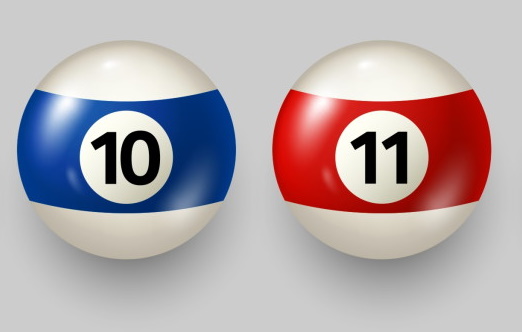
In the Sicha of 22 Shevat (which we summarize in the article 22 Shevat: The Ultimate Unification) the Rebbe explains the 3 stages that correspond to the dates 10, 11 and 22 Shevat.  Briefly, they are the stages of:

a) Preparing the recipient (“10”) to receive the great revelation;

b) The initial revelation of “11” itself.  It is in a way where the recipient is elevated up to the level of “11” (rather than integrating it into is own reality). It remains separate from the “11”, but also loses its importance as it is subsumed into the matters of the “11”; and,

c) The ultimate unity, when the “11” is fully revealed in the reality of and in the inyonim of the “10”; they become as one, yet the “10” is neither nullified out of existence nor does it lose its importance.

One can learn these deep concepts and be left wondering what they mean practically.  We will attempt to bring these ideas down, and illustrate what they mean (בדרך אפשר) in the relationship of Chassidim to the Rebbe.

3 Stages in the Avoidah of Chassidim

1)Until Yud Shevat the Chassidim had the avoidah to work on themselves, seichel and midos, to prepare themselves for the Geuloh (עמדו הכן כולכם).  This was the avoidah of the 6th generation, where the difference in the roles of the Chassidim and the Rebbe was emphasized. This avoidah, the preparation of the recipient (“10”),  was was completed upon the histalkus of the Previous Rebbe on Yud Shevat.

2) Beginning with 11 Shevat, the Nesius of the Rebbe מה”מ, the avoidah of the 7th generation begins: the emphasis is not on one’s avoidah with himself, but on one’s task to influence the world around.  This is most pronounced in the inyan of shlichus, where the shliach puts aside the shleimos of his personal avoidah in order to become an emissary and representative of the Rebbe מה”מ.  This matches what the Rebbe says about the “10” being subsumed into the “11”: the shliach’s personal life and interests are subsumed into the Rebbe’s concerns. The shliach and the one who sent him now share a common avoidah, more so than in the previous generation, but it is really the avoidah of the Rebbe into which the shliach is subsumed and thus they remain 2 separate entities;

3) After 22 Shevat the emphasis on Moshiach shifts into high gear, ascending from year to year, with an increasing emphasis on the avoidah being “from their own effort” (בכֹח עצמם), and amazing explanations of the revelation of Atzmus and the unification of the mashpia and the mekabel.  Of course, all this takes on a new dimension after Gimmel Tammuz, when Chassidim are “forced” to proceed without “giluyim” and the Rebbe’s inyonim are now their own inyonim.  The border between Rebbe and chosid becomes increasingly obscured as the Rebbe becomes more and more revealed in the actions of the chosid, yet the reality of the chosid is not nullified.

These thoughts are for your consideration, your own comments are welcome!