Matos-Masei 5751: The Reason For Golus is Rectified!

Matos-Masei 5751: The Reason For Golus is Rectified!

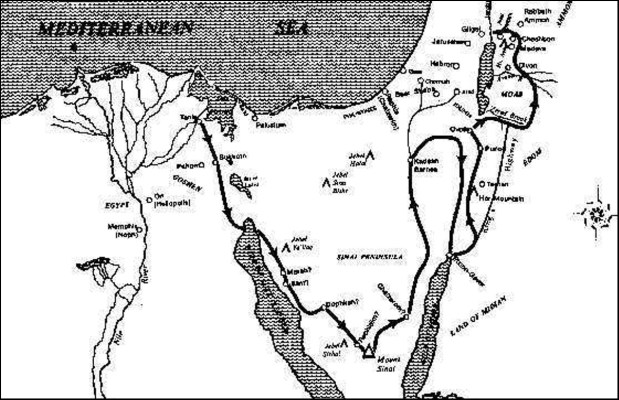
These parshiyos (read together in many years), contain the 42 journeys of Bnei Yisroel in the midbar prior to entering Eretz Yisroel.  These 42 journeys represent our sojourn in golus (both collectively, and individually).  Upon completing these journeys, the birurim of exile, we find ourselves holding at “Yarden Yericho” prepared to enter the land.

This is also the final reading from sefer Bamidbar, upon which the custom is to say “Chazak! Chazak! V’Nischazek!” (a declaration something along the lines of “be strong”).  The Rebbe connects Continue reading

Pinchas 5751 — A Deeper Look at a “Pnimi”

Pinchas 5751 — A Deeper Look at a “Pnimi”

In this sicha the Rebbe explains that we bring the Geuloh through the avoidah of “making ‘here’ Eretz Yisroel” (מאך דא ארץ ישראל).  This is associated with the avoidah of being a “Pnimi” — one who is completely involved in what he is doing.  The instruction of “making ‘here’ Eretz Yisroel” is explained by the Rebbe: “even when he is found ‘here’, in chutz la’aretz, and in the time of golus — one must make ‘Eretz Yisroel’ [while he is] ‘here’ — in this place and time…seemingly: according to Torah ‘here’ (chutz la’aretz) is not ‘Eretz Yisroel’!”

The way to make “here” (which is not “Eretz Yisroel”) into “Eretz Yisroel” is by being totally involved in the avoidah of the moment, without thinking about what it will lead to, whether it is the main thing or a preparation for something else.  “It is known the saying of the Rebbe Rashab — a Pnimi is one who is completely involved in everything he does.”  Even if what he is doing is a preparation for something else (such as singing the niggun as preparation for hearing a Chassidic discourse from the Rebbe), he is focused on what he is doing and not what it leads to.

A Yid must do his avoidah ‘here’ — in this place and time — with complete perfection (based on his abilities and potentials in his situation) in thought, speech, and action, as a ‘Pnimi‘ who is completely involved in whichever avoidah he is presently doing (and he doesn’t think at the time that he’s doing it about another avoidah later)…he is making in this place (and time) a land in which Yiddishkeit (Yisroel) is openly recognizable. 

Now let’s look deeper.

The repeated references to “here” Continue reading

Pinchas: Making “Here” Eretz Yisroel

Pinchas: Making “Here” Eretz Yisroel

Let’s begin with a story:

A chosid once asked the Tzemach Tzedek for a brocha to go live in the Holy Land so that he could devote his life there to Torah study and avodas Hashem; the Tzemach Tzedek replied, “R’ Hillel (Paritcher, a legendary chosid called by the Rebbeim “half a Rebbe”) doesn’t lack Eretz Yisroel. Make here Eretz Yisroel.”

In this week’s Dvar Malchus the Rebbe connects this story with the description in parashas Pinchas of the distribution of Eretz Yisroel among the 12 tribes and how it relates to our individual avodah in the last moments of exile.

The purpose of our exile (individual and collective) is to refine and elevate the world at large, transforming it into the level of the Land of Israel, our part in the words of the midrash that in the Time to Come the land of Israel will spread out to all the lands.  However, at the same time Yerushalayim will spread out to all of the land of Israel (Israel remaining on a higher level than the rest of the world) and thus Moshiach will come to gather every Jew and bring him to Eretz Yisroel.

Given this, one might think that Continue reading

Conquering the 3 Lands Peacefully

Conquering the 3 Lands Peacefully

The Rebbe mentions in the Dvar Malchus of Parshas Lech Lecho that Avraham Avinu is promised by Hashem that his descendants will inherit the land.  Hashem made a covenant with Avraham, stating:  “To your seed I have given this land, from the river of Egypt until the great river, the Euphrates river.  The Keni, the Kenizi, and the Kadmoni, And the Chitti and the Prizi and the Rephaim, And the Amori and the C’naani and the Girgashi and the Yevusi.”  (Parshas Lech Lecho, 15:18-21)

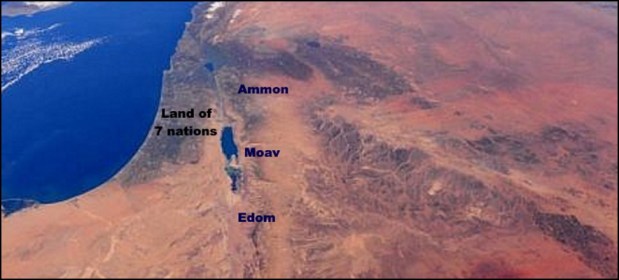
Rashi here points out that “There are ten nations [enumerated] here, but He gave them only seven nations. The [other] three are Edom, Moab, and Ammon, and they are [here referred to as] the Keni, the Kenizi, and the Kadmoni, which are destined to be [our] heritage in the future.”  The seven nations dwelled in the land of Canaan, which was conquered by the Bnei Yisroel when they entered the land with Yehoshua bin Nun.  The other three nations (Keni, Kenizi, Kadmoni) were not ever conquered, and Continue reading

Matos-Masei 5751: The Reason For Golus is Rectified!

Matos-Masei 5751: The Reason For Golus is Rectified!

These parshiyos (read together in many years), contain the 42 journeys of Bnei Yisroel in the midbar prior to entering Eretz Yisroel.  These 42 journeys represent our sojourn in golus (both collectively, and individually).  Upon completing these journeys, the birurim of exile, we find ourselves holding at “Yarden Yericho” prepared to enter the land.

This is also the final reading from sefer Bamidbar, upon which the custom is to say “Chazak! Chazak! V’Nischazek!” (a declaration something along the lines of “be strong”).  The Rebbe connects “chazak” (strength) with the concept of “chazaka” — something which, after three times, has Continue reading

Pinchas 5751 — How Being a “Pnimi” is Living Geuloh

Pinchas 5751 — How Being a “Pnimi” is Living Geuloh

In this sicha the Rebbe explains that we bring the Geuloh through the avoidah of “making ‘here’ Eretz Yisroel” (מאך דא ארץ ישראל).  This is associated with the avoidah of being a “Pnimi” — one who is completely involved in what he is doing.  The instruction of “making ‘here’ Eretz Yisroel” is explained by the Rebbe: “even when he is found ‘here’, in chutz la’aretz, and in the time of golus — one must make ‘Eretz Yisroel’ [while he is] ‘here’ — in this place and time…seemingly: according to Torah ‘here’ (chutz la’aretz) is not ‘Eretz Yisroel’!”

The way to make “here” (which is not “Eretz Yisroel”) into “Eretz Yisroel” is by being totally involved in the avoidah of the moment, without thinking about what it will lead to, whether it is the main thing or a preparation for something else.  “It is known the saying of the Rebbe Rashab — a Pnimi is one who is completely involved in everything he does.”  Even if what he is doing is a preparation for Continue reading

Pinchas — Making “Here” Eretz Yisroel

Pinchas — Making “Here” Eretz Yisroel

The Rebbe begins the Sicha by referencing a story that occurred in the times of the 3rd Lubavitcher Rebbe, the Tzemach Tzedek:

A chosid once asked the Tzemach Tzedek for a brocha to go live in the Holy Land so that he could devote his life there to Torah study and avodas Hashem; the Tzemach Tzedek replied, “R’ Hillel (Paritcher, a legendary chosid on a very high level) doesn’t lack Eretz Yisroel. Make here Eretz Yisroel.”

In this week’s Dvar Malchus the Rebbe connects this story with the description in parashas Pinchas of the distribution of Eretz Yisroel among the 12 tribes and how it relates to our individual avodah in the last moments of exile.

The purpose of our exile (individual and collective) is to refine and elevate the world at large, transforming it into Continue reading

Conquering the 3 Lands Peacefully

Conquering the 3 Lands Peacefully

The Rebbe mentions in the Dvar Malchus of Parshas Lech Lecho that Avraham Avinu is promised by Hashem that his descendants will inherit the land.  Hashem made a covenant with Avraham, stating:  “To your seed I have given this land, from the river of Egypt until the great river, the Euphrates river.  The Keni, the Kenizi, and the Kadmoni, And the Chitti and the Prizi and the Rephaim, And the Amori and the C’naani and the Girgashi and the Yevusi.”  (Parshas Lech Lecho, 15:18-21)

Rashi here points out that “There are ten nations [enumerated] here, but He gave them only seven nations. The [other] three are Edom, Moab, and Ammon, and they are [here referred to as] the Keni, the Kenizi, and the Kadmoni, which are destined to be [our] heritage in the future.”  The seven nations dwelled in the land of Canaan, which was conquered by the Bnei Yisroel when they entered the land with Yehoshua bin Nun.  The other three nations (Keni, Kenizi, Kadmoni) were not ever conquered, and in fact there are verses in the Torah warning the Bnei Yisroel “Do not distress Moav and do not provoke them to war…”, “When you approach opposite the children of Ammon, neither distress them, nor provoke them…”  In the time of golus these lands and nations who live in them are not to be provoked because Hashem says “I will not give you any of their land [as] an inheritance” until the time of the true and complete Geuloh.

These lands and the nations who dwell in them are described in the teachings of Chassidus: the seven nations (lands) correspond to the seven emotional character traits (midos) of the animal soul which must be conquered and then transformed from evil to Holiness.  The three nations/lands refer to the intellect (Wisdom and Understanding, Chochma-Bina) and the super-intellect (Crown, Kesser).  The avoidah of a Yid in the time of golus was focused on conquering the land of the seven nations, the midos of the animal soul.  Only after we have finished refining the midos can we begin to take possession of the other three lands, referring to the intellect.  We have already posted how Chassidus explains this process in the post entitled The 3 Nations and Geuloh.  Here we will present what the Rebbe says is the avoidah in the present time regarding the three additional lands of the Keni, Kenizi, and Kadmoni.

In section 12 of Dvar Malchus Lech Lecho, the Rebbe refers to “avoidas haMoichin“, the avoidah of the intellect, as being connected with taking possession of the three additional lands.  This is an avoidah which is relevant only at the end of golus, since until now we were busy with the midos.  In fact, even the intellectual labor in Torah that took place until now was for the purpose of influencing the midos.  However, in the Time to Come there will be intellectual labor for its own sake, “to unify with Elokus via the complete unification (“a wonderoud unity”, Tanya ch. 5) of the individual’s intellect with the Torah (Hashem’s wisdom, which is one with Him).  Via the fact the Torah and the Holy One, blessed be He, are all one, it will be revealed that Yisroel, the Torah, and the Holy One, blessed be He, are all one.”

At present we only have a revelation of the intellect in Torah as it relates to the midos (49 gates of wisdom, מ”ט שערי בינה).  In the future, there will be a revelation of the three intellectual attributes as they are in their essence (the 50th gate, שער הנו”ן).  The Rebbe takes notice that the names of these three nations all start with the letter Kuf (ק) which has a leg the goes below the line.  This hints at these lofty levels coming all the way down to this mundane world.  The Rebbe then tells us that the avoidah that is connected with this is to reveal chiddushim in Torah.  By doing so, the individual reveals hidden powers of his soul, including the essence of his intellect, his moichin b’etzem.  At this point there is a footnote that references the sicha the Rebbe said on the night of the 8th of Marcheshvan, a few days before Shabbos Lech Lecho. (Listen here.)

In the sicha of 8 Marcheshvan,  the Rebbe elaborates on the subject of avoidas haMoichin and taking possession of the lands of the three nations in our days.  Firstly, the Rebbe says that “it is incumbent to make an effort that already now there will be the avoidah which is a foretaste and example and preparation for the avoidah that will be in the true and complete Geuloh.”

 What is this avoidah?

There needs to be an effort and an increase mainly in the learning of Torah that is related to the time of the Geuloh — learning Torah that speaks about Moshiach Tzidkeinu and the true and complete Geuloh.  And more, and a main thing: an increase in learning Pnimiyus HaTorah in a way of understanding and grasping [the material] unified with the revealed dimension of Torah — one Torah.  And not just the first period of Yemos Hamoshiach, but also the second period.  [See The 3 Nations and Geuloh].  And more specifically — an increase regarding the “seven nations” which we were already given … the avoidah of the seven midos and also the avoidah of the three moichin

Since we are found truly close to the true and complete Geuloh, there needs to be a sampling and example and beginning of avoidas haMoichin as they are by themselves — via the learning and effort to fulfill in actuality the matters connected with avoidas haMoichin, even if not related to avoidas haMidos

This avoidas haMoichin means learning deep concepts of Chassidus (such as in the teachings of the Mitteler Rebbe).  The Rebbe says that all of this increase in learning (which will surely lead each one to the new unique insights (chiddushim) which the Rebbe asked for) will bring “broadness” (רחבות) in the learning and also in material matters, that “with only a small effort with one finger” he can receive his parnosa from Hashem.

Additionally, the Rebbe says to add in joyous Chassidishe farbrengens in which the participants will discuss matters of Pnimiyus HaTorah in a way of broad understanding and grasping the material.

And what does all of this accomplish?

Additionally, and this is the main thing — via this we speed up and hasten and bring about immediately that all of Bnei Yisroel will go to our Holy Land, “a great congregation will return here” — to the land of ten nations. 

To summarize: the Rebbe is telling us that since avoidas haBirurim is finished (as mentioned many times in Dvar Malchus) and everything is ready for the Geuloh, we must begin acquiring the complete land of Israel — the land of all ten nations — by beginning to be involved with avoidas haMoichin by adding in all the aspects of Torah that the Rebbe mentions (adding in learning the subjects of Moshiach and Geuloh, and adding in learning Chassidus as it shows itself united with the revealed dimension of Torah, and adding in learning deep subjects in Chassidus).  This represents our first steps into the avoidah of the future, an example of what the Rebbe is telling us throughout these sichos: by beginning to conduct our lives in a way that is fitting with the Geuloh, we speed up the revelation that the Geuloh is really here with us already.  It is primarily a switch in our perception, understanding, and outlook — the intellectual avoidah of bring into reality the Geuloh!