
Korach (3 Tammuz) 5751: The Sun Stood Still For a Reason

Korach (3 Tammuz) 5751: The Sun Stood Still For a Reason

The Miracle of the Sun standing still was only in order to allow Israel to defeat the enemy by their own power in a natural way.

Gimmel Tammuz is the day that the Previous Lubavitcher Rebbe was released from Soviet prison in 5687 (1927).

Prior to that, we find that it was on this day that Yehoshua bin Nun performed a tremendous miracle, causing the sun to stand still.  The story behind the miracle is that Israel were doing battle with the enemy.  Sunset was approaching, and with the setting of the sun the battle would cease and the enemy would be able to escape.  In order to enable Israel to defeat the enemy, Yehoshua instructed the sun to “be silent”, causing it to cease it’s flight in the heavens, preserving the daylight so that the battle could be won.

The Rebbe asks an obvious question: if one has the power to cause the sun (and the entire heavenly system with it) to pause, why not simply bring about the defeat of the enemy in a direct fashion?  The preceding verses in Sefer Yehoshua tell us that more of the enemy were killed by stones which fell upon them from heaven than were killed by the sword.  Is it not a simpler matter to rain down some more stones than to freeze the entire heavenly system?

The answer the Rebbe gives is that the battle is Israel’s battle, it must be won by them under their own power.  Of course Hashem is helping with miraculous assistance from above, but this is only assistance.  The war must be fought and pursued by Israel in a natural fashion, even if on top of that there is super-natural assistance.  Thus, instead of Yehoshua simply bringing about the defeat of the enemy and Israel stand by passively, he used his power to give Israel more time to overcome the enemy in a natural way.

In our day, Gimmel Tammuz is primarily associated with the transition from the years when we saw the Rebbe to the current situation where the Rebbe is not seen except in videos and dreams.  Moshe Rabbeinu is likened to the sun, and the Rebbe, Moshe Rabbeinu in our generation, is still providing all the assistance necessary to win the war against evil.  But the war must be won by us, under our own power.  While the Rebbe was visible to all, it was possible to “rely on the Rebbe” to win the war.  Today, when it seems that the sun, Moshe Rabbeinu, has “stopped moving” it is only in order to allow us to overcome the enemy using natural means.

For a more detailed explanation, with comprehensive references from Chassidus, see the Kuntres Inyonei Moshiach and Geulah for Gimmel Tammuz.

Shlach 5751: How to Conquer and Settle the Land

Shlach 5751: How to Conquer and Settle the Land

In the sicha of Parshas Shlach the Rebbe contrasts the spies who were sent by Moshe Rabbeinu in the parsha, and the spies sent by Yehoshua in the haftorah.  By contrasting the differences, the Rebbe identifies for us two differing paths in our service of Hashem (and in “entering the land” — bringing the Geuloh) “which complement each other and complete each other for the sake of a singular goal, the conquest of and the entering into the land.”

The spies sent by Yehoshua were for the sake of conquering the land, whereas those sent by Moshe were supposed to aid and encourage entering the land (which includes settling the land after it is conquered).  Moshe’s spies were assigned the task of scouting out the goodness of the land, to give Bnei Yisroel a tangible idea of the special land that awaits them (by bringing back the enormous fruits of the land), and through this to arouse in the Yidden a desire and excitement to enter Eretz Yisroel.

As we know, the spies contradicted their mission and tried to scare Bnei Yisroel away from entering the land as a result of “mixing in” to Moshe Rabbeinu’s instructions.  But, explains the Rebbe, in truth they did accomplish their mission: when Bnei Yisroel entered the land after 40 years wandering in the desert (the consequence of the spies “mixing in”), they did so with excitement that came from what they learned from those same spies.  “If only they hadn’t caused damage by what they added to the shlichus (regarding [the doubting the success of] conquering the land)…then all of Bnei Yisroel would have entered the land of Israel immediately with joy and great desire.”

The Rebbe proceeds to identify the points of difference between the two groups of spies:

  • 12 spies (Moshe) / 2 spies (Yehoshua);
  • Tribal leaders (Moshe) / unidentified men (Yehoshua);
  • Sent “in your opinion” (Moshe) / sent by command of Hashem (Yehoshua);
  • To “scout” the entire land (Moshe) / to “spy out” Yericho only (Yehoshua);
  • Travel openly (Moshe) / travel secretly (Yehoshua);
  • Identify the nature of the land and the people (Moshe) / identify the morale of the population (Yehoshua).

Seemingly, these are completely different kinds of shlichus, deriving from the fact that under Moshe they would have entered the land miraculously, whereas in the times of Yehoshua they needed to conquer the land in a natural manner.  But, as mentioned above, the Rebbe says that they complement and even complete each other, and this is also true in our avoidas Hashem to “enter the land” (bring the Geuloh).  The spies of Moshe represent the inyan of “differentiation” (התחלקות), the unique and special qualities that different elements possess (to be explained momentarily).  The spies of Yehoshua represent the inyan of “unity” (אחדות), where all differences are subsumed and nullified in the common underlying unity.

These differing aspects and approaches manifest themselves in the following areas:

  • Torah is the aspect of unity, the wisdom of Hashem — just as He is One, so too His wisdom is One.  Mitzvos are the aspect of differentiation, each mitzvah involving different limbs, different objects, having different effects.
  • Within Torah itself there are these same two dimensions: Nigleh which is Torah as it differentiates to explain the various mitzvos, etc., and Pnimiyus Hatorah, which explains Elokus and reveals the unity of Hashem in all creation.
  • The Neshoma possesses unique and differentiated “soul powers” (כוחות הפרטים) (intellect, midos) which are applied in different situations, and also it possesses Bittul, which shows on the unity of all aspects of Divine service.

The Rebbe says that the avoidah of refining the world is primarily accomplished through the aspect of differentiation (where one can be better than another, etc.) because the aspect of unity is above the world (and, thus, cannot affect it so much).  Nonetheless, there is also a need for the dimension of unity which brings the avoidah of refining the world to its perfection — that G-dliness which is above the world is drawn down and revealed in the world to make true unity.

This is reflected in two groups of spies.  Moshe’s spies were sent “in accordance with your opinion” (Moshe Rabbeinu’s opinion), which itself reflects on the “differentiation” in Torah as it becomes enclothed in the person’s own intellect.  Yehoshua’s spies, however, were sent upon command of Hashem, the aspect of bittul and kabbolos ‘ol.  The 12 spies represent the different types of Divine service of the 12 tribes, each tribe being different in its strengths and weaknesses.  The 2 spies of Yehoshua show on bittul of all of the powers of the neshoma to the two primary directions of Divine service: positive mitzvos and negative mitzvos.

Each one of us needs to utilize both forms of “spying out the land” in order to properly conquer and settle it.  The actual conquering is best accomplished through the simplicity and bittul of Yehoshua’s spies.  But arousing a desire to enter the land, and to settle it properly demands the approach of Moshe’s spies who utilize their unique abilities and capabilities to accomplish their shlichus.

It is possible to say that when the two dimensions are combined, the bittul of Yehoshua’s spies will keep us away from the mistake of Moshe Rabbeinu’s spies (who “mixed in” and “added” something undesirable to their shlichus) — that even when we make use of our personal strengths and uniqueness we will remain true to the shlichus and succeed to both conquer the land and to settle the land (with joy and desire) and to bring the true and complete Geuloh!

B’haalosecha 5751: The Flame Rises on its Own

B’haalosecha 5751: The Flame Rises on its Own

The Rebbe many times repeats the words of Tanya, chapter 37, that all the lofty revelations of the time to come are dependent on our Divine service during the time of exile.  Although this is well known among those who learn Chassidus, there is nonetheless a common misconception that once we finish our labor in Golus, than everything else happens automatically.  In almost every Sicha of Dvar Malchus, the Rebbe drives home the point that the end of exile is not the end of our labor.  In this Sicha it is expressed as “lighting the lamps until the flame rises on its own.”

This is Rashi’s commentary on the words of  Hashem to Aharon HaCohen in our Parshah: “When you light the lamps [of the menorah]”.  Says Rashi, this literally means “when you bring up the lamps”, because Aharon “is required to kindle the lamp until the flame rises by itself.”

The object is not simply that the lamps should be illuminated (the lamps referring to neshomos Yisroel), because this occurs also while Aharon is holding the light to them.  The Torah doesn’t say “light up the lamps”, but “bring up the lamps”.  This means that even when the one who lights them removes his influence, the lamps stay lit.  The Rebbe emphasizes that this means that the  lamps burn on their own accord even without any outside influence.

Even though lighting and bringing up the lamps comes about through lamp-lighting Jews, nonetheless the lamp must be ignited in a way that afterward the light comes from itself, the flame goes “on its own”, without needing any assistance from the lamp-lighter.

This means that even though a person didn’t “light himself up” — he had a Rebbe, parents, teachers, mashpiim, friends, etc. who helped “light him up” with an enthusiasm in avoidas Hashem — nonetheless, the complete and true avoidah is when (after he is “lit up” by others) he becomes a “flame which rises on its own”.  This means his own existence alone is what drives him, and not the influence of a mashpia (not even The Mashpia).

The significance to our times, after Gimmel Tammuz, should be obvious.  We are not presently operating in an environment where we see the Rebbe giving dollars, a piece of lekach, Kos Shel brocha, or an enthusiastic wave of the hand.  But if one refers to the decades when Chassidim saw and felt all of that as “the good old days” — he is missing the point!  The “complete and true avoidah” is not when a Yid feels excited when the Rebbe is “lighting him up”, but rather after that, when he can prove that the Rebbe was truly successful in lighting him up because his fire for serving Hashem “rises on it’s own” — even when the “lamp-lighter” pulls away the lighter!

This may sound like a daunting challenge, to bring ourselves to Geuloh-dik avoidas Hashem without the “Mashpia” (the Rebbe) lighting us up.  Firstly, we don’t have any choice in the matter: either we do this or, chas v’sholom, cool off.  As to the “how” — how can we bring ourselves to this avoidah the Rebbe wants from us, to rise up on our own accord?  The Rebbe brings in the Sicha from the Rebbe Rashab:

The nature to rise up [to its source] that is found in fire is not like something additional to it, not because it feels the loftiness of its source; but rather, because of its bittul and its lack of a metzius…

The more bittul we achieve, the less we are concerned with our own metzius (our feelings and our experiences of the Rebbe) and instead focus on what the Rebbe wants from us, we will find that we are “lit up” to bring Moshiach (in both our personal avoidah and our avoidah with others) in a more complete and true manner than was the case in the “good old days”. We will truly rise up on our own!

Shavuos: “The New Torah That Will Go Forth From Me”

Shavuos: “The New Torah That Will Go Forth From Me”

One of the most prominent features of the Messianic era is the spreading forth of Divine knowledge.  It begins with Moshiach Tzidkeinu himself (“he will possess great wisdom greater than Shlomo Hamelech, and will be a great Prophet (Novi) close to [and exceeding] Moshe Rabbeinu”), and proceeds to the entire Jewish nation (“Yisroel will be great sages and will know the hidden things and will grasp the knowledge of their Creator according to their [individual] ablity”).  This is expressed by the verse in Yeshaya “Because Torah will go forth from Me” (“כי תורה מאתי תצא”), upon which the Midrash explains “A new Torah will come forth from Me, innovation in Torah (chiddush Torah) will go forth from Me” (תורה חדשה מאתי תצא, חידוש תורה מאתי תצא).  [As explained in many places in Chassidus, the “new Torah” refers to new and deeper understanding of the very same Torah that was given to Moshe Rabbeinu at Har Sinai: the very same Torah, the very same letters, etc.]

PROPHECY AND HALACHA

The Rebbe explains that there are two aspects to the chiddush Torah: the newly revealed secrets of the Torah, and chiddush in halacha (specifically: using the fins of the Levyoson to shecht the Shor Habar, as the Rebbe will explain in depth.)

That Moshiach will reveal secrets of Torah is readily understood.  But to say that he will make innovations in halacha presents a difficulty, because (as mentioned above) Moshiach is a Novi and there is a priciple that a Novi is not permitted to make innovations in halacha (אילה המצוות, אין נביא רשאי לחדש עוד דבר מעתה).  Furthermore, what is the idea of an innovation in Torah anyway?!  The entire Torah (including the future innovations of a  sage, “talmid vosik“) was given to Moshe Rabbeinu on Har Sinai — so what room is there to “innovate”?

The answer the Rebbe gives is that the effort of the talmid vosik to find and reveal the answer (using the 13 rules through which the Torah is explained) makes it his own chiddush.  On a deeper level, such a chiddush is only revealing something that was “concealed, but existing” (העלם שישנו במציאות).  Meaning that using the tools of the 13 rules the human intellect is capable of revealing this concept.  But in the Messianic Era, the chiddush will come from the level of things which are “concealed, and not in existence” (העלם שאינו במציאות).  Meaning that human intellect could never arrive at such a conclusion, it must be revealed into human intellect from Above by the Holy One, blessed be He.  Thus the midrash tells us that this new dimension of Torah comes “from Me” (from Above) and “goes forth” — goes out into human intellect.

This also answers the difficulty of Moshiach as a Novi making innovations in halacha: the revelation of prophecy to Moshiach (revelation of Hashem from Above) does not remain “Above” (in which case it has no bearing on halacha), but rather: Moshiach draws it into the understanding of his own intellect, and proceeds to teach it to the people, enabling the masses to understand these Divine revelations with their own human intellect.  Once it becomes understood with the human mind, it is “not in the heavens” (לא בשמים היא) and thus is valid to make halachic rulings.

Based on what was explained above, we can understand how in the Messianic Era it will be permissible to shecht the Shor Habar with the fins of the Levyoson (a shechita which now would be forbidden because it is not kosher to shecht with a jagged edge): it will be revealed that the halachos of shechita never pertained to this shechita (of the Shor Habar).  An example of such a thing: halacha rules that shechita is forbidden on Shabbos.  In a case of saving a life there is a special heter which permits it.  But this halacha never referred to the shechting of korbanos — it is permitted to do so on Shabbos without the need for a special heter (since the halacha, from the outset, never applied to this shechita of korbonos).  Similarly, the halacha that shechting with a jagged edge is not kosher never pertained to the shechting of the Shor Habar.

BEIS SHAMMAI and BEIS HILLEL

What is the connection between the two dimensions of the future Chiddush Torah: the secrets and the halacha (since they are referred to together in the same posuk)?  The Rebbe explains that this can be understood by examining the difference between Beis Shammai and Beis Hillel.  As is known, Beis Shammai ruled very strictly in almost every case, whereas Beis Hillel ruled leniently.  Furthermore, the sages tell us that the halacha is (with a few specific exceptions) according to Beis Hillel.

Beis Shammai’s strictness comes from the fact that they rule in accordance with Pnimiyus Hatorah, whereas Beis Hillel rule according to Nigleh, the revealed dimension of Torah.  Beis Shammai were “sharper”, so there was a basis that halacha should go according to their opinion.  But the halacha is like Beis Hillel because they were the majority, which the Rebbe explains to mean that their reasoning could be understood by the majority.  (Similarly, we find that although Rebbi Meir was greatly praised as being unique in his generation, the halacha does not go with his opinion — because the majority of sages could not grasp the depth of his reasoning.)

The halacha like Beis Hillel is true until in the Messianic Era. But in the time of Moshiach the halacha will be like Beis Shammai, because their sharper reasoning will be grasped by the majority (ultimately everyone will grasp it).  We learn from this the crucial point that a halachic ruling must be in accordance with what the Rov understands.  A Rov must use his intellect to arrive at his decision, not his kabbolos ‘ol to the Rebbe (which hopefully he has — he can save it for other things, but not halachic rulings).  [Interesting to note that even when the Rebbe “guided” Rabbonim to certain rulings (such as ruling that those coming from Eretz Yisroel should keep two days of Yom Tov when they come to the Rebbe), the rulings still had to be halachically sound and not just because “the Rebbe said”.  And we can learn from here as regards the Psak Din on Moshiach…]

The Rebbe raises here another two questions: Since Beis Shammai is almost always more strict, why are we saying that in the Messianic Era (when his opinion will be halacha), the shechita of the Shor Habar with the fins of the Levyoson will be permitted— this is not more strict, it is more lenient!  And even more: why do we need to be strict in the Messianic era when there will be no more evil?!

THE FUTURE REFUGE CITIES (AREI MIKLOT)

The revealed dimension of Torah, Nigleh, deals with revealed good and revealed evil.  Pnimiyus HaTorah deals with hidden good and hidden evil.

Both of these concepts are expressed in the mitzvah of establishing refuge cities for accidental murderers — Arei Miklot.  Six such cities were established in Eretz Yisroel in the times of Moshe and Yehoshua.  Three more, the Rambam rules, will be established in time of Moshiach.  Here we have the same question: will there be murderers in the times of Moshiach?!

Even after avoidas haBirurim is finished (as the Rebbe tells us, in other sichos: this has already occurred) — there will still be the existence of evil in the world (until the resurrection of the Dead, the second, miraculous stage of the Messianic Era).  This evil in the world will cause the continued existence of accidental deaths (though premeditated murder will cease).  Thus, there will be a need for the Arei Miklot also in the Messianic Era.

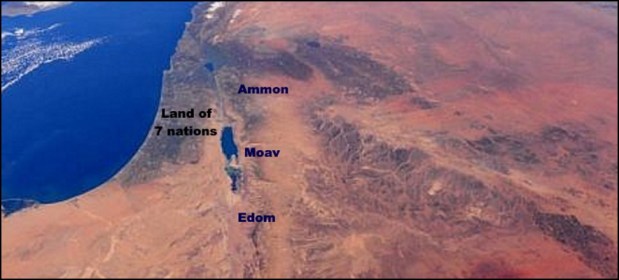
Looking more deeply, the Rebbe explains that the concept of a refuge city refers to words of Torah.  Learning Torah is a “refuge” which protects the person.  The three new Arei Miklot of the Messianic Era refers to the inner dimension of Torah that will be revealed at that time.  These cities are to be established in the three lands of the Keni, Kenizi, and Kadmoni (the nations of Moav, Amon, and Edom) which will be acquired at that time.  The land of Israel that was conquered in the earlier generations was only the land of the 7 Cananite nations, which correspond to the 7 midos which the Jewish people had to refine.  These three lands that will be acquired in the Messianic Era correspond to the 3 intellectual faculties (Chabad — Chochma, Bina, and Daas), reflecting the refinement of the intellect, the Moichin which occurs in the times of Moshiach.

This brings us back to Beis Shammai and Beis Hillel.  There are certain things that everyone agrees that they are permitted by Torah, and other things that everyone agrees are forbidden by Torah.  The cases of machloikes between Beis Shammai and Beis Hillel are on things where there is a doubt whether it is evil and Torah forbids it, or if it contains good and Torah wants us to elevate it.  Beis Shammai, who were stricter, who ruled in accordance with Pnimiyus HaTorah, deal with a case of doubt by forbidding it, pushing it away, due to the hidden potential evil that the thing may possesses.  Beis Hillel, on the other hand, who are based on Nigleh, the revealed Torah, only push away revealed evil.  (They each have an inherent logic: to permit something that contains evil strengthens the “other side”, but also to push away something that we could be lenient with also gives strength to the “other side”.)  The shechting of the Shor Habar with the fins of the Levyoson is different because will be done by Hashem himself, which leaves no room for any possibility of evil (and thus even Beis Shammai will permit such a shechita).

THE SHOR HABAR: A DEEPER DIMENSION

It is explained in Chassidus that the expression of the gemara that equates shechting with pulling or drawing (אין ושחט אלא ומשך) means that the act of slaughtering an animal in a kosher manner takes something that was forbidden to eat (the live animal) and “draws” it into the the realm of the permissible.  Once it becomes permissible, a Jew can eat the flesh of this animal, internalizing and elevating it.  What as forbidden to eat becomes permissible to eat.  Eating refers to internalizing Torah, drawing it down and grasping the concepts.  The Arei Miklot of the Messianic era are the new revelations of Pnimiyus Hatorah from Moshiach, revelations so lofty that on their own they cannot be grasped and internalized — they are in the category of “forbidden (unable) to be eaten (internalized)”.  Shechita means taking that which cannot be internalized and making it able to be internalized.

The Levyoson, who lives in the sea, the hidden world, represents serving Hashem spiritually via lofty spiritual unifications (יחודים עליונים).  The Shor Habar, which lives on dry land, the revealed world, represents the service of Hashem by refining physicality.  Each one has what the other lacks: the spiritual Levyoson is in a way of elevation from Above, grasping lofty lights but they cannot be drawn down below; the Shor Habar is drawing everything into physicality, but it lacks the lofty revelations.

In the future there will the qualities of both of these dimensions together — that the lofty lights will be drawn down and revealed below.  How?  By shechting the Shor Habar with the fins of the Levyoson*, meaning that great spiritual levels associated with the Leviyoson will be revealed in those matters associated with the Shor Habar type of Divine Service.  This means even the most lofty matters, things which cannot be grasped by the human intellect, will be drawn down in a way that they can indeed be grasped, that the Torah “from Me” which cannot be grasped at this time, will “go forth” to be grasped by human intellect.  The loftiest spiritual revelations will be drawn down below to into halacha that deals with physical objects.

And with this explanation in mind, let us note (and grasp) what the Rebbe says in the sicha of Parshas Vayeitzei, 5752:

The only thing lacking is — that a Jew should open his eyes properly, and should see how everything is ready for the Geulah!  There is the “set table” already, and there is already the Levyoson and the Shor Habor and the aged wine, and Yidden are sitting at the table — “their father’s table”, together with Moshiach Tzidkeinu (as stated in seforim that in every generation there is one of the seed of Dovid who, due to his righteousness, is fitting to be Moshiach), and there is already a “heart to know and eyes to see and ears to hear”.

The table is set with the teachings of Moshiach, teaching things that we could never arrive at on our own, which enable us to grasp, in the vessels of Nigleh (Tanach, Midrashim, Mishnayos, Gemara, Halacha) great and lofty things which would otherwise be beyond human intellect.  All we need to do is to open our eyes to this reality, and proceed to “eat” — to learn and internalize these teachings, completing the refinement of the intellect, and bringing into our reality the revelations of the true and complete Geuloh!

“All the rest is commentary, now go and learn.”


* To note: the Midrash informs us that the Shor Habar will be shechted by the fins of the Levyoson: the jagged edge of the fins tells us that this shechting will take place “step by step”, level after level.

19-20 Kislev 5752: “We Are in the Days of Moshiach”

In particular in these days — the days of Moshiach — in which we are found now, we need only to “open up the eyes”, and then we see that we are already found in the true and complete Geuloh in the simple meaning of the words, and all of bnei Yisroel are ready in all the details “to approach and to sit down at the table”, a table set with all the delicacies and all good things, beginning with matters of Geuloh, Levyoson and the Shor haBar and the aged wine, and more and primarily, “to know Hashem”, “the earth will be filled with the knowledge of Hashem as water covers the seas.”


Sefer Hasichos 5752 page 173

Sefer Hasichos, 5752, p. 173

The Beis Hamikdosh Here in the Time and Place of Golus

The Rebbe mentions, in the printed sicha of Vayera 5752 (last week), a midrash* which states that the month of Marcheshvan (when the construction of the first Beis Hamikdash was completed, but it wasn’t opened until the following Tishrei) “lost out” and in the time to come the Holy One, blessed be He, will pay her back with the inauguration (chanukas) of the 3rd Beis Hamikdash which will take place in the month of Marcheshvan.

What significance does this have to the events of Marcheshvan 5752, when the sicha was spoken and printed?  Several days after the sicha was spoken, and a day or two before the sicha appeared, in that very month of Marcheshvan, there was a revelation of the Beis Hamikdash.

This revelation was (and is) contained in a small booklet, the Kuntres Beis Rabbeinu sh’b’Bavel, edited by the Rebbe and published in honor of 20 Marcheshvan (birthday of the Rebbe Rashab).  In this Kuntres, the Rebbe explains the words of the Gemara that the following the destruction of the Beis Hamikdash, the revelation of the Shechina which was revealed in the Beis Hamikdash “traveled” from Yerushalayim together with the Jews as they went into golus.  Where did it settle?  In the study hall and synagogue of the leader of the respective generations.  In our generation, explains the Rebbe, this is 770 Eastern Parkway, the study hall and synagogue of the Rebbe, the leader of the generation (of course, the Rebbe makes the reference to his father-in-law, the Previous Rebbe).

Not only is every shul a “mikdash me’at“, a “miniature sanctuary”, but the shul of the leader of the generation is in fact a counterpart to the Beis Hamikdash that stood in Yerushalayim, and the revelation of the Shechina which is present there is the same revelation that was in Yerushalayim.  (If one will ask why we don’t see this, learn the Dvar Malchus of parshas Vayera, wherein the Rebbe explains the difference between something being revealed from Above, and the concurrent need for the recipient to be a fitting vessel for that revelation in order to experience it.)

In other words, 770 Eastern Parkway is the place in golus where the revelation of the Shechina is presently situated as long as the Jews are in golus.  And it will be the first place where the Third Beis Hamikdash will be revealed, after which it will return to Yerushalayim.  In the Rebbe’s words:

Now we can appreciate the unique greatness of Beis Rabbeinu: As the main Small Temple of the final exile, Beis Rabbeinu is the very place of the future Beis Hamikdash, and moreover, the place where the future Beis Hamikdash will first be revealed, and the place from which it will return to Yerushalayim.

The implications are startling: this Kuntres reveals to us, based on the Rebbe’s explanation of a posuk in Yechezkiel and a sugya in the gemora, that the Beis Hamikdash is located at 770 Eastern Parkway, and this is the “very place itself”** (מקום המקדש גופיה דלעתיד) where the 3rd Beis Hamikdash will descend from Heaven, and from this place it will travel to Yerushalayim!

In other words, the Beis Hamikdash (as well as the place of the 3rd Beis Hamikdash) has been revealed in the realm of the intellect!  In the month of Marcheshvan.  And as the Rebbe explains, in last week’s sicha, in order to experience the revelation we have to desire it and then labor to make ourselves a fitting vessel (like Avraham Avinu did and thus he merited that Hashem was revealed to him), otherwise it will remain in the intellectual realm, unseen by physical eyes.

Please, do not suffice with these few words in this meager essay, but take the opportunity to read through (and even better–learn properly and in depth) the Kuntres Beis Rabbeinu sh’b’Bavel (available for viewing and printing here).  After all, the Rebbe emphasizes numerous times that it is through learning the inyonim of Moshiach and Geulah that we speed up the actual true and complete Geulah.  As the Rebbe says–all elements of the Geulah are here, we simply need to agree and desire and open our eyes.  Learning these inyonim is the “fast way” to open our eyes.

It’s up to us!

* Yalkut Shimoni, Melachim I, remez 184.  Footnote #108 in the sicha.

** See the maamor “Gadol Habayis Hazeh”, section IV and forward, for the significance of the place of the Beis Hamikdash as opposed to the structure itself.

Achrei Mos-Kedoshim 5751: No Reason to Fear Geulah

At present, we are at the conclusion of the exile and at any moment Moshiach will come. First of all, a response is necessary for all those who are worried when they hear a clamor that everyone is required to do what they can do to bring Moshiach: They are concerned that the entire time they spent building up business and social relationships in exile will be forfeited when the Redemption comes.

These worries can be assuaged on the basis of the concepts explained above: The redemption will not nullify the natural order as it exists at present. On the contrary, all the positive achievements of the exile will remain and indeed, will be elevated with the coming of the Redemption. Within them, will be revealed the Alef, G‑d’s Presence. This will put the focus on what the true intent of these activities is, the revelation of G‑d’s honor throughout the world.

Therefore, a person need not worry about what will become of his business activities when Moshiach comes. On the contrary, he can rest assured that all the activities that he carried out according to the Torah’s guidelines — even those that are not directly associated with the Torah and its mitzvos — are of value. However, this also points to the importance of a person keeping the fundamental purpose of his business activity in mind, and making sure that his efforts are directed to revealing G‑d’s honor.

This also leads to another concept. A person should not think that the Redemption will be totally a spiritual matter without any connection to our activities within this world. This is not the case. On the contrary, it is through our activities in exile, that we will merit the coming of the Redemption. Within those activities must also be a fundamental stress on “Reflecting on three things,” as explained above; i.e., focusing one’s energies one elevating the world at large. In particular, this should be expressed in increasing one’s donations to tzedakah, giving of one’s physical effort and wealth to provide another person with his material needs.

We see in fact that the nature of the world encourages such activities and in that context, it is worthy to mention the discovery of jewels in a far removed corner of the world. These jewels will be used for “a bride’s ornaments,” to increase the merit of the Jewish people through gifts to tzedakah.

* * *

In connection with the redemption, we find the prophecy, “And Kingship will be the L‑rd’s.” This includes kingship, not only over the Jews, but also over the gentile nations as well. Hence, as a preparation for Moshiach’s coming, it is also important to spread the observance of the Seven universal Laws commanded to the descendants of Noach.

In this context, it is worthy to mention how the activities of the world and that of the gentile nations appear to be assisting the coming of the Redemption. In previous generations, the Jews suffered oppression from the gentile nations in which they lived and in the present generation, the opposite is true. Most Jews live in countries whose governments are generous and assist them in the observance of the Torah and mitzvos, allowing them to carry out the inner service that will bring about a personal redemption which, in turn, will hasten the coming of the redemption as a whole. Surely, this is true of the country in which we are living. Furthermore, these countries are also granting assistance to Jews in the world at large, helping Jews immigrate to Eretz Yisrael.

In the last few years, we have seen this tendency spread to other nations throughout the world, even to Russia. Instead of suppressing the observance of the Torah and its mitzvos as in previous generation, they have granted religious freedom and are also allowing Jews the opportunity to emigrate to Eretz Yisrael. Furthermore, they are even assisting them in this objective. This helps prepare the way for the ultimate ingathering of the exiles in the Era of the Redemption.

Similarly, we see how the United States, the most powerful nation in the world, has dedicated its resources for the purpose of charity and education, two of the most fundamental activities necessary to create a stable environment in the world.

For this purpose, the United States has sent hundreds of its soldiers to help hungry and starving people in a far off corner of the world. Instead of using its airplanes for war, it employed them to reach those people who require such assistance. And instead of using its wealth for the benefit of its own people alone, it gave of that wealth to save the lives of unfortunate people and children. Although the people of this country had little contact with these unfortunate people previously, as soon as they heard of their suffering, they volunteered their assistance.

Similarly, in these days, the President of this country has issued Proclamations calling for an increase in education. At the very beginning of his Presidency he stated his desire to be known as “The Education President,” and at present, efforts are being made to strengthen education throughout the country.

An interrelationship exists between the fact that these steps are being taken by the United States and that the United States has been established as the most powerful nation in the world. Because the United States has dedicated itself to these goals, G‑d has granted it such power. This reveals how there is an inner process of causation operating within the world, pushing it to reveal its true G‑dly nature.

Translation: Sichos in English

Acharon Shel Pesach, 5751: Seven and Eight

1. This year the holiday of Pesach possesses a unique dimension because the first day of Pesach and therefore the last day (in the Diaspora) fall on Shabbos. The day on which Pesach falls also imparts a special property to Parshas Shemini, causing the portion to be read eight times (this includes the readings on the Shabbos afternoons and on Mondays and Thursdays) over a period of three weeks. There is a popular adage Shemini Shemoneh Shemainoh, “When Parshas Shemini is read eight times, it will be a plentiful year.”

Shemini means “the eighth,” while in contrast, the natural order is a cycle of seven. Even Shabbos, the seventh day, is associated with a sense of perfection and completion within the natural order as reflected in our Sages’ statement: “What was the world lacking? Rest. When Shabbos came, with it came rest;” the quality of rest which Shabbos contributes is a dimension which, when missing, creates a lack in the world. In contrast, eight refers to a quality that is totally transcendent in nature, entirely above the limits of our world.

This contrast can be further developed by focusing on the unique aspect of the Counting of the Omer this year. It is written, “And you shall count… from the day following the Shabbos… and they shall be seven perfect weeks.” When Pesach falls on Shabbos, the Counting of the Omer begins “from the day following the Shabbos” in a simple sense, and thus the weeks of the Counting of the Omer parallel the ordinary weekly cycle. Our Sages explain that this endows an added dimension of perfection to this period of time.

To explore this concept in greater depth: Pesach and the Counting of the Omerreflect two different patterns in the service of G‑d. Pesach means “leap” and refers to a leap beyond the natural order as in the redemption from Egypt when “the King of kings, the Holy One blessed be He, revealed Himself to them and redeemed them.”

In contrast, the Counting of the Omer represents a systematic sequence of development in which a person refines his seven emotional qualities. In particular, these seven qualities each include each other. Thus in the 49 (7×7) days of the Omer, we refine each particular dimension of our emotional makeup. Similarly, this service elevates the world at large which was created through the medium of these seven emotional qualities.

Thus, it appears that Pesach and the Counting of the Omer represent two different patterns of service: Why does the Torah associate the two?

This question is reinforced by the fact that, when giving the command to count the Omer, the Torah refers to Pesach as “the Shabbos.” Here also we see a similar contrast. The sanctity of the festivals is dependent on the service of the Jewish people. Thus our Sages interpret the verse “These are the festivals of G‑d which you will declare” to mean that the sanctity of the festivals are dependent on the Jewish people.

In contrast, the sanctity of Shabbos does not depend on the Jews at all. Its holiness is drawn down from above. If so, why does the Torah associate the Counting of the Omer (which as above refers to man’s service) with the term Shabbos (that reflects holiness endowed to us by G‑d)?

These difficulties can be resolved as follows: Man’s service does not involve only those elements of spirituality to which he shares a connection, i.e., those that relate to the natural order. Even those which transcend the natural order and whose revelation depends on G‑d, must be internalized and drawn down within our personalities and within the world at large through man’s service. In this manner, we can achieve a fusion of both qualities: There will be a revelation of G‑dliness which transcends the natural order, but it will be drawn down within the world through man’s service.

This concept is alluded to in the verse, “And you shall count for yourselves,… from the day following the Shabbos…” Homiletically, the expression “the day following the Shabbos” refers to a level above Shabbos, i.e., above even the level of perfection within the natural order. Furthermore, by using this term rather than the expression, “the day following the festival,” the Torah indicates that this influence surpasses not only the influence which the Jews can draw down through their own efforts (the festivals), but also surpasses the influence which is drawn down from above (Shabbos).

By telling us, “And you shall count for yourselves,” the Torah also emphasizes the intent that this influence be drawn down within the world at large. The verse continues, mentioning “seven perfect weeks,” which points to the efforts to have this influence permeate the world in a particular way. This leads to the counting of “fifty days,” the revelation of a level which transcends the world, even as it exists in a refined sense (i.e., the 49 days of the Omer, in which each of the seven attributes with which the world was created is expressed in a refined manner).

The fiftieth level which is associated with the giving of the Torah, transcends the set of worldly existence entirely. Nevertheless, since it is preceded by the service of the Counting of the Omer, this level can be drawn down within the context of material existence.

Based on the above, we can appreciate the unique dimension contributed by the fact that Pesach falls on Shabbos. Firstly, in such a year, it is clearly seen how the influence drawn down is from “the day following Shabbos,” i.e., its uniquely transcendent nature is openly revealed. Secondly, since the weeks of the Counting of the Omer parallel the weeks of the natural order, we clearly see how this transcendent influence permeates the world at large. Thus, the two dimensions which characterize the influence of the Counting of the Omer each year are more openly revealed when the first day of Pesach falls on Shabbos.

In a more particular way, these levels described above are revealed this year on the first Shabbos within the Counting of the Omer (in the Diaspora, Acharon Shel Pesach, in Eretz Yisrael, Isru Chag) when the counting of one full week of the Omer, the week associated with the quality of chessed, is completed. Furthermore, the completion of the counting of this week relates to the completion of the counting as a whole for Chessed is described as “the day (quality) which accompanies all the other days (qualities).”

In such a year, the two qualities mentioned above are revealed in microcosm. The revelation of the dimension which transcends the worldly set is reflected in Acharon Shel Pesach’s being the eighth day of the holiday. As mentioned above, the number eight points to a revelation above the natural order. The completion of the counting of the first week reflects how this influence is drawn down into the world at large, because as mentioned above, the attribute of Chessed has an effect on all the other qualities.

These qualities are further emphasized when the eighth day of Pesach falls on Shabbos for this reveals how the transcendent dimension associated with eight is fused with Shabbos, i.e., the natural order as it exists in a perfect manner.

There is also a connection to the holiday of Acharon Shel Pesach itself. The celebration of Acharon Shel Pesach was instituted in connection with the Seventh Day of Pesach, the day which commemorates the splitting of the Red Sea which was the final stage of the exodus from Egypt.

In Chassidic thought, it is explained that the splitting of the sea reflected the bonding between the transcendent worlds which are above revelation (the sea, whose creations are hidden and covered by the sea’s waters) and the lower revealed worlds (the dry land, on which the creations can be openly seen). In particular, there are two opinions regarding the nature of the bond established: a) The Zohar’s conception, that the bond was established through the elevation of the lower realms; b) The AriZal’s conception, that the bond was established through the revelation from above.

According to Chassidus, “these and these are the words of the living G‑d,” and both conceptions are true. And in this way, the fusion is complete, a revelation from above (when the revelation is initiated from above, more transcendent levels are revealed) and an elevation from below (which allows the influence received to be internalized in a more complete manner). Thus, we also have a parallel to the theme explained above, that the revelation which transcends the world will permeate the world itself.7

Herein we can also see a connection to Parshas Shemini. As mentioned above,Shemini represents a level above the natural order which revolves around a cycle of seven. Thus there is a parallel to Pesach which represents “a leap” above the natural order, and a closer parallel this year when the “the day following the Shabbos” — which reflects a level above Shabbos, the perfection of the natural order — falls on Shabbos itself. Even the transcendent levels associated with Shemini — and this year, the peaks associated with the reading of the parshah eight times (i.e., transcendence within transcendence) — are drawn down into our world through the Counting of the Omer.

* * *

2. Pesach is “the season of our freedom.” In addition to commemorating the redemption from Egypt, it also grants the potential for all future redemptions, including the ultimate redemption when “as in the days of your exodus from Egypt, I will show you wonders.” In particular, it is the eighth day of Pesach which shares a connection with Mashiach. This is expressed in the following: a) As mentioned above, the number eight is associated with the Era of Redemption; b) The Haftorah recited on the eighth day of Pesach contains many prophecies related to the coming of Mashiach, “A shoot shall emerge from the stem of Yishai…” and the state of peace which he will introduce into the world, “the wolf will dwell with the lamb.” c) The Baal Shem Tov instituted the custom of eating Mashiach’s Seudah, “the feast of Mashiach,” on the eighth day of Pesach. This custom was publicized by the Rebbe Rashab in Yeshivas Tomchei Temimim in 5666 — when he also introduced the custom of drinking four cups of wine in association with the Torah’s four expressions of redemption — and has now spread throughout the Jewish community.

There is also a connection between the Counting of the Omer on Acharon Shel Pesach and the Era of Redemption. In general, the Counting of the Omer shares a connection with the redemption. The Counting of the Omer is intended to bring about a revelation of the 50th Gate of Understanding, a level which will be revealed in a complete and permanent manner in the Era of Redemption.

There is a reflection of this revelation on the present day, for as explained above, the completion of counting the week associated with the attribute of Chessed has a connection with the completion of the Counting of the Omer as a whole. In particular, this is reflected in the counting of the Sefirah, Malchus sheb’Chesed on the night of Acharon Shel Pesach. The ultimate expression of G‑d’s Chessed (kindness) will be in the Era of Redemption when His Malchus (kingship) will be revealed throughout the world.

All of the above concepts are given greater emphasis this year due to the influence of Shabbos and Parshas Shemini. In particular, we see howMashiach’s Seudah leads to and becomes part of the Melaveh Malkah meal, the meal which is associated with King David who is the progenitor of Mashiach and is himself described as Malkah Mashichah, “the anointed king.” May Mashiach come and actually join us at this meal and may the grace be led by King David as related by our Sages.

And then, from this meal we will proceed to the era when “The Merciful One will restore the service of the Beis HaMikdash for us.” May this be in the immediate future.


Translation by Sichos in English