9) Kuntres 28 Sivan: I Will Show You Wonders Behind the Miracles

9) Kuntres 28 Sivan: I Will Show You Wonders Behind the Miracles

A Chassidic discourse on the verse “As in the days when you came out from Mitzrayim, I will show you wonders” was edited and distributed by the Rebbe on 28 Sivan, 5751 (50th anniversary of the Rebbe’s arrival to America together with the Rebbetzin).  The subject is the nature and varying levels of miracles and wonders in general, and particularly as they will be in the Messianic age.  This not only shares an obvious connection with the miraculous escape of the Rebbe and Rebbetzin from Europe to America 50 years earlier, but also with the year 5751 תנש”א, which the Rebbe repeatedly referred to as the year of “I will show you wonders” (the letters of the Jewish year — Nun-Alef — standing for the  Hebrew words in our verse “I will show you wonders.”)

First, we need to understand the varying levels of miracles: miracles above nature (transforming water into blood, splitting the sea), and miracles enclothed in nature.  Miracles enclothed in nature themselves divide into 3 types: where the miracle is recognizable (Purim, Chanukah); where nature conceals the miracle but there is still a recognition that something out of the ordinary occurred and one is obligated to thank Hashem (an ill person who is healed, a prisoner who is freed, etc); and the lowest level, where nature so completely obscures the miracle to the point that one doesn’t even recognize that a miracle occurred (אין בעל הנס מכיר בניסו).

The Rebbe proceeds to explain that the last type of miracle, unrecognizable from the ordinary process of nature, is actually the Continue reading

Shlach 5751: How to Conquer and Settle the Land

Shlach 5751: How to Conquer and Settle the Land

In the sicha of Parshas Shlach the Rebbe contrasts the spies who were sent by Moshe Rabbeinu in the parsha, and the spies sent by Yehoshua in the haftorah.  By contrasting the differences, the Rebbe identifies for us two differing paths in our service of Hashem (and in “entering the land” — bringing the Geuloh) “which complement each other and complete each other for the sake of a singular goal, the conquest of and the entering into the land.”

The spies sent by Yehoshua were for the sake of conquering the land, whereas those sent by Moshe were supposed Continue reading

8) Kuntres 15 Sivan: True Hiskashrus

The Rebbe brings in the name of the Rebbe Maharash a Midrash which states:

The Holy One said to man, “My candle is in your hand, and your candle is in My hand; My candle in your hand is Torah… Your candle in My hand is the soul… If you guarded My candle, I guard your candle; but if you extinguished My candle, I extinguish your candle.”

Although it may sound like a case of reward and punishment, the maamor explains it in a much deeper way:

The soul is likened to a candle because of its inherent nature to desire to rise up and be nullified in its source. This is accomplished by Aharon, who has the job to light the menorah until “the flame ascends of its own accord.”. Thus, the verse says “like good oil on the head descends on the beard the beard of Aharon…”. The beard of Aharon is the inyan of the halachos of Torah. This explains our midrash: that guarding the candle of Torah guards the soul that its desire to ascend should be revealed. This is accomplished via Torah.

As Chassidim we can understand that it refers to our hiskashrus to the Rebbe: that by Continue reading

B’haalosecha 5751: The Flame Rises on its Own

B’haalosecha 5751: The Flame Rises on its Own

The Rebbe many times repeats the words of Tanya, chapter 37, that all the lofty revelations of the time to come are dependent on our Divine service during the time of exile.  Although this is well known among those who learn Chassidus, there is nonetheless a common misconception that once we finish our labor in Golus, than everything else happens automatically.  In almost every Sicha of Dvar Malchus, the Rebbe drives home the point that the end of exile is not the end of our labor.  In this Sicha it is expressed as “lighting the lamps until the flame rises on its own.”

This is Rashi’s commentary on the words of  Hashem to Aharon HaCohen in our Parshah: “When you light the lamps [of the menorah]”.  Says Rashi, this literally means “when you bring up the lamps”, because Aharon “is required to kindle the lamp until the flame rises by itself.”

The object is not simply that the lamps should be illuminated (the lamps referring to neshomos Yisroel), because Continue reading

Parshas Naso, 5751: The Year (in which) Moshiach is Revealed

Parshas Naso, 5751: The Year (in which) Moshiach is Revealed

In the sicha of Parshas Naso, the Rebbe states as follows:

This is especially emphasized in this year — the year 5751 (1991) which stands for “I will show wonders” — beginning with the wonders that we already saw in actuality, revealed in the eyes of the whole world, in this year [referring to the miracles of the Gulf War].  That through [these events] the words of the Yalkut Shimoni midrash were fulfilled: “In the year that Melech Hamoshiach is revealed all the kings of the world will quarrel, the king of Persia [Iran/Iraq], the king of Arabia, and the Holy One, blessed be He, says to the Jewish people, “my children, do not be afraid, all that I have done I only did for you…the time of your Redemption has arrived.”  Since that time, we are already standing at [the closing section of the Yalkut Shimoni midrash] “in the hour that Melech Hamoshiach comes, he announces to the Jewish people and says humble ones, the time of your redemption has arrived.”

Prior to and during the first Persian Gulf War, the Rebbe made frequent references to this Yalkut Shimoni midrash, but here, for the first time, the Rebbe says unequivocally that “it has been fulfilled”, specifically quoting the words “in the year Melech Hamoshiach is revealed”.  In other words: in 1991 Melech Hamoshiach was revealed.  But despite this, as the Rebbe points out in other sichos, the Jewish people are still fearful and require Moshiach to tell them not to be afraid and to inform them that the Geulah has arrived.  But the “breakthrough” has happened: the year Melech Hamoshiach is revealed.

To add further insight:

“The year in which Melech Hamoshiach is revealed…” (“שנה שמלך המשיח נגלה בו”). The word “year” in Hebrew is feminine, and grammatically we would expect this Midrash to read “נגלה בה“, meaning “in her [the year, feminine]”.  So we need to explain why it says “בו” instead of “בה”: “the year Melech Hamoshiach is revealed in him“[masculine].

Regarding this logical question, it will help to Continue reading

Shavuos: “The New Torah That Will Go Forth From Me”

Shavuos: “The New Torah That Will Go Forth From Me”

One of the most prominent features of the Messianic era is the spreading forth of Divine knowledge.  It begins with Moshiach Tzidkeinu himself (“he will possess great wisdom greater than Shlomo Hamelech, and will be a great Prophet (Novi) close to [and exceeding] Moshe Rabbeinu”), and proceeds to the entire Jewish nation (“Yisroel will be great sages and will know the hidden things and will grasp the knowledge of their Creator according to their [individual] ablity”).  This is expressed by the verse in Yeshaya “Because Torah will go forth from Me” (“כי תורה מאתי תצא”), upon which the Midrash explains “A new Torah will come forth from Me, innovation in Torah (chiddush Torah) will go forth from Me” (תורה חדשה מאתי תצא, חידוש תורה מאתי תצא).  [As explained in many places in Chassidus, the “new Torah” refers to new and deeper understanding of the very same Torah that was given to Moshe Rabbeinu at Har Sinai: the very same Torah, the very same letters, etc.]

PROPHECY AND HALACHA

The Rebbe explains that there are two aspects to the chiddush Torah: the newly revealed secrets of the Torah, and chiddush in halacha (specifically: using the fins of the Levyoson to shecht the Shor Habar, as the Rebbe will explain in depth.)

That Moshiach will reveal secrets of Torah is readily understood.  But to say that he will make innovations in halacha presents a difficulty, because (as mentioned above) Moshiach is a Novi and there is a priciple that a Novi is not permitted to make innovations in halacha (אילה המצוות, אין נביא רשאי לחדש עוד דבר מעתה).  Furthermore, what is the idea of an innovation in Torah anyway?!  The entire Torah (including the future innovations of a  sage, “talmid vosik“) was given to Moshe Rabbeinu on Har Sinai — so what room is there to “innovate”?

The answer the Rebbe gives is that the effort of the talmid vosik to find and reveal the answer (using the 13 rules through which the Torah is explained) makes it his own chiddush.  On a deeper level, such a chiddush is only revealing something that was “concealed, but existing” (העלם שישנו במציאות).  Meaning that using the tools of the 13 rules the human intellect is capable of revealing this concept.  But in the Messianic Era, the chiddush will come from the level of things which are “concealed, and not in existence” (העלם שאינו במציאות).  Meaning that human intellect could never arrive at such a conclusion, it must be revealed into human intellect from Above by the Holy One, blessed be He.  Thus the midrash tells us that this new dimension of Torah comes “from Me” (from Above) and “goes forth” — goes out into human intellect.

This also answers the difficulty of Moshiach as a Novi making innovations in halacha: the revelation of prophecy to Moshiach (revelation of Hashem from Above) does not remain “Above” (in which case it has no bearing on halacha), but rather: Continue reading

7) Kuntres Shavuos 5751: “Above” is Created From Below

7) Kuntres Shavuos 5751: “Above” is Created From Below

As explained in Chassidus, Sefiras Ha’Omer precedes Matan Torah because we must refine the 49 aspects of our Nefesh Behamis (animal soul) before we can receive the Torah. But the Torah itself was given to us to refine our animal soul (as Moshe argued to the Malochim who wanted Torah kept in the Heavens that Mitzvos like “Do Not Steal” only apply to one who has to combat an evil inclination). This raises the question: is refining the animal soul for the sake of receiving the Torah, or is receiving the Torah for the sake of refining the animal soul?!

To answer this, the Rebbe points out the language pertaining to Sefiras ha’Omer: to count seven complete weeks (שבע שבתות תמימות). The Midrash asks when are the weeks “complete” תמימות? “When Yisroel are doing the will of the Omnipresent.”  This “doing the will of…” is accomplished through the love of “all your might” בכל מאודך (as we say in Shema). When we achieve this level — which is beyond our limitations — Hashem responds to us in a similar fashion, “as water reflects a face” כמים הפנים לפנים.  Meaning that Continue reading

Bamidbar: How to Reach Hashem’s Essence

Bamidbar: How to Reach Hashem’s Essence

The sicha of Shabbos Parshas Bamidbar is an anomaly in the Dvar Malchus sichos, because here the Rebbe doesn’t mention the word Moshiach or Geuloh at all until the very end of the sicha.  Nonetheless, when we examine what the Rebbe does address here, we find that the Rebbe really is teaching us a vital element in actualizing the Geuloh.

There is a concept in Pnimiyus Hatorah called “ratzo v’shov“, which refers to two divergent directions in serving Hashem: “ratzo” means the desire of the neshoma to run away and escape the bonds of the world and the physical limitations of the body.  This is described in Tanya as the nature of the neshoma, like a flame that seeks to rise up and separate from the wick even at the expense of its own existence.  On the other hand, there is the direction of “shov“, which means to return to this world in order to fulfill Hashem’s Will which are Torah and Mitzvos in this world.  How does a Yid manage to unify these two opposites?  If my desire is to escape the world, then every moment in the world is against my will and therefore unpleasant.  But if my desire is to be in the world and fulfill Hashem’s Will here in the world, then I surely don’t want to escape and run away.  How are we supposed to fulfill both “ratzo” and “shov“?!

The way to do this, explains the Rebbe, is to transcend either of these two specifics of serving Hashem and to be tuned in to their underlying commonality: they are both the Will of Hashem.  Meaning, that if Continue reading

Matos-Masei 5751: The Reason For Golus is Rectified!

Matos-Masei 5751: The Reason For Golus is Rectified!

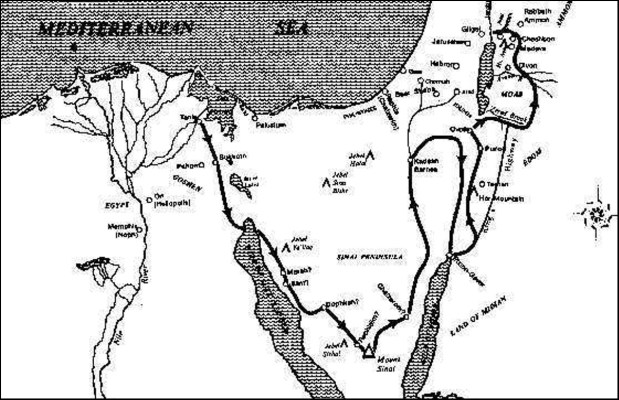
These parshiyos (read together in many years), contain the 42 journeys of Bnei Yisroel in the midbar prior to entering Eretz Yisroel.  These 42 journeys represent our sojourn in golus (both collectively, and individually).  Upon completing these journeys, the birurim of exile, we find ourselves holding at “Yarden Yericho” prepared to enter the land.

This is also the final reading from sefer Bamidbar, upon which the custom is to say “Chazak! Chazak! V’Nischazek!” (a declaration something along the lines of “be strong”).  The Rebbe connects “chazak” (strength) with the concept of “chazaka” — something which, after three times, has permanence and is unchanging.  This is connected with the 3rd Beis Hamikdosh which has the ultimate “chazakah” of being eternal.  In fact, “the intent and purpose of the churban and the golus (the purpose of the days “bein hameitzarim“) is in order to come to the level and perfection of the building of the future Beis Hamikdosh and the future Geuloh…emphasizing the inyan of “chazakah” — the 3rd Beis Hamikdosh and the 3rd Geuloh.”

The journeys in the midbar, the birurim of exile, represent the avoidah from below to Above.  As expressed in the earlier sichos, the process from Above to below is instantaneous but ephemeral (it does not last), whereas the process from below to Above can take time (according to the pace of those below), but it has permanence.  Our sages tell us that already, at the splitting of the sea, it was possible (if Bnei Yisroel would have merited) they would have gone straight into Eretz Yisroel and achieved the true and complete Geuloh, which has no golus after it.  From this the Rebbe derives that “there exists also now (after the churban and the exile) the inyan of the eternal Geuloh and the eternal Beis Hamikdosh in a way of strength and permanence (חוזק ותוקף), except that their strength and permanence are only from Above, and thus in the world of below (there can be and) there is a situation of churban and golus.”  Again the Rebbe is telling us how all the elements and revelations from Above are already in place, all that is needed is for us to become suitable recipients.

Fitting with this the Rebbe makes a dramatic statement.  During the prior years of the Rebbe’s leadership, the Rebbe would frequently repeat the statement of our Sages that the cause of the golus was senseless hatred (שינת חינם) and therefore the way to rectify this and end the golus is through “senseless love” of our fellow Jew (אהבת חינם).  In this sicha the Rebbe, astoundingly, states:

It should be added and emphasized the connection between Ahavas Yisroel and the future Geuloh — not (only) that the nullification of the golus is by nullifying the cause of golus (which came about due to the opposite of Ahavas Yisroel), for our situation after the completion of our deeds and our avoidah over the course of golus, and after completing all the 42 journeys in “the desert of the nations”, we find ourselves already “at Yarden Yericho” (the level of Moshiach, who judges by sense of smell [the word “to smell” shares the same root as the name Yericho]), on the threshold of the Geuloh.  Certainly the reason for the golus has already been rectified [emphasis added], and therefore, the emphasis on Ahavas Yisroel is — as a foretaste and beginning of the true and complete Geuloh which is connected with the point of unity [shared by all Yisroel] which is above differentiation, which is the same by every Yid, for it is a spark from the soul of Moshiach, the Yechida Klolis.

This “blockbuster” statement is one of many in these sichos where the Rebbe says “straight out” that a state of reality that existed for thousands of years no longer exists!  To be sure, the Rebbe is not saying that we are released, chas v’sholom, from acting with Ahavas Yisroel.  The Rebbe is telling us that our Ahavas Yisroel is no longer a corrective measure (to fix the cause of golus), but rather and expression of our current (but hidden) and future (to be revealed) state of oneness with every Yid!  Learning this should make it virtually impossible for us to demand anything less from ourselves than complete “Geuloh-dik” Ahavas Yisroel for every Jew — after all, we have already rectified the problem of “senseless hatred”, so why should it be difficult now to show “senseless love”?

The Rebbe closes the sicha by saying:

Simply — that in addition to the fact that we have already finished all the details of the 42 journeys in the desert of the nations during the time of golus, and that we are standing already at “Yarden Yericho”, “on the other side of Yarden Yericho to the East” [verse 34:15], we are crossing the [river] Yarden westward and entering Eretz Yisroel.  And in Eretz Yisroel itself we are going westward — to Yerushalayim the Holy city, and to the 3rd Beis Hamikdosh, until the Holy of Holies (on the west side of the Beis Hamikdosh) in which are found the Aron and the Luchos.

We can make no mistake where the Rebbe is placing us: on the gateway to Geuloh, with no turning back!

Pinchas 5751 — A Deeper Look at a “Pnimi”

Pinchas 5751 — A Deeper Look at a “Pnimi”

In this sicha the Rebbe explains that we bring the Geuloh through the avoidah of “making ‘here’ Eretz Yisroel” (מאך דא ארץ ישראל).  This is associated with the avoidah of being a “Pnimi” — one who is completely involved in what he is doing.  The instruction of “making ‘here’ Eretz Yisroel” is explained by the Rebbe: “even when he is found ‘here’, in chutz la’aretz, and in the time of golus — one must make ‘Eretz Yisroel’ [while he is] ‘here’ — in this place and time…seemingly: according to Torah ‘here’ (chutz la’aretz) is not ‘Eretz Yisroel’!”

The way to make “here” (which is not “Eretz Yisroel”) into “Eretz Yisroel” is by being totally involved in the avoidah of the moment, without thinking about what it will lead to, whether it is the main thing or a preparation for something else.  “It is known the saying of the Rebbe Rashab — a Pnimi is one who is completely involved in everything he does.”  Even if what he is doing is a preparation for something else (such as singing the niggun as preparation for hearing a Chassidic discourse from the Rebbe), he is focused on what he is doing and not what it leads to.

A Yid must do his avoidah ‘here’ — in this place and time — with complete perfection (based on his abilities and potentials in his situation) in thought, speech, and action, as a ‘Pnimi‘ who is completely involved in whichever avoidah he is presently doing (and he doesn’t think at the time that he’s doing it about another avoidah later)…he is making in this place (and time) a land in which Yiddishkeit (Yisroel) is openly recognizable. 

Now let’s look deeper.

The repeated references to “here” as our present “time and place” draws to mind the Maamor edited by the Rebbe and published a year earlier (found in “Meluket Daled“), beginning with the words גדול יהיה כבוד הבית הזה (“Gadol Yehiyeh Kavod haBayis Hazeh“).  In that maamor (sections 6-7-8) the Rebbe explains some very deep concepts behind the miraculous phenomenon that took place in the Kodesh haKodashim space in the Beis Hamikdash: in that space the size of the holy ark (the aron kodesh) took up no space (“makom ha’Aron eino min haMida“).

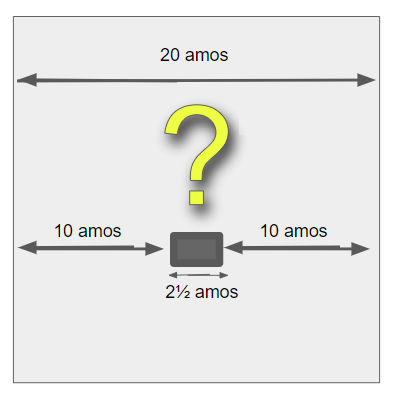
First, let us examine the phenomenon: The Kodesh haKodashim itself was 20 amos wide, and the aron was 2½ amos wide.  Under normal circumstances, if one would measure the distance from the wall to the edge of the aron one would find a distance of 8¾ amos in each direction.  But in actuality the distance measured was a full 10 amos from each side of the aron to the wall!  Although the aron measured a full 2½ amos, it didn’t take up any space in the room!

The explanation is best understood from looking at the maamor itself, but to briefly summarize: time and place are generally a function of the name “Elokim”, which is tzimtzum and concealment.  This is the essence of golus: G-dliness is concealed and the divisions of time and place come into being.  Higher than the name Elokim is the name YKVK, which is essentially higher than time and place.  This is not to say that they do not exist at all, as the Rebbe explains, but rather that they exist without division and separation (התחלקות), with all moments being united (the name YKVK meaning “past, present, and future as one” — היה, הווה, ויהיה כאחד).  The same is true for the spacial dimensions: they exist in a state of unity without being divided into “here” and “there”.

[In the world of Tzimtzum created by the Divine name Elokim, there is a division of place, I can be here and you can be there.  But really, “here” and “there” are not different places but rather concepts.  Wherever I am found is “here” and wherever I am not found is “there”.  Thus, the concept of going to Eretz Yisroel is a concept of Tzimtzum and golus.  In the Geuloh, when there will be a revelation of YKVK in our present reality.  In the Geuloh we will discover that “here” includes everywhere, and thus we will find ourselves in Eretz Yisroel (and more: in the Kodesh haKodashim, where all places are unified in that one place — everywhere is “here”).  So, in actuality, we are not working “here” in order to go “there”; we are working “here” to bring about the revelation that “here” really includes “there”.]

Based on the above, we can understand the miraculous phenomenon of the aron in the Kodesh haKodashim: the “place” of the aron was not a usual “place” like the rest of the world, which is created by the name Elokim concealing the oneness of YKVK.  Rather, that place is unique in that it has a revelation of YKVK within the reality created by Elokim.  In other words: all regular places in the world exist in a state of division and separation, each place separate from and distant from other places.  In a YKVK reality there would be no such thing as individual places, they would all be nullified to the Oneness.  In this unique spot there was the revelation of YKVK (Oneness and unity) within Elokim (separation and division), resulting in a place in our familiar world of Elokim which possessed fixed dimensions (20 amos) but yet revealed the unity and oneness of YKVK in that the fixed dimensions of the Aron could co-exist within the fixed dimensions of the Kodesh haKodashim in a state of unity.  (See the maamor for the full explanation.)

From here we can appreciate a deeper dimension of “make ‘here’ Eretz Yisroel”: the very concept of “here” as opposed to “there” is function of the name Elokim, the source of Tzimtzum and golus.  From the perspective of YKVK the terms “here” and “there” are irrelevant because all places are as one.  So the very fact that we are found “here” means we are in a world of Tzimtzum, a world of division and separation created by the name Elokim.  What must we do?  We must make “here” into Eretz Yisroel — the avoidah of revealing the true underlying Oneness (as it exists by the name YKVK) through being a Pnimiwho is completely involved in whichever avoidah he is presently doing (and he doesn’t think at the time that he’s doing it about another avoidah later)” which is a YKVK reality — there is no “now” and “then” since the YKVK reality is always found in the present moment (which includes all moments).

Through this avoidah of emulating the YKVK reality, a Yid …is making in this place (and time) a land in which YKVK  is openly recognizable.  The future revelation of YKVK (within Elokim) will reveal that the Tzimtzum is not real from the perspective of YKVK, and will bring about the unity of all places and all moments (the true meaning of the ingathering of the exiles from all four corners of the world).  This is the Eretz Yisroel reality (certainly as it will be in the future when Yerushalayim will spread out to all of Eretz Yisroel…), and the way we arrive to Eretz Yisroel (the revelation of the unity and Oneness of YKVK) is through the avoidah of being a Pnimi — living the moment in a way of all moments — in our thought, speech, and action!