28 Nissan: Do All You Can!

28 Nissan: Do All You Can!

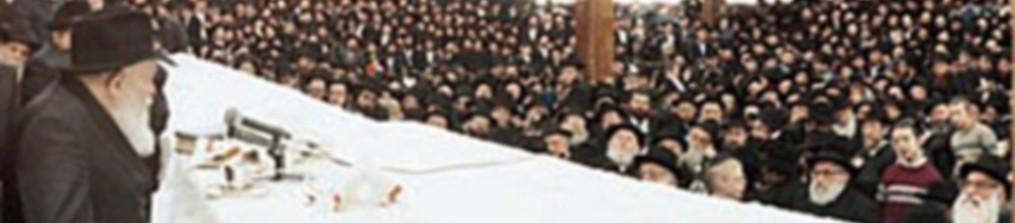
What follows comes from the “famous sicha of Koach (28) Nissan”, which the Rebbe spoke after Maariv prayers to a small crowd in 770. Although the words were –- and remain –- shocking, an attempt to shake Chassidim out of their complacency in golus, they would be followed by nearly a year of sichos containing some of the loftiest revelations, which are the subject of this website: the Dvar Malchus sichos of 5751-52.

The shliach and mashpia R’ Zalman ‘שיחי Liberow is fond of pointing out that although the Rebbe’s words are strong, disturbing, and sound almost as though the Rebbe “doesn’t know what to do with these people” (chas v’sholom), if we take a second look we find that the Rebbe says that he is doing “the only thing left to do”, which should give us tremendous encouragement! It means that literally there is nothing else that needs to be done (by the Rebbe) to bring Moshiach. If the Rebbe gives it over to us, it means that we have the power to do it! “Karov eleicha hadavar me’od.

(Perhaps it is worth noting that 28 Nissan is the 13th day in counting the Omer, Yesod sh’b’Gevurah. It is the day that the walls of Yericho, the first city conquered by Yehoshua bin Nun and the bnei Yisroel upon entering Eretz Yisroel. It is also the day (in 5714 [1954]) that the Rebbe taught the famous niggun of “Tzema Lecha Nafshi”, a niggun of longing for G-dly revelation.)

A translation of part of the sicha:

Because of the unique stress on the Redemption in this time, an astonishing question arises: How is it possible that despite all these factors, Moshiach has not yet come? This is beyond all possible comprehension.

It is also beyond comprehension that when ten (and many times ten) Jews gather together at a time that is appropriate for the Redemption to come, they do not raise a clamor great enough to cause Moshiach to come immediately. They are, heaven forbid, able to accept the possibility that Moshiach will not arrive tonight, and even that he will not arrive tomorrow, or on the day after tomorrow, heaven forbid.

Even when people cry out “Ad mosai” — Until when will we remain in exile?’ they do so only because they were told to. If they had sincere intent and earnest desire, and cried out in truth, Moshiach would surely have come already.

What more can I do to motivate the entire Jewish people to clamor and cry out, and thus actually bring about the coming of Moshiach. All that has been done until now has been to no avail, for we are still in exile; moreover, we are in an inner exile in regard to our own service of G-d.

All that I can possibly do is to give the matter over to you. Now, do everything you can to bring Moshiach, here and now, immediately.

May it be G-d’s will that ultimately ten Jews will be found who are stubborn enough to resolve to secure G-d’s consent to actually bring about the true and ultimate Redemption, here and now immediately. Their stubborn resolve will surely evoke G-d’s favor, as reflected by the interpretation of the verse, “For they are a stiff necked people; You will pardon our sins and wrongdoings and make us Your possession.”

I have done whatever I can; from now on, you must do whatever you can. May it be G-d’s will that there will be one, two, or three among you who will appreciate what needs to be done and how it needs to be done, and may you actually be successful and bring about the true and complete Redemption. May this take place immediately, in a spirit of happiness and gladness of heart.


View the video with English subtitles:

Shemini 5751: Unifying the Limited and the Unlimited

Shemini 5751: Unifying the Limited and the Unlimited

Periodically parshas Shemini (“Eighth”, referring to the 8th day of setting up the Mishkan in the desert) is read 8 times (this occurs outside of Eretz Yisroel in a non-leap year when Pesach falls out on Shabbos).  This gives rise to the expression “Shemini Shmoneh Shmeina”, meaning “[When parshas] Shemini (“Eighth”) [is read] Shmoneh [eight times, then the year will be] Shmeina [fat]” — with material and spiritual abundance.  (And is drawn into all the coming years until the next time it will be read 8 times.)

The “eighth” that is mentioned in this parsha is the beginning of the indwelling of the Shechina in the Mishkan. The world derives from 7,  which represents G-dly light as it is enclothed in the Creation. The number 8 represents the G-dly light above Creation, and it is specifically on the 8th day that we find the Shechina being revealed in the Mishkan.

Ultimate Purpose of Creation

Hashem’s intent in creating the world is that the G-dly light that is above the world (represented by Shemini, 8th) will not remain separate but rather will be drawn down to be revealed in the world in a way that the world, on its own terms, will be able to receive this revelation.  This means the revelation above limitation being unified with limitation itself. When these two aspects are unified, the recipient beomes a vessel to accept this revelation in an internalized way — the revelation of Continue reading

3) Kuntres 18 Nissan: Guarding the Intellectual Soul

What is easier: keeping a powerful beast like a cow or a bull locked up in it’s pen, or a bird?  Which requires “additional guarding”?

Although a bird possesses nothing of the power that the bull has, it has an additional ability that even the most powerful beast lacks — the power of flight. Thus, fences are sufficient to keep a mighty bull locked up, but a tiny bird is not properly guarded unless the walls are capped by a roof.

In Halocho this expresses itself in the laws regarding courtyards — that a large courtyard that is not covered by a roof is considered a carmelis (by Rabbinic decree, even though according to Torah it is a private domain (reshus hayochid)), but if it is covered with a roof then it remains a private domain according to Rabbinic opinion as well.

The maamor printed for 18 Nissan, 5751 (anniversary of the Rebbe’s Bris Mila)  explains this in terms of our Divine service: the animal for which fences are sufficient is our animal soul; the bird that requires a roof is our Intellectual Soul (Nefesh Hasichlis).  The animal soul, while powerful, has four legs on the ground and looks down — it’s only attraction and interest is gashmiyus.  It is enough to build fences to pen it in.  But the Nefesh Hasichlis, while it is a human intellect which relates to worldly things, possesses an inclination to “fly away” to contemplate things which are of a higher nature. Thus it needs a roof as well.

What is this roof?

In our Divine service, the “roof” is Continue reading

2) Kuntres Yud Alef Nissan 5751: Prayer of the Rich Man

This discourse of the Rebbe was edited and printed for distribution for the Rebbe’s birthday, 11 Nissan, 5751.  A lengthy and deep discourse, we mention here only the main points, reflecting the themes of the Dvar Malchus sichos from the same period.

“Tefilla leMoshe” is called by our sages the prayer of a rich man, and “Tefilla leDovid” is the prayer of a poor man.  Since tefilla is defined as our asking for our needs, what is a rich man’s prayer?  What does he need?

We find that according to Torah one must fill the needs of the poor man.  This doesn’t only mean those necessities required by every person, it means we are obligated also to fill his personal needs.  If he had previously been wealthy and was accustomed to a servant and a horse to run before him, then for him such a thing is lacking and we must provide it for him.  One is obligated to fill what he lacks, but one is not obligated to make him rich.  Thus, it comes out that even having a servant and a horse running before him (i.e. to be not lacking anything) is still not wealthy.

Wealthy, explains the Rebbe, is “superabundance”, which is more than just that nothing is lacking.  Furthermore, it means that this abundance is not received from another source (and thus could be cut off or taken away); rather, it is inherently his — making him rich in essence (עשיר בעצם).   This is why our sages say “there is no one wealthy except in da’as (knowledge)”.  Rich (in knowledge) means that what he has learned has become unified with him and part of him as a result of his own effort (as opposed to remaining on the level of what others taught him).

Back to the question: one who is rich has superabundance — what, then, is his prayer?!  The Rebbe answers: Continue reading

Tzav 5751: Moshe “the G-dly Man” Has Power to Redeem Us

Tzav 5751: Moshe “the G-dly Man” Has Power to Redeem Us

The sicha opens by mentioning that this Shabbos was Shabbos Hagadol, the Shabbos when we commemorate what the Shulchan Aruch calls “the beginning of the Geuloh and the miracles”.  This does not refer to the 10 plagues (9 of which already occurred by this time), but to the armed revolt of the first-born Egyptians who demanded from Pharoah and the elders of Mitzrayim that they let the Bnei Yisroel leave Egypt.  When Pharoah refused, the first-born took up arms and killed 600,000 Mitzriim.  The Rebbe is connecting this with the Gulf War (which ended 2 weeks before Shabbos Parshas Tzav), when the “first-born” (the strongest nations) took up arms against a tyrant who was threatening the Jewish nation.  Recall the words of the Shulchan Aruch: “the beginning of the Geuloh and the miracles”.

But the focus of this sicha is on the redeemer, on Moshe Rabbeinu.  What makes him singularly capable of redeeming the Yidden from golus Mitzrayim?  (And since “the first redeemer is the last redeemer” (Moshiach) — this applies also to the final redemption.)

The Rebbe explains that Moshe is uniquely qualified, and endowed with the ability, to bring the Geuloh.   To understand this, the Rebbe defines for us the meaning of Geuloh: Continue reading

Vayikra 5751: Miraculous Conduct

Vayikra 5751: Miraculous Conduct

The sicha of Parshas Vayikra is the first sicha of the Dvar Malchus cycle (from Vayikra 5751 through Vayakhel 5752).  The focus of this sicha is a recurring theme in all the sichos from these 12 months: drawing the miraculous (which transcends nature) into the natural order of things.

The demonstration of this in our sicha is the special occurrence that occurs once in a few years: Rosh Chodesh Nissan comes out on Shabbos.  In such a year, three Sefer Torahs are removed from the Aron Kodesh to be read: the regular Sefer for the parsha, a second sefer for Rosh Chodesh, and a third sefer for the annual reading of  “Parshas Parah” prior to Pesach. The only other times 3 sefer Torahs are taken out are Simchas Torah (every year) and Shabbos Chanukah or parshas Shekalim that fall out on Rosh Chodesh (not the case every year).

The 3 sefer Torahs of Simchas Torah are described by the Rebbe as “t’midin“, a regular offering in the consistent, fixed order of things.  The 3 sefer Torahs of Shabbos Rosh Chodesh Nissan in such a year as 5751, an infrequent occurrence, is in the category of “musafin“, something “additional” to the usual order of things. It is also implicit in the nature of the readings on those days: on Simchas Torah we read “Bereishis”, Hashem creating the world as it conducts itself according to nature; and, on Rosh Chodesh Nissan the first mitzva (counting the months) “החודש הזה לכם”, which the Rebbe refers to as the miraculous conduct of the world.  Not only that, but Continue reading

“Yechi Hamelech”, Beis Nissan, 5748

“Yechi Hamelech”, Beis Nissan, 5748

We are presenting here a free-translation of the relevant passages from the sicha of Beis Nissan, 5748, where the Rebbe himself introduces and explains the significance of the declaration “Yechi Hamelech”.  (Bold emphasis in the original sicha):

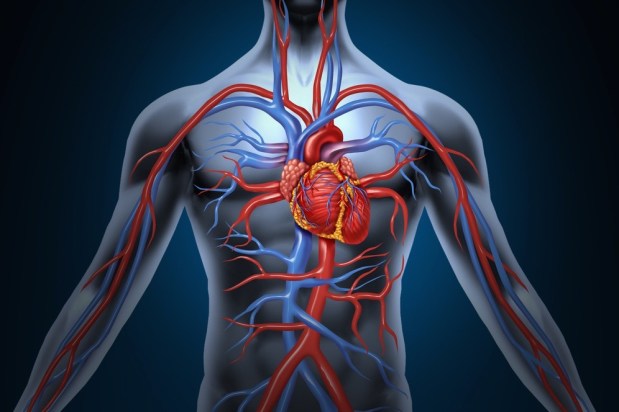
…the heart is the life-force of the body itself, being that it is the location of “the blood, which is the soul”, and the heart causes “the dispersion and circulation of the life-force…which is enclothed in the blood of the nefesh which goes out from the heart to all of the limbs, and circulates the life energy (“ruach chayim“) and the blood into every limb and the ligaments and it is absorbed by them and returns to the heart, etc.” (as the Alter Rebbe explains in Igeres Hakodesh, ch. 31).

So it comes out that the important element of the life-force of all the limbs of the body are connected with the heart, since the blood (“which is the soul”) which is in the heart…is actually dispersed to all the limbs of the body.

Life-force is connected with movement.  And movement is found specifically in the heart, for it is found to be constantly pumping and drawing blood, “the pulse of the heart”.  And the blood that is in it is also in a constant state of movement, circulating throughout the entire body (as explained in Igeres Hakodesh), which is not the case with the liver and the brain [two other essential organs mentioned previously] which do not move.

Similarly this is true as regards the Leader (the Nosi) and the King (the Melech), “the heart of the community of Israel” (Rambam) — “who sends them out and brings them back”, meaning that in accordance with his word comes about (as well — in addition to the head and the brain which provide guidance and direction) the drawing down of life-force to Bnei Yisroel.

And when the day arrives which was Continue reading

VIDEO: The Poor Man Must Accept the Gift

Based on the Maamar in Kuntres Beis Nissan 5751: The Rebbe gives the moshol of giving to a poor man. The “initial thought” is not the giving of the tzedakah, but that the poor man should accept it and benefit from it, which is not in the power of the giver, only the recipient.

What does this mean for Dor Hashvii and the Rebbe’s assertion that “I’ve done all I can do, now I give it over to you…”

1) Kuntres Beis Nissan 5751: To Give and To Receive

A Chassidic discourse, called a maamor, was edited by the Rebbe and published in honor of the Hillula of the Rebbe Rashab, Beis Nissan, 5751.  This was the day after Shabbos Vayikra, the very beginning of the cycle of Dvar Malchus.  We are going to extract a small section of this maamor which stands out boldly as a descriptive explanation of the sharp and shocking words of the Rebbe on 28 Nissan (a few weeks after this maamor was released): “I’ve done all I can do, now I give it over to you to do all that you can do to bring Moshiach in actuality”.

The section of the maamor we will look at states as follows:

The Rebbe Rashab explains the difference between two inyonim: “its beginning is wedged into its end and its end into its beginning” (נעוץ תחילתן בסופן וסופן בתחילתן) and [the similar expression that] “the end of the deed was first in thought” (סוף מעשה במחשבה תחילה).  The difference between them is that “it’s end” (סופן) refers to the end and completion of the thought, wedged into the beginning of that which is being given (ההמשכה).  And a moshol is brought for this from the giving of tzedaka.  That the beginning (of the giving) is the mercy (רחמים) that is awakened towards the poor man.

The concept that “its end is wedged into its beginning” is that the main intent in the awakening of mercy (“its beginning”) is

Continue reading

Introduction to the cycle of Dvar Malchus

Introduction to the cycle of Dvar Malchus

Introduction to the cycle of Dvar Malchus

“Rav Asi asked, ‘Why do little school children begin their Chumash learning with Vayikra and not with Bereishis? It is because little children are pure and unblemished, and the sacrifices are pure and unblemished. The pure ones begin their learning with the study of the pure.'” (Vayikra Rabbah, Tzav 7:3)

The cycle of Dvar Malchus refers to the twelve months of sichos which the Rebbe said between 5751-52 (1991-92), the latest words (“Mishna achrona”) that we have from the Rebbe.  Notably, the cycle begins with the sicha of Parashas Vayikra, 5751.  Although the Torah of Moshiach will only be revealed to us together with the revelations of the true and complete Geulah, these sichos are a “taste” of the “new Torah that will come forth from Me” (Yeshayahu 51:4; Vayikra Rabbah 13:3) and fittingly we start learning from parshas Vayikra.  Furthermore, the sicha describes a connection to Simchas Torah, which is the day when we begin reading the Torah anew (finishing with “V’zos Habrocha” and beginning with “Bereishis”).

Some background: The year 5750 (1990-91) was termed by the Rebbe “it will be a year of miracles” based on the letters that form the Hebrew year.  The year 1990 saw the beginning of the disintegration of the Soviet Union and the outbreak of the first Gulf War.  The year 5751 received the name “it will be year of ‘I will show wonders’”. 

By the time we reach Parshas Vayikra, 5751 (March 1991), the Gulf War has ended (on Purim, two weeks earlier); the events in the disintegration of the Soviet Union will lead, in June (Rosh Chodesh Tammuz), to the election of Boris Yeltsin and the end of the Communist Regime, effectively ceasing to exist upon the resignation of President Gorbachev in late August (Shabbos Ki Seitze).  This new reality — the defeat of Sadaam Hussein in Iraq (and the overt miracles witnessed in Israel during that war) and the collapse of the Soviet Union (bringing an end to the Cold War and the nuclear arms race) — is the background to these sichos.

As the Rebbe often explains, events in the physical world are a consequence of what occurs spiritually, the realm of the Jewish souls.  If we see the fall of the earthly “iron curtain” it is because the spiritual “iron curtain” (“mechitza shel barzel”) which separated Israel from their Father in Heaven has fallen.  If an evil dictator who threatened to annihilate, G-d forbid, Jews young and old is defeated and rendered powerless without a Jew firing a weapon, this is because the same drama is playing out spiritually.  These sichos are to guide us in this “new world order” — a new earthly world order, reflecting a new spiritual world order. Continue reading