In the landmark Sicha of Tazria-Metzora 5751, the Rebbe explains how Tzora’as is a condition that occurs at the end of golus, after avoidas habirurim is finished (which is why it appears in the Torah after parshas Tazria, which refers to the birth of the soul of Moshiach). As we are now holding at that time and place — the end of golus, after the birurim are finished — the condition of Tzora’as is relevant to us.
In fact, the Rebbe states clearly that each and every Yid today can be said to be on the level of one who has completed his avoidah and is holding in a state of the Metzora — all the bad is coming out, but the inside is completely refined. (Reminiscent of chazal’s play on words that “Metzora” is from the words “moitzi ra’“, a reference to loshon hora, but according to Chassidus we can understand it literally “to put out the evil” — that all the evil has been purged from within and it’s appearance externally is really the final stage before it’s complete eradication.)
How can we understand this Tzora’as in our lives?
The maamor of the Alter Rebbe in Likkutei Torah and this Sicha of the Rebbe MH”M explain how the oirois Elyonim (“lofty Divine lights”) begin to shine in a Yid’s soul only after the inner refinement is completed. Lacking bittul and proper vessels to receive these oiros, the lights of G-dly עונג (pleasure) are rearranged to become נגע (lesion). This manifests itself as anger, judgmental behavior, and “spiritual arrogance”. The powerful lights of Tohu which demand “Moshiach Now!” and “Yechi Hamelech” may be unable to tolerate those who one perceives to be “holding up the process”. We could call it intolerance for and arrogance regarding one who appears to be a “misanaged” in these matters.
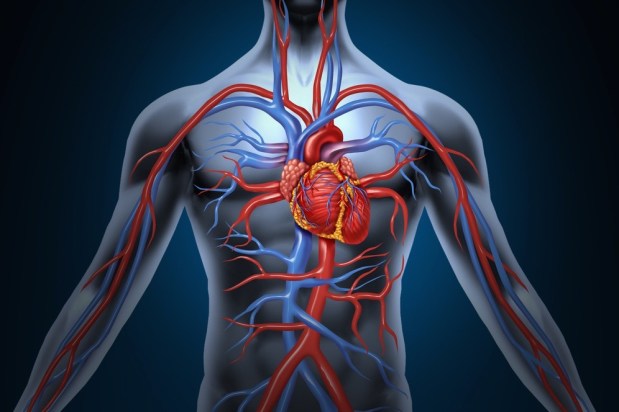
There is another form of Tzora’as that can affect their person, in the opposite manner, alluded to also in the maamor. The Alter Rebbe explains that the lesion of Tzora’as which appears on the skin is a white patch of skin because the white color is a sign that the blood flow is interrupted. In a healthy body the heart pumps blood to the limbs, and the limbs return the blood to the heart (see also Tanya, Igeres Hakodesh ch. 31). The failure of the limb to return blood to the heart results in the white patch of skin, which is Tzora’as.
With this concept in mind, let us revisit the words of the Rebbe is the Sicha of Beis Nissan, 5748 (3 years and a month before the Sicha of Tazria-Metzora 5751). There the Rebbe explains how the King is the heart of the nation (as the Rambam writes), and just as the role of the heart in the body is to pump blood, which is life, to the limbs, similarly the King gives life to the people. And just as in a healthy body the limbs must send blood — life — back to the heart, so, too, the people must give life to the King (for there is no King without a people).
The people giving life to the King, says the Rebbe, is expressed by the crowning of the King with the expression “Yechi Hamelech”, which “emphasizes that also the actions of the nation affect the life of the King”.
The crowning of the King by the people through the declaration “Yechi Hamelech” is likened to the limbs returning the blood to the heart. And the failure to return blood to the heart results in the white lesion which is Tzora’as, meaning that the inability to declare “Yechi Hamelech” is itself a case of Tzora’as!
The cure for Tzora’as, as explained in our sources, is the bittul that comes from learning Torah — and in our time the Rebbe emphasizes that it must be in the subject of Moshiach and Geuloh, especially as explained in the Rebbe’s own Sichos and Maamorim. This study provides the the vessels to heal both forms of Tzora’as — both the intolerant and judgmental form, and also the inability of the “limb” to return the blood to the “heart” by crowning the King with the declaration “Yechi Hamelech”.
Surely we will all add in this study, to bring about the realization of “the law of the Metzora on the day of his purification”, which the Rebbe says refers to the revelation of Moshiach.
Yechi Adoneinu Moreinu v’Rabbeinu Melech haMoshiach L’olam Vo’ed!
!יחי אדוננו מורנו ורבינו מלך המשיח לעולם ועד