
21) Kuntres Chof-Beis Shevat: the Infinite Revealed

21) Kuntres Chof-Beis Shevat: the Infinite Revealed

This maamor begins with the verse of parshas Mishpotim: “These are the statues that you shall place before them: if you will acquire a Hebrew servant…”.  The Talmud Yerushalmi says that statues the verse is referring to are the secrets of Torah.  This raises a question, since the term “mishpotim” refers to the basic statutes of the Torah which the human mind can grasp (including the nations of the world), but not the Torah’s hidden secrets.  Furthermore, what is the connection with acquiring a Hebrew servant?

The defining element of a Hebrew servant is his acceptance of the yoke of servitude: his kabbolos ‘ol.  The reason this appears at the beginning of the Torah’s many “mishpotim” (statutes understood by the human mind) is to hint even when we fulfill the Torah’s laws which we understand — we must be fulfilling them [as well] out of kabbolos ‘ol, like a servant who does what he is told without understanding.  After all, the main thing about these laws is that they are the Will of Hashem, and Will is above reason and understanding.  But haven’t we defined the mishpotim as laws which our mind does understand?  In fact, it is not a contradiction: Continue reading
Chof-Beis Shevat: The Ultimate Unification

Chof-Beis Shevat: The Ultimate Unification

In the sicha related to the 4th yahrtzeit of the Rebbetzin Chaya Mushka (Chof-Beis [22] Shevat, 5752), the Rebbe reveals amazing things about this event, the date it took place, and what these mean for us.

The date of the Rebbetzin’s passing is found in the same month two other epochal events: Yud Shevat, the Hilulla of the Previous Rebbe, and Yud-Alef Shevat, the day when the Rebbe MHM officially accepted leadership and inaugurated the 7th generation — Dor Hashvii.  The Rebbe explains the deeper significance of these events on these dates, and how they relate to the Geuloh.

First of all, while we generally view the Rebbetzin as the Rebbe’s wife, the Rebbe in this sicha identifies her primarily as the daughter of the Previous Rebbe.  Her passing comes as a continuation of, and an addition to, the great elevation that occurred on her father’s Hilulla, Yud Shevat.

To give us insight as to what is going on “behind the curtains”, the Rebbe explains that there are two dimensions of a “dwelling place in the lower realms” (דירה בתחתונים): Continue reading

Yisro 5752: Dwelling-Place and the One Who Dwells There

Yisro 5752: Dwelling-Place and the One Who Dwells There

This sicha focuses on the 10 Commandments (“Aseres Hadibros“) and their connection with Hashem’s desire for a “dwelling place down below” דירה בתחתונים.

There are two versions of the Dibros: those spoken by Hashem (in parshas Yisro), and those repeated by Moshe Rabbeinu in parshas V’eschanon.  The Rebbe refers to them as the “first Dibros” and the “last Dibros”.  Each version expresses something different: the first Dibros coming from Hashem Himself on Har Sinai, and the second spoken by Moshe “with slight changes”.

The goal of creation is to create a dwelling place in the lower worlds.  This means that just as a person’s essence is truly “at home” in his own dwelling place, we find the same by Hashem.  Explains the Rebbe: the true “dwelling place” for Hashem’s essence (“Atzmus“) is the Yidden themselves.  Why?  Because the Yidden are (“so to speak”) one thing with Atzmus (as is stated in the Zohar “Yisroel and the Holy One, Blessed be He, are all One”).  Furthermore, this enables them to make the world itself into a dwelling place down below — a “dira b’tachtonim”.

This is reflected in our two versions of the Aseres Hadibros: The first Dibros, which were heard from Hashem, give the power to make a “dwelling place for Him, may He be blessed  His — Essence” (דירה לו, יתברך — לו לעצמותו).  The last Dibros, spoken by Moshe Rabbeinu, give the power to the Yidden to affect the world on its own terms, Continue reading

Bo-Beshallach, 5752: Gathering Tzaddikim For a Greater Elevation

Bo-Beshallach, 5752: Gathering Tzaddikim For a Greater Elevation

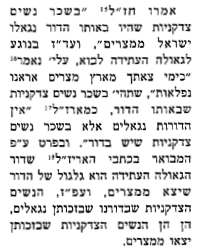
tmp_9129-BBsh_011603882386It is brought in the writings of the Arizal that the generation of the future Geuloh is a gilgul (reincarnation) of the generation that came out of Egypt, and according to this, we are redeemed in the merit of the righteous women in our generation, for they themselves are the righteous women in whose merit we came out of Egypt.
What makes our generation special?  It is rooted in Nosi Hador, the leader of the generation:

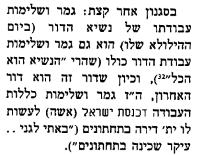
tmp_9129-BBsh_02-1548525365The completion and perfection of the avodah (spiritual mission) of the Nosi Hador (on his Yom Hahillula [day of his passing –Yud Shevat]) is the completion and perfection of the avodah of the entire generation (for “the Nosi is everything” [Rashi on Chukas 21:21]), and since this generation is the final generation, then this is the completion and perfection of all of the avodah of Knesses Yisroel (woman) to make a dwelling place down below for Hashem, may He be blessed.
This relates to the concept of the “disappearance (סלוק) of Tzaddikim” (yahrzeit and Hillula) upon the completion and perfection of their avodah, as the verse states “My beloved went down to his garden…to collect roses”, upon which the Midrash expounds: “to hide away (לסלק) the Tzaddikim that are among Yisroel” (which means that they have completed their souls through Torah and Mitzvos [commentaries “Yafeh Kol” and “Yadei Moshe” on this midrash]). More importantly: this “disappearance” (“סלוק”) is for a much greater elevation (incomparably so) which will be in the world of the resurrection, “those who dwell in the dust arise and sing”, and the Tzaddikim (the “roses”) at their head, souls in bodies in this physical world, in the true and complete Geulah.

The Rebbe proceeds to mention the inyan of the “breaking out of all the spiritual lights” (“ispariyu v’isgaleen minei kol nehorin“) which occurs at the time of histalkus (specifically: of the Nosi Hador).  The Rebbe clarifies that “the inyan of histalkus is not disappearing  (סלוק), chas v’sholom, but rather the revelation of the encompassing light (ohr hasovev kol almin) in the aspect of exaltedness” [note 44].  The main point, says the Rebbe, is that this “breaking out of all the spiritual lights” is the culmination of all the avodah of his lifetime.

Further explaining the connection with righteous women, the Rebbe mentions Miriam and her rejoicing with tambourines at the splitting of the sea, and brings the Midrash that “Miriam is named for merirus [=bitterness]”, that the most difficult period of “they made their lives bitter through servitude [in Egypt]” began when Miriam was born, and after this (and through this bitterness) “the Holy One, blessed be He, appointed the redeemer, this is Miriam” (for Dovid Hamelech is a descendant of Miriam, and similarly Moshiach Tzidkeinu who descends from Dovid).  This is coming to tell us that “the Geuloh was through this that Miriam greatly felt the pain and bitterness of exile.”  So, too, our bitterness over exile, and our anticipation of and yearning for the Geuloh will bring it in actuality.  In fact, according to the degree of her bitterness over the golus was her great joy upon the redemption, so that she took a tambourine in her hand and led all the women in celebration.

This celebration occurred when “they saw the Egyptians dead on the seashore”, for it was at that time that the fear of the Egyptians ceased to plague Bnei Yisroel, which is the completion of the redemption of Yisroel and thus the joy over the redemption was also complete.

tmp_9129-BBsh_031191101095…we are assured that immediately the true and complete Geuloh is coming, and the women begin immediately (in the last moments of golus) to sing (“with consummate modesty, of course”) with tambourines and instruments, rejoicing over the coming of the true and complete Geuloh!

More specifically: together with the tefillah, the request and the demand from the Holy One, blessed be He, that the Geuloh should come immediately mamash, which is with a feeling of pain and bitterness over the length of golus, which expresses itself in the cry from the depths of the tmp_9129-BBsh_04-1578198273heart “Ad mosai, ad mosai, ad mosai”!…  [=”until when?!”]  yet they [the righteous women] are imbued with the feeling of joy, and the greatest joy which is expressed in song due to the great trust that “behold, this one (“the King Moshiach”) comes”, and already has come!

This sicha was printed as a compilation of the talks of Shabbos Parshas Bo (6 Shevat 5752) and Shabbos Parshas Beshallach (13 Shevat 5752)

Yud Shevat: “Yohrzeit” of a Living Man

Yud Shevat: “Yohrzeit” of a Living Man

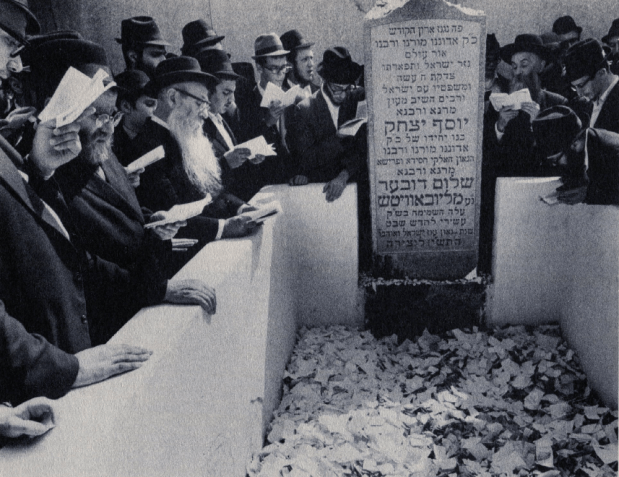
Yud Shevat marks the yohrzeit and Hillula (anniversary of the passing) of the Previous Rebbe in 5710 (1950), the father-in-law of the Rebbe MH”M.  His resting place is in Montefiore Cemetery in Cambria Heights, NY, commonly referred to as “the Ohel”.

The Rebbe, MH”M, oversaw all the details, wrote the text of the gravestone, and even designed the Ohel structure itself (in a way that Kohanim could enter and avoid the halachic prohibition of being in proximity to a grave).  The Rebbe visited the Ohel on a twice-weekly basis, and often more frequently than that.

At the same time, the Rebbe continued to refer to his father-in-law as “Nosi Doreinu”, the leader of the generation, and the “Moshiach of the generation“.  The Rebbe asserted that “hu bachayim” (“he is alive”), like Yaakov Avinu who did not die.  Each year on the Previous Rebbe’s birthday, the Rebbe spoke about his father-in-law’s new chapter of Tehillim, just like anyone else who has a birthday and begins a new year of life.  The Rebbe spoke sharply that his father-in-law does not have an issue of inheritance because he is “fresher and more lively” each passing year.

Yud Shevat is the yohrzeit of a living man, the Ohel is the gravesite of a living man.

If we don’t understand, the problem is ours to ponder and to research.  When we will understand how the gemora can state the “Moshe didn’t die” and “Yaakov didn’t die” and that after his passing Rebbi Yehuda Hanosi would appear at the home of his family on Shabbos night (and made Kiddush for them) — then perhaps we will begin understand the meaning of Yud Shevat.   To understand how eternal life is not contradicted by a yohrzeit nor by a gravestone.

יחי אדוננו מורנו ורבינו מלך המשיח לעולם ועד

20) Kuntres Yud Shevat 5752: Avoidah, Stage 2

20) Kuntres Yud Shevat 5752: Avoidah, Stage 2

Note: This Maamor is NOT based on the chapter of Bosi Legani that we learn this year.  (Unless you are reading this in the year תשצ”ב)

For 40 years the Rebbe would say a Chassidic discourse on one of the 20 chapters of the last maamor (Chassidic discourse) written by the Frierdicker Rebbe, entitled Bosi LeGani.  Every year at the Yud Shevat farbrengen, the Rebbe would say a maamor (sometimes more than one) on that year’s chapter.  Beginning from 5749 the Rebbe did not say a new maamor, instead an edited version of a maamor on that year’s chapter was printed.  The cycle started again in 5751 (addressing chapter 1) and the maamor printed in 5752 can be expected to have added significance, as it was released during the year of Dvar Malchus sichos.  In fact, when looked at in this light one indeed finds a message that fits with the unique chiddushim of 5751-52.

A general point: the edited version of a maamor is often significantly different from the way the Rebbe originally said the maamor.  In some instances, the edited maamor is so different from the original that it presents a completely opposite perspective.  (For example: the Rebbe once said a maamor in which the he spoke about the superiority of Torah over Mitzvos; when edited and published, the maamor addresses the superiority of Mitzvos over Torah!)  In the maamor published for Yud Shevat 5752, it is noteworthy to point out that the relevant “chiddush” is not explicitly stated in the original, unedited version of the maamor which the Rebbe said in 5732 (which can be viewed here), but when edited in 5752 the Rebbe saw fit to state it clearly.  The matter is as follows:

One who has been following Dvar Malchus, or has learned the Rebbe’s sichos and maamorim from all the years, is likely familiar with the concepts of the revelation from Above as opposed to the effort we make from below.  In this maamor, this is associated with Matan Torah (from Above to below) and the Mishkan (the vessel for receiving the revelation of Elokus).  The Rebbe explains that “this that Hashem desired to have a dwelling place down below (“dira b’tachtonim”) is that there will be a revelation of Elokus below via the avoidoh of human beings.”  Thus, the main element is the Mishkan (and Mikdash), where the avoidah of korbanos takes place.

The Mishkan (and by extension, the Mikdash) has two distinct stages.  The first is the making of the Mishkan (עשיית המשכן), the second is the avoidah which takes place in the mikdash — the avoidah of iskafiya and is’hap’cha (“breaking” the evil inclination, and “elevating” the inclination).  There is an aspect of “ikkar Shechina” that is drawn down through the making of the Mishkan (ועשו לי מקדש) , and after this is a higher level (נעלית יותר) that is drawn down by the two aspects of avoidah.  States the Rebbe: “therefore, the main avoidah that took place in the Mishkan and Mikdash was the avoidah of sacrifices (korbanos), iskafiya and is’hap’cha.”

From here we see the first point: the main thing is not the making of the Mishkan, but rather the avoidah that follows.  The original maamar of Bosi Legani can leave one with the impression that the main thing is the making of the Mishkan and the gilui Shechina that comes with it (the work of Moshe Rabbeinu, the 7th generation, as quoted in the maamar).  Similarly, after hearing the Rebbe’s revelation that 770 is the actual place of the 3rd Beis Hamikdash (“Beis Rabbeinu sh’b’Bovel“), and that “all Jews will find themselves standing (איבערגעשטעלט) in our Holy Land together with the third Beis Hamikdosh WHICH WE HAVE HERE (וואס מ’האט דא)…” (Sicha of 28 Sivan, 5751), we might become so excited we might lose sight of the fact that this is only the first stage; the Rebbe is clarifying for us that only after the first stage does the work really begin!*

The second point involves the distinction between “breaking” and “transforming” the evil inclination (the avoidah of iskafiya and is’hap’cha).  In general, Chassidus explains that “breaking” the evil inclination is the challenge of the average Jew, the Beinoni, as he stands up to its challenges.  Tzaddikim, who are not tempted by evil, don’t have those nisyonos, and their avoidah is that of transforming evil.  This would lead one to imagine that the Beinoni graduates to the avoidah of transforming evil when his avoidas haBirurim is completed.  This would seemingly be supported by the shift in focus from iskafiya in the previous generations (exemplified by the conduct of great Chassidim like Itche der Masmid), to the avoidah of transforming and elevating the world around us.  In this maamar, the Rebbe clarifies that in fact the avoidah of transforming evil is primarily associated with the making of the Mishkan (the first stage, mentioned above), whereas the avoidah of korbanos (the second stage) is essentially breaking (nullifiying) evil, just as the korban itself is completely nullified in the fire of the mizbe’ach.  In other words: after the revelation of “ikkar shechina” that is drawn down by the making of the mishkan, the higher level revelation is drawn down by our avoidah of iskafiya.  Not only is iskafiya still relevant — it is the main avoidah(Not to say that the iskafiya of today is the same as the iskafiya of previous generations, ואין כאן המקום לאריך).

It comes out that while the every Bosi LeGani maamar since the original Yud Shevat begins with the greatness of the drawing down of the Shechina through the making of the Mishkan, here in the latest (as of now) maamar the Rebbe brings out clearly that there is a higher level achieved through the avoidah that is performed after the Mishkan is built.  Once could say that here the Rebbe is connecting the beginning of his leadership (“…Moshe, he is the 7th, and all 7ths are beloved, drew down the Shechina into this world…mainly in the Beis Hamikdash, as is stated ‘make for me a Mikdash’…”) with the completion of more than 40 years of that leadership (when we have “a heart to know, eyes to see, ears to hear, etc.”), and clarifying for us that we aren’t finished yet!

* Well-known is the comment of the Rebbe to J.J. Hecht, after the latter was working very hard on a particular project and expressed to the Rebbe that at least when Moshiach comes we’ll be able to relax.  The Rebbe responded that when Moshiach comes we will start to work several times harder!

Bo 5752: G-dliness Revealed Without Histalkus

Bo 5752: G-dliness Revealed Without Histalkus

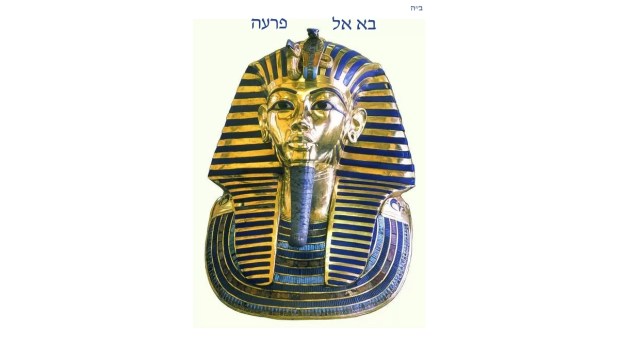
Our parsha begins with Hashem’s instruction to Moshe Rabbeinu “Come to Pharaoh”.  The question is asked: why “come to Pharaoh” and not “go to Pharaoh” (as stated in other verses)?  Furthermore, being that the Torah is eternal, what is the relevance of going to Pharaoh, King of Egypt, when we are standing at the end of golus — long after Egypt was rendered helpless and nothing remains of Pharaoh — at a time when the birurim of the klipah of Pharaoh are finished (as mentioned many times)?

CONFRONTING PHARAOH

The commentaries explain that Moshe Rabbeinu was afraid to go to the inner chambers of Pharaoh, and therefore Hashem said “Come [with Me] to Pharaoh” to ease Moshe’s fear of confronting Pharaoh alone.

However, our question becomes stronger when we learn, based on the Zohar, that the evil Pharaoh that we encountered in Egypt has his source in the “Pharaoh of kedusha (holiness)”, which refers to the revelation of G-dliness.  Why was Moshe afraid to go to the Pharoah of holiness, so much so that he needed a direct command from Hashem to “come” together with Hashem?! Continue reading

Erev Shabbos: Time of Techiyas Hameisim

Erev Shabbos: Time of Techiyas Hameisim

In addition to the radical chiddushim in the plain understanding of the second sicha of Parshas Va’era 5752, one can also find a number of hints and suggestions that give even deeper insight into the ground-shaking ideas the Rebbe is revealing.

In the explanation as to how the “good sign” of one who dies on Erev Shabbos applies to our era (the last quarter of the 6th millennium, “Erev Shabbos” of the entire creation), the Rebbe refers to the concept of “nesira” (“cutting”). This “nesira” describes what happened to Adam Harishon on the day of his creation: Hashem put him to sleep in order to separate Chava. From being a “back to back” entity they gained the ability to be “face to face”, and to bring into existence limitless future generations. While his sleep was one-sixtieth of death, it was completely a positive matter: in order to bring about an immeasurable improvement, specifically the ability to give birth to all future generations.

The Rebbe references the writings of the Arizal as a source for the Kabbalistic explanation of this concept of Nesira. In the writings of the Arizal (Shaar Hapsukim, p.17) one finds that the Arizal writes that “this matter is that the moichin (intellect) which is in the head of Z”A (the six sefiros) go out from it via this sleeping, and then they are given to the female (Malchus).” This brings about that Malchus grows from a point to her full development. Reading this, especially in the original language, seems to hint at the state of affairs after the events of 27 Adar and 3 Tammuz, when the Rebbe (the head — “Rosh Bnei Yisroel”) is not seen, and Malchus (the Jewish souls) receive and develop their potential via the intellectual power bestowed upon them by the head (“now I give it over to you, do all that you can to bring Moshiach in actuality” [sicha of 28 Nissan 5751]).

The Rebbe also brings (footnote 40) from “Kuntres Sfas Emes (at the end of Emes L’Yaakov)” that there is a “nesira” every Rosh Hashana which is the most difficult and requires the sounding of the shofar and a great awakening. There was also a “nesira” at the time of Purim, the 70 years of golus Bavel, and “the ‘nesira’ which will be in the future in the time when Moshiach Tzidkeinu will come…these are the birth pangs of Moshiach”. A hint that in our times there will also be a “nesira”. Note that in the first sicha (footnote 66) the Rebbe mentions that regarding Yehuda the verse states “she ceased to give birth” hinting at the future redemption regarding which it says ‘shir chadash’ in the masculine, “because while the female suffers birth pangs, the males do not give birth.” Implying that the suffering associated with birth ceases when we are in a “masculine” mode of Geuloh (as described in Torah Ohr, parshas Tazria), referring to the effort from below, fitting the avoidah of the time of Nesira and the Rebbe’s statements numerous times that there is no need to undergo more birth pangs of Moshiach.

Having established that our era is itself the “Erev Shabbos” of the entire creation, the Rebbe now explains the significance: In footnote 63 the Rebbe brings a reference that the time of Techiyas Hameisim is Erev Shabbos (the time for “shaking off the dust”, quoting the Zohar I, 127b). This is connected with Rebbi Yehuda Hanosi, who himself was an example of Techiyas Hameisim, returning to make kiddush for his family after his passing. Tzaddikim have Techiyas Hameisim at the start of Yemos Hamoshiach, “40 years before the era of Techiyas Hameisim for all of bnei Yisroel” (Zohar I, 140a). Then the Rebbe goes on to say (not for the first time) that our generation will experience eternal life (which is Techiyas Hameisim, as explained elsewhere) without the interruption of death.

We can, b’derech efesher, understand from this that the beginning of Yemos Hamoshiach was back in 5711 (the beginning of the Rebbe’s leadership), and all 40 plus years of the Rebbe’s leadership leading up to 5752 were in fact Yemos Hamoshiach! After 40 years (which the Rebbe emphasized many times as the beginning of a new epoch of having “eyes to see, a heart to know, etc;” and to be able to fully comprehend the teachings of one’s Rebbe) we have entered the period of “Techiyas Hameisim for all of bnei Yisroel.” Thus, the Rebbe states that when “the time of death is erev Shabbos his death is in a way that it is emphasized in a revealed way (only) the good…mainly through Techiyas Hameisim in proximity to the time of burial.”

We are already in the time of “erev Shabbos” of Creation; the Rebbe, after 40 years of leadership, is telling us that we will all go to eternal life (Techiyas Hameisim) without interruption, “in proximity to the time of burial.” This unique expression of “Techiyas Hameisim in proximity to the time of burial” should grab our attention. It reads as a description of fact, not as an expression of possibility. Not “if the Geuloh will come now, then this individual will be among the first to rise” (which might not come to pass if the Geuloh didn’t come), but rather: this is what is happening now, the “erev Shabbos” in proximity to the burial! It is not a Techiyas Hameisim that is visible to our physical eyes, but it is happening!

[For the Torah basis for saying this, that what looks to us as a person passing away is actually the “shaking off the dust” of klipa, see the Kuntres “The Generation that Doesn’t Die“.]

The Rebbe wrote to R’ Michoel Seligson regarding the Rebbe’s small sefer Hayom Yom, “הפוך בה והפוך בה כי כולה בה” — turn it over and over because it contains everything; how much more so the lengthy sichos of the 5751-5752, the more one “turns them over” the more he reveals the insights of the Geuloh found in the Torah of Moshiach!

Va’era 5752: The Rectification of Death

Va’era 5752: The Rectification of Death

In the second sicha printed for parshas Va’era 5752, the Rebbe elaborates on the statement of the sages that “one who dies on Erev Shabbos, it is a good sign for him”.

The Gemara describes that when R’ Yehuda haNosi took ill, R’ Chiya visited him and found him crying.  He asked him why he was crying (assuming that he was afraid of death).  R’ Chiya proceeded to give him a list of signs that portend well for the fate of a person after death (and their opposite): Dying amidst laughter is a good sign, while crying is a not good; one who dies on Erev Shabbos is a good sign, after Shabbos is not good.  (And several others.)

R’ Yehuda haNosi responded that he was crying (not from a fear of his fate after death, but rather) because of the Torah and Mitzvos he would no longer be able to perform.  Seemingly, the list of good signs brought by R’ Chiya (several of which applied to R’ Yehuda haNosi and were meant to comfort him), do not help the reason given by R’ Yehuda for his crying, because seemingly being unable to perform Torah and Mitzvos after ones passing is not affected by the good signs of how a person passes away.  (The Rebbe brings a proof for this from the story in the Gemara about Dovid haMelech, who asked to pass away on Erev Shabbos (because then one is not subject to “chibut hakever“), and Hashem refused him, telling him that even one day of his Torah learning was more dear to Him.)

Furthermore, the Rebbe asks on this whole discussion a fundamental question:

“How is it possible to truthfully say (in Toras Emes, the Torah of truth) that “one who dies on Erev Shabbos it is a good sign for him” — a “good sign” in relation to the occurrence of death, the opposite of life, the ultimate opposite of good according to Torah?!”  

Since the Torah defines “good” as fulfilling the will of Hashem through the performance of Torah and Mitzvos as a soul in a body, then death is the opposite of Good, since it is the the departure of the soul from the body and the performance of Torah and Mitzvos ceases (thus it was the reason for R’ Yehuda haNosi’s crying).

In answer the Rebbe explains that:

The “good sign” of “one who dies on Erev Shabbos” indicates and emphasizes the rectification of the undesirable aspect in the general inyan of death, and automatically the reason for R’ Yehuda haNossi’s crying over the interruption of Torah and Mitzvos is nullified (and rectified), as we will explain.

The Rebbe proceeds to explain that already on the very first Erev Shabbos, when Adam Harishon was created, there was already something similar to death that took place, as the verse states “Hashem brought a drowsiness upon the Man and caused him to sleep”.  Sleep is called “one-sixtieth of death” by our sages, for when a person sleeps his life force (chayus) is not visible (through movement, expressing ideas, etc.).  This is seemingly an undesirable state, but in fact it is a sign that there will be an increase in the individual’s chayus (life-force) when he wakes up, an incomparable increase.  In the case of Adam Harishon this resulted in the creation of his wife, Chava, after which they could bring unlimited generations into being — an incomparable increase of chayus compared to before he slept, from the limited to the unlimited.

This model also holds in the bigger picture of the 6,000 years of this world which correspond to the days of Creation (the 7th millennium corresponding to the 7th day, Shabbos).  The 6th millennium (which we are in presently) corresponds to “Erev Shabbos”, the end of the time of golus, and there is this inyan of sleeping through which is brought about a union on a higher level (according to Kabbalah this is the union of Z”A and Malchus, the Holy One, blessed be He, and Knesses Yisroel), corresponding to the sleep of Adam Harishon that resulted in an infinitely higher state of being.

Thus, one who “dies on Erev Shabbos” also refers to one who passes away in our time, the eve of the 7th millennium; it is like the sleep we mentioned above.  So it turns out that this death (on “Erev Shabbos” at the end of golus) is for the sake of an increase and renewal of life.  This has two explanations:

a) Our sages say “Yaakov Avinu did not die…just as his descendants are alive, so, too, he is alive”, that through the continuation of the life of his descendants (true life, in accordance with Torah) this brings about that “also he is alive”.  And more than this, that this inyan of “he is alive” in its true sense, meaning eternal existence, is revealed by the continuation and eternality of “his descendants are alive” after his passing [in other words, Yaakov’s eternal life is revealed specifically after he passes away (or, at least, seemed to pass away) by the fact that his descendants continue to live the true life of Torah]that specifically then it can be seen in a revealed way the eternality (the truth) of “he is alive”.  So it turns out that through death comes about an increase and renewal of life — the revelation of the eternality and truth of life.

b) And this is the main thing: that the concealment (histalkus) of the chayus that occurs at death is for the sake of an increase and renewal of chayus as a soul in a body — at the resurrection of the dead, for then there will be life of a soul in a body in eternal life.

This enables us to answer the question of how does telling R’ Yehuda haNosi that “one who dies on Erev Shabbos it is a good sign for him”: since on Erev Shabbos it is emphasized that the concealment (histalkus) of the chayus is for the sake of an increase and renewal of the chayus.  Thus, it turns out that

…the time of death coming on Erev Shabbos is in a way that emphasizes in a revealed way the good aspect alone, the increase and renewal of chayus, both through the increase of the eternality and the truth of the life through the fact that “his descendants are alive”, and also and mainly through the Resurrection of the dead right after the time of burial.

Thus, it turns out, that this “good sign” indicates and emphasizes the rectification of the undesirable aspect in death, and automatically the reason that Rebi [Yehuda haNosi] was crying over the nullification of Torah and Mitzvos is rectified as well, because when Tzaddikim arise at the Resurrection of the dead (at the beginning of Yemos Hamoshiach, forty years before the epoch of the Resurrection of the dead of all Bnei Yisroel) there is a continuation of the fulfillment of Torah and Mitzvos (and to the contrary: in a higher degree of perfection — “as mitzvos of Your will”, כמצות רצונך)

In other words, death on Erev Shabbos is a good sign also as regards the fulfillment of Torah and Mitzvos, for following on the heels of this death is the Resurrection of the dead which enables the fulfillment of Torah and Mitzvos as a soul in a body in a perfected and unlimited way, immeasurably greater than the way it was before the “death on Erev Shabbos”!

The Rebbe then takes this even further: that the main intention of this “good sign” is not literal death, chas v’sholom, but rather the avodah of the Yid in his lifetime as a soul in a body.  This is especially after it has already occurred literally with unique individuals, and through them it is sufficient to fulfill the obligation of the rest of Bnei Yisroel (so that the rest of us do not need to literally pass away in order to attain the higher level described above). Consequently, by the rest of Bnei Yisroel there will be only the spiritual avodah of “death” (meaning self-nullification, bittul), with a seamless continuation to eternal life (without any interruption in between) in the time to come.

Death on Erev Shabbos (the 6th millennium, our times) is only a concealment as a preparation for a revelation of a higher level of life — eternal life of the soul in the body, in the ultimate state of perfection!

Thoughts on the 22 Shevat Sicha

In the Sicha of 22 Shevat (which we summarize in the article 22 Shevat: The Ultimate Unification) the Rebbe explains the 3 stages that correspond to the dates 10, 11 and 22 Shevat.  Briefly, they are the stages of:

a) Preparing the recipient (“10”) to receive the great revelation;

b) The initial revelation of “11” itself.  It is in a way where the recipient is elevated up to the level of “11” (rather than integrating it into is own reality). It remains separate from the “11”, but also loses its importance as it is subsumed into the matters of the “11”; and,

c) The ultimate unity, when the “11” is fully revealed in the reality of and in the inyonim of the “10”; they become as one, yet the “10” is neither nullified out of existence nor does it lose its importance.

One can learn these deep concepts and be left wondering what they mean practically.  We will attempt to bring these ideas down, and illustrate what they mean (בדרך אפשר) in the relationship of Chassidim to the Rebbe.

3 Stages in the Avoidah of Chassidim

1)Until Yud Shevat the Chassidim had the avoidah to work on themselves, seichel and midos, to prepare themselves for the Geuloh (עמדו הכן כולכם).  This was the avoidah of the 6th generation, where the difference in the roles of the Chassidim and the Rebbe was emphasized. This avoidah, the preparation of the recipient (“10”),  was was completed upon the histalkus of the Previous Rebbe on Yud Shevat.

2) Beginning with 11 Shevat, the Nesius of the Rebbe מה”מ, the avoidah of the 7th generation begins: the emphasis is not on one’s avoidah with himself, but on one’s task to influence the world around.  This is most pronounced in the inyan of shlichus, where the shliach puts aside the shleimos of his personal avoidah in order to become an emissary and representative of the Rebbe מה”מ.  This matches what the Rebbe says about the “10” being subsumed into the “11”: the shliach’s personal life and interests are subsumed into the Rebbe’s concerns. The shliach and the one who sent him now share a common avoidah, more so than in the previous generation, but it is really the avoidah of the Rebbe into which the shliach is subsumed and thus they remain 2 separate entities;

3) After 22 Shevat the emphasis on Moshiach shifts into high gear, ascending from year to year, with an increasing emphasis on the avoidah being “from their own effort” (בכֹח עצמם), and amazing explanations of the revelation of Atzmus and the unification of the mashpia and the mekabel.  Of course, all this takes on a new dimension after Gimmel Tammuz, when Chassidim are “forced” to proceed without “giluyim” and the Rebbe’s inyonim are now their own inyonim.  The border between Rebbe and chosid becomes increasingly obscured as the Rebbe becomes more and more revealed in the actions of the chosid, yet the reality of the chosid is not nullified.

These thoughts are for your consideration, your own comments are welcome!