Tzoraas: The Illness Before Geuloh

Tzoraas: The Illness Before Geuloh

In the landmark Sicha of Tazria-Metzora 5751, the Rebbe explains how Tzoraas is a condition that occurs at the end of golus, after avoidas habirurim is finished (which is why it appears in the Torah after parshas Tazria, which refers to the birth of the soul of Moshiach).  As we are now holding at that time and place — the end of golus, after the birurim are finished — the condition of Tzoraas is relevant to us.

In fact, the Rebbe states clearly that each and every Yid today can be said to be on the level of one who has completed his avoidah and is holding in a state of the Metzora — all the bad is coming out, but the inside is completely refined.  (Reminiscent of chazal’s play on words that “Metzora” is from the words “moitzi ra’“, a reference to loshon hora, but according to Chassidus we can understand it literally “to put out the evil” — that all the evil has been purged from within and it’s appearance externally is really the final stage before it’s complete eradication.)

How can we understand this Tzoraas in our lives?

The maamor of the Alter Rebbe in Likkutei Torah and this Sicha of the Rebbe MH”M explain how the oirois Elyonim (“lofty Divine lights”) begin to shine in a Yid’s soul only after the inner refinement is completed.  Lacking bittul and proper vessels to receive these oiros, the lights of G-dly עונג (pleasure) are rearranged to become נגע (lesion).  This manifests itself as anger, judgmental behavior, and “spiritual arrogance”.  The powerful lights of Tohu which demand “Moshiach Now!” and “Yechi Hamelech” may be unable to tolerate those who one perceives to be “holding up the process”.  We could call it intolerance for and arrogance regarding one who appears to be a “misanaged” in these matters.

There is another form of Tzoraas that can affect their person, in the opposite manner, alluded to also in the maamor.  The Alter Rebbe explains that the lesion of Tzoraas which appears on the skin is a white patch of skin because the white color is a sign that the blood flow is interrupted.  In a healthy body the heart pumps blood to the limbs, and the limbs return the blood to the heart (see also Tanya, Igeres Hakodesh ch. 31).  The failure of the limb to return blood to the heart results in the white patch of skin, which is Tzoraas.

With this concept in mind, let us revisit the words of the Rebbe is the Sicha of Beis Nissan, 5748 (3 years and a month before the Sicha of Tazria-Metzora 5751).  There the Rebbe explains how the King is the heart of the nation (as the Rambam writes), and just as the role of the heart in the body is to pump blood, which is life, to the limbs, similarly the King gives life to the people. And just as in a healthy body the limbs must send blood — life — back to the heart, so, too, the people must give life to the King (for there is no King without a people).

The people giving life to the King, says the Rebbe, is expressed by the crowning of the King with the expression “Yechi Hamelech”, which “emphasizes that also the actions of the nation affect the life of the King”.

The crowning of the King by the people through the declaration “Yechi Hamelech” is likened to the limbs returning the blood to the heart. And the failure to return blood to the heart results in the white lesion which is Tzoraas, meaning that the inability (for whatever reason it may be) to declare “Yechi Hamelech” is itself a case of Tzoraas!

The cure for Tzoraas, as explained in our sources, is the bittul that comes from learning Torah–and in our time the Rebbe emphasizes that it must be in the subject of Moshiach and Geuloh, especially as explained in the Rebbe’s own Sichos and Maamorim.  This study provides the the vessels to heal both forms of Tzoraas — both the intolerance and judgmental form, and also the inability of the “limb” to return the blood to the “heart” by crowning the King with the declaration “Yechi Hamelech”.

Surely we will all add in this study, to bring about the realization of “the law of the Metzora on the day of his purification”, which the Rebbe says refers to the revelation of Moshiach.

Yechi Adoneinu Moreinu v’Rabbeinu Melech haMoshiach L’olam Vo’ed!

!יחי אדוננו מורנו ורבינו מלך המשיח לעולם ועד

“Yechi Hamelech”, Beis Nissan, 5748

“Yechi Hamelech”, Beis Nissan, 5748

The Shabbos of Parshas Tazria-Metzora 5751 was the first time that one of the Chassidim (R’ Dovid Nachshon) worked up the nerve to declare “Yechi…melech Hamoshiach” before the Rebbe (see “The Facts Behind the Psak” for details), and therefore we are presenting a free-translation of the relevant passages from the sicha of Beis Nissan, 5748, where the Rebbe himself introduces and explains the significance of the declaration “Yechi Hamelech”.  (Bold emphasis in the original sicha):

…the heart is the life-force of the body itself, being that it is the location of “the blood, which is the soul”, and the heart causes “the dispersion and circulation of the life-force…which is enclothed in the blood of the nefesh which goes out from the heart to all of the limbs, and circulates the life energy (“ruach chayim“) and the blood into every limb and the ligaments and it is absorbed by them and returns to the heart, etc.” (as the Alter Rebbe explains in Igeres Hakodesh, ch. 31).

So it comes out that the important element of the life-force of all the limbs of the body are connected with the heart, since the blood (“which is the soul”) which is in the heart…is actually dispersed to all the limbs of the body.

Life-force is connected with movement.  And movement is found specifically in the heart, for it is found to be constantly pumping and drawing blood, “the pulse of the heart”.  And the blood that is in it is also in a constant state of movement, circulating throughout the entire body (as explained in Igeres Hakodesh), which is not the case with the liver and the brain [two other essential organs mentioned previously] which do not move.

Similarly this is true as regards the Leader (the Nosi) and the King (the Melech), “the heart of the community of Israel” (Rambam) — “who sends them out and brings them back”, meaning that in accordance with his word comes about (as well — in addition to the head and the brain which provide guidance and direction) the drawing down of life-force to Bnei Yisroel.

And when the day arrives which was the beginning of the leadership (Beis Nissan [the day the Previous Rebbe became the leader upon the passing of his father, the Rebbe Rashab]), there is an increase in the aspect of the heart, meaning and increase in the matter of the life….

4) …on the one hand, the dimension of loftiness and separateness, [that the King is] “head and shoulders above the rest of the nation”, specifically “nation”, “from the word meaning ‘individual coals’, that they are things which are separate and foreign and distant from the level of the King.”  This is emphasized in the degree of awe and self-nullification (bittul) to the King — “place upon yourself a King” which the sages explain as “place awe of him upon yourself”.

On the other hand — the ultimate closeness, as has been stated, that the King is “the heart of the entire community of Israel”.  For there is no greater closeness than the closeness of the heart to the limbs of the body, as was explained that the blood in the heart itself is found constantly in all of the limbs: “the dispersion and circulation of the blood to all the limbs is constant…that all the limbs are connected together and receive their life-force from the heart.”

And more than this:

The closeness between the King and the nation is not only as regards to dispensing life-force to the entire nation, who receive their life-force from the King, but rather also the opposite — that the existence of the King is dependent upon the nation, “there is no King without a people“, which means that even though they are called a “nation, from the word meaning ‘nearly extinguished coals’…distant from the level of the King.”, nevertheless at the same time (and, in fact, because of this) they are the cause of the Kingship — the King.

And this is emphasized in the crowning of the King — that the people declare “Yechi Hamelech” [“long live the King”] (as we find also in the Kingship of the House of David), that in this is emphasized as well that the actions of the people are in the King’s life, the life of the King.

5) …in addition to what was said regarding an increase in life to all people in the generation via the Leader of the Generation, the Nosi Hador — it is also true that the people of the generation cause an in crease in the matter of life to the Nosi Hador, as was stated above regarding the declaration “Yechi Hamelech”.

In simple words:

After we have completed 68 years (numeric value = “life”) of the leadership (his activities and his efforts) of Nosi Doreinu — there needs to be an essential increase in the inyan of the life (also) via the actions of the people who declare “Yechi Hamelech”, the meaning of this declaration being — that we have already arrived at the time of “arise and sing those who dwell in the dust” — my father-in-law Nosi Doreinu and until the arise and sing Dovid Malka Mashicha!

And this is also the “shturem” that is made at the time of ikvesa d’Meshicha [the heels of Moshiach, the final stages] regarding the need to declare ad mosai[“Until when?!”], for through this we bring closer and speed up the Geuloh.  And we can say that in addition to the emphasis on anticipation, the request and the demand for the Geuloh [which brings Moshiach in actuality, in a way that one can point with his finger and say ‘this’, here is the Melech Hamoshiach, flesh and blood, as ruled by the Rambam “a King will arise from the house of David…and will gather in the exiled of Israel”], in this declaration is included the intent of Coronation — “Yechi Hamelech”, that through this we bring about the coming of Dovid Malka Mashicha.

6) Additionally, regarding Melech Hamoshiach it is emphasized even more his relationship to every single member of the Jewish nation (in addition to the fact that every King is “the heart of the entire community of Israel”) — therefore, every single individual possesses the power and the ability to bring about the matter of “Yechi Hamelech”.

VIDEO: The Poor Man Must Accept the Gift

Based on the Maamar in Kuntres Beis Nissan 5751: The Rebbe gives the moshol of giving to a poor man. The “initial thought” is not the giving of the tzedakah, but that the poor man should accept it and benefit from it, which is not in the power of the giver, only the recipient.

What does this mean for Dor Hashvii and the Rebbe’s assertion that “I’ve done all I can do, now I give it over to you…”

1) Kuntres Beis Nissan 5751: To Give and To Receive

A Chassidic discourse, called a maamor, was edited by the Rebbe and published in honor of the Hillula of the Rebbe Rashab, Beis Nissan, 5751.  This was the day after Shabbos Vayikra, the very beginning of the cycle of Dvar Malchus.  We are going to extract a small section of this maamor which stands out boldly as a descriptive explanation of the sharp and shocking words of the Rebbe on 28 Nissan (a few weeks after this maamor was released): “I’ve done all I can do, now I give it over to you to do all that you can do to bring Moshiach in actuality”.

The section of the maamor we will look at states as follow:

The Rebbe Rashab explains the difference between two inyonim: “its beginning is wedged into its end and its end into its beginning” (נעוץ תחילתן בסופן וסופן בתחילתן) and [the similar expression that] “the end of the deed was first in thought” (סוף מעשה במחשבה תחילה).  The difference between them is that “it’s end” (סופן) refers to the end and completion of the thought, wedged into the beginning of that which is being given (ההמשכה).  And a moshol is brought for this from the giving of tzedaka.  That the beginning (of the giving) is the mercy (רחמים) that is awakened towards the poor man.

The concept that “its end is wedged into its beginning” is that the main intent in the awakening of mercy (“its beginning”) is that there should be actual giving to the poor man (“its end”).  And if there will not be any actual giving, then the main thing is lacking.  Its end is wedged into its beginning: the intent (of giving) which is wedged into its beginning (the awakening of mercy (רחמים) for the poor man)….

The inyan of “the end of the deed was first in thought” (סוף מעשה במחשבה תחילה) is higher than the inyan of “its beginning is wedged into its end and its end in its beginning” (נעוץ תחילתן בסופן וסופן בתחילתן).  This is because the meaning of the expression “end of the deed” (סוף מעשה) is not the end of the act of performing the deed itself, the action of the person.  Rather, it means the action that comes as a result of the actions performed by the person.  In our moshol, the giving of chesed: the “end of the deed” (סוף מעשה) is when that which is being given is accepted — that the poor man should accept that which is being given to him with a good feeling (מקבל את ההשפעה בטוב) and that he should benefit from what he received. 

This aspect — the manner in which the poor man accepts that which is given to him — is not dependent on the giver, but rather on the recipient….  Thus, the pleasure that the giver has from the acceptance of what he gives (the poor man accepting with a good feeling that which he has been given) is a greater pleasure than the pleasure from the “giving” alone.

This brief moshol, when we take a moment to contemplate what it is telling us, resolves a lot of questions.  It also eliminates much of the anxiety raised by the sicha of 28 Nissan (which has been magnified by the state of affairs we find ourselves in for over 20 years, ר“ל, when do not receive new sichos or maamorim).

View the Rebbe’s renown sicha of 28 Nissan in light of this kuntres.  The Rebbe telling the Chassidim “I have done everything in my power to do”, corresponds to giving to the “poor man”.*  Having succeeded in completing the act of giving, he now has to wait until “the poor man should accept that which is being given to him with a good feeling and to benefit from it”, because “this is not dependent on the giver, but rather on the recipient”.

The Rebbe is sharing with us a most vital piece information: you, the Jewish people, have been given everything you need!  It’s the reality: “the money is in the bank,” and the Geuloh is in the bank!  But it is up to you yourselves to accept it, to realize what you have received, to put it to good use and benefit from it!

All the sichos and maamorim the Rebbe spoke, all the seforim the Rebbe instructed to print, all of the brocha and hatzlocha, guidance and direction that the Rebbe has poured and continues to pour on the Jewish people and the world…this is not just a coin in the poor man’s cup — this is true wealth!

But as long as it remains in the cup (and all the more so if we don’t realize that it’s even there), then we remain in a golus of poverty — poverty in our own perception of reality.  We need to accept what the Rebbe has given us, put it to use in shaping our reality, and in this way we ourselves will realize that not only do we have the potential to no longer be poor, but that we are in fact rich in actuality — the true and complete Geuloh!

The matter was given over to us by the Rebbe and is completely in our hands!  So, now, let’s ask ourselves the question: Ad mosai?!!


* We should note that in Kuntres Yud Alef Nissan, the maamor printed for the Rebbe’s 90th birthday, the Rebbe explains that the Jewish people are not really poor except in awareness, and the “prayer of the rich man” (Moshe Rabbeinu) is that the Yidden should realize that they are in fact rich.  Nonetheless, one who sees himself as poor really is poor — “there is no poverty except for knowledge” (איו עני אלא בדעת).

Tazria-Metzora 5751: The “Geuloh Illness”

Tazria-Metzora 5751: The “Geuloh Illness”

Moshiach in Exile is Called “Metzora

In many years the Torah portions of Tazria and Metzora are read together on the same Shabbos.  Parshas Tazria begins with the words “a woman who gives seed and gives birth to a male” — according to Chassidus, this hints at the birth (revelation) of the soul of Moshiach.  Giving seed refers to our deeds and effort (“avodah”) in the time of exile, followed immediately by the sprouting — the complete Geuloh.

Metzora refers to Moshiach; as our sages say: he bears our sicknesses.  The name of Moshiach in the time of exile is “Metzora” (one suffering from the spiritual skin ailment called Tzoraas).  The opening words of this parsha, “This is the Torah of the metzora on the day of his purification” — the day of his purification, the day that the nega on his skin is healed, meaning when he (Moshiach) is revealed and redeems the children of Israel in the true and complete Geuloh.

What is the connection?  Tazria is birth, meaning the eternal Geuloh; Metzora is one who needs to be brought to purification.  Seemingly, if the eternal Geuloh is “born”, it is not related in any way to the state of a metzora, who is connected with illness and exile.  However, the content of parshas Tazria is all about the various types of lesions of a metzora, which pertains to exile.  And, parshas Metzora actually teaches the laws of the purification of the metzora, the inyan of Geuloh.  Seemingly, it should be reversed?!

Tzora’as — Illness After Completing Everything

It turns out that the order is of the parshiyos and their subjects is exact.  The illness of tzora’as becomes relevant only at the very end of golus.  The verse that begins to describe the illness of tzora’as states “A man [‘Adam’] who has a on the skin of his flesh…”, and the Zohar states that “Adam is a great level, the perfection of everything”.  If so, how could he be subject to illness?!  The answer is: although he has rectified everything in his inner dimensions, nonetheless, on the skin of his flesh the evil is still not refined, there remains waste material “on the ends of his garments”; but this is only an external matter which is not connected at all to the “essence” (etzem, atzmiyus) of the person, not even to his flesh (which changes through eating and drinking); it is only related to the skin which surrounds him externally.  In truth, the nega is only on the skin (from the word “nogea”, meaning to touch — not even the skin itself is really affected).  A completely superficial state of affairs.

It turns out that, according to pnimiyus haTorah, these negoyim (lesions) are actually a result of the lofty state of the “Adam” described above.  In fact, the negoyim themselves they are not tamei (impure and imparting impurity); only when they will be observed by a Kohen who will declare them impure will they become tameiThis is because in their source they derive from lofty spiritual lights (“oirois elyoinim”).  The word “nega” itself is a reversal of the letters of the word “oneg” which is the aspect of supernal pleasure.  As a rule, it is the loftiest things which fall to the lowest levels of impurity.  Their rectification of the negoyim is via the revelation of their true nature as lofty spiritual lights (“oirois elyoinim”), and by revealing this we nullify the external forces (“yenikas hachitzonim”).

Bittul Negates the Evil and Heals the Metzora

The subject of tzara’as and negoyim is connected with the concept of the lights of Tohu, a level beyond being constrained in vessels.  These lights, when revealed, bring about a yearning of the soul to escape limitation (ratzo), abandoning the responsibilities of this world (spiritual and otherwise).  The lofty lights of Tohu do not want to return (shov) to the vessels of holiness, they only seek to rise and escape limitation, which gives nurture to the klipos.  The cure for this is bittul, self-nullification to the point of completely nullifying one’s will “until the person is like a lifeless stone…like a servant before the King.”  It is specifically through our avoidah of bittul that the powerful lights of Tohu can be drawn into many vessels down below, which is how we create Hashem’s dwelling place down below (“dira b’tachtonim”).

This bittul is specifically accomplished through learning Torah.  We see that the verse says “this is the Torah of the metzora” (instead of “the purification” or something similar) — because the rectification of the metzora comes through involvement in Torah, which is the aspect of bittul.

Through Bittul We Transform Exile to Redemption

Exile (“golus”) is darkness and concealment; yet, in its source, it is very lofty.  From these very lofty levels descend the concealment and all the undesirable things of golus.  And even after it descends — having reached the level of impure things — it is only an external manifestation, like a nega which is external even to the skin of the person.  Rectification through our deeds and avodah is not a process of adding something new; rather, it is simply revealing the truth of the golus.  In other words, we are not nullifying golus, we are transforming golus to Geuloh.  This occurs by drawing down the alef and adding the alef to gola (“exile”) to make Geuloh (discussed in Parshas Shemini and Kuntres Chof Av).  (The Rebbe points out that the letters of “alef” אלף spell פלא “peleh” (“wonder”), as in “I will show you wonders” (the acronym for the year 5751).  We can add also this year, 5781, the year of “pla’os arenu.)

Thus we understand that Geuloh is not a matter in and of itself; Geuloh is a revelation of the true nature of golus.

Similarly, Metzora is used in reference to Moshiach — in a positive sense: the metzora is sent out of the camp and “dwells alone”, and, so too, Moshiach “dwells alone” because of his lofty level (“higher than the Patriarchs, higher than Moshe”, Midrash Tanchuma, Toldos 14).   The Rebbe takes note that after the gemora tells us that Moshiach’s name is Metzora, it enumerates how the students of Rabbi Shilo, Rabbi Yanai, etc., found verses indicating that the name of their own teacher was the name of Moshiach.  The Rebbe asserts that “we (Chassidim) follow in their way (as regards Rabboseinu Nessienu, and particularly my father-in-law the Rebbe, the Nossi of our generation) — ‘Yosef Yitzchok’ is the name [of Moshiach]….”

“Direct Path” to Revelation of Moshiach — Torah

The Rebbe quotes from the Alter Rebbe’s Likkutei Torah that “Adam reflects the perfection of everything, one whose actions are proper and he has rectified all matters that pertain to him…only the waste on the ends of his garments isn’t refined…due the state of golus”.  The Rebbe then adds that in our generation, the last generation of golus, which has already finished and completed the matters of avodah that needed to be done during the time of golus, “we can say that all of the Jewish people are on this level”!

The Rebbe then provides the “direct path” for one who has finished all the avodah to bring about the revelation and coming of Moshiach: “learning Torah…which can unify opposing directions and negate the inyan of golus.  Negating golus is itself Geuloh.”  Torah is the “direct path” to the revelation and coming of the Moshiach, as it combines both bittul and unquestioning obedience with internalized understanding.

The Rebbe specifies that the learning should focus on the subjects of Moshiach and Geuloh.  The Rebbe itemizes where to find these subjects: in the prophets, in tractates Sanhedrin and Sotah, in Midrashim, and — especially — in pnimiyus haTorah, beginning with the Zohar and particularly Chassidus, and particularly the Torah (maamarim and Likkutei Sichos) of the Leader of our Generation (Nosi Hador).  (As every Chosid knows, only the Rebbe himself has a series called “Likkutei Sichos”, and from this we find the Rebbe quietly and indirectly referring to himself as the Nosi Hador, whom the Rebbe identifies as the Moshiach of the generation.)

Conclusions

This sicha, when learned in the original, is incredibly rich and ground-breaking.  Nevertheless, we can summarize the main points as follows:

  • After the initial revelation of Moshiach (Tazria) follows the potential for tzora’as and the need for its purification; golus does not contradict that Moshiach and the Geuloh are here;
  • As far from Holiness as Yid in our era may appear, this is only the waste-matter on the most superficial levels; on the inner level his soul is completely rectified and ready for Geuloh;
  • The lesions indicating Tzora’as really derive from a very lofty source, all that is needed is to reveal that source.  Similarly the darkness of golus in truth derives from the loftiest of levels, and all that is needed is to add the “alef” and reveal its source;
  • Chassidim follow the lead of the students of Yanai and Shilo, finding ways to support the claim that the Rebbe is Moshiach;
  • The direct path to bring the Geuloh is to learn (especially in groups of ten) the subjects of Moshiach and Geuloh, particularly in the Torah of Moshiach himself.

(We should note that it was at this farbrengen that the declaration “Yechi Adoneinu Moreinu v’Rabbeinu Melech Hamoshiach L’Olom Vo’ed” was declared before the Rebbe for the first time.  For details from behind-the-scenes, see “The Facts Behind the Psak”

Shemini 5751: Unifying the Limited and the Unlimited

Shemini 5751: Unifying the Limited and the Unlimited

Periodically parshas Shemini (“Eighth”, referring to the 8th day of setting up the Mishkan in the desert) is read 8 times (this occurs outside of Eretz Yisroel in a non-leap year when Pesach falls out on Shabbos).  This gives rise to the expression “Shemini Shmoneh Shmeina”, meaning “[When parshas] Shemini (“Eighth”) [is read] Shmoneh [eight times, then the year will be] Shmeina [fat]” — with material and spiritual abundance.  (And is drawn into all the years until the next time it will be read 8 times.)

The “eighth” that is mentioned in this parsha is the beginning of the indwelling of the Shechina in the Mishkan. The world derives from 7,  which represents G-dly light as it is enclothed in the Creation. The number 8 represents the G-dly light above Creation, and it is specifically on the 8th day that we find the Shechina being revealed in the Mishkan.

Ultimate Purpose of Creation

Hashem’s intent in creating the world is that the G-dly light that is above the world (represented by Shemini, 8th) will not remain separate but rather will be drawn down to be revealed in the world in a way that the world, on its own terms, will be able to receive this revelation.  This means the revelation above limitation being unified with limitation itself. When these two aspects are unified, the recipient beomes a vessel to accept this revelation in an internalized way — the revelation of the Shechina in “the work of your hands”, the Mishkan.

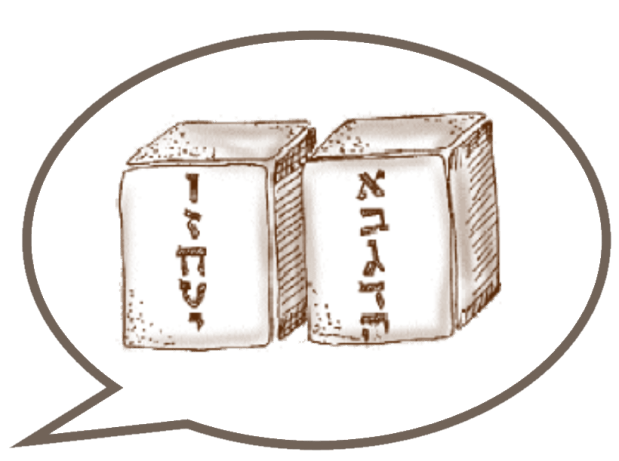
This is exemplified in the words of the Sages that the place of the Aron Kodesh (containing the Luchos) transcended limitation (“eino min hamida”).  The Aron itself had precise measurements, but the place transcended limitation, meaning limitation and unlimited together, that the unlimited can be grasped by within the bounds of the lower (limited) entity.  The Rebbe explains this in another Sicha:

The Talmud states that “the position occupied by the Aron did not take up any space.” That is, the Aron had definite physical dimensions — 2½ cubits length, 1½ cubits width, 1½ cubits height. Logically then, when placed in the Holy of Holies, the Aron should have occupied this amount of space. Yet, the Talmud tells us, it took up no space at all! This is logically impossible — for it is the synthesis of two opposites: the finite and the infinite. Yet in the case of the Aron, it existed… Not only did the Aron transcend the limits of nature (itself a great miracle, since the Aron was made of physical gold), but simultaneously the finite and infinite co-existed together in it: the Aron had definite physical limits, yet took up no space…Its concept is made possible from a level that transcends both of them, allowing the synthesis of these two opposites. (From sicha of 23 Elul, 5742)

We find this as well in the avodah of a Jew — there is his limited and measured avodah, as befits his level, to make himself into a vessel to internalize the revelations.  And additionally there is the avodah of “with all your might” (b’chol me’odecha) — a vessel to receive G-dliness above the limitations of the person.  The ultimate goal is the unification of these 2 forms of avodah.  To summarize: Shemini (8th) is the unlimited, whereas  Shmoneh (the number 8) is the unlimited as it is contained in the qualities of limitation (7): the unification of limited and unlimited, the ultimate intent of Creation.

The revelation of the level of G-dliness that is above the limitation of world is specifically via the avodah from below to above — within the limitations of the world.  As with the 8 which comes specifically from the 7 that precede it.  Thus we find that the limited and measured avodah is connected (in its source) with the highest level (above the source of the unlimited).  Similar to what we find with the Aron — the concept of “eino min hamida” (transcending limitation), comes specifically because the Aron had defined measurements.

Transforming the Exile (“gola”) Into Geuloh

Chesed and Gevurah are the spiritual root of limited and unlimited.  Chesed, is the attribute of “kindness” and giving.  Gevurah, the opposite.  The Alter Rebbe explains that it is  not tzimtzum (contraction and limitation), but rather the attribute of “might” that can overpower other forces (“hisgabrus haChayus”).  Gevurah is not the absence of Chesed, but rather a higher level of might that can conceal the ChesedGevurah brings about exile, but is itself a powerful level of Kedusha, as explained in Chassidus regarding the special quality of “the light that comes from the darkness”.

Geuloh, as explained many times in the Rebbe’s Sichos, is attained by adding to the word “gola” (exile) the letter “alef” (representing the Holy One, blessed be He “Alufo shel olam”).  This adding of the letter “alef” is accomplished via “our deeds and our avodah during the time of exile” upon which the Geuloh is dependent.  Through this, the exile itself (“gola”) becomes Geuloh.

 The main thing is that through “our deeds and our Avodah during the duration of exile” we bring the Geuloh.  It is specifically the concealments and limitations of exile which give the strength to bring Geuloh.

This is similar to statement of our Sages: “everyone who fulfills the Torah amidst poverty will in the end fulfill it amidst wealth.”  Via the poverty of exile, “there is no one who is poor except in knowledge” (“ein oni ela b’da’as”), we receive the true wealth of knowledge and wealth in the simple sense — in the true and complete Geuloh.  This is especially since we have already fulfilled any obligations to endure the limitation of “poverty” (in the previous generations) [meaning — primarily — poverty of knowledge].  Now there is freedom and abundance (“harchava”) in a simple sense from the kingship of the nations.  [For more explanation, see Inyonei Moshiach and Geulah #8.]

Thus, we can learn Torah and fulfill Mitzvos in a relaxed state of mind and body (“menuchas hanefesh and menuchas haguf”) with “wealth” in Torah — via the printing of many seforim, some of which had been hidden until now.  For this reason the Geuloh will have both the positive quality of Geuloh and the positive quality of Golus (the quality of avodah performed via compelling one’s self (“hiskafya”), limitation and constriction, “amidst poverty”…)

Geuloh Hasn’t Come — Proof That it Depends on Us

Since the Geuloh hasn’t yet come, this itself is proof that it is dependent on “our deeds and our avodah” of this generation.  It is specifically through avodah amidst boundaries and limitation and concealment (which derive from Gevuros), because amazing powers are hidden away within them — powers which can bring the Geuloh.

There is a rule that “The Holy One, blessed be He, does not demand of us more than we have the power to accomplish,” therefore we have the power to bring the Geuloh (since that is what is demanded of us).  To be a partner with Hashem in this, not just to help.  A partner implies being involved in all the details in a complete manner.  Since a Jew is a part of G-dliness (chelek Eloka) he possesses the greatest powers to bring about the greatest things — until even the command “be Holy because I am Holy”, upon which our Sages comment “Holy, like Me” — not with surprise, but with certainty!

Shemini5751_AddInTorah

All of us have the responsibility to add in avodah to bring Moshiach in actuality.  There is no room to rely on others — each one needs to do the avodah of “to serve my Master” by himself, and he is given the powers to do this.  How so?  By adding in Torah and Mitzvos — the revealed and the Pnimiyus, and fulfilling Mitzvos in an exemplary manner and influencing others to do the same.  Spreading Torah and Yiddishkeit and the wellsprings of Chassidus outward, the latter especially brings about “the Master comes” — this is the King Moshiach.  And all of this amidst anticipation and yearning for the Geuloh.Shemini5751_AddInTorah2

Tzav 5751: Moshe “the G-dly Man” Has Power to Redeem Us

Tzav 5751: Moshe “the G-dly Man” Has Power to Redeem Us

The sicha opens by mentioning that this Shabbos was Shabbos Hagadol, the Shabbos when we commemorate what the Shulchan Aruch calls “the beginning of the Geuloh and the miracles”.  This does not refer to the 10 plagues (9 of which already occurred by this time), but to the armed revolt of the first-born Egyptians who demanded from Pharoah and the elders of Mitzrayim that they let the Bnei Yisroel leave Egypt.  When Pharoah refused, the first-born took up arms and killed 600,000 Mitzriim.  The Rebbe is connecting this with the Gulf War (which ended 2 weeks before Shabbos Parshas Tzav), when the “first-born” (the strongest nations) took up arms against a tyrant who was threatening the Jewish nation.  Recall the words of the Shulchan Aruch: “the beginning of the Geuloh and the miracles”.

But the focus of this sicha is on the redeemer, on Moshe Rabbeinu.  What makes him singularly capable of redeeming the Yidden from golus Mitzrayim?  (And since “the first redeemer is the last redeemer” (Moshiach) — this applies also to the final redemption.)

The Rebbe explains that Moshe is uniquely qualified, and endowed with the ability, to bring the Geuloh.   To understand this, the Rebbe defines for us the meaning of Geuloh: “the revelation of G-dliness down below in the redemption from Egypt is in order that Yidden, as they are found in the world, can see, and recognize, and know the Eybershter.” Seeing the miracles (which began on Shabbos Hagadol) enable Yidden to have a Geuloh, “freeing them from the limitations of world, the enslavement to worldly assumptions and servitude to the various limitations of world.” The miracles Hashem shows us are not an end to themselves, but are motivating and enabling us to march out of our state of golus by ourselves.

All of this comes about through Moshe Ish HaElokim — Moshe the G-dly Man (Tehillim, kapital 90).  By referring to him as a G-dly Man (איש האלקים) the Torah is indicating that Moshe unifies two levels: power above the world (Elokim) and the level of enclothing in the world (man).  Thus Moshe, possessing both these levels (“ish” and “Elokim”), is a connecting intermediary (ממוצה המחבר) who connects G-dliness with the world (being that he is openly connected to G-dliness even as he is also enclothed in the world).

More than that, the Rebbe explains a second “unification” indicated in the expression “Moshe ish haElokim”: the level of “Moshe” and the level of “Ish HaElokim”.  Moshe is the name he received when he was pulled from the waters of the Nile by Basya bas Pharoah: “I drew him from the water” (מן המים משיתיהו).  As explained in Chassidus, this is referring to the lofty level of Moshe’s neshoma, that it derives from the highest, hidden worlds (עלמא דאתכסיא), the world of Tohu which is likened to water.  According to this explanation, the level of “Moshe” is entirely above the world, G-dliness that has no relationship with the world.  “Ish HaElokim” (here we look at it as a single title) refers to the unification of “Ish” and “Elokim”, meaning the unification of world with the level of G-dliness that has a connection to world.  Moshe Ish haElokim unifies all these levels.

Although not mentioned in this sicha, the Rebbe explains in a maamar just how lofty the aspect of “Moshe” really is — not only higher than Elokim, but also higher than YKVK.  And the various levels of YKVK:

                    Sefer Hamaamarim 5718, parshas Shemini

Moshe reaches the Essence, Atzmus (עצמות) mamash.  The verse that states “and Yisroel saw the mighty hand that Hashem had used in Mitzrayim…[and they believed in Hashem] and in Moshe His servant” goes from the lower levels to the higher levels: “That Hashem did…” this is the lower name YKVK; “and the people saw Hashem…” this is the higher name YKVK; “and they believed in Hashem” this is the name YKVK that is in Atzmus.  And after that it says “and in Moshe His servant”, from which it is understood that Moshe is higher even than the aspect of YKVK that is in Atzmus.  And therefore he has the power to unify and to draw down the aspect of YKVK that is in Atzmus [into the world] that it should shine openly.

This loftiness of Moshe generates not only miracles that are enclothed in nature (the name Elokim) but miracles completely above the way of nature.  And all of this is for us: that we will “…see, and recognize, and know the Eybershter…” and thus be freed from “the limitations of world, the enslavement to worldly assumptions and servitude to the various limitations of world”.

All of the above is meant to lead us to perform our service of Hashem in a miraculous manner.  We must reveal the “Tzaddik” within us — not only the “Tzaddi“, but the “Tzaddik” (with the addition of the letter Kuf ק).  This implies using free choice to choose the side of holiness (“Tzadi” — “My side”), which has the power to elevate even those aspects which are “below the line”, just as the letter “kuf” has a leg which reaches “below the line”.  When the Yidden, who have free choice (due to being enclothed in wordly bodies), choose the side of holiness, their choice adds the “kuf” to “Tzadi“, making “Tzaddik“; this gives the power to transform the world and it’s inhabitants, that they should also agree.

Again, the Rebbe is repeating to us that the Geuloh is not a passive fireworks show of miracles, but rather it gives us the “green light” to get to work and reveal the redemption through our own actions.  This is assisted by our recognition of the miraculous state of the world, which occurs through Moshe the G-dly man, the first redeemer and the last redeemer.

Siyum Rambam: Halachos of Torah sh’b’al Peh Will Never Be Nullified

Siyum Rambam: Halachos of Torah sh’b’al Peh Will Never Be Nullified

What follows was compiled and edited by the Rebbe, “in conjunction with the completion of the sefer of the Rambam”, from sichos spoken over the course of Rosh Hashono, Shabbos Chol Hamoed Sukkos, and Simchas Torah 5752.

In the Mishna Torah, the Rambam gives us an orderly presentation of the entire Torah sh’b’al Peh, a sefer of “halachos halachos”.  It possesses a special importance, comparable to the importance of the Torah sh’bichsav, which we learn out from the saying of our sages: “all the seforim of the Neviim and  Kesuvim will in the future be nullified to the Days of Moshiach,” which is not the case with halachos: “Halachos of the Torah sh’b’al Peh will never be nullified.”  (Which leads to the statement of the Rebbe [footnote 17 in the printed sicha] that the study of Rambam speeds up and accelerates [ממהרים ומזרזים] the time of Yemos Hamoshiach, at which time it will be revealed that the halachos are never nullified.)

The Rebbe then raises a question (based on something explained at length in Torah Chadasha, Shavuos 5751): there us a principle of Torah that the halacha goes according to Beis Hillel, but this is only in the time of golus; in the future, when the Beis Din Hagadol will return to Yerushalayim, the halacha will be like Beis Shammai (for Beis Shammai will be the majority in the future, and we rule according to the majority).  If so, we find that the present halachos (which are in accordance with Beis Hillel) will in fact be nullified in the future?!

More than this: it is known that according to several opinions “mitzvos will be nullified in the time to come” — at Techiyas Hameisim, which is in the second stage (2nd tekufah) of Yemos Hamoshiach.  This is learned out from a debate in the gemara about permitting burial shrouds to be woven out of “kilayim” (material made from a forbidden mixture of threads).  This is permitted, according to Rav Yosef, because “mitzvos will be nullified in the time to come”.  If so, then all of the halachos of the Torah sh’b’al Peh will be nullified in the future (in the second tekufah, Techiyas Hameisim) — if the mitzvos will be nullified, then it should follow that the halachos (the ruling of how to perform the mitzvos) will be nullified?

Mitzvos Will Be Nullified or Torah is Eternal?


To say that Mitzvos will be nullified is, apparently, a contradiction to the eternality of Torah.  And if one will say that Mitzvos are an inyan of “today to fulfill them” to be followed by “tomorrow to receive their reward” when they will be nullified — this is not a sufficient answer.  Why?  Because (as explained in Chassidus) Mitzvos represent Hashem’s ratzon, His Will, which is independent of any other purpose (such as refining the person or the world and bringing them to perfection).  Based on this, we have a strong question as to how Mitzvos, which “stand eternally”, could be said to be nullified in the time to come? Continue reading

Vayikra 5751: Miraculous Conduct

Vayikra 5751: Miraculous Conduct

The talk (sicha) of Parshas Vayikra is the first sicha of the Dvar Malchus cycle (the sichos from Vayikra 5751 through Vayakhel 5752).  The focus of this sicha is a recurring theme in all the sichos from these 12 months: drawing the miraculous (which transcends nature) into the natural order of things.

The demonstration of this in our sicha is the special occurrence that occurs once in a few years: Rosh Chodesh Nissan comes out on Shabbos.  In such a year, three Sefer Torahs are removed from the Aron Kodesh to be read: the regular Sefer for the parsha, a second sefer for Rosh Chodesh, and a third sefer for the annual reading of  “Parshas Parah” prior to Pesach. The only other times 3 sefer Torahs are taken out are Simchas Torah (every year) and Shabbos Chanukah or parshas Shekalim that fall out on Rosh Chodesh (not the case every year).

The 3 sefer Torahs of Simchas Torah are described by the Rebbe as “t’midin“, a regular offering in the consistent, fixed order of things.  The 3 sefer Torahs of Shabbos Rosh Chodesh Nissan in such a year as 5751, an infrequent occurrence, is in the category of “musafin“, something “additional” to the usual order of things. It is also implicit in the nature of the readings on those days: on Simchas Torah we read “Bereishis”, Hashem creating the world as it conducts itself according to nature; and, on Rosh Chodesh Nissan the first mitzva (counting the months) “החודש הזה לכם”, which the Rebbe refers to as the miraculous conduct of the world.  Not only that, but Nissan is called “the month of Redemption”, implying also a Redemption from conduct in accordance with nature, transcending those limitations and proceeding to miraculous conduct.

The Rebbe, as one might expect, emphasizes the unification of these two dimensions:

“the ‘miraculous conduct’ is drawn down and permeates (also) in the matters of the world in actual action… that the avoidah of actual deed in the matters of the world is not in the usual way, like natural conduct, but rather like miraculous conduct, above his nature and the manner to which he is accustomed.”

The Rebbe, before our very eyes, has shifted the meaning of “miraculous” onto us.  This year of 5751, “it will be a year that I will show wonders” (תהא שנת נפלאות אראנו), follows the “year of miracles”, 5750 (תהא שנת ניסים), in which there were the miracles of the Gulf War, the end of Communism, the breakup of the Soviet Union, and swords into plowshares — great wonders “out there” in the world. But here in this Sicha the Rebbe is letting us know that the real focus is our miraculous conduct in Torah and Mitzvos — going beyond our own nature, beyond that to which we are accustomed, that our performance of Mitzvos should be “miraculous” compared to our nature and regular conduct (comparable to 3 sefer Torahs of Shabbos Rosh Chodesh Nissan).  In the Rebbe’s words: “the addition and meaning in avoidah in a way of  ‘miraculous conduct’ in the avoidah of each and every Jew…until the perfection of the avoidah…” 

The Rebbe even provides us with a practical example: giving tzedaka in a way that transcends limitations:

… Even after he has given properly for holiday needs (צרכי החג) — he needs to make an accounting that reflects the additional blessing he will receive from Hashem in the meantime [as a result of the tzedaka he gave for holiday needs], and therefore his maaser and chomesh obligation [tithing 10% and 20%] has increased as well, and thus he needs to increase what he gives for holiday needs. And more than this: he can and must add in giving for holiday needs (beyond maaser and chomesh) even before he sees the results of the increased blessing. The more he will increase his giving for the needs of the holiday, likewise the blessing of Hashem will increase with abundant wealth

Based on what was explained previously, the miracle is not the “abundant wealth” one will receive, but rather the miraculous conduct of giving tzedaka beyond his accustomed manner (which is what draws down the abundant wealth). In other words: we are the miracle. (And if we are not, then we had better to get to work and become the miracle in our performance of Mitzvos!)

The Rebbe’s emphasis here is on doing things “not in the usual way…but rather…above his nature and the manner to which he is accustomed.” We can recognize how this is a fitting “opening statement” to the sichos of Dvar Malchus, in which the Rebbe introduces us to the concept of “living with Geuloh”, transcending the previous generations in this respect.  And even  more fitting when we contemplate that these sichos of Dvar Malchus are also a prelude to the events of Chof-Zayin Adar and Gimmel Tammuz, which brought about a dramatic “paradigm shift”: the centrality of “taking orders” becoming eclipsed by the necessity of “taking initiative” — a shift which demands going “above his nature and the manner to which he is accustomed.”

Pekudei 5752: The Missing Parsha

The Dvar Malchus begins with Vayikra 5751, but where does it end?  The Parshas Vayakhel sicha is unfinished, and parshas Pekudei is missing (actually, “missing” is one of the definitions of the word*, as in יפקד מושבך).  What is the message?

Firstly, we could take note that the start of our Dvar Malchus cycle is parshas Vayikra.  This hints at the division of the Chasidishe Parsha, Torah Ohr and Likkutei Torah — the former covering Bereishis to Vayakhel, the latter Vayikra through the end.  In an odd turn of hashgacha protis, parshas Pekudei is absent from Torah Ohr (which covers all of Shemos) and appears in the other volume.

But more to the point, the Rebbe generally explains these two parshiyos (Vayakhel and Pekudei, which in many years are read together) as reflecting two distinct angles:

  • Vayakhel means “gathering” and speaks of unity and generality, where the individual elements are subdued in the whole.
  • Pekudei implies making an accounting of the individual elements, and in fact it is here that we learn the details: this many talents of silver, that many hooks and boards, etc.

The fact that our Dvar Malchus has Vayakhel but lacks Pekudei (when looked at in light of the content of all the sichas) implies that from the collective side of things, everything is in a state of Geulah: the aspect of Above to below, the “Nosi is everything” (הנשיא הוא הכל) which nullifies all the elements to the greater whole. You can find this expressed many times in these sichos.

What remains to be completed is the aspect of Pekudei: the completion and perfection of the parts, not as they are nullified to the greater whole but their own intrinsic importance as unique elements. Meaning our avodah, individually.  In the Rebbe’s words: “do all that you can” — you, personally and as an individual!  (Of course, merging the individual effort with the unity of Vayakhel, which is the reason that most years the two parshiyos are read together.)

What is needed now is for each one of us to reveal his spark of Moshiach through our own efforts, and not to expect someone else, not even Melech HaMoshiach, to do it for us. Avodah b’koach atzmo“, to reveal individually what has already been accomplished collectively. To bring — each one of us — Moshiach in actuality!

(Not only will this complete the aspect of “Pekudei”, but it brings about the completion and perfection of “Vayak’hel”, because the “incomplete” Sicha of Vayak’hel hints that even the aspect of “Above to below” remains incomplete as long as the “Pekudei” is lacking.  Completing the task of the mekabel (from below) adds to the perfection of the mashpia (Above).)


* Another meaning of Pekudei is connected with childbearing and the marital union, as in “Hashem remembered Sarah” (to bless her with a child) (ה’ פקד את שרה), and “a man must be intimate with his wife [before seeing out on a lengthy journey]” (יפקוד את אשתו).  In fact, this second meaning is mentioned in the Alter Rebbe’s drush on this parsha in Likkutei Torah, strengthening the connection between the parsha and these words.  This fits as a hint that although Parshas Pekudei is “missing”, and it might seem to some that the “husband” has gone on a journey leaving his wife alone — even so he must “be intimate with his wife” before departing (these Sichos of Dvar Malchus)  and even to the point of making her “pregnant” through this intimacy: pregnant with the true an complete Geuloh.