As we learned in the Dvar Malchus sicha of parshas Chayei Sarah, this parsha contains the first shilchus in Torah and that in our times shlichus has a new element: the acceptance and “kabbalas panim” of Moshiach. In most years, it comes out to be the time when the International Gathering of the Rebbe’s shluchim is held. The Rebbe often brings the words of the Shelah that everything is by hasgacha protis, and thus days and events which fall out near the Parsha are connected with that Parsha. The Rebbe also speaks about the connection between the Torah portion and the daily section of Tanya, Tehillim, and Rambam.
If we look, we see a wonderful and eye-opening hasgacha protis as regards the Kinus Hashluchim.
When the Kinus Hashluchim falls out on parshas Chayei Sarah, thousands of Shluchim find themselves Continue reading →
The opening verse in Parshas Noach says that “נֹ֗חַ אִ֥ישׁ צַדִּ֛יק תָּמִ֥ים הָיָ֖ה בְּדֹֽרֹתָ֑יו” “Noach was a righteous man, he was perfect in his generations”. The Midrash on this posuk (Midrash Rabba Noach, 30:8) says in the name of R’ Levi: “Whoever it is said about them ‘he was’ saw a new world.” The Midrash then enumerates five individuals, the first being Noach, citing that when he and his family exited the ark, they saw a new world.
In what sense did Noach see a new world? Obviously, it was the same Earth, although following the waters of the flood surely the surface of the Earth looked different than it did previously. And of course, the evildoers who populated the Earth previously were no longer around. But can we really say that this is what it means to see a “new world”?
The Rebbe, in the sicha of Noach 5752, clues us in to what is being implied here according to pnimiyus haTorah:
In the creation of the world, the Torah refers to Hashem using two names: Continue reading →
The ruling of the Rambam is well-known: every individual should consider that the fate of the entire world is in his hands. By performing a single mitzvah, one person can tilt the scales of judgement and bring salvation to himself and the world.
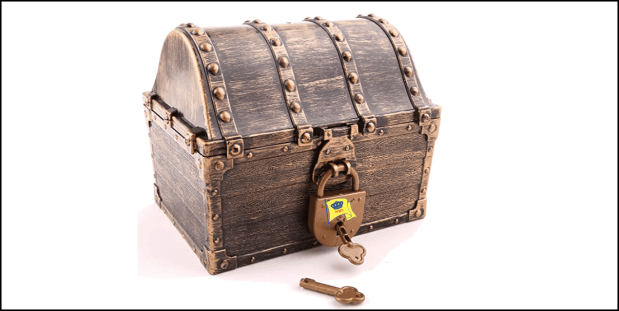
In the Sicha of Ki Seitze 5751, the Rebbe describes how the reward for Mitzvos is, metaphorically, locked in a chest. This chest is in the possession of all Jews.*
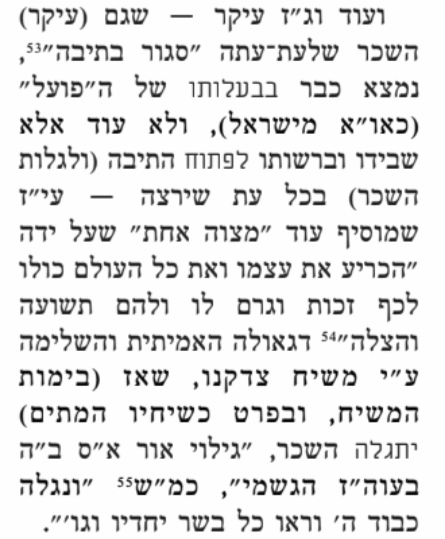
“Not only that, but he has the ability and the permission to open the chest (and to reveal the reward) any time he wants — by adding “one mitzvah” more, that through this [mitzvah] ‘he will tilt the scales…'”
Those who learn the Sichos are already familiar with this Rambam (the Rebbe showed an enthusiasm for this Rambam over the years). But, in general, the Rebbe adds a new dimension in his use of sources, and especially regarding the Sichos of Nun-Alef/Nun-Beis we should be on the lookout for new dimensions of understanding.
We offer the following insight:
The Rebbe here separates the words “one mitzvah” מצוה אחת from the rest of the quote from the Rambam, and the Rebbe adds the words “by adding one more mitzvah” (עי”ז שמוסיף עוד מצוה אחת).
To say “adding one more mitzvah” (עי”ז שמוסיף עוד מצוה אחת) implies something quite different than the Rambam’s wording of “performing one mitzvah” (עשה מצוה אחת). Adding one more (עוד) implies a mitzvah that was not already fulfilled, that there is “one more mitzvah” that we can “add” which will bring the revelations of the true and complete Geulah.
In truth, there are many Mitzvos we haven’t fulfilled in actuality, since we lack the ability to bring korbonos. But there is one mitzvah that has not been fulfilled — and is possible to fulfill today — and it is a mitzvah fulfilled by the Jewish people as a whole.*
This is the mitzvah mentioned in last week’s parsha, Parshas Shoftim: the mitzvah to appoint a King שום תשים עליך מלך. Although it was fulfilled in earlier generations, our generation has not properly fulfilled it. More than that, the shleimos of this mitzvah was not reached through the appointing of Shaul Hamelech or Dovid Hamelech; rather its shleimos is the appointing of Melech haMoshiach — which is the responsibility of our generation, specifically!
This interpretation fits perfectly with what the Rebbe says here: because the opening of the “chest” that contains the reward of our Mitzvos (the revelation of Ohr Ein Sof in the world, as explained in the Sicha) is related to Yemos haMoshiach, and it is self-understood that in order for it to be Yemos haMoshiach there must be a Moshiach, whom the Jewish nation has a mitzvah to appoint over themselves, accepting his kingship.
So look at this portion of the Sicha again, and see how the Rebbe is saying that the “one mitzvah” which we can add, which will bring the lofty revelations we are longing for, is the mitzvah of appointing a King מינוי מלך!
Of course, this is a Mitzvah that falls on the shoulders of the entire Jewish nation as a whole, so it’s not enough that you and I and the bochurim in 770 accept the Rebbe as King, Melech haMoshiach, but requires the acceptance of his kingship by the Jewish nation. This is, lechoira, also the meaning of the Rebbe’s words in 28 Nissan 5751 and Noach 5752: “the only thing left is to give it over to you” and “the Geulah doesn’t depend on anything besides Moshiach himself.” There’s no contradiction: what has been give over to us is the acceptance and crowning of Moshiach himself by us!
אין הדבר תלוי אלא במשיח צדקינו עצמו
All that remains is to appoint the King!
*) It is possible, though not necessary, to say that the Rebbe means here the collective body of all Yidden rather than each individual: “The reward that until now is “closed in a chest” is already found in the possession of the “worker” (each and every Jew).”
Near the end of the sicha (ois 15) the Rebbe makes an astonishing statement that demands our attention. The verse in Tehillim (126b) states “then our mouths will be filled with laughter” (אז ימלא שחוק פינו), upon which the gemara (Brochos 31a) comments:
Rabbi Yoḥanan said in the name of Rabbi Shimon ben Yoḥai: One is forbidden to fill his mouth with mirth in this world, [= as long as we are in exile (in the name of the Ge’onim)], as it is stated: “then will our mouths fill with laughter and our lips with song” (Tehillim 126:2). When will that joyous era arrive? When “they will say among nations, the Lord has done great things with these” (Tehillim 126:2).
The emphasis is that “then” is referring to the time of the future Geuloh (and thus it is explained throughout Torah, including Toras HaChassidus of all of the Rebbeim, including the Rebbe). The time to “fill our mouths with laughter” is at the time of the Geuloh. Now comes the amazing chiddush of the Rebbe:
“Then (in the time to come, l’asid lavo) we will fill our mouths with laughter.”, which, in our generation, the Nossi of the generation, my father-in-law the Rebbe, whose second name is Yitzchok, from the root meaning laughter and joy, and he is the 8th Nossi from the Baal Shem Tov (8 being the gematria of “then” in our posuk אז), the inyan of “we will fill our mouths with laughter” is done (not in the future tense, “then”, but rather) in the present tense.
A verse that is universally explained to be referring to the time of the Geuloh, some time in the future, is now explained by the Rebbe to be something that is occurring (or can occur) now! To understand better what this means (in addition to the clear implication that this aspect of Geuloh is no longer something reserved for the future) let us take the Rebbe’s own description of what it means to “fill our mouths with laughter”.
If we look at the maamor “Ani L’Dodi” printed as a Kuntres in Elul, 5750 (one year before our sicha), we will find that the Rebbe offers us the following definition of our posuk:
A smiling countenance [referring to the moshol of the King in the field] — this is the essential pleasure תענוג עצמי (which the Holy One, blessed be He, takes in Yidden), the inyan of the circus קניגיא [which Hashem will make in the times of Geuloh for the pleasure of the Tzaddikim] when we will see in a revealed way that all the war of good and evil (in this world) is only for laughter and pleasure, “then we will fill our mouths with laughter”.
This means that during Golus we are unable to properly realize that our struggle with evil is really a staged battle from which Hashem takes great pleasure and from which we ourselves will take great pleasure, and therefore we cannot “fill our mouths with laughter” because our battle against evil seems very real, the existence of the evil is an ever-present danger. But the time of Geuloh brings with it a new revelation: that this is all part of the Divine plan for Divine pleasure, and realizing this properly allows us to “fill our mouths with laughter” despite our struggles with the evil inclination. Evil is no longer real, but simply part of the “game” of this world (as the Rebbe explains earlier in this sicha regarding “when you go out to war ‘on’ your enemies” — higher than and above your enemies (to the point that they don’t have a real existence)). Thus, when the Rebbe says that we can already fill our mouths with laughter, it means that we are capable of properly grasping and internalizing the true nature of our struggle with our “enemies”. When one realizes this, he will not have any fear but rather renewed motivation to overcome these “enemies”, since he can fully recognize that this is all a Divinely ordained “circus” and not a real battle at all.
It is known that the Rebbe, in the early years of his leadership, spoke of the importance of learning the most recent sichos in a very exacting way (“If only Anash, and particularly the Tmimim, would be exacting in my father-in-law the Rebbe’s words, especially his sichos of 5710 and the year before.”). Let us do just that with two easily overlooked matters in the sicha of parshas Shoftim.
WHO IS THE NOVI? WHO ARE THE STUDENTS?
In this sicha the Rebbe states clearly that the Rebbeim are the prophets (Novi) of our generation, including the Rebbe himself. The phrasing, however, demands a closer look. In section 11 the Rebbe states:
A Novi about whom another Novi testifies about him that he is a prophet — as this relates to the Leader of our generation, and which is continued in the generation after him via his students etc. — he is presumed to be a prophet and this second one does not require investigation [as to whether he really is a Novi or not]…
The Rebbe mentions here a Novi (who benefits from testimony about his prophetic abilities) and another Novi (an established Novi who provides the testimony). This relates to “the Leader of our generation”, and continued in the generation after him via his students. We could suggest the following interpretation: “a Novi (the Rebbe Rayatz) about whom another Novi (the Rebbe Rashab) testifies about him that he is a prophet…and is continued in the generation after him via his students (the Rebbe himself)….” This seemingly fits with the Rebbe’s generally expressed view that the Rebbe Rayatz is the Leader of our generation, and the Rebbe is a continuation of the Rebbe Rayatz.
However, from our perspective the Rebbe Rayatz was the leader of the previous generation whereas the leader of our generation is the Rebbe himself. According to this perspective, we could suggest an alternative interpretation: “a Novi (the Rebbe himself) about whom another Novi (the Rebbe Rayatz) testifies about him that he is a prophet…and is continued in the generation after him via his students (the Chassidim)….” The first part fits well, as well as the plural “students” fitting “Chassidim” better than just the Rebbe alone. But we can surely challenge as to how the Chassidim are to be considered continuing the prophecy — who among us Chassidim holds of himself that he is a prophet?!
To this we can answer that it is stated in Chassidus that in the ultimate future all of Israel will possess prophecy, and although it may presently be concealed from most (or all) of us, we are destined for it (as the first generation of Geuloh). Furthermore, there might be a hint in section 12, where the Rebbe mentions the Geuloh and interjects the words “the end of the deed was first in thought” (סוף מעשה במחשבה תחילה). These words might bring the diligent student to recall the Kuntres which the Rebbe distributed earlier this year, on Beis Nissan 5751. In that Kuntres, the Rebbe brings a moshol of giving tzedoko to a poor man: “the end of the deed” which was “first in thought” is not the actual giving of the tzedoko, but rather that the poor man should accept the gift and use it beneficially and happily. We might suggest that this supports our second interpretation, hinting that we have been giving tremendous spiritual gifts, including even prophecy! But it is not enough that this is given to us — we must accept it. And until we properly accept it, it remains concealed.
[As to the expression “the generation after him”, this is not problematic since more than once the Rebbe expressed himself that there is a 7th Nosi (counting from the Alter Rebbe, or, alternatively, the 9th Nosi counting from the Baal Shem Tov) and the 8th Nosi (or the 10th from the Baal Shem Tov) will be Moshiach.]
THE FOUNDATION STONE CANNOT BE HIDDEN AWAY
In section 12 the Rebbe addresses the eternity of prophets and the Leaders of the generation by likening them to the eternality of the “Foundation stone” (the “even ha’shesiya“) upon which the entire world stands and which is not subject to change:
“…I will provide for you a Novi, etc., like you”, the Leader of the Generation who “is everything” “Tzaddik, foundation of the world”, along the lines of the even hashesiya (Foundation Stone) — which is found in a specific place in this physical world, and exists eternally without change (not even the change of being hidden away (“geniza“), as occurred with the Aron which was hidden away, or anything similar to that), in the way that a judge and a Novi exists (eternally) in every generation….
There are those who like to see this passage as expressing the concept that the Rebbe remains alive (“chai v’kayam”) even after what appeared to happen on Gimmel Tammuz, 5754. This would seemingly preclude being “hidden away” (even in a state of “chai v’kayam“) in a gravesite, or the like. [There are other, even more clear, sources from the Rebbe which explain why it is necessary for the Nosi Hador to be physically alive, and the concept is not built from this passage in our sicha].
However, as we proceed to section 13, we find something that seems to challenge our initial understanding:
…the Beis Hamikdash itself (which is built and prepared Above) will descend from Above to below, together with the Kodesh Hakodashim and the Foundation Stone that is in it, from which the entire world is supported.
First the Rebbe tells us that the Foundation Stone is found in a specific place in this physical world, and is so eternal that it can’t even be hidden away. Then the Rebbe presents us with a challenge: how would this not be a contradiction to the fact that this very Foundation Stone (which is in this physical world) is located in the Kodesh HakodeshimAbove and we need it to descend from Above to below?! And all the more so we are challenged to understand this “contradiction” in light of the fact that this was given as an example of the eternality of the Novi, the Leader of the generation!
At this point we will not attempt to offer an explanation, only to render a conclusion that seems to be a necessary outcome of the Rebbe’s words. The conclusion is that there is no contradiction to being “in this physical world” and being “Above”. If the way we understand those concepts presents a contradiction, then apparently our understanding is flawed. Because to the Rebbe there is no contradiction, and he can even express this in a single sicha!
For a possible way of “expanding our vessels” and redefining these terms to fit the Rebbe’s usage, we suggest a look at the booklet “Eternal Life of a Soul in a Body” at our sister site MoshiachInDepth.wordpress.com. The idea is that “this physical world” has various levels, including a dimension which cannot (presently) be discerned. When we will sufficiently refine our physical bodies and the body’s senses, we will be able to discern these higher and more refined levels of physicality — as we labor to draw down the lofty concepts of Pnimiyus Hatorah into our human intellect through diligent study, this brings about that these higher levels will “descend” into our awareness. We will perceive that there are aspects of “this physical world” which are “Above” other aspects, which cannot presently be perceived even though nothing is concealing them.
Several times in these talks of 5751-52 the Rebbe states that the “direct way” to bringing Moshiach is through learning the subjects of Moshiach and Geuloh. Parshas Devarim contains the instruction “do not disturb Moav” (אל תצר את מואב, Devarim 2:9), which is the nation living in one of the three lands “beyond the Yarden river” which were promised to Avraham Avinu and will be inherited in the future. These lands are called the lands of the Keni, Kenizi, and Kadmoni (lands of Ammon, Moav, and Edom (Seir)–see Rashi on Devarim 2:5).
The inheritance of these lands is explained at length in Chassidus as referring to the intellectual faculties (Chochma, Bina) and the super-intellectual level of Kesser (see Lech Lecha 5752, for example), which are part of our spiritual makeup, but we have not “acquired” them yet. In fact, the names Keni, Kenizi and Kadmoni all contain the letters of “kinyan” (the letters ק – נ – י), acquisition, hinting that these lofty levels must ultimately be “acquired” — internalized in a way where we master them.
With that in mind, note the interesting expression the Rebbe uses in the sicha for parshas Devarim, that all matters of the Geuloh have been completed and are “as if in a closed chest”:
…all the matters have been completed, and the Beis Hamikdash stands ready Above, and similarly all the matters–“everything is ready for the feast”, everything is ready as if in a closed chest and they have given the chest and its key to every single Jew.
What makes this noteworthy is the following halacha of the Rambam in chapter 21 of the laws of Mechira (“Selling”):
The Rambam rules that one cannot acquire something if he does not know what he is acquiring! We cannot acquire the “closed chest” which contains the Geuloh until we know what is in it! Until we know what Moshiach and Geuloh are all about, even if “the closed chest” that contains them has been handed to us along with the keys, we need to learn about it in order to “acquire” it, to internalize it as our own.
And if you will ask: but we have the keys, why not just open the chest and we’ll know exactly what’s in it and that satisfies all requirements for kinyan (acquisition)?
Yes, this is true. But the fact is that the chest and the keys have been given over to every Jew, and yet no one has yet seen fit to open the chest and reveal the Geuloh; thus, it seems that in order to arouse a Jew to do that he has to be motivated to do so by excitement over what is inside the chest that has been given to him. How will he be motivated to open the chest? Through fulfilling the Rebbe’s instruction to learn the subjects of Moshiach and Geuloh, to know what is in the chest, and then certainly each one of us will realize the great treasure we have been given and we will rush to open it up — and the sooner the better!
In this sicha the Rebbe explains that we bring the Geuloh through the avoidah of “making ‘here’ Eretz Yisroel” (מאך דא ארץ ישראל). This is associated with the avoidah of being a “Pnimi” — one who is completely involved in what he is doing. The instruction of “making ‘here’ Eretz Yisroel” is explained by the Rebbe: “even when he is found ‘here’, in chutz la’aretz, and in the time of golus — one must make ‘Eretz Yisroel’ [while he is] ‘here’ — in this place and time…seemingly: according to Torah ‘here’ (chutz la’aretz) is not ‘Eretz Yisroel’!”
The way to make “here” (which is not “Eretz Yisroel”) into “Eretz Yisroel” is by being totally involved in the avoidah of the moment, without thinking about what it will lead to, whether it is the main thing or a preparation for something else. “It is known the saying of the Rebbe Rashab — a Pnimi is one who is completely involved in everything he does.” Even if what he is doing is a preparation for Continue reading →
Everything in the life of the Rebbe’s Chassidim is governed by the Rebbe’s teachings. But when something occurs for which we don’t have explicit instructions — such as Gimmel Tammuz — we must look in the Rebbe’s Torah for guidance.
Many Chassidim will say that the Rebbe in fact does give explicit instructions for Gimmel Tammuz, for example in 5751 the Rebbe writes that Gimmel Tammuz represents “the beginning of the Geuloh”. Nonetheless, not every chosid today is prepared to accept that what the Rebbe said regarding the “beginning of the Geuloh” of the Rebbe Rayatz can so easily be applied to Gimmel Tammuz, 5754. Even so, this split — how Chassidim respond to the situation after Gimmel Tammuz 5754 — is itself addressed by the Rebbe, as we hope to show.
In Likkutei Sichos volume 19 is printed a famous sicha explaining an aggadeta at the end of Mesechta Makos. The aggadeta describes two incidents involving Rebbi Akiva while he was travelling with three other sages. What concerns us here is the second incident:
Rabban Gamliel, Rebbi Elazar ben Azaryah, Rebbi Yehoshua, and Rebbi Akiva were going up to Yerushalayim (after the destruction of the Beis Hamikdash). When they reached the point where they could see the Temple Mount they all (including Rebbi Akiva) tore their garments as a sign of mourning. As they proceeded and approached the site of the Beis Hamikdash, they saw a fox run out of the Holy of Holies. The three sages began crying, and Rebbi Akiva laughed.
“Why are you laughing?!” they asked him.
He responded: “Why are you crying?”
They answered: “The place about which the verse states ‘a non-Kohen who approaches will die’ and now foxes are are going there and we shouldn’t cry?!”
Rebbi Akiva responded: that is why I am laughing. The verse states (Yeshayahu 8:2) “two faithful witnesses will give testimony: Uriah haKohen and Zecharia [the prophet].” The prophecy of one is dependent on the other. Uriah prophesied (about the destruction of the Beis Hamikdash) that “Zion will be plowed like a field”. Zecharia prophesied (about the Geuloh) that “elderly men and women will yet sit in the streets of Yerushalayim.” “Now that I see that Uriah’s prophecy was fulfilled, I’m certain that Zecharia’s will be fulfilled.”
They said to him: “Akiva, you have comforted us. Akiva, you have comforted us.” Thus ends the aggadeta.
The Rebbe asks a number of questions, which are answered at length in the Sicha, but for our purposes we need to understand how the Rebbe explains Rebbi Akiva’s laughter upon seeing something as drastic as a fox running out of the Holy of Holies. The Rebbe explains Rebbe Akiva’s view as follows:
Rebbi Akiva was able to see the good, even in something that appears as not good at all. Since the good will come out in the end, his opinion was that the future good takes precedence over anything “not good” in the present. Thus, if one knows (according to Torah, not merely a “hergesh”) that the destruction that you see will lead to Geuloh — this demands, according to Rebbi Akiva, that one relate to the future Geuloh and not the present destruction. In the Rebbe’s words: Rebbi Akiva only saw the future good.
And more than that: in the verse the destruction itself is likened to a “plowed field”, which is actually part of the growth process. It is not a negative step which one must suffer in order to get to better things down the road; rather — the plowing itself is part and parcel of the sowing and reaping.
In other words, not only the future good must take precedence over the unpleasant present, but the present itself is part of the future good! And this is why the other sages were comforted by his words: because he showed them how the future good was actually already present in the “here and now” (despite how unpleasant the “here and now” might appear).
Let us translate this as it might apply to Gimmel Tammuz in our times: Continue reading →
Would you like to know at what moment the sun stood still on Gimmel Tammuz, 5754?
In the sicha of parshas Korach, Gimmel Tammuz, 5751, the Rebbe explains at length the great miracle which occurred on Gimmel Tammuz in the days of Yehoshua bin Nun: the sun and the moon (and the entire cosmic system) stood still. “Shemesh b’Givon dom“.
This miracle doesn’t seem to have such an obvious connection to the miraculous Geuloh of the Rebbe Rayatz in 5627 (the subject of the Rebbe’s farbrengen), but mashpiim find an obvious connection to the events of Gimmel Tammuz 5754: that just as it was by Yehoshua bin Nun, that he commanded the sun and the moon (and the entire cosmos) to stand still, causing time to “freeze” in order to enable the Yidden to win the war they were waging on their own effort, so too we are in a “frozen moment” where the Rebbe wants us to finish the war to end golus with our own effort. But there is an even greater insight, as we hope to explain with Hashem’s help.
When Gimmel Tammuz comes around, half the farbrengens are on the theme of celebrating “as’chalta d’Geuloh” (the beginning of the Geuloh), and the other half are on the theme of Hillula. Confusion? Denial? Delusion?
Come and hear an amazing resolution of what might have seemed to be an irreconcilable dispute about reality.
When Eliyahu HaNovi was preparing to ascend heavenward, he asked Continue reading →
We find that the Rebbe teaches a firm principle: the flow of the year is a continuum. This means to say that each holiday or commemoration day is a preparation for the one that follows it on the calendar. For example: Pesach (coming out of Egypt) is a preparation for Matan Torah on Shavuos; the day of Yud Kislev (the redemption of the Mitteler Rebbe) is a preparation for Yud-Tes Kislev (the day of redemption 29 years earlier of his father, the Alter Rebbe). The year that things happened in history is of much less significance than the order that they happen on the calendar.
From this we understand that since 28 Sivan precedes Gimmel Tammuz by 5 days — according to the Rebbe’s principle it serves as a preparation for Gimmel Tammuz. In what do we see this? On 28 Sivan we celebrate the Rebbe coming to America, being miraculously saved from the “valley of tears” of war-torn Europe. Gimmel Tammuz is marks the end of the era (until now, at least) when we could see and hear the Rebbe in the usual ways. What sort of preparation is this one for that one?
The day of 28 Sivan is noted in the “Shalsheles Hayachas” printed (at the Rebbe’s behest) at the beginning of the sefer Hayom Yom. It begins with the Maharal of Prague, indicating the 7 generations to the Alter Rebbe. Then it lists by year the major events and accomplishments of each of the Rebbeim of Chabad, concluding with the Rebbe. For the Rebbe it states (after the year he was born and married) that in “5701 — Sivan — came to the city of New York”. Not “arrived” (as a refugee) but “came” (purposefully). A few comments about the Rebbe’s coming to New York:
Firstly, in the farbrengen of Shavuos 5701, about 10 days before the Rebbe and the Rebbetzin would set sail for America, the Previous Rebbe said:
According to universal custom, preparations for an important guest begin well in advance. Every corner in the house is cleaned two weeks in advance, the family talks about the upcoming visit, and the neighbors are duly updated. He’s arriving soon. It’s now close to the time when Mashiach will come. It’s time to prepare for his arrival….
Many see in this a hint to the arrival to America of the Rebbe, Melech HaMoshiach. The old-timers who were in New York at the time tell that from the moment the Rebbe arrived, “everything changed”. In fact, the Rebbe even testified on himself that something changed when he arrived to the USA. At a farbrengen (Chol haMoed Pesach, 5748), the Rebbe addressed his arousal to cry out “Ad Mosai” (“until when” must we remain in golus):
I never heard this from my father, and certainly not from my grandfather. Even from myself, I never heard such talk before I arrived here in the United States…
So even the Rebbe’s impatience for Geuloh started when the Rebbe came to America (on 28 Sivan)!
We could say that 28 Sivan is an aspect of Moshiach being revealed. Revealed to the Chassidim in America, revealed to the Rebbe himself, revealed in the new activities of Lubavitch that began only after the Rebbe’s arrival.
Based on this, we can see how 28 Sivan is a preparation for Gimmel Tammuz: on 28 Sivan Moshiach is revealed, on Gimmel Tammuz Moshiach is concealed. As Rashi brings from on Daniel 12:12:
“in the future our Moshiach will be concealed after he has been revealed and will return and be revealed [again]” (שעתיד משיחנו להתכסות אחר שנגלה וישוב ויתגלה)
In order to fulfill the second step of being concealed (with the great value of the Divine service of the period of concealment, as discussed, for example, in the Kuntres of Rosh Chodesh Kislev, 5751 which addresses the concealment of Erev Rosh Chodesh), there must be the preparation of Moshiach being revealed. The aspect of revelation of 28 Sivan precedes and prepares for the aspect of concealment of Gimmel Tammuz (and it’s connected to Erev Rosh Chodesh, which is the day after 28 Sivan). Of course Gimmel Tammuz is not an end in itself — it leads to the ultimate redemption of 12-13 Tammuz. And as the Rebbe says many times: the Geuloh of 12-13 Tammuz showed in retrospect how Gimmel Tammuz itself was “the beginning of the Geuloh”. May we bring it about now!







 Dvar Malchus 770