
Vayetzei 5752: We Need Only to Open the Eyes

Vayetzei 5752: We Need Only to Open the Eyes

This sicha was said on Shabbos Vayeitze, which corresponded in 5752 to the 9th of Kislev, the birthday and hillula (day of passing) of the Mitteler Rebbe, the 2nd Rebbe of Chabad.

The Alter Rebbe, his father, represented the attribute of Chochma (wisdom), and his son the Mitteler Rebbe represents the attribute of Bina (understanding).  Just as Bina expands and reveals the breadth and depth of Chochma, so, too, the teachings of the Mitteler Rebbe are “wide as a river”, allowing one to drink deeply from the wellsprings of pnimiyus haTorah.  This is significant to bringing the Geuloh, because:

At this time there needs to be…the study of pnimiyus Hatorah as it has been revealed in the teachings of Chassidus, and the fulfillment of the instructions of our Rebbeim.  This includes — learning the subjects of Moshiach and Geuloh, in a way that it opens the heart and the eyes and the ears — so that they will understand, and see and feel the true and complete Geuloh tangibly in the physicality of the world.

Not merely learning as some sort of intellectual exercise, but rather “in a way of seeing, that this [the true and complete Geuloh] is already prepared and ready, and one only needs to open the eyes and then he will see this!

Practically speaking, Continue reading

Toldos 5752: The Essential Existence is Revealed

Toldos 5752: The Essential Existence is Revealed

This week the sicha examines a simple but deep concept: the distinction between “essential existence” (“etzem metzius“) and the revelation of that existence.  This is illustrated by the difference between the birth of a person, the beginning of their essential existence, upon which everything they will do in the future depends, and the actual good deeds that they will do in their life.

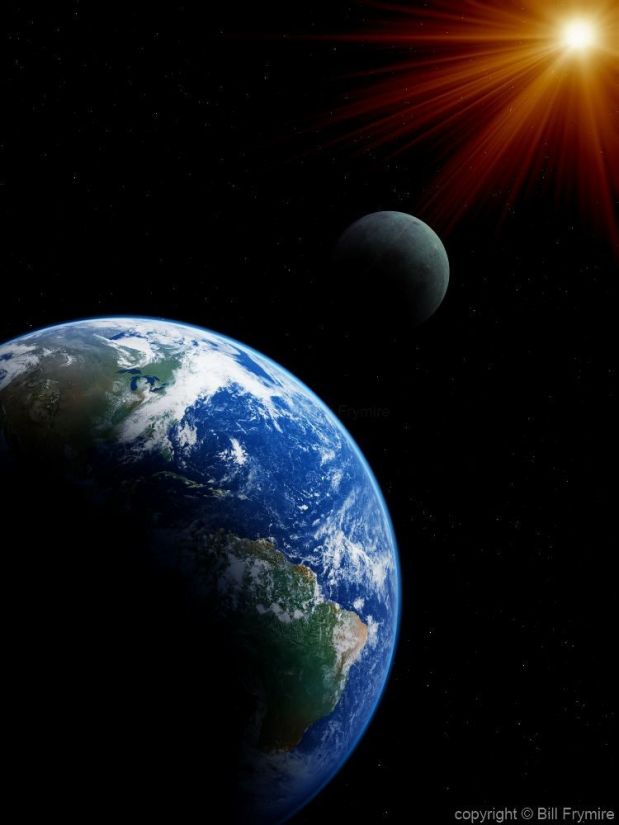
Similarly, we find by the moon (this sicha was spoken on the Shabbos following Rosh Chodesh Kislev), that Rosh Chodesh is the “birth” of the new moon. Following its birth, the moon proceeds over the next 15 days to wax greater and greater, increasing the amount of light it shines.  The greatest light that reflects from the moon is on the 15th of the month, representing the fulfillment of its ability to shine (a “full moon”). [There is also a special quality of the 2nd half of the month is explained in the sicha of Parshas Vayishlach].  Yet, even the great light of the full moon derives from the initial revelation of its essential existence on Rosh Chodesh.

In the case of a Yid: the first moment of revelation of his essential existence, etzem metziyuso, is the moment of Continue reading

Kuntres Beis Rabbeinu Sh’b’Bavel: The Place of the Beis Hamikdosh in Golus

Kuntres Beis Rabbeinu Sh’b’Bavel: The Place of the Beis Hamikdosh in Golus

“I will be for them a small sanctuary (mikdash me’at) in the lands where they will come.” (Yechezkiel 11:16)

Our sages explain this posuk to mean that even outside of Eretz Yisroel, in the place and time of golus, there is a “small mikdash” which is a scaled-down example of the “great mikdash” in Yerushalayim.  Rebbi Yitzchok in the gemora (Megillah 29a) said that this refers to the shuls and study halls in Bavel (Babylon), and Rebbi Eliezer said that this is “Beis Rabbeinu sh’b’Bavel” — “the house of our Rebbe in Bavel”.

The Rebbe, as might be expected, holds that these two sages do not have an argument, that each one surely agrees with the opinion of the other; the only difference is what they consider to be the main and most important fulfillment of the prophecy of “mikdash me’at“.  Rebbi Eliezer holds that it is the study hall (place of learning) and shul (place of Tefilla) of “Rabbeinu”.  Every shul possesses this quality in a small measure, but the primary and most complete manifestation of it is in the shul and study hall of the Rav whose Torah decisions are followed by the people of the city.  And, in a fuller sense, there is one place which is the main “mikdash me’at” in the time of golus: the shul and study hall of the leader of the generation.

Our sages state that “Everywhere that Yisroel were exiled, the Shechina was exiled with them.”  The sages in our gemora asked where in Bavel is the Shechina to be found?  Abaye answered: in the shul of Hutzal and the shul of Shaf v’Yosiv in Nehardea — sometimes here and sometimes there.  These were two unique shuls in Bavel, the first being close to the study hall of the revered Ezra the Sofer, the second being built from stones that were brought from the Beis Hamikdosh in Yerushalayim and “the Shechina was always found there” (Rashi).   It called “Shaf v’Yosiv” (meaning “uprooted and [re]settled”) to indicate that “the Mikdash travelled and settled there”.  It was literally the Beis Hamidkash of that generation, as “the revelation of the Shechina that was in the Beis Hamikdosh in Yerushalayim (and nowhere else) traveled and settled in this special place in Bavel, in place of the Mikdash in Yerushalayim.

Of course, the Shechina dwells in every shul where Jews gather for Tefillah, and every study hall where they learn Torah, but nowhere is the Shechina more revealed than in the Beis Hamikdosh in Yerushalayim, or (in the time of golus) in these special buildings.   Similarly we find that “in the future the shuls and study halls of Bavel will be established in Eretz Yisroel” — this is true of every shul and study hall, all of which will be connected to the Third Beis Hamikdosh in Yerushalayim.  And when these places are relocated to Eretz Yisroel, the revelation of the Shechina will also return to Eretz Yisroel, and there will no longer be a revelation of the Shechina outside the land of Israel where the “mikdash me’at” stood.  The Rebbe adds (quoting the Maharsha): Continue reading

Chayei Sara 5752: Shlichus is Finished, Now We Must Greet Moshiach

Chayei Sara 5752: Shlichus is Finished, Now We Must Greet Moshiach

This sicha was said on Shabbos during the annual Kinus Hashluchim gathering in 5752 (1991).

Standing by the beginning and opening of the Kinus Hashluchim — emissaries of my father-in-law the Rebbe, Nosi Doreinu, in all corners of the globe — we must mention, first of all, the foundation [of the Shlichus] and to verbalize the task of the shluchim in our generation in general, and especially — the new element which has been added especially in the most recent time to the work of shlichus: to greet Moshiach Tzidkeinu in the true and complete Geuloh. [Emphasis in the original]

The Rebbe proceeds to explain that periodically there is added a new element (“chiddush”) to the Shlichus, which becomes the gate through which all the other elements ascend, and in our generation and in this time “the special shlichus of our time: to greet Moshiach Tzidkeinu.”  [it should be noted that in the original the expression is “lekabel pnei Moshiach Tzidkeinu”, which can be translated as “to greet”, but literally the words convey the meaning “to accept the face of Moshiach”.]

Then the Rebbe then explains at length what a Shliach is, according to halacha, and how Continue reading

Vayera 5752: To Truly Desire Divine Revelation

Vayera 5752: To Truly Desire Divine Revelation

This sicha begins with the story of the Rebbe Rashab as a young boy.  On his 4th or 5th birthday he was brought to his grandfather, the Tzemach Tzedek, to receive a blessing.  When he entered his grandfather’s room he burst out in tears and said “In cheder, we learned that G-d revealed Himself to Avraham.  Why does He not reveal Himself to me?”

The Tzemach Tzedek responded:When a Jew [alternatively, ‘When a tzaddik’] who is ninety-nine years old recognizes that he must undergo [the spiritual service of] circumcision, he is worthy of having G-d reveal Himself to him.”

Both the question and the answer contain clues to the process of redemption.

The mitzvah of circumcision is a unique covenant with the Creator which is brought about by removing the foreskin, the “orlah“, an impure manifestation that obscures.  Although none of us Continue reading

Lech Lecho 5752: Pick up and Leave

Lech Lecho 5752: Pick up and Leave

Hashem’s instruction to Avraham Avinu “Lech Lecho” is a leaving (from “your land, your birth place, your father’s house”) for the sake of arriving: arriving to “the land I will show you”, Eretz Yisroel.

According to Chassidus, each of these expressions of leaving has a spiritual counterpart in the avodah of a Jew:

  • Your land (artzecha) refers to one’s will (ratzon), that one has to leave his concepts of “I want”;
  • Your birth place refers to the traits one was born with, to leave the concept of “that’s the way I am”;
  • Your father’s house refers to the education and training that one has become accustomed to.

First one must completely leave these three limiting self-conceptions (even if they are in the realm of Holiness), and having left them he can now proceed towards “the land I will show you”, the Land of Israel.  Back in parshas Pinchas the Rebbe explained that a Jew must “make here Eretz Yisroel”, make it “a place where G‑dliness, holiness, and Yiddishkeit are openly revealed”, and further: to conduct ourselves in the spirit of the Geulah.  Here the Rebbe says that we are far beyond the beginning of the process of conquering the land outside of  Israel and making it Eretz Yisroel, and thus the instruction to “go out from your land” in our case refers also to the land that has already been made into Eretz Yisrael. To not only “go out” from negative things, but to “go out” from the current, limited level we have obtained even in holy things.

This includes not only the land of the 7 nations, which correspond to the 7 midos (the 7 emotional attributes of chesed, gevurah, etc.), but the land of all 10 nations that was promised to Avraham, including the 3 nations of Keni, Kenizi and Kadmoni, which correspond to the 3 moichin (the 3 intellectual attributes of the soul: Kesser, Chochma, and Bina).  And the acquisition of this land will take place peacefully, without the war that was required to conquer the 7 lands, meaning the 7 midos.

This process of “Lech Lecho” — leaving what one is accustomed to, even good and holy things — takes place by revealing powers that one did not even know he had.  This includes adding in learning Torah and making chiddushim (novel insights), gathering people on Shabbos to teach them Torah.  This process of “Lech Lecho” is the preparation needed to reach the “Torah of Moshiach”, which is connected with the acquisition of the 3 lands, the 3 moichin, which is the “sha’ar haNun“, the 50th gate which Moshe Rabbeinu was only able to reach at the end of his life.  And through this we will reach the complete revelation of the Torah that was given at Har Sinai: the level of “a new Torah will go forth from Me” (Vayikra Rabba 13:3 on Yeshayahu 51:4).

Conquering the 3 Lands Peacefully

Conquering the 3 Lands Peacefully

The Rebbe mentions in the Dvar Malchus of Parshas Lech Lecho that Avraham Avinu is promised by Hashem that his descendants will inherit the land.  Hashem made a covenant with Avraham, stating:  “To your seed I have given this land, from the river of Egypt until the great river, the Euphrates river.  The Keni, the Kenizi, and the Kadmoni, And the Chitti and the Prizi and the Rephaim, And the Amori and the C’naani and the Girgashi and the Yevusi.”  (Parshas Lech Lecho, 15:18-21)

Rashi here points out that “There are ten nations [enumerated] here, but He gave them only seven nations. The [other] three are Edom, Moab, and Ammon, and they are [here referred to as] the Keni, the Kenizi, and the Kadmoni, which are destined to be [our] heritage in the future.”  The seven nations dwelled in the land of Canaan, which was conquered by the Bnei Yisroel when they entered the land with Yehoshua bin Nun.  The other three nations (Keni, Kenizi, Kadmoni) were not ever conquered, and Continue reading

Noach 5752: Geuloh is Dependent Only on Moshiach Himself

Noach 5752: Geuloh is Dependent Only on Moshiach Himself

The chosid R’ Zushya Willemovsky, “The Partisan”, was told by the Rebbe in a private audience in the 1960s that there remained 20 or 21 things that needed to be accomplished in order for Moshiach to come.  From this we learn the significance of the sichos of Dvar Malchus in general, and parshas Noach in particular — that everything has been accomplished and nothing is preventing the Geuloh.

In this sicha, the Rebbe speaks about the importance of periodically making a proper spiritual accounting (cheshbon tzedek) to search out a recognize the areas in ourselves which need improvement, even things that are very slight imperfections (such as causing someone to feel bad because we didn’t return their greeting(!)).  This should be done with joy, with recognition that it is easier than ever to rectify these matters because the Jewish people, who are like one body, “are found in a state of an individual who is healthy in all of his limbs and organs, both spiritually and physically, and thus anything that is lacking is likened to a weakness or a minor illness in one limb which can be healed quickly and easily”.

Furthermore, when a person takes stock of himself and recognizes that he has flaws and failings which need to be rectified, “this is not a contradiction, G-d forbid, to the testimony of the Leader of the Generation that the work has already been completed and we are standing ready to receive Moshiach Tzidkeinu.”  Yes, we need to search these things out, and upon identifying them to rectify them, but these things do not delay Moshiach’s coming.

Dependent Only on Moshiach Himself

“With absolute certainty all the ‘end times’ have passed, and [the Jewish people] have already done tshuva, and now the matter is not dependent upon anything other than Moshiach Tzidkeinu himself!  (Italics in the original.)  Towards the end of the sicha the Rebbe repeats: “…when we do a proper accounting at  the end of the first week of the year 5752, “it will be a year with wonders in it”, we come to the conclusion that the matter is not dependent upon anything other than Moshiach Tzidkeinu himself (as stated above)…”

It might seem that Continue reading

Noach “Saw a New World”

Noach “Saw a New World”

The opening verse in Parshas Noach says that “נֹ֗חַ אִ֥ישׁ צַדִּ֛יק תָּמִ֥ים הָיָ֖ה בְּדֹֽרֹתָ֑יו” “Noach was a righteous man, he was perfect in his generations”.  The Midrash on this posuk (Midrash Rabba Noach, 30:8) says in the name of R’ Levi: “Whoever it is said about them ‘he was’ saw a new world.”  The Midrash then enumerates five individuals, the first being Noach, citing that when he and his family exited the ark, they saw a new world.

In what sense did Noach see a new world?  Obviously, it was the same Earth, although following the waters of the flood surely the surface of the Earth looked different than it did previously.  And of course, the evildoers who populated the Earth previously were no longer around.  But can we really say that this is what it means to see a “new world”?

The Rebbe, in the sicha of Noach 5752, clues us in to what is being implied here according to pnimiyus haTorah:

In the creation of the world, the Torah refers to Hashem using two names: Continue reading

Bereishis 5752: Servitude to the Nations is Finished

Bereishis 5752: Servitude to the Nations is Finished

The Rambam, in his “Laws of Kings and Their Wars and Melech HaMoshiach”, declares that the coming of Moshiach and the process of redemption are not dependent upon the miraculous: “Do not expect that in the Days of Moshiach the pattern of conduct of the world will change, but rather the word will conduct itself in a normal manner…”  “Our sages have taught that there is no difference between this world and the world to come other than servitude to the nations.” (Chapter 12)  This means to say that even in the Messianic Era (the first stage), the world continues to go in a natural way, however the Jewish people are no longer in a state of “servitude” to the nations as they were during golus.

In this sicha, the Rebbe explains how the Jewish nation was chosen by Hashem and thus the entire Creation exists for the sake of the Jewish people. The truth is that the nations of the world do not truly hold sway over us (“servitude”).

Even though the Jewish people in exile are found in a state of “servitude to the nations”, and there is a command in the Torah “the law of the land is the law” (dina d’malchusa dina)…the reason is not due to fear of the nations of the world (at the time of exile) G-d-forbid, but quite the contrary: Jews are the primary thing (reishis) and the nations of the world were created for their sake… the reason is that this is the way the Holy One, blessed be He, ordered things, that this is how things need to be in the time of exile.

Although in certain matters (monetary cases, taxes, and the like) “the law of the land is the law”, yet this does not infringe upon matters of Torah and Mitzvos, of the neshoma, and also does not infringe on the bodies and the physicality (and materiality) of a Jew, for he always remains primary (reishis) and above the nations of the world.  The command that “the law of the land is the law” is not because he is in a state of servitude to the nations of the world, but because this is what Hashem decreed to be the state of affairs in exile (“because of our sins [we were exiled from our land]”).

In other words, the Rebbe is stating that we are not now in a state of servitude to the nations in any respect.  This was in fact always the case, however it is clear that the Rebbe is indicating that a new threshold has been reached: while the Jewish people have always been in essence above servitude to the nations, this was not something that was Continue reading