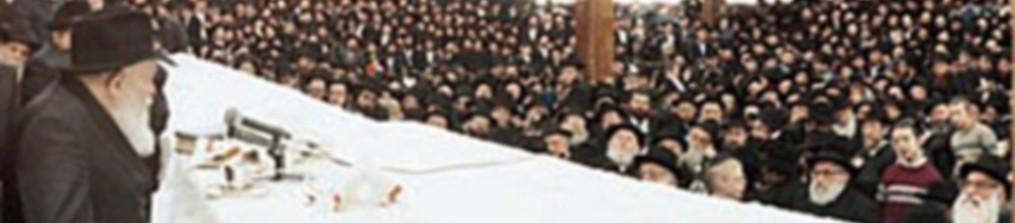
The Rebbe spoke this sicha on the 50th anniversary of his arriving safely to the shores of America (together with the Rebbetzin) from war-torn Europe in 5701 (1941). America is identified in Chassidus as a place where Matan Torah did not take place (in a revealed way), and is referred to as the “lower half of the world” (חצי כדור התחתון). It is, in this regard, the lowliest place. But specifically from the lowest place one can elevate everything (like a lever positioned under a building, which can lift up the entire building).
Here, in the lower half of the world, the Previous Rebbe settled in 5700 (1940), joined by the Rebbe and the Rebbetzin a year later. The (now-famous) building at 770 Eastern Parkway was acquired as the home, shul, and study-hall of the Previous Rebbe, and the Rebbe explains the significance of this number. (This sicha is one of the talks that would be compiled into the unprecedented sicha of “Beis Rabbeinu sh’b’Bavel“.)
As is know, there are 7 sefiros, from Chesed to Malchus. The state of perfection is represented by 10, so the ultimate perfection of 70 is 700, and of 7 is 70, both of which combine to make 770. The completion of the task of refining the sefiros. This is not just number-play, as the Continue reading →
A Chassidic discourse on the verse “As in the days when you came out from Mitzrayim, I will show you wonders” was edited and distributed by the Rebbe on 28 Sivan, 5751 (50th anniversary of the Rebbe’s arrival to America together with the Rebbetzin). The subject is the nature and varying levels of miracles and wonders in general, and particularly as they will be in the Messianic age. This not only shares an obvious connection with the miraculous escape of the Rebbe and Rebbetzin from Europe to America 50 years earlier, but also with the year 5751 תנש”א, which the Rebbe repeatedly referred to as the year of “I will show you wonders” (the letters of the Jewish year — Nun-Alef — standing for the Hebrew words in our verse “I will show you wonders.”)
First, we need to understand the varying levels of miracles: there are miracles above nature (transforming water into blood, splitting the sea), and also miracles enclothed in nature. Miracles enclothed in nature themselves divide into 3 types: recognizable miracles (Purim, Chanukah); miracles concealed by nature but there is still a recognition that something out of the ordinary occurred for which one is obligated to thank Hashem (an ill person who is healed, a prisoner who is freed, etc); the third and lowest level is where nature so completely obscures the miracle to the point that one doesn’t even recognize that a miracle occurred (אין בעל הנס מכיר בניסו).
The Rebbe proceeds to explain that the last type of miracle, unrecognizable from the ordinary process of nature, is actually the highest in it’s source. As the verse states עושה נפלאות גדולות לבדו, Hadhem performs great wonders “alone”, no one knows about them. It is from this level that the great wonders of the Messianic age will come, which will be wonders even compared to the wonders of Mitzrayim. This can explain Continue reading →
The year 5751 marked the 50th anniversary of the Rebbe’s arrival to the United States (together with the Rebbetzin). That year, the Rebbe received well-wishes from then-President of the United States, George Bush, in honor of the anniversary of the Rebbe’s arrival. We have the Rebbe’s response to President Bush, dated the 3rd of Elul, 5751 (13 August, 1991)1. After the formal pleasantries, the Rebbe writes something that perhaps conceals more than it reveals. The Rebbe writes:
“By Divine Providence your kind letter was dated on the morrow of the anniversary of the Nation’s birthday. It is well to remember that the founders of this Nation considered Independence Day as ‘a day of deliverance, by solemn acts of devotion to G-d Al-mighty.’ By Divine Providence also my arrival in the United States in 1941 coincided with Continue reading →
In the sicha of Parshas Shlach the Rebbe contrasts the spies who were sent by Moshe Rabbeinu in the parsha, and the spies sent by Yehoshua in the haftorah. By contrasting the differences, the Rebbe identifies for us two differing paths in our service of Hashem (and in “entering the land” — bringing the Geuloh) “which complement each other and complete each other for the sake of a singular goal, the conquest of and the entering into the land.”
The spies sent by Yehoshua were for the sake of conquering the land, whereas those sent by Moshe were supposed to aid and encourage entering the land (which includes settling the land after it is conquered). Moshe’s spies were assigned the task of scouting out the goodness of the land, to give Bnei Yisroel a tangible idea of the special land that awaits them (by bringing back the enormous fruits of the land), and through this to arouse in the Yidden a desire and excitement to enter Eretz Yisroel.
As we know, the spies contradicted their mission and tried to scare Bnei Yisroel away from entering the land as a result of “mixing in” to Moshe Rabbeinu’s instructions. But, explains the Rebbe, in truth Continue reading →
The Rebbe brings in the name of the Rebbe Maharash a Midrash which states:
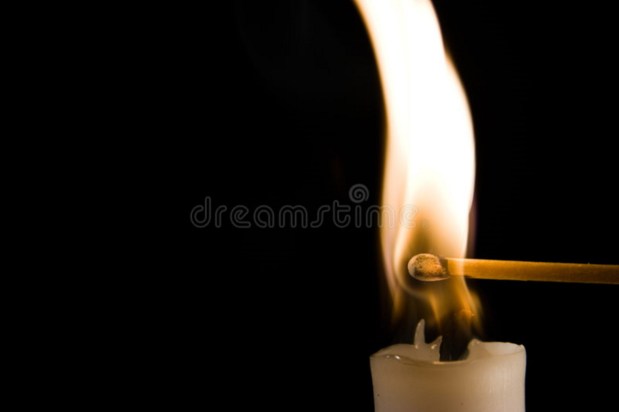
The Holy One said to man, “My candle is in your hand, and your candle is in My hand; My candle in your hand is Torah… Your candle in My hand is the soul… If you guarded My candle, I guard your candle; but if you extinguished My candle, I extinguish your candle.”
Although it may sound like a case of reward and punishment, the maamor explains it in a much deeper way:
The soul is likened to a candle because of its inherent nature to desire to rise up and be nullified in its source. This is accomplished by Aharon, who has the job to light the menorah until “the flame ascends of its own accord.”. Thus, the verse says “like good oil on the head descends on the beard the beard of Aharon…”. The beard of Aharon is the inyan of the halachos of Torah. This explains our midrash: that guarding the candle of Torah guards the soul that its desire to ascend should be revealed. This is accomplished via Torah.
As Chassidim we can understand that it refers to our hiskashrus to the Rebbe: that by Continue reading →
One of the most prominent features of the Messianic era is the spreading forth of Divine knowledge. It begins with Moshiach Tzidkeinu himself (“he will possess great wisdom greater than Shlomo Hamelech, and will be a great Prophet (Novi) close to [and exceeding] Moshe Rabbeinu”), and proceeds to the entire Jewish nation (“Yisroel will be great sages and will know the hidden things and will grasp the knowledge of their Creator according to their [individual] ablity”). This is expressed by the verse in Yeshaya “Because Torah will go forth from Me” (“כי תורה מאתי תצא”), upon which the Midrash explains “A new Torah will come forth from Me, innovation in Torah (chiddush Torah) will go forth from Me” (תורה חדשה מאתי תצא, חידוש תורה מאתי תצא). [As explained in many places in Chassidus, the “new Torah” refers to new and deeper understanding of the very same Torah that was given to Moshe Rabbeinu at Har Sinai: the very same Torah, the very same letters, etc.]
PROPHECY AND HALACHA
The Rebbe explains that there are two aspects to the chiddush Torah: the newly revealed secrets of the Torah, and chiddush in halacha (specifically: using the fins of the Levyoson to shecht the Shor Habar, as the Rebbe will explain in depth.)
That Moshiach will reveal secrets of Torah is readily understood. But to say that he will make innovations in halacha presents a difficulty, because (as mentioned above) Moshiach is a Novi and there is a priciple that a Novi is not permitted to make innovations in halacha (אילה המצוות, אין נביא רשאי לחדש עוד דבר מעתה). Furthermore, what is the idea of an innovation in Torah anyway?! The entire Torah (including the future innovations of a sage, “talmid vosik“) was given to Moshe Rabbeinu on Har Sinai — so what room is there to “innovate”?
The answer the Rebbe gives is that the effort of the talmid vosik to find and reveal the answer (using the 13 rules through which the Torah is explained) makes it his own chiddush. On a deeper level, such a chiddush is only revealing something that was “concealed, but existing” (העלם שישנו במציאות). Meaning that using the tools of the 13 rules the human intellect is capable of revealing this concept. But in the Messianic Era, the chiddush will come from the level of things which are “concealed, and not in existence” (העלם שאינו במציאות). Meaning that human intellect could never arrive at such a conclusion, it must be revealed into human intellect from Above by the Holy One, blessed be He. Thus the midrash tells us that this new dimension of Torah comes “from Me” (from Above) and “goes forth” — goes out into human intellect.
This also answers the difficulty of Moshiach as a Novi making innovations in halacha: Continue reading →
The Rebbe many times repeats the words of Tanya, chapter 37, that all the lofty revelations of the time to come are dependent on our Divine service during the time of exile. Although this is well known among those who learn Chassidus, there is nonetheless a common misconception that once we finish our labor in Golus, than everything else happens automatically. In almost every Sicha of Dvar Malchus, the Rebbe drives home the point that the end of exile is not the end of our labor. In this Sicha it is expressed as “lighting the lamps until the flame rises on its own.”
This is Rashi’s commentary on the words of Hashem to Aharon HaCohen in our Parshah: “When you light the lamps [of the menorah]”. Says Rashi, this literally means “when you bring up the lamps”, because Aharon “is required to kindle the lamp until the flame rises by itself.”
The object is not simply that the lamps should be illuminated (the lamps referring to neshomos Yisroel), because this occurs also while Aharon is holding the light to them. The Torah doesn’t say “light up the lamps”, but “bring up the lamps”. This means that even when the one who lights them removes his influence, the lamps stay lit. The Rebbe emphasizes that this means that the lamps burn on their own accord even without any outside influence.
Even though lighting and bringing up the lamps comes about through lamp-lighting Jews, nonetheless the lamp must be ignited in a way that afterward the light comes from itself, the flame goes “on its own”, without needing any assistance from the lamp-lighter.
This means that even though a person didn’t “light himself up” — he had a Rebbe, parents, teachers, mashpiim, friends, etc. who helped “light him up” with an enthusiasm in avoidas Hashem — nonetheless, the complete and true avoidah is when (after he is “lit up” by others) he becomes a “flame which rises on its own”. This means his own existence alone is what drives him, and not the influence of a mashpia (not even The Mashpia).
The significance to our times, after Gimmel Tammuz, should be obvious. We are not presently operating in an environment where we see the Rebbe giving dollars, a piece of lekach, Kos Shel brocha, or an enthusiastic wave of the hand. But if one refers to the decades when Chassidim saw and felt all of that as “the good old days” — he is missing the point! The “complete and true avoidah” is not when a Yid feels excited when the Rebbe is “lighting him up”, but rather after that, when he can prove that the Rebbe was truly successful in lighting him up because his fire for serving Hashem “rises on it’s own” — even when the “lamp-lighter” pulls away the lighter!
This may sound like a daunting challenge, to bring ourselves to Geuloh-dik avoidas Hashem without the “Mashpia” (the Rebbe) lighting us up. Firstly, we don’t have any choice in the matter: either we do this or, chas v’sholom, cool off. As to the “how” — how can we bring ourselves to this avoidah the Rebbe wants from us, to rise up on our own accord? The Rebbe brings in the Sicha from the Rebbe Rashab:
The nature to rise up [to its source] that is found in fire is not like something additional to it, not because it feels the loftiness of its source; but rather, because of its bittul and its lack of a metzius…
The more bittul we achieve, the less we are concerned with our own metzius (our feelings and our experiences of the Rebbe) and instead focus on what the Rebbe wants from us, we will find that we are “lit up” to bring Moshiach (in both our personal avoidah and our avoidah with others) in a more complete and true manner than was the case in the “good old days”. We will truly rise up on our own!
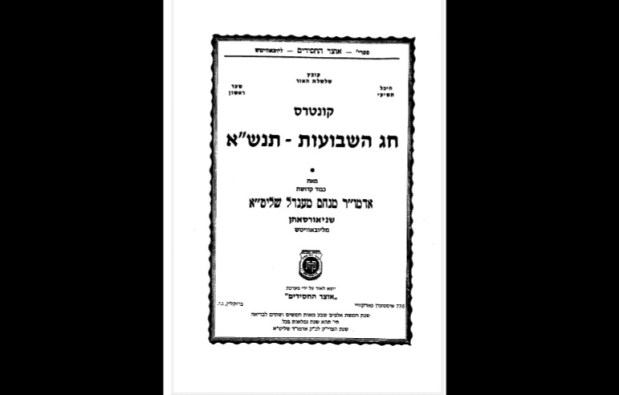
As explained in Chassidus, Sefiras Ha’Omer precedes Matan Torah because we must refine the 49 aspects of our Nefesh Behamis (animal soul) before we can receive the Torah. But the Torah itself was given to us to refine our animal soul (as Moshe argued to the Malochim who wanted Torah kept in the Heavens that Mitzvos like “Do Not Steal” only apply to one who has to combat an evil inclination). This raises the question: is refining the animal soul for the sake of receiving the Torah, or is receiving the Torah for the sake of refining the animal soul?!
To answer this, the Rebbe points out the language pertaining to Sefiras ha’Omer: to count seven complete weeks (שבע שבתות תמימות). The Midrash asks when are the weeks “complete” תמימות? “When Yisroel are doing the will of the Omnipresent.” This “doing the will of…” is accomplished through the love of “all your might” בכל מאודך (as we say in Shema). When we achieve this level — which is beyond our limitations — Hashem responds to us in a similar fashion, “as water reflects a face” כמים הפנים לפנים. Meaning that Continue reading →
In the sicha of Parshas Naso, the Rebbe states as follows:
This is especially emphasized in this year — the year 5751 (1991) which stands for “I will show wonders”– beginning with the wonders that we already saw in actuality, revealed in the eyes of the whole world, in this year [referring to the miracles of the Gulf War]. That through [these events] the words of the Yalkut Shimoni midrash were fulfilled: “In the year that Melech Hamoshiach is revealed all the kings of the world will quarrel, the king of Persia [Iran/Iraq], the king of Arabia, and the Holy One, blessed be He, says to the Jewish people, “my children, do not be afraid, all that I have done I only did for you…the time of your Redemption has arrived.” Since that time, we are already standing at [the closing section of the Yalkut Shimoni midrash] “in the hour that Melech Hamoshiach comes, he announces to the Jewish people and says humble ones, the time of your redemption has arrived.”
Prior to and during the first Persian Gulf War, the Rebbe made frequent references to this Yalkut Shimoni midrash, but here, for the first time, the Rebbe says unequivocally that “it has been fulfilled”, specifically quoting the words “in the year Melech Hamoshiach is revealed”. In other words: in 1991 Melech Hamoshiach was Continue reading →
The sicha of Shabbos Parshas Bamidbar is an anomaly in the Dvar Malchus sichos, because here the Rebbe doesn’t mention the word Moshiach or Geuloh at all until the very end of the sicha. Nonetheless, when we examine what the Rebbe does address here, we find that the Rebbe really is teaching us a vital element in actualizing the Geuloh.
There is a concept in Pnimiyus Hatorah called “ratzo v’shov“, which refers to two divergent directions in serving Hashem: “ratzo” means the desire of the neshoma to run away and escape the bonds of the world and the physical limitations of the body. This is described in Tanya as the nature of the neshoma, like a flame that seeks to rise up and separate from the wick even at the expense of its own existence.
On the other hand, there is the direction of “shov“, which means to return to this world in order to fulfill Hashem’s Will which are Torah and Mitzvos in this world. How does a Yid manage to unify these two opposites? If my desire is to escape the world, then every moment in the world is against my will and therefore unpleasant. But if my desire is to be in the world and fulfill Hashem’s Will here in the world, then I surely don’t want to escape and run away. How are we supposed to fulfill both “ratzo” and “shov“?!