Vayigash 5752: The World’s Limitations Are No Obstacle

Vayigash 5752: The World’s Limitations Are No Obstacle

In our parsha we read about Yehuda approaching Yosef despite the fact that Yosef was second in command to Pharaoh (and not knowing this was really his brother).  Yehuda fearlessly, but respectfully, demands that the youngest brother, Binyomin, be set free.  Although he spoke respectfully, he did not ask permission to approach (as is customary) and was prepared to fight if necessary.  All this in order to free Binyomin.

Who was mightier: Yosef or Yehuda?  We know that Yosef was second only to Pharaoh, and everyone had to do exactly what he commanded.  Yehuda, on the other hand, was a visitor with no rights, who had previously bowed in deference to Yosef.  Despite this, Yehuda “broke protocol” and — recognizing that the life of Binyomin was at stake — confronted the Egyptian viceroy with mesirus nefesh (hardly imagining that this was really his brother Yosef who still loves him) .

To understand this, the Rebbe explains two approaches to dealing with the world:

a) to be limited by the world and its limitations (of physicality, of customs and “protocol”), to go “in the way of the world”; and

b) to be completely above the world and its limitations, not reckoning with it.

The Rebbe then makes an analogy to the feast of Achashverosh (in the times of the Purim story), which was conducted according to “the desire of each and every person”.  The Midrash says “each and every person” means Mordechai and Haman, and asks how can one fulfill their desires — completely opposite desires — simultaneously?  The answer: to a flesh and blood king this is impossible, but in the future Hashem will do exactly that.

How so?  Mordechai’s desire, as the name “Mordechai HaYehudi” suggests, is not to bow down to any idolatry, any aspect of worldly life which is not fulfilling the will of Hashem (even if it is permitted according to Torah) — he desires that everything be for the sake of Heaven, lesheim shomayim.  Haman, on the other hand, claims that since one is found in the world, in golus, then one must reckon with its limitations.  These are completely opposite desires!  But, explains the Rebbe, when you are connected with the Eybershter, you are above the conduct of the world and thus you have the ability to unify opposites: to be in the world and in golus, and yet “not to bow down” and to stand entirely higher than it all.

The question, however, remains: how can one (even if he has the “power” to do so) do two opposite things (practically speaking)?  To “not bow down” to golus, and at the same time to in fact conduct himself in accordance with the limitations of golus?

The answer is that now, in our generation — the final generation of golus and the first generation of Geuloh — it is possible to do so, because the world is a different world.  In previous generations there were various limitations placed on the Jewish people from the outside: decrees, r”l, which impacted Yiddishkeit and did not leave room for a Yid to stand above golus.  Today, however “in our generation this is entirely dependent on a Jew’s will.

From the above we can understand that the might of Yehuda is in fact greater than that of Yosef.  Because Yosef’s might is connected with the kingdom of Egypt and its limitations, including the conduct of a state.  Yehuda, on the other hand, “did not ask permission” and represents a higher level of “might”, the level of breaking boundaries.  It is specifically Yehuda’s actions that bring to the Jewish people settling in Mitzrayim in a way where they flourish.  When a Jew stands with “forthrightness” (breitkeit), he brings about that even the King of Egypt assists him!

We find that in all the generations there were limitations from the outside, coming from the nations of the world and their decrees against Yidden, r”l, which did not always leave Yidden to conduct themselves with full forthrightness and balabatishkeit.

This is not the case in our generation and in our time, as we see in actuality that we do not have the confusions of the past, and the nations of the world leave Jews to conduct themselves as they please, and the matter is dependent only on the desire of the Yidden to conduct themselves with full forthrightness and balabatishkeit.

Today, not only are the nations of the world not imposing restrictions on Yidden and Yiddishkeit — they even assist.  They enable Jews to spread Yiddishkeit and Torah and Mitzvos, and also that which pertains to the nations of the world themselves: the 7 Noahide laws.  Today a Jew can “go in the way of the world” and still conduct himself as a Jew with full forthrightness and balabatishkeit: fulfilling the desire of both Mordechai (above limitations of the world) and Haman (within the way of the world)!

The Rebbe continues and states that the Frierdicker Rebbe has already informed us that:

all preparations for Geuloh have been completed, and now we must draw down the Geuloh into actuality in the physicality and materiality of the world (materiality which is transformed into physicality*), in a revealed way in the eyes of all flesh…the entire world demands that every Yid should already be standing in the state of the true and complete Geuloh …and the matter is not dependent on anything other than their desire”

Thus, each one of us must conduct himself and herself with forthrightness and balabatishkeit that “the world was created for me” to fulfill Torah and Mitzvos.  There is no need to hide or to outsmart the system (“kuntzen“) because today the world enables a Jew to fulfill Torah and Mitzvos, and to bring Geuloh — if he wants, if he stands firm about it.  The Geuloh is here, waiting for us to reveal it in our actions — without asking permission!

* Chassidus defines “physicality” as that which conceals G-dliness, whereas “materiality” not only conceals but asserts a contrary reality.

Vayishlach 5752: The Job After the Birurim Are Completed

Vayishlach 5752: The Job After the Birurim Are Completed

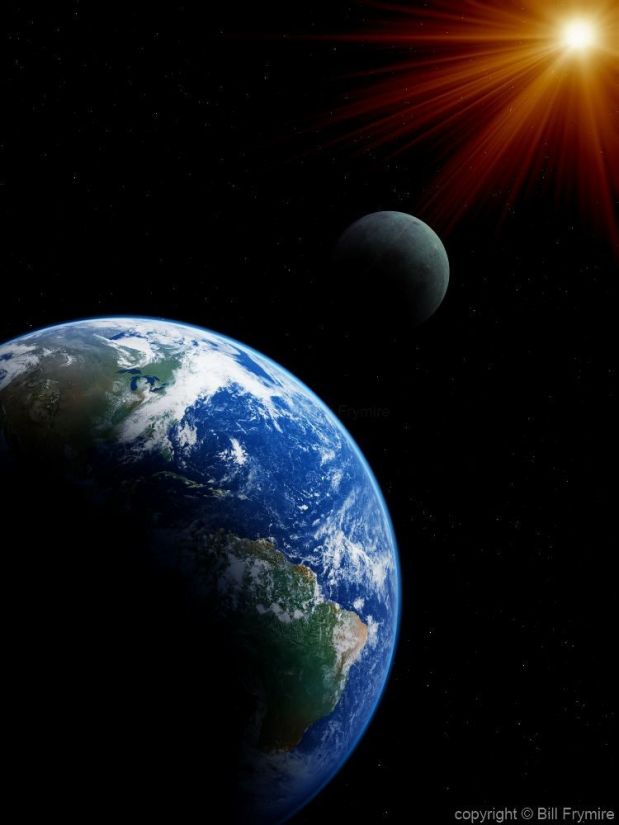
The sicha of Vayishlach 5752 contains several different threads, each of considerable significance. Firstly, the Rebbe explains the concept of the diminution of the moon — that the full moon on the 15th of the lunar month, when the moon fully receives and reflects the light of the sun, is followed by a decrease in the light until it completely disappears from sight. However, this period of diminution of the light of the moon is really only as far as the revelation of the moon is concerned.  But the fact that we continue to count the days up (16th, 17th, 18th, etc.) hints that in fact the moon is really reaching a higher level, coming closer to the sun (the mashpia) until it ultimately unifies with it and becomes a mashpia itself.  “The complete perfection of the moon is when it becomes like the sun and no longer needs to receive the light of the sun.

The unification of the sun and the moon, the mashpia and the mekabel, requires the moon to be completely nullified, resulting in “the essence being revealed” (etzem b’hisgalus).  This is a metaphor for the relationship of the Jewish people to Hashem, that when Yisroel is completely nullified to Hashem they become unified and they themselves become like Him, both being equal “one crown for both of them”.  All this takes place after the process of refinement (avodas habirurim) is completed.

This brings us to the next significant thread of this sicha, where the Rebbe states that the refinement of the sparks of Tohu (related to Esav in our parsha) has been completed, and “all the matters of avodah have been finished and completed, also as regards (and in) the world.”  Although this appears in many of the sichos of Dvar Malchus, in our sicha of Vayishlach the Rebbe addresses the question: if everything has been done, what do we do now?  The answer is found in the conduct of Yaakov towards Esav in our parsha.  Returning from living with Lavan in Charan, Yaakov was ready for Moshiach and anticipated that Esav, too, was ready.  Thus, what Yaakov did is what we are doing.  The verses tell us how Yaakov sent excessive gifts to Esav, and bowed down 7 times.  In Torah Ohr, the Alter Rebbe explains  what this means spiritually, which the Rebbe summarizes as follows:

“Yaakov sent messengers before him to Esav his brother” — that Yaakov, whose source is from the world of Tikkun, sent messengers literally “before him“, to the level that is higher than him, to Esav his brother who has his source in the world of Tohu (since, due to his relationship to Yaakov, we are referring to Esav after he was refined and returned to his source, the transcendent level of Tohu).  This was “in order to draw down the transcendent level of Tohu to him below in Tikkun, which is the aspect of internalized light, that the transcendent will shine forth internally and they will be unified together.

Tohu is transcendent: over and above our ability to grasp and internalize, and thus it’s becomes the source of wild and uncontrolled behaviors.  Tikkun is the world of Torah which can be internalized and leads to the fulfillment of Hashem’s will in the world.  The goal is to unify the powerful lights of Tohu within the borders of Tikkun.

This is also the meaning of the unification of the moon and the sun (Yaakov and Esav, inner light and transcendent light, memaleh kol almin and sovev kol almin), until the moon no longer receives from the sun (since the the refinement of the sparks of Tohu has already been finished and completed,  which was the reason that the moon was originally diminished to be a receiver, as explained earlier in the sicha), but rather the light of the moon becomes like the light of the sun, that both are equal.

(Footnote 89): We learn out from the avodah of Yaakov after he thought that Esav was already refined, and even after the messengers returned and informed him that Esav was not yet refined — he did not get involved in “avodas habirurim” (to refine Esav), but rather he became involved in “the elevation of the ‘lower waters’ to draw down the ‘masculine waters’ of the transcendent level of Tohu‘ [in the original: hala’as ma”n lehamshich ma”d d’makif d’Tohu] via his offering.  [More explanation is required, but time does not allow us to do so here and now.  See Torah Ohr on this week’s parsha.]

The Rebbe continues and connects this with the refinement of the nation of France, in loshon kodesh “Tzorfas” which has the numerical value of 770, that this represents the completion of the process of refining the world.  “From this it is understood that literally in our times we need only to open the eyes and to see the reality b’poel mamash.”  (Footnote 112): “That is to say, not only this that the avodah of refinement has been completed and that we need to bring about a revelation of this in the world, but rather more than this, that there is [such a revelation] already revealed in actuality, and we need only to open the eyes, because already you have been given…eyes to see.'”

Vayishlach 5752: The Moon Becomes Like the Sun

Vayishlach 5752: The Moon Becomes Like the Sun

Our sages tell us that the Jewish people are likened to the moon and thus we count according to the moon.  The months of the Jewish calendar begin with the birth of the new moon each month.  This means that the 15th of every month is the date of the full moon.  What is a full moon?  It is the time when the moon reaches the state of maximum revelation, reflecting the light of the sun to its utmost.   This is called shleimus halevana, the moon being “full” and “complete”.  This process of the waxing of the moon until it reaches completeness is illustrated by the increasing number of the day of the month: 1, 2, 3, etc., until the 15th.  The ascending number corresponds to the ascending completeness of the moon’s revelation.

The true completeness of the moon, explains the Rebbe, is not truly found on the 15th of the month (the full moon), because then the moon is is only at maximum capacity as a mekabel, a receiver (and reflector) of light from the sun.  The true shleimus, the true completeness of the moon is when the moon becomes similar to the sun — a mashpia — and no longer needs to receive light from the sun.

By examining the astronomical properties of the movement of the moon we will understand this more deeply: the first half of the month, when the revelation of the light of the moon is increasing daily, the moon itself is actually moving further away from the sun.  The further it gets from the sun, the greater its light.  In the second half of the month it moves closer to the sun, and as it gets closer its visible light diminishes.  This is because the closer the mekabel is to the mashpia, the less he is able to “shine forth”, due to the great self-nullification, bitul, it has in order to receive.  What occurs in the second half of the month, the Rebbe explains, is that the moon comes closer to the sun in order to achieve the union of the two of them in the following month.  While the light of the moon diminishes at this time, in truth light is only a glimmer of the essence.  And as the moon approaches the sun, its essence is coming closer to revelation.  When is the essence revealed?

When the mekabel is unified with the mashpia to such a degree that it also becomes a mashpia, and there ceases to be a relationship of giver/recipient between them, that both of them are equal — then the essence is revealed.

So it turns out that as great as the revelation of the full moon may be, it is only as regards the moon as a mekabel from the sun.  But the true shliemus of the moon begins its approach in the second half of the month — as it comes closer to the sun and is transforming into a mashpia itself.  For this reason, we continue to count up (16, 17, 18, etc.) even as the moon wanes and its illumination diminishes — because on a deeper level it is still climbing to higher levels.

It is for this reason that we find that the holidays of the Torah are on the 15th of the month when the moon is full (or, in the case of Shavuos — in the 1st half of the month, when the light of the moon is increasing).  But Yud Tes Kislev, the Matan Torah of Toras haChassidus, falls out on the 19th, in the second half of the month.  This is because the revelation of Chassidus is a beginning and a taste of the Torah of Moshiach (“Torah chadasha m’iti seitzeh“) which is connected with the revelation of the essence (which is what is taking place by the moon in the second half of the month).

This is also connected with the weekly parsha, where Yaakov has finished refining the sparks of holiness that were trapped in the realm of Lovon his father-in-law and is now going to greet Esav.  This parsha is speaking about the time, at the end of golus, when the avodah of birurim will be finished.  Yaakov is ready for the days of Moshiach,to unify with Esav (representing the unification of the neshoma and the body, and also the Holy One, blessed be He and Yisroel).

Thus the difference between Yaakov as he is involved in the service of refinement and Yaakov as he is prepared for the Redemption, parallels the difference between the moon as it receives light from the sun and as it will be in the Era of the Redemption, when it will be equal to the sun.

When Yaakov confronted Eisav, although Yaakov was prepared for the Redemption Eisav was not, and the task of refining Eisav and the material worlds associated with him had to continue for centuries. In the present age, however, to borrow an expression from the Previous Rebbe, “We have already polished the buttons.” The task of refinement which was entrusted to the Jews has been completed.

Thus we are now living in a new era with a new service. Instead of concentrating on the refinement of the world, our efforts must focus on revealing the Redemption. The Era of Redemption, which is described with the analogy of a feast, is a present reality, all that is necessary is for us to open our eyes and see.

So it turns out that this week’s parsha is speaking directly about our times — the end of golus when we have completed avodas habirurim (work of refinement) and are ready to be transformed from mekabel to mashpia by revealing the unity of the Holy One, blessed be He, and Yisroel.  Furthermore:

From this it is understood that the continuation of the avodah that follows (as long as Moshiach Tzidkeinu is delayed for whatever reason (completely unknown and not understood)) is not avodas habirurim (for avodas habirurim has already been completed and finished) but rather, it is a special avodah to bring the revelation in actuality in the world.

[For those who are familiar with the terminology of Chassidus (explained in Torah Ohr on our parsha), the Rebbe notes (footnote 89) that this present avodah is similar to what Yaakov attempted to do when he went to greet Esav — dividing his camp into two camps, sending abundant gifts to Esav, and bowing before him.  “He did not involve himself in avodas habirurim (to refine Esav), but rather he involved himself in ‘hala’as ma”n to elicit ma”d of Tohu’ via his offering” which he sent to Esav.  This itself is worthy of a separate essay.  But , simply put, he made an effort from below-to-Above in way that it will awaken from the supernal source of Esav an outpouring of the lights of Tohu, recalling the Rebbe’s words of Koach Nissan: that we must drawn down the lights of Tohu into vessels of Tikkun.  All of this requires further explanation.]

The Rebbe continues and connects this with the refinement of the nation of France, in loshon kodesh “Tzorfas” which has the numerical value of 770, that this represents the completion of the process of refining the world.

From this it is understood that literally in our times we need only to open the eyes and to see the reality b’poel mamash.”  (Footnote 112): That is to say, not only this that the avodah of refinement has been completed and that we need to bring about a revelation of this in the world, but rather more than this, that there is already revealed [such a revelation] in actuality, and we need only to open the eyes, because already you have been given…eyes to see.’

Vayishlach 5752 in English

Vayishlach 5752 in Loshon Kodesh

Vayeitzei 5752: Asleep on the Site of the Beis Hamikdash?!

Vayeitzei 5752: Asleep on the Site of the Beis Hamikdash?!

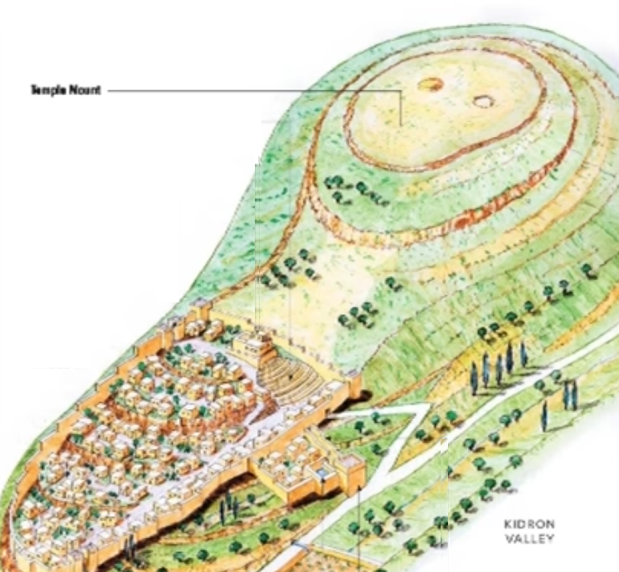
Yaakov Avinu, fleeing the wrath of his brother Esav, arrived in Beis El as the sun was setting unexpectedly.  As a result of the sudden sunset, he went to sleep there for the night.  The next morning, when he woke up, he realized where he was — Har Hamoriah, the site where the Beis Hamikdash would later be built.  He declared his shock that he had slept in such a holy spot!

In the Dvar Malchus sicha of Vayeitzei, the Rebbe examines Yaakov’s laying down to sleep “‘in that place’ — the place of the Mikdash (מקום המקדש)…”  

This expression “the place of the mikdash” (“מקום המקדש”) should grab our attention — this is the same expression the Rebbe uses in Kuntres Beis Rabbeinu Sh’b’Bavel (which was published and distributed several weeks prior to this sicha).  In that Kuntres, the Rebbe states that 770 is the “place of the Mikdash” (מקום המקדש).  Does the Rebbe want us to realize that we, too, are “sleeping” in the “place of the Mikdash” (מקום המקדש) and don’t realize it?!

Apparently so.

However, the Rebbe explains in this sicha that the seemingly disgraceful “sleeping in the place of the Mikdash” can Continue reading

Vayetzei 5752: We Need Only to Open the Eyes

Vayetzei 5752: We Need Only to Open the Eyes

This sicha was said on Shabbos Vayeitze, which corresponded in 5752 to the 9th of Kislev, the birthday and hillula (day of passing) of the Mitteler Rebbe, the 2nd Rebbe of Chabad.

The Alter Rebbe, his father, represented the attribute of Chochma (wisdom), and his son the Mitteler Rebbe represents the attribute of Bina (understanding).  Just as Bina expands and reveals the breadth and depth of Chochma, so, too, the teachings of the Mitteler Rebbe are “wide as a river”, allowing one to drink deeply from the wellsprings of pnimiyus haTorah.  This is significant to bringing the Geuloh, because:

At this time there needs to be…the study of pnimiyus Hatorah as it has been revealed in the teachings of Chassidus, and the fulfillment of the instructions of our Rebbeim.  This includes — learning the subjects of Moshiach and Geuloh, in a way that it opens the heart and the eyes and the ears — so that they will understand, and see and feel the true and complete Geuloh tangibly in the physicality of the world.

Not merely learning as some sort of intellectual exercise, but rather “in a way of seeing, that this [the true and complete Geuloh] is already prepared and ready, and one only needs to open the eyes and then he will see this!

Practically speaking, Continue reading

Toldos 5752: The Essential Existence is Revealed

Toldos 5752: The Essential Existence is Revealed

This week the sicha examines a simple but deep concept: the distinction between “essential existence” (“etzem metzius“) and the revelation of that existence.  This is illustrated by the difference between the birth of a person, the beginning of their essential existence, upon which everything they will do in the future depends, and the actual good deeds that they will do in their life.

Similarly, we find by the moon (this sicha was spoken on the Shabbos following Rosh Chodesh Kislev), that Rosh Chodesh is the “birth” of the new moon. Following its birth, the moon proceeds over the next 15 days to wax greater and greater, increasing the amount of light it shines.  The greatest light that reflects from the moon is on the 15th of the month, representing the fulfillment of its ability to shine (a “full moon”). [There is also a special quality of the 2nd half of the month is explained in the sicha of Parshas Vayishlach].  Yet, even the great light of the full moon derives from the initial revelation of its essential existence on Rosh Chodesh.

In the case of a Yid: the first moment of revelation of his essential existence, etzem metziyuso, is the moment of his birth when the neshoma comes into a physical body.  All of what he will proceed to do afterwards is found in this initial moment of his coming into existence, and this moment is the main thing — “the entire existence of a person over the course of all the days of his life are contained in the moment when he is born and goes out into the air of the world.”  

Everything that proceeds after the birth is simply an expansion and greater revelation of that first moment.  The importance of what follows (his “good deeds”) is that these good deeds bring about the revelation to the world of his essential existence as a G-dly neshoma — and this is the fulfillment of his existence.

Nonetheless, the main thing is that first moment when he comes into existence, birth.  We see this in the birth of a child, which is accompanied by rejoicing and celebration even before the child has done anything.  And more than this, the Rebbe explains:

the main quality of the Jewish people in their essential existence, “Yisroel and the Holy One, blessed be He, are all one”, is intact even without the performance of Torah and Mitzvos, “pleasing ways and good deeds”.  Like the metaphor of a fleshly King who has many sons, that the love he has for his sons is essential love even when they do not possess “pleasing ways and good deeds”.  (And on the contrary: regarding the sons who do possess “pleasing ways and good deeds”, and it is logical to love them, the essential  love is not so evident).

Of course one loves a son who’s ways are pleasing and deeds are good.  But to love a son who lacks pleasing ways and good deeds?  In such a case it is clear that the love derives not from the “nachas” of his behavior, but from his essential existence as the son of this father.

This shows also on the importance of the physical body of a Jew, which has no special quality in and of itself, but nonetheless Hashem chose the Jewish body.  Thus, a Jew’s body expresses Hashem’s essential connection to a Jew even more than the neshoma — because a neshoma has the unique quality of being a “part of G-dliness” (like a son whose ways are pleasing and deeds are good).  By being enclothed in a physical body and doing the work to refine it, the neshoma reveals that it also possess an essential connection to Hashem that is not dependent on its special qualities.

The concept of birth, and of the moon, are directly connected to the Geuloh.  Just as birth, and the birth of the moon, is a moment which contains the entire essential existence of the person, so, too, the moment of the Geuloh is the revelation of etzem haneshoma, the essence of the neshoma, which is higher than any name which we can give it, even higher than the name “Yechida” and “chelek Eloka“.  It is like when a person awakens from sleep, even before he has enough awareness to say “Modeh ani“, thanking Hashem for restoring his soul, he already has awoken to his essential existence.  This is the moment of Geuloh — awakening to our true essential existence.

Not only that, but it is known that every Jew contains within him a spark of Moshiach.  The Geuloh comes when each one reveals the spark of Moshiach within him — the revelation of the essence of the neshoma “etzem haneshoma mamash“.  This is “waking up from sleep”, and this waking up brings about that he will proceed to reveal the essence in actuality, which is the true inyan of the Coming of Moshiach.

So, the question then is: how do we “wake up”?

When the chayus of every single Yid is in the inyan of Moshiach, this brings (automatically) to the state of Yemos Hamoshiach (the Days of Moshiach), that the essence of the Yidden will be revealed in actuality.

This is “breathing the air of Moshiach”, which allows us to feel the “spirit of Melech Hamoshiach” — the essence — which is more fundamental than eating and drinking, and higher than the “light” of Melech Hamoshiach.

The Rebbe concludes the sicha:

…we should have the begining of the true Geuloh, via Moshiach Tzidkeinu — “a king will arise from the house of Dovid, etc.”, until “he will rectify the entire world to serve Hashem together…”  And as hinted at in the end of the haftorah of the previous week…which finishes with the declaration “Yechi Adoni Hamelech Dovid l’Olam” (“Live my master the King Dovid forever”) — the eternality of the Kingship of the house of Dovid…which reaches its perfection via Melech Hamoshiach…the meaning of this declaration is the revelation of the existence of Melech Hamoshiach.  And through this [declaration] comes his revelation before the eyes of all through his activities, etc.”

There is a need to wake up, to declare that there is the existence of Melech Hamoshiach (“Yechi Hamelech”), which is the essence of our own existence.  It is by doing this that we are able to bring about the revelation of Melech Hamoshiach in the world, to bring the Geuloh in actuality.

Chayei Sara: The Message Beyond the Sicha

Chayei Sara: The Message Beyond the Sicha

As we learned in the Dvar Malchus sicha of parshas Chayei Sarah, this parsha contains the first shilchus in Torah and that in our times shlichus has a new element: the acceptance and “kabbalas panim” of Moshiach.  In most years, it comes out to be the time when the International Gathering of the Rebbe’s shluchim is held.  The Rebbe often brings the words of the Shelah that everything is by hasgacha protis, and thus days and events which fall out near the Parsha are connected with that Parsha.  The Rebbe also speaks about the connection between the Torah portion and the daily section of Tanya, Tehillim, and Rambam.

If we look, we see a wonderful and eye-opening hasgacha protis as regards the Kinus Hashluchim.

When the Kinus Hashluchim falls out on parshas Chayei Sarah, thousands of Shluchim find themselves at the Kinus on Shabbos listening not only to the story of Eliezer, the servant of Avraham Avinu (the first shliach in the Torah), but also, of course, to the haftorah.  The haftorah for parshas Chayei Sarah (Melachim I, 1:1-31) describes the attempt by Adoniyahu, son of Dovid Hamelech, to usurp his aged father’s throne and rule in his father’s place instead of his brother Shlomo (Solomon, whom Dovid Hamelech had chosen as his successor).  Dovid is informed what his son is doing:

[Adoniyahu] has gone down this day and has slain oxen and fatlings and sheep in abundance, and he called all the King’s sons, and the officers of the army, and Evyassar the priest, and behold they eat and drink before him, and they said, “Long live King Adoniyahu” (“Yechi Hamelech Adoniyahu“).

The culmination of his attempt to usurp the throne is the people’s acceptance of his Kingship by declaring “Yechi Hamelech”!  Dovid Hamelech swears that Shlomo shall reign after him, and the haftorah ends with the words  “Let my lord King David live forever” (“Yechi Adoni Hamelech Dovid L’olam“).

The importance of declaring “Yechi Hamelech” is explained by the Rebbe in the sicha of Beis Nissan, 5748 (1988)*, where the Rebbe brings the Rambam’s description of the king of the nation as the heart of the nation.  Just as the heart pumps blood, which is life, to all of the limbs of the body, giving life to the body, proper circulation is dependent on the limbs, which must also return the blood to the heart.  This, explains the Rebbe, is the people’s declaration of “Yechi Hamelech”the limbs (the people) returning life-blood to the heart (the king).

Now see more hashagacha protis:

In the portion of Tanya that is learned around this time (Igeret Hakodesh 31), the Alter Rebbe writes about the circulation of the blood in spiritual terms:

The cause of illness or health lies in the distribution and flow of the life-force from the heart to all the organs, [this life-force] being vested in the blood of life which flows from the heart to all the organs; and the spirit of life and the blood circulates all around into all the limbs, through the veins that are embedded in them, and returns to the heart.  Now, if the circulation and flow of this spirit of life is always as it should be…then the individual is perfectly healthy.  …But should there be any disorder in any place, restraining, hindering or reducing the circulation and flow of the blood with the spirit of life vested in it, then this bond — which connects all the limbs with the heart by means of this circulation — is severed (which would extinguish life), or diminished, in which case the individual will fall ill and sick (May G‑d protect us!)

To summarize: On the Shabbos day when all the Shluchim of the Rebbe are gathered together to discuss the goals and techniques of their Shlichus, Divine Providence brings about that:

  1. The “latest word” from the Rebbe on this parsha the Rebbe informs us what is the new element in shlichus in our times: that in each generation, there is an individual who is fit to be Moshiach and “when the time comes, G‑d will reveal Himself to him and send him.” The service at present is thus to be prepared to actually accept Moshiach and create a climate in which he can accomplish his mission and redeem Israel from the exile;
  2. The haftorah concludes with the declaration “Yechi Hamelech” (describing how “Yechi Adoni Hamelech Dovid L’olam” negates and prevents the crowning of the “usurper to the throne” as expressed in the undesirable declaration “Yechi Hamelech Adoniahu”); and,
  3. The daily section of Tanya teaches that spiritual health derives from proper circulation, when the limbs return the flow of blood to the heart — the exact metaphor that the Rebbe uses to explain the declaration “Yechi Hamelech”!

For those who need a hint in this matter, Hashgacha Protis has provided it.

We conclude with a brocha that every single one of the Rebbe’s shluchim (and, as the Rebbe says in the sicha, every Jew in our generation has been appointed a shliach of the [Previous] Rebbe) should be healthy in all their limbs and in their heart, both physically and spiritually, and that they should be successful in fulfilling the shlichus of the one who sent them, including and especially the “new element” that has become the “gateway” for the entire shlichusto greet Moshiach Tzidkeinu in actual reality, through the final words of the haftorah as they apply in our generation, the generation of Moshiach (a descendant of Dovid through his son Shlomo**):

Let our Master our Teacher and our Rebbe, Melech Hamoshiach live forever!

* subtitled video

** Rambam, 13 Principles of Faith, #12 (See the original sicha and also questions and answers by Rabbi Shlomo Majeski)

Chayei Sara 5752: Shlichus is Finished, Now We Must Greet Moshiach

Chayei Sara 5752: Shlichus is Finished, Now We Must Greet Moshiach

This sicha was said on Shabbos during the annual Kinus Hashluchim gathering in 5752 (1991).

Standing by the beginning and opening of the Kinus Hashluchim — emissaries of my father-in-law the Rebbe, Nosi Doreinu, in all corners of the globe — we must mention, first of all, the foundation [of the Shlichus] and to verbalize the task of the shluchim in our generation in general, and especially — the new element which has been added especially in the most recent time to the work of shlichus: to greet Moshiach Tzidkeinu in the true and complete Geuloh. [Emphasis in the original]

The Rebbe proceeds to explain that periodically there is added a new element (“chiddush”) to the Shlichus, which becomes the gate through which all the other elements ascend, and in our generation and in this time “the special shlichus of our time: to greet Moshiach Tzidkeinu.”  [it should be noted that in the original the expression is “lekabel pnei Moshiach Tzidkeinu”, which can be translated as “to greet”, but literally the words convey the meaning “to accept the face of Moshiach”.]

Then the Rebbe then explains at length what a Shliach is, according to halacha, and how Continue reading

Vayera 5752: To Truly Desire Divine Revelation

Vayera 5752: To Truly Desire Divine Revelation

This sicha begins with the story of the Rebbe Rashab as a young boy.  On his 4th or 5th birthday he was brought to his grandfather, the Tzemach Tzedek, to receive a blessing.  When he entered his grandfather’s room he burst out in tears and said “In cheder, we learned that G-d revealed Himself to Avraham.  Why does He not reveal Himself to me?”

The Tzemach Tzedek responded:When a Jew [alternatively, ‘When a tzaddik’] who is ninety-nine years old recognizes that he must undergo [the spiritual service of] circumcision, he is worthy of having G-d reveal Himself to him.”

Both the question and the answer contain clues to the process of redemption.

The mitzvah of circumcision is a unique covenant with the Creator which is brought about by removing the foreskin, the “orlah“, an impure manifestation that obscures.  Although none of us Continue reading

Lech Lecho 5752: Pick up and Leave

Lech Lecho 5752: Pick up and Leave

Hashem’s instruction to Avraham Avinu “Lech Lecho” is a leaving (from “your land, your birth place, your father’s house”) for the sake of arriving: arriving to “the land I will show you”, Eretz Yisroel.

According to Chassidus, each of these expressions of leaving has a spiritual counterpart in the avodah of a Jew:

  • Your land (artzecha) refers to one’s will (ratzon), that one has to leave his concepts of “I want”;
  • Your birth place refers to the traits one was born with, to leave the concept of “that’s the way I am”;
  • Your father’s house refers to the education and training that one has become accustomed to.

First one must completely leave these three limiting self-conceptions (even if they are in the realm of Holiness), and having left them he can now proceed towards “the land I will show you”, the Land of Israel.  Back in parshas Pinchas the Rebbe explained that a Jew must “make here Eretz Yisroel”, make it “a place where G‑dliness, holiness, and Yiddishkeit are openly revealed”, and further: to conduct ourselves in the spirit of the Geulah.  Here the Rebbe says that we are far beyond the beginning of the process of conquering the land outside of  Israel and making it Eretz Yisroel, and thus the instruction to “go out from your land” in our case refers also to the land that has already been made into Eretz Yisrael. To not only “go out” from negative things, but to “go out” from the current, limited level we have obtained even in holy things.

This includes not only the land of the 7 nations, which correspond to the 7 midos (the 7 emotional attributes of chesed, gevurah, etc.), but the land of all 10 nations that was promised to Avraham, including the 3 nations of Keni, Kenizi and Kadmoni, which correspond to the 3 moichin (the 3 intellectual attributes of the soul: Kesser, Chochma, and Bina).  And the acquisition of this land will take place peacefully, without the war that was required to conquer the 7 lands, meaning the 7 midos.

This process of “Lech Lecho” — leaving what one is accustomed to, even good and holy things — takes place by revealing powers that one did not even know he had.  This includes adding in learning Torah and making chiddushim (novel insights), gathering people on Shabbos to teach them Torah.  This process of “Lech Lecho” is the preparation needed to reach the “Torah of Moshiach”, which is connected with the acquisition of the 3 lands, the 3 moichin, which is the “sha’ar haNun“, the 50th gate which Moshe Rabbeinu was only able to reach at the end of his life.  And through this we will reach the complete revelation of the Torah that was given at Har Sinai: the level of “a new Torah will go forth from Me” (Vayikra Rabba 13:3 on Yeshayahu 51:4).