Matos-Masei 5751: The Reason For Golus is Rectified!

Matos-Masei 5751: The Reason For Golus is Rectified!

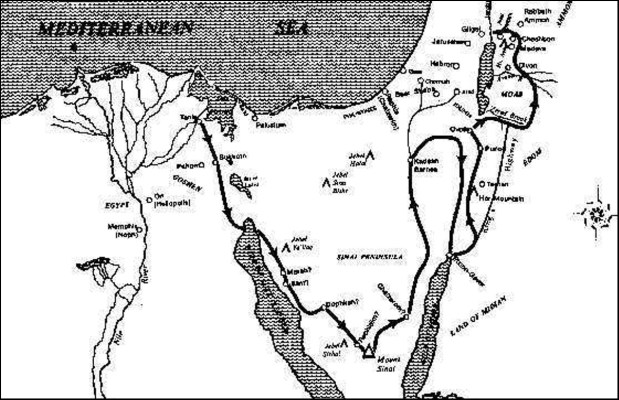
These parshiyos (read together in many years), contain the 42 journeys of Bnei Yisroel in the midbar prior to entering Eretz Yisroel.  These 42 journeys represent our sojourn in golus (both collectively, and individually).  Upon completing these journeys, the birurim of exile, we find ourselves holding at “Yarden Yericho” prepared to enter the land.

This is also the final reading from sefer Bamidbar, upon which the custom is to say “Chazak! Chazak! V’Nischazek!” (a declaration something along the lines of “be strong”).  The Rebbe connects “chazak” (strength) with the concept of “chazaka” — something which, after three times, has Continue reading

Pinchas 5751 — How Being a “Pnimi” is Living Geuloh

Pinchas 5751 — How Being a “Pnimi” is Living Geuloh

In this sicha the Rebbe explains that we bring the Geuloh through the avoidah of “making ‘here’ Eretz Yisroel” (מאך דא ארץ ישראל).  This is associated with the avoidah of being a “Pnimi” — one who is completely involved in what he is doing.  The instruction of “making ‘here’ Eretz Yisroel” is explained by the Rebbe: “even when he is found ‘here’, in chutz la’aretz, and in the time of golus — one must make ‘Eretz Yisroel’ [while he is] ‘here’ — in this place and time…seemingly: according to Torah ‘here’ (chutz la’aretz) is not ‘Eretz Yisroel’!”

The way to make “here” (which is not “Eretz Yisroel”) into “Eretz Yisroel” is by being totally involved in the avoidah of the moment, without thinking about what it will lead to, whether it is the main thing or a preparation for something else.  “It is known the saying of the Rebbe Rashab — a Pnimi is one who is completely involved in everything he does.”  Even if what he is doing is a preparation for Continue reading

Pinchas — Making “Here” Eretz Yisroel

Pinchas — Making “Here” Eretz Yisroel

The Rebbe begins the Sicha by referencing a story that occurred in the times of the 3rd Lubavitcher Rebbe, the Tzemach Tzedek:

A chosid once asked the Tzemach Tzedek for a brocha to go live in the Holy Land so that he could devote his life there to Torah study and avodas Hashem; the Tzemach Tzedek replied, “R’ Hillel (Paritcher, a legendary chosid on a very high level) doesn’t lack Eretz Yisroel. Make here Eretz Yisroel.”

In this week’s Dvar Malchus the Rebbe connects this story with the description in parashas Pinchas of the distribution of Eretz Yisroel among the 12 tribes and how it relates to our individual avodah in the last moments of exile.

The purpose of our exile (individual and collective) is to refine and elevate the world at large, transforming it into Continue reading

Chukas: Revealing the Hidden

Chukas: Revealing the Hidden

There is a common thread running through almost all of the Dvar Malchus sichos of 5751-52: the concepts of “ratzo v’shov” (ascending and returning); and the contrast between influence from Above the effort from below. These concepts are explained at great length in the teachings of Chassidus, and they receive added emphasis in Dvar Malchus.

The year this sicha was said Continue reading

28 Sivan a Preparation for Gimmel Tammuz?

We find that the Rebbe teaches a firm principle: the flow of the year is a continuum.  This means to say that each holiday or commemoration day is a preparation for the one that follows it on the calendar.  For example: Pesach (coming out of Egypt) is a preparation for Matan Torah on Shavuos; the day of Yud Kislev (the redemption of the Mitteler Rebbe) is a  preparation for Yud-Tes Kislev (the day of redemption 29 years earlier of his father, the Alter Rebbe).  The year that things happened in history is of much less significance than the order that they happen on the calendar.

From this we understand that since 28 Sivan precedes Gimmel Tammuz by 5 days — according to the Rebbe’s principle it serves as a preparation for Gimmel Tammuz.  In what do we see this?  On 28 Sivan we celebrate the Rebbe coming to America, being miraculously saved from the “valley of tears” of war-torn Europe.  Gimmel Tammuz is marks the end of the era (until now, at least) when we could see and hear the Rebbe in the usual ways.  What sort of preparation is this one for that one?

The day of 28 Sivan is noted in the “Shalsheles Hayachas” printed (at the Rebbe’s behest) at the beginning of the sefer Hayom Yom.  It begins with the Maharal of Prague, indicating the 7 generations to the Alter Rebbe.  Then it lists by year the major events and accomplishments of each of the Rebbeim of Chabad, concluding with the Rebbe.  For the Rebbe it states (after the year he was born and married) that in “5701 — Sivan — came to the city of New York”.  Not “arrived” (as a refugee) but “came” (purposefully).  A few comments about the Rebbe’s coming to New York:

Firstly, in the farbrengen of Shavuos 5701, about 10 days before the Rebbe and the Rebbetzin would set sail for America, the Previous Rebbe said:

According to universal custom, preparations for an important guest begin well in advance.  Every corner in the house is cleaned two weeks in advance, the family talks about the upcoming visit, and the neighbors are duly updated. He’s arriving soon. It’s now close to the time when Mashiach will come. It’s time to prepare for his arrival….  

Many see in this a hint to the arrival to America of the Rebbe, Melech HaMoshiach.  The old-timers who were in New York at the time tell that from the moment the Rebbe arrived, “everything changed”.  In fact, the Rebbe even testified on himself that something changed when he arrived to the USA.  At a farbrengen (Chol haMoed Pesach, 5748), the Rebbe addressed his arousal to cry out “Ad Mosai” (“until when” must we remain in golus):

I never heard this from my father, and certainly not from my grandfather. Even from myself, I never heard such talk before I arrived here in the United States…

So even the Rebbe’s impatience for Geuloh started when the Rebbe came to America (on 28 Sivan)!

We could say that 28 Sivan is an aspect of Moshiach being revealed.  Revealed to the Chassidim in America, revealed to the Rebbe himself, revealed in the new activities of Lubavitch that began only after the Rebbe’s arrival.

Based on this, we can see how 28 Sivan is a preparation for Gimmel Tammuz: on 28 Sivan Moshiach is revealed, on Gimmel Tammuz Moshiach is concealed.  As Rashi brings from on Daniel 12:12:

“in the future our Moshiach will be concealed after he has been revealed and will return and be revealed [again]” (שעתיד משיחנו להתכסות אחר שנגלה וישוב ויתגלה)

In order to fulfill the second step of being concealed (with the great value of the Divine service of the period of concealment, as discussed, for example, in the Kuntres of Rosh Chodesh Kislev, 5751 which addresses the concealment of Erev Rosh Chodesh), there must be the preparation of Moshiach being revealed.  The aspect of revelation of 28 Sivan precedes and prepares for the aspect of concealment of Gimmel Tammuz (and it’s connected to Erev Rosh Chodesh, which is the day after 28 Sivan).  Of course Gimmel Tammuz is not an end in itself — it leads to the ultimate redemption of 12-13 Tammuz.  And as the Rebbe says many times: the Geuloh of 12-13 Tammuz showed in retrospect how Gimmel Tammuz itself was “the beginning of the Geuloh”.  May we bring it about now!
Korach 5751: The Sun Stood Still For a Reason on Gimmel Tammuz

Korach 5751: The Sun Stood Still For a Reason on Gimmel Tammuz

The Miracle of the Sun standing still was only in order to allow Israel to defeat the enemy by their own power in a natural way.

Gimmel Tammuz is the day that the Previous Lubavitcher Rebbe was released from Soviet prison in 5687 (1927).

Prior to that, we find that it was on this day that Yehoshua bin Nun performed a tremendous miracle, causing the sun to stand still.  The story behind the miracle is that Israel were doing battle with the enemy.  Sunset was approaching, and with the setting of the sun the battle would cease and the enemy would be able to escape.  In order to enable Israel to defeat the enemy, Yehoshua instructed the sun to “be silent”, causing it to cease it’s flight in the heavens, preserving the daylight so that the battle could be won.

The Rebbe asks an obvious question: if one has the power to cause the sun (and the entire heavenly system with it) to pause, why not simply bring about the defeat of the enemy in a direct fashion?  The preceding verses in Sefer Yehoshua tell us that more of the enemy were killed by stones which fell upon them from heaven than were killed by the sword.  Is it not a simpler matter to rain down some more stones than to freeze the entire heavenly system?

The answer the Rebbe gives is that the battle is Israel’s battle, it must be won by them under their own power.  Of course Hashem is helping with miraculous assistance from above, but this is only assistance.  The war must be fought and pursued by Israel in a natural fashion, even if on top of that there is super-natural assistance.  Thus, instead of Yehoshua simply bringing about the defeat of the enemy and Israel stand by passively, he used his power to give Israel more time to overcome the enemy in a natural way.

In our day, Gimmel Tammuz is primarily associated with the transition from the years when we saw the Rebbe to the current situation where the Rebbe is not seen except in videos and dreams.  Moshe Rabbeinu is likened to the sun, and the Rebbe, Moshe Rabbeinu in our generation, is still providing all the assistance necessary to win the war against evil.  But the war must be won by us, under our own power.  While the Rebbe was visible to all, it was possible to “rely on the Rebbe” to win the war.  Today, when it seems that the sun, Moshe Rabbeinu, has “stopped moving” it is only in order to allow us to overcome the enemy using natural means.

For a more detailed explanation, with comprehensive references from Chassidus, see the Kuntres Inyonei Moshiach and Geulah for Gimmel Tammuz.

Shlach 5751: How to Conquer and Settle the Land

Shlach 5751: How to Conquer and Settle the Land

In the sicha of Parshas Shlach the Rebbe contrasts the spies who were sent by Moshe Rabbeinu in the parsha, and the spies sent by Yehoshua in the haftorah.  By contrasting the differences, the Rebbe identifies for us two differing paths in our service of Hashem (and in “entering the land” — bringing the Geuloh) “which complement each other and complete each other for the sake of a singular goal, the conquest of and the entering into the land.”

The spies sent by Yehoshua were for the sake of conquering the land, whereas those sent by Moshe were supposed Continue reading

8) Kuntres 15 Sivan: True Hiskashrus

The Rebbe brings in the name of the Rebbe Maharash a Midrash which states:

The Holy One said to man, “My candle is in your hand, and your candle is in My hand; My candle in your hand is Torah… Your candle in My hand is the soul… If you guarded My candle, I guard your candle; but if you extinguished My candle, I extinguish your candle.”

Although it may sound like a case of reward and punishment, the maamor explains it in a much deeper way:

The soul is likened to a candle because of its inherent nature to desire to rise up and be nullified in its source. This is accomplished by Aharon, who has the job to light the menorah until “the flame ascends of its own accord.”. Thus, the verse says “like good oil on the head descends on the beard the beard of Aharon…”. The beard of Aharon is the inyan of the halachos of Torah. This explains our midrash: that guarding the candle of Torah guards the soul that its desire to ascend should be revealed. This is accomplished via Torah.

As Chassidim we can understand that it refers to our hiskashrus to the Rebbe: that by Continue reading

B’haalosecha 5751: The Flame Rises on its Own

B’haalosecha 5751: The Flame Rises on its Own

The Rebbe many times repeats the words of Tanya, chapter 37, that all the lofty revelations of the time to come are dependent on our Divine service during the time of exile.  Although this is well known among those who learn Chassidus, there is nonetheless a common misconception that once we finish our labor in Golus, than everything else happens automatically.  In almost every Sicha of Dvar Malchus, the Rebbe drives home the point that the end of exile is not the end of our labor.  In this Sicha it is expressed as “lighting the lamps until the flame rises on its own.”

This is Rashi’s commentary on the words of  Hashem to Aharon HaCohen in our Parshah: “When you light the lamps [of the menorah]”.  Says Rashi, this literally means “when you bring up the lamps”, because Aharon “is required to kindle the lamp until the flame rises by itself.”

The object is not simply that the lamps should be illuminated (the lamps referring to neshomos Yisroel), because Continue reading

Parshas Naso, 5751: The Year (in which) Moshiach is Revealed

Parshas Naso, 5751: The Year (in which) Moshiach is Revealed

In the sicha of Parshas Naso, the Rebbe states as follows:

This is especially emphasized in this year — the year 5751 (1991) which stands for “I will show wonders” — beginning with the wonders that we already saw in actuality, revealed in the eyes of the whole world, in this year [referring to the miracles of the Gulf War].  That through [these events] the words of the Yalkut Shimoni midrash were fulfilled: “In the year that Melech Hamoshiach is revealed all the kings of the world will quarrel, the king of Persia [Iran/Iraq], the king of Arabia, and the Holy One, blessed be He, says to the Jewish people, “my children, do not be afraid, all that I have done I only did for you…the time of your Redemption has arrived.”  Since that time, we are already standing at [the closing section of the Yalkut Shimoni midrash] “in the hour that Melech Hamoshiach comes, he announces to the Jewish people and says humble ones, the time of your redemption has arrived.”

Prior to and during the first Persian Gulf War, the Rebbe made frequent references to this Yalkut Shimoni midrash, but here, for the first time, the Rebbe says unequivocally that “it has been fulfilled”, specifically quoting the words “in the year Melech Hamoshiach is revealed”.  In other words: in 1991 Melech Hamoshiach was revealed.  But despite this, as the Rebbe points out in other sichos, the Jewish people are still fearful and require Moshiach to tell them not to be afraid and to inform them that the Geulah has arrived.  But the “breakthrough” has happened: the year Melech Hamoshiach is revealed.

To add further insight:

“The year in which Melech Hamoshiach is revealed…” (“שנה שמלך המשיח נגלה בו”). The word “year” in Hebrew is feminine, and grammatically we would expect this Midrash to read “נגלה בה“, meaning “in her [the year, feminine]”.  So we need to explain why it says “בו” instead of “בה”: “the year Melech Hamoshiach is revealed in him“[masculine].

Regarding this logical question, it will help to Continue reading