The statement of the Rambam is well-known: every individual should consider that the fate of the world is in his hands. By performing a single mitzvah, one person can tilt the scales of judgement and bring salvation to the entire world.
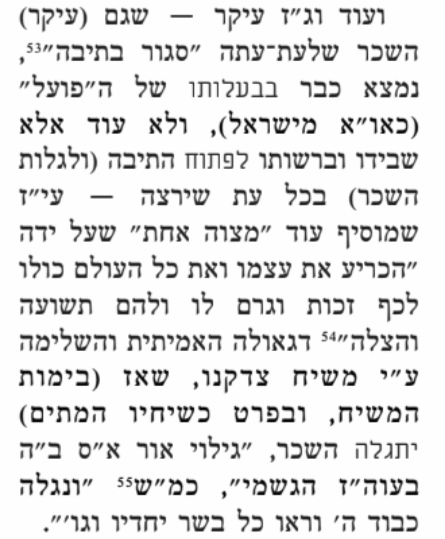
In the Sicha of Ki Seitze 5751, the Rebbe describes how the reward for Mitzvos is, metaphorically, locked in a chest. This chest is in the possession of all Jews.*
“Not only that, but he has the ability and the permission to open the chest (and to reveal the reward) any time he wants — by adding “one mitzvah” more, that through this [mitzvah] ‘he will tilt the scales…'”
Those who learn the Sichos are already familiar with this Rambam (the Rebbe showed an enthusiasm for this Rambam over the years). But, in general, the Rebbe adds a new dimension in his use of sources, and especially regarding the Sichos of Nun-Alef/Nun-Beis we should be on the lookout for new dimensions of understanding.
We offer the following insight:
The Rebbe here separates the words “one mitzvah” מצוה אחת from the rest of the quote from the Rambam, and the Rebbe adds the words “by adding one more mitzvah” (עי”ז שמוסיף עוד מצוה אחת).
To say “adding one more mitzvah” (עי”ז שמוסיף עוד מצוה אחת) implies something quite different than the Rambam’s wording of “performing one mitzvah” (עשה מצוה אחת). Adding one more (עוד) implies a mitzvah that was not already fulfilled, that there is “one more mitzvah” that we can “add” which will bring the revelations of the true and complete Geulah.
In truth, there are many Mitzvos we haven’t fulfilled in actuality, since we lack the ability to bring korbonos. But there is one mitzvah that has not been fulfilled — and is possible to fulfill today — and it is a mitzvah fulfilled by the Jewish people as a whole.*
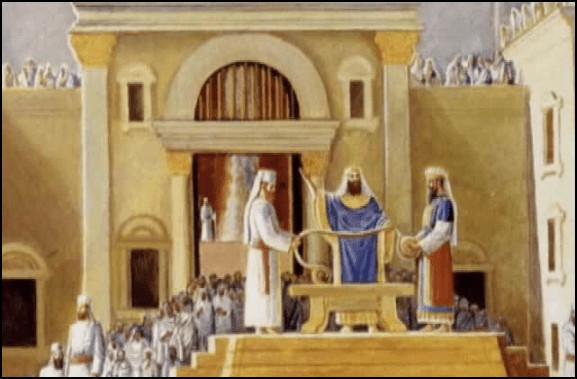
This is the mitzvah mentioned in last week’s parsha, Parshas Shoftim: the mitzvah to appoint a King שום תשים עליך מלך. Although it was fulfilled in earlier generations, our generation has not properly fulfilled it. More than that, the shleimos of this mitzvah was not reached through the appointing of Shaul Hamelech or Dovid Hamelech; rather its shleimos is the appointing of Melech haMoshiach — which is the responsibility of our generation, specifically!
This interpretation fits perfectly with what the Rebbe says here: because the opening of the “chest” that contains the reward of our Mitzvos (the revelation of Ohr Ein Sof in the world, as explained in the Sicha) is related to Yemos haMoshiach, and it is self-understood that in order for it to be Yemos haMoshiach there must be a Moshiach, whom the Jewish nation has a mitzvah to appoint over themselves, accepting his kingship.
So look at this portion of the Sicha again, and see how the Rebbe is saying that the “one mitzvah” which we can add, which will bring the lofty revelations we are longing for, is the mitzvah of appointing a King מינוי מלך!
Of course, this is a Mitzvah that falls on the shoulders of the entire Jewish nation as a whole, so it’s not enough that you and I and the bochurim in 770 accept the Rebbe as King, Melech haMoshiach, but requires the acceptance of his kingship by the Jewish nation. This is, lechoira, also the meaning of the Rebbe’s words in Noach 5752: the Geulah doesn’t depend on anything besides Moshiach himself.
אין הדבר תלוי אלא במשיח צדקינו עצמו
All that remains is to appoint the King!
*) It is possible, though not necessary, to say that the Rebbe means here the collective body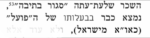 of all Yidden rather than each individual: “The reward that until now is “closed in a chest” is already found in the possession of the “worker” (each and every Jew).”