Chof-Ches Sivan, 5751: Where is the Beis Hamikdash Now?

Chof-Ches Sivan, 5751: Where is the Beis Hamikdash Now?

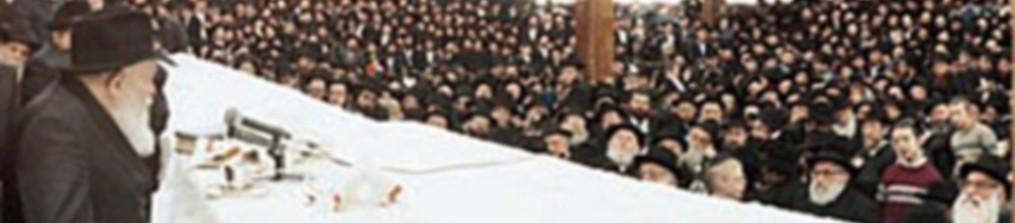
The Rebbe spoke this sicha on the 50th anniversary of his arriving safely to the shores of America (together with the Rebbetzin) from war-torn Europe in 5701 (1941).  America is identified in Chassidus as a place where Matan Torah did not take place (in a revealed way), and is referred to as the “lower half of the world” (חצי כדור התחתון).  It is, in this regard, the lowliest place.  But specifically from the lowest place one can elevate everything (like a lever  positioned under a building, which can lift up the entire building).

Here, in the lower half of the world, the Previous Rebbe settled in 5700 (1940), joined by the Rebbe and the Rebbetzin a year later.  The (now-famous) building at 770 Eastern Parkway was acquired as the home, shul, and study-hall of the Previous Rebbe, and the Rebbe explains the significance of this number.  (This sicha is one of the talks that would be compiled into the unprecedented sicha of “Beis Rabbeinu sh’b’Bavel“.)

As is know, there are 7 sefiros, from Chesed to Malchus.  The state of perfection is represented by 10, so the ultimate perfection of 70 is 700, and of 7 is 70, both of which combine to make 770.  The completion of the task of refining the sefiros.  This is not just number-play, as the Rebbe goes on to explain:

And from this place the Geuloh begins, and the building of the Beis Hamikdosh, “the Sanctuary of G-d, which Your hands established” (מקדש אדנ”י כוננו ידיך)… Even though its place is in the Holy Land, in Yerushalayim, on the Holy Mountain, [but the work of achieving this] is done via our avoidah in the time of golus, so we have in this place, specifically in this place, the entire preparation for the “Sanctuary of G-d”…until in this place will be the revelation of “the Sanctuary of G-d”, in this place (770).

The Rebbe continues to say that this refers to the entire building (of the Beis Hamikdosh), including the roof, as the Midrash states “Melech Hamoshiach stands on the roof of the Beis Hamikdosh and announces to Yisroel: the time of your redemption has arrived”.

Immediately, all Jews will find themselves standing (איבערגעשטעלט) in our Holy Land together with the third Beis Hamikdosh WHICH WE HAVE HERE (וואס מ’האט דא)…

Those words have been translated in capital letters to draw attention to their significance.  In this and other sichos, one could arrive at the mistaken understanding that 770 is merely the “small sanctuary in the time of golus” where, “at some point in the future”, the 3rd Beis Hamikdosh will be revealed first (see Kuntres “Beis Rabbeinu sh’b’Bavel”).

It is correct that 770 is that place where the 3rd Beis Hamikdosh will be revealed first.  But only the revelation to you and me is in the future; because the essential presence of the 3rd Beis Hamikdosh we have here מ’האט דא (present tense)!  This is a critical point to grasp, which enables many things to be understood.  For example: the Rebbe’s assertion (parshas Vayakhel) that the ingathering of the Exiles has begun.  This is something which comes about, as the Rebbe himself explains elsewhere, through the 3rd Beis Hamikdosh (and not merely the “small sanctuary in the time of golus”)!  We have it here!

The Rebbe continues and says that Eybershter agrees to the words and requests of Yidden, revealing His love for them down below in this low world, that everything in the world is working for Geuloh.  And further: the 28th of Sivan leads into the 29th, which is Erev Rosh Chodesh, when the moon is not visible.  This aspect of “your place will be empty” (יפקד מושבך) brings to “you are remembered” (see Kuntres Beis Iyar for more explanation), a term which also refers to the intimacy of husband and wife — the unification with the Eybershter, becoming “one reality”, “one flesh”.

Finally, the Rebbe makes a statement that, if understood, resolves all of the difficulties as to whether the Rebbe is really saying (here and elsewhere) that the Geuloh is here, which is contrary to what we see, or if we have to bring it.  The Rebbe states that:

The Eybershter “needs” (so to speak) the partnership of every Yid, specifically as soul in a body; and through our deeds and avoidah comes the Geuloh.  The Yid must come to agree that not only the time of your redemption has arrived, but more than that: the Geuloh b’pashtus is already here…Geuloh from the root that means revelation (through the avoidah of a Yid in Golus)…

Reading this closely, we note that the Rebbe is saying that what is needed in order to BRING the redemption (in the future, even if only the next moment) is that a Jew who is still in GOLUS (present tense, meaning that he has not yet experienced the Geuloh) nonetheless will AGREE and PROCLAIM that the Geuloh is ALREADY here “b’pashtus”!  To agree, and to go so far as to proclaim, that the Geuloh is already here while you yourself are still in golus — this what brings the Geuloh.

Furthermore, we can note the Rebbe’s exacting choice of words: “agree” (מסכים), which has a different meaning than “acknowledge” (מודה).  Agree means that the Yid, with his own level of understanding, comes to the same conclusion — agrees — with what the Rebbe is saying.  This is the “partnership” with the Eybershter the Rebbe is speaking about.  Because if we did not need to reach this through our own intellect and understanding, if it would be sufficient to simply to believe what the Rebbe is saying (that the Geuloh is already here b’pashtus), or to accept it unconditionally as a loyal Chosid, then the Rebbe would not have chosen the word “agree” (מסכים).  To reach the level of “agreement”, one has to learn and understand and on his level reach the same conclusion — much like a Rov who must rule according to his own understanding and not because he has unconditional acceptance of one who is greater than him.  (As the Gemara* tells about Rebbe Meir — that in his generation he was acknowledged as being uniquely great, but the sages did not rule the halacha according to his opinion because they could not understand the depth of his reasoning.)

We can readily grasp how the direct path to our “agreement” is learning about the subject of Moshiach and Geuloh, especially in the Rebbe’s teachings.  Only in this way can we do more than merely acknowledge the Rebbe’s words — we will be able to truly agree!

* Eruvin 13b:

גלוי וידוע לפני מי שאמר והיה העולם שאין בדורו כמותו. ומפני מה לא קבעו הלכה כמוהו? שלא יכלו חבריו לעמוד על סוף דעתו

9) Kuntres 28 Sivan: I Will Show You Wonders Behind the Miracles

9) Kuntres 28 Sivan: I Will Show You Wonders Behind the Miracles

A Chassidic discourse on the verse “As in the days when you came out from Mitzrayim, I will show you wonders” was edited and distributed by the Rebbe on 28 Sivan, 5751 (50th anniversary of the Rebbe’s arrival to America together with the Rebbetzin).  The subject is the nature and varying levels of miracles and wonders in general, and particularly as they will be in the Messianic age.  This not only shares an obvious connection with the miraculous escape of the Rebbe and Rebbetzin from Europe to America 50 years earlier, but also with the year 5751 תנש”א, which the Rebbe repeatedly referred to as the year of “I will show you wonders” (the letters of the Jewish year — Nun-Alef — standing for the  Hebrew words in our verse “I will show you wonders.”)

First, we need to understand the varying levels of miracles: miracles above nature (transforming water into blood, splitting the sea), and miracles enclothed in nature.  Miracles enclothed in nature themselves divide into 3 types: where the miracle is recognizable (Purim, Chanukah); where nature conceals the miracle but there is still a recognition that something out of the ordinary occurred and one is obligated to thank Hashem (an ill person who is healed, a prisoner who is freed, etc); and the lowest level, where nature so completely obscures the miracle to the point that one doesn’t even recognize that a miracle occurred (אין בעל הנס מכיר בניסו).

The Rebbe proceeds to explain that the last type of miracle, unrecognizable from the ordinary process of nature, is actually the highest in it’s source, from the verse עושה נפלאות גדולות לבדו, the great wonders that Hashem does “alone”, no one knows about them.  It is from this level that the great wonders of the Messianic age will come, which will be wonders even compared to the wonders of Mitzrayim.  This can explain why the about the Messianic wonders it says “I will show you wonders” — because they will come from the high level which today are unrecognizable — Hashem will have to “show” us that they are wonders.

But, the Rebbe explains, this verse of “showing wonders” doesn’t only apply to miracles enclothed in nature, but also miracles above nature.  Those miracles will be wonders even in comparison to the wonders that were seen in coming out of Mitzrayim.  But we are left with a question: what need is there to “show” the wonder of a miracle so above nature that it is already a wonder?  The answer the Rebbe gives is amazing.  But to reach that answer, we have to first understand the following:

First, the difference between these miracles is the degree to which they are grasped by human intellect.  A wonder like the splitting of the sea is so beyond human comprehension that we cannot grasp it at all, we can only gaze at it speechlessly.  The more the miracle is enclothed in nature, the more we can grasp it intellectually; to understand not only what happened, but how it happened.  The Rebbe gives examples: we don’t understand how a dead person is brought back to life, we only know that before he was dead and now he is alive.  But looking at the miracle of Purim, for example, we can see exactly how the decree was abolished, or when a sick person is healed we can grasp how it was brought about through certain drugs.  From this out comes out that being enclothed in nature is really what reveals the miracle, making it accessible to the human intellect.  The ultimate form are the miracles that we don’t even recognize — they are so fully grasped by our intellect that there is no sense of wonder that would cause us to notice something unusual has happened, which would cause us to give thanks to Hashem.

Mitteler Rebbe asks a question on the miracles that are unrecognizable: since they derive from the lofty level of “Him alone” (לבדו), then how is or possible for anything to conceal them?  His answer is that, in fact, nothing can conceal them.  They are so fully and seamlessly revealed by nature that we can’t even recognize that something out of the ordinary has occurred!

But really, all miracles come from the Ohr Ein Sof; the difference of whether that are enclothed in nature or not depends on whether they are from the aspect of concealment within the Ohr Ein Sof (למעלה מעלה עד אין קץ), or the aspect of revelation (למטה מטה עד אין תכתית).  And all the wonders of the Messianic era will revealed, including those that derive from the aspect of concealment.

So, the wonders of the Messianic era will come from the highest levels, and will also be revealed even into the human intellect.  But more than that, the Rebbe explains that even the miracles of the Messianic era that will not be enclothed in nature (like the splitting of the sea and the river) will be in the following manner: not only the splitting of the sea will be seen openly, but the revelation [of Elokus] that brings about the splitting of the sea will be seen openly! (As by the splitting of the sea upon coming out of Mitzrayim, when everyone pointed with a finger and said “this is my G-d” (זה א-לי ואנוהו). While by Yetzias Mitzrayim this was a one-time event, in the Messianic era it will be the ongoing reality!)

So we find that the miracles of the Messianic era will be wonders, from a higher level than even the wonders of Yetzias Mitzrayim, and at the same time they will be able to be grasped by human intellect.  (And they will be seen in a way where the Divine revelation itself will be perceived!)  But how will nature — which derives from the Divine name Elokim which conceals G-dliness that is above world — be able to accommodate such a degree of revelation?  The Rebbe explains that  through avoidas habirurim, refining the Divine sparks that fell in physicality, the Jewish people effect a refinement of nature.  Nature itself becomes elevated  (עלית הטבע), so that instead of obscuring the level of G-dliness that is above the world, it becomes a vessel for that G-dliness to be revealed!

It will be interesting to note (for those who have learned the Sicha explaining the “New Torah That Will Go Forth From Me”) that the Rebbe references chapter 16 in Shaar HoEmuna by the Mitteler Rebbe.  There, the Mitteler Rebbe explains this same subject of miracles, and also the difference between the aspect of concealment within the Ohr Ein Sof (למעלה מעלה עד אין קץ), and the aspect of revelation (למטה מטה עד אין תכתית).  He brings out that these two aspects correspond to Halacha (revelation to the lowest levels) and Kabbala (hidden secrets above revelation). Through this reference we can tie together everything in our maamor (which seems to be speaking only about miracles and wonders in physical objects) with the concepts discussed in the Sicha explaining the “New Torah That Will Go Forth From Me” — the ability of Moshiach to draw down the loftiest secrets of Torah to the point where they become Halacha! 

But what is the connection between the secrets of Kabbala, rulings in Halacha, and miracles in the physical world?  As explained by the Rebbe elsewhere, a Halacha ruling (psak din) has an affect on the world, and thus we can understand that when Moshiach draws down the secrets of Torah into Halacha (unifying the aspect of concealment with that of revelation) that this causes the same effect in the physical world, resulting in miracles and wonders which themselves unify the levels of concealment and revelation — above nature and within nature, as explained in this maamor of 28 Sivan!

Shaar Hayichud, Mitteler Rebbe, Ch. 15

Korach (3 Tammuz) 5751: The Sun Stood Still For a Reason

Korach (3 Tammuz) 5751: The Sun Stood Still For a Reason

The Miracle of the Sun standing still was only in order to allow Israel to defeat the enemy by their own power in a natural way.

Gimmel Tammuz is the day that the Previous Lubavitcher Rebbe was released from Soviet prison in 5687 (1927).

Prior to that, we find that it was on this day that Yehoshua bin Nun performed a tremendous miracle, causing the sun to stand still.  The story behind the miracle is that Israel were doing battle with the enemy.  Sunset was approaching, and with the setting of the sun the battle would cease and the enemy would be able to escape.  In order to enable Israel to defeat the enemy, Yehoshua instructed the sun to “be silent”, causing it to cease it’s flight in the heavens, preserving the daylight so that the battle could be won.

The Rebbe asks an obvious question: if one has the power to cause the sun (and the entire heavenly system with it) to pause, why not simply bring about the defeat of the enemy in a direct fashion?  The preceding verses in Sefer Yehoshua tell us that more of the enemy were killed by stones which fell upon them from heaven than were killed by the sword.  Is it not a simpler matter to rain down some more stones than to freeze the entire heavenly system?

The answer the Rebbe gives is that the battle is Israel’s battle, it must be won by them under their own power.  Of course Hashem is helping with miraculous assistance from above, but this is only assistance.  The war must be fought and pursued by Israel in a natural fashion, even if on top of that there is super-natural assistance.  Thus, instead of Yehoshua simply bringing about the defeat of the enemy and Israel stand by passively, he used his power to give Israel more time to overcome the enemy in a natural way.

In our day, Gimmel Tammuz is primarily associated with the transition from the years when we saw the Rebbe to the current situation where the Rebbe is not seen except in videos and dreams.  Moshe Rabbeinu is likened to the sun, and the Rebbe, Moshe Rabbeinu in our generation, is still providing all the assistance necessary to win the war against evil.  But the war must be won by us, under our own power.  While the Rebbe was visible to all, it was possible to “rely on the Rebbe” to win the war.  Today, when it seems that the sun, Moshe Rabbeinu, has “stopped moving” it is only in order to allow us to overcome the enemy using natural means.

For a more detailed explanation, with comprehensive references from Chassidus, see the Kuntres Inyonei Moshiach and Geulah for Gimmel Tammuz.

Shlach 5751: How to Conquer and Settle the Land

Shlach 5751: How to Conquer and Settle the Land

In the sicha of Parshas Shlach the Rebbe contrasts the spies who were sent by Moshe Rabbeinu in the parsha, and the spies sent by Yehoshua in the haftorah.  By contrasting the differences, the Rebbe identifies for us two differing paths in our service of Hashem (and in “entering the land” — bringing the Geuloh) “which complement each other and complete each other for the sake of a singular goal, the conquest of and the entering into the land.”

The spies sent by Yehoshua were for the sake of conquering the land, whereas those sent by Moshe were supposed to aid and encourage entering the land (which includes settling the land after it is conquered).  Moshe’s spies were assigned the task of scouting out the goodness of the land, to give Bnei Yisroel a tangible idea of the special land that awaits them (by bringing back the enormous fruits of the land), and through this to arouse in the Yidden a desire and excitement to enter Eretz Yisroel.

As we know, the spies contradicted their mission and tried to scare Bnei Yisroel away from entering the land as a result of “mixing in” to Moshe Rabbeinu’s instructions.  But, explains the Rebbe, in truth they did accomplish their mission: when Bnei Yisroel entered the land after 40 years wandering in the desert (the consequence of the spies “mixing in”), they did so with excitement that came from what they learned from those same spies.  “If only they hadn’t caused damage by what they added to the shlichus (regarding [the doubting the success of] conquering the land)…then all of Bnei Yisroel would have entered the land of Israel immediately with joy and great desire.”

The Rebbe proceeds to identify the points of difference between the two groups of spies:

  • 12 spies (Moshe) / 2 spies (Yehoshua);
  • Tribal leaders (Moshe) / unidentified men (Yehoshua);
  • Sent “in your opinion” (Moshe) / sent by command of Hashem (Yehoshua);
  • To “scout” the entire land (Moshe) / to “spy out” Yericho only (Yehoshua);
  • Travel openly (Moshe) / travel secretly (Yehoshua);
  • Identify the nature of the land and the people (Moshe) / identify the morale of the population (Yehoshua).

Seemingly, these are completely different kinds of shlichus, deriving from the fact that under Moshe they would have entered the land miraculously, whereas in the times of Yehoshua they needed to conquer the land in a natural manner.  But, as mentioned above, the Rebbe says that they complement and even complete each other, and this is also true in our avoidas Hashem to “enter the land” (bring the Geuloh).  The spies of Moshe represent the inyan of “differentiation” (התחלקות), the unique and special qualities that different elements possess (to be explained momentarily).  The spies of Yehoshua represent the inyan of “unity” (אחדות), where all differences are subsumed and nullified in the common underlying unity.

These differing aspects and approaches manifest themselves in the following areas:

  • Torah is the aspect of unity, the wisdom of Hashem — just as He is One, so too His wisdom is One.  Mitzvos are the aspect of differentiation, each mitzvah involving different limbs, different objects, having different effects.
  • Within Torah itself there are these same two dimensions: Nigleh which is Torah as it differentiates to explain the various mitzvos, etc., and Pnimiyus Hatorah, which explains Elokus and reveals the unity of Hashem in all creation.
  • The Neshoma possesses unique and differentiated “soul powers” (כוחות הפרטים) (intellect, midos) which are applied in different situations, and also it possesses Bittul, which shows on the unity of all aspects of Divine service.

The Rebbe says that the avoidah of refining the world is primarily accomplished through the aspect of differentiation (where one can be better than another, etc.) because the aspect of unity is above the world (and, thus, cannot affect it so much).  Nonetheless, there is also a need for the dimension of unity which brings the avoidah of refining the world to its perfection — that G-dliness which is above the world is drawn down and revealed in the world to make true unity.

This is reflected in two groups of spies.  Moshe’s spies were sent “in accordance with your opinion” (Moshe Rabbeinu’s opinion), which itself reflects on the “differentiation” in Torah as it becomes enclothed in the person’s own intellect.  Yehoshua’s spies, however, were sent upon command of Hashem, the aspect of bittul and kabbolos ‘ol.  The 12 spies represent the different types of Divine service of the 12 tribes, each tribe being different in its strengths and weaknesses.  The 2 spies of Yehoshua show on bittul of all of the powers of the neshoma to the two primary directions of Divine service: positive mitzvos and negative mitzvos.

Each one of us needs to utilize both forms of “spying out the land” in order to properly conquer and settle it.  The actual conquering is best accomplished through the simplicity and bittul of Yehoshua’s spies.  But arousing a desire to enter the land, and to settle it properly demands the approach of Moshe’s spies who utilize their unique abilities and capabilities to accomplish their shlichus.

It is possible to say that when the two dimensions are combined, the bittul of Yehoshua’s spies will keep us away from the mistake of Moshe Rabbeinu’s spies (who “mixed in” and “added” something undesirable to their shlichus) — that even when we make use of our personal strengths and uniqueness we will remain true to the shlichus and succeed to both conquer the land and to settle the land (with joy and desire) and to bring the true and complete Geuloh!

B’haalosecha 5751: The Flame Rises on its Own

B’haalosecha 5751: The Flame Rises on its Own

The Rebbe many times repeats the words of Tanya, chapter 37, that all the lofty revelations of the time to come are dependent on our Divine service during the time of exile.  Although this is well known among those who learn Chassidus, there is nonetheless a common misconception that once we finish our labor in Golus, than everything else happens automatically.  In almost every Sicha of Dvar Malchus, the Rebbe drives home the point that the end of exile is not the end of our labor.  In this Sicha it is expressed as “lighting the lamps until the flame rises on its own.”

This is Rashi’s commentary on the words of  Hashem to Aharon HaCohen in our Parshah: “When you light the lamps [of the menorah]”.  Says Rashi, this literally means “when you bring up the lamps”, because Aharon “is required to kindle the lamp until the flame rises by itself.”

The object is not simply that the lamps should be illuminated (the lamps referring to neshomos Yisroel), because this occurs also while Aharon is holding the light to them.  The Torah doesn’t say “light up the lamps”, but “bring up the lamps”.  This means that even when the one who lights them removes his influence, the lamps stay lit.  The Rebbe emphasizes that this means that the  lamps burn on their own accord even without any outside influence.

Even though lighting and bringing up the lamps comes about through lamp-lighting Jews, nonetheless the lamp must be ignited in a way that afterward the light comes from itself, the flame goes “on its own”, without needing any assistance from the lamp-lighter.

This means that even though a person didn’t “light himself up” — he had a Rebbe, parents, teachers, mashpiim, friends, etc. who helped “light him up” with an enthusiasm in avoidas Hashem — nonetheless, the complete and true avoidah is when (after he is “lit up” by others) he becomes a “flame which rises on its own”.  This means his own existence alone is what drives him, and not the influence of a mashpia (not even The Mashpia).

The significance to our times, after Gimmel Tammuz, should be obvious.  We are not presently operating in an environment where we see the Rebbe giving dollars, a piece of lekach, Kos Shel brocha, or an enthusiastic wave of the hand.  But if one refers to the decades when Chassidim saw and felt all of that as “the good old days” — he is missing the point!  The “complete and true avoidah” is not when a Yid feels excited when the Rebbe is “lighting him up”, but rather after that, when he can prove that the Rebbe was truly successful in lighting him up because his fire for serving Hashem “rises on it’s own” — even when the “lamp-lighter” pulls away the lighter!

This may sound like a daunting challenge, to bring ourselves to Geuloh-dik avoidas Hashem without the “Mashpia” (the Rebbe) lighting us up.  Firstly, we don’t have any choice in the matter: either we do this or, chas v’sholom, cool off.  As to the “how” — how can we bring ourselves to this avoidah the Rebbe wants from us, to rise up on our own accord?  The Rebbe brings in the Sicha from the Rebbe Rashab:

The nature to rise up [to its source] that is found in fire is not like something additional to it, not because it feels the loftiness of its source; but rather, because of its bittul and its lack of a metzius…

The more bittul we achieve, the less we are concerned with our own metzius (our feelings and our experiences of the Rebbe) and instead focus on what the Rebbe wants from us, we will find that we are “lit up” to bring Moshiach (in both our personal avoidah and our avoidah with others) in a more complete and true manner than was the case in the “good old days”. We will truly rise up on our own!

Shavuos: “The New Torah That Will Go Forth From Me”

Shavuos: “The New Torah That Will Go Forth From Me”

One of the most prominent features of the Messianic era is the spreading forth of Divine knowledge.  It begins with Moshiach Tzidkeinu himself (“he will possess great wisdom greater than Shlomo Hamelech, and will be a great Prophet (Novi) close to [and exceeding] Moshe Rabbeinu”), and proceeds to the entire Jewish nation (“Yisroel will be great sages and will know the hidden things and will grasp the knowledge of their Creator according to their [individual] ablity”).  This is expressed by the verse in Yeshaya “Because Torah will go forth from Me” (“כי תורה מאתי תצא”), upon which the Midrash explains “A new Torah will come forth from Me, innovation in Torah (chiddush Torah) will go forth from Me” (תורה חדשה מאתי תצא, חידוש תורה מאתי תצא).  [As explained in many places in Chassidus, the “new Torah” refers to new and deeper understanding of the very same Torah that was given to Moshe Rabbeinu at Har Sinai: the very same Torah, the very same letters, etc.]

PROPHECY AND HALACHA

The Rebbe explains that there are two aspects to the chiddush Torah: the newly revealed secrets of the Torah, and chiddush in halacha (specifically: using the fins of the Levyoson to shecht the Shor Habar, as the Rebbe will explain in depth.)

That Moshiach will reveal secrets of Torah is readily understood.  But to say that he will make innovations in halacha presents a difficulty, because (as mentioned above) Moshiach is a Novi and there is a priciple that a Novi is not permitted to make innovations in halacha (אילה המצוות, אין נביא רשאי לחדש עוד דבר מעתה).  Furthermore, what is the idea of an innovation in Torah anyway?!  The entire Torah (including the future innovations of a  sage, “talmid vosik“) was given to Moshe Rabbeinu on Har Sinai — so what room is there to “innovate”?

The answer the Rebbe gives is that the effort of the talmid vosik to find and reveal the answer (using the 13 rules through which the Torah is explained) makes it his own chiddush.  On a deeper level, such a chiddush is only revealing something that was “concealed, but existing” (העלם שישנו במציאות).  Meaning that using the tools of the 13 rules the human intellect is capable of revealing this concept.  But in the Messianic Era, the chiddush will come from the level of things which are “concealed, and not in existence” (העלם שאינו במציאות).  Meaning that human intellect could never arrive at such a conclusion, it must be revealed into human intellect from Above by the Holy One, blessed be He.  Thus the midrash tells us that this new dimension of Torah comes “from Me” (from Above) and “goes forth” — goes out into human intellect.

This also answers the difficulty of Moshiach as a Novi making innovations in halacha: the revelation of prophecy to Moshiach (revelation of Hashem from Above) does not remain “Above” (in which case it has no bearing on halacha), but rather: Moshiach draws it into the understanding of his own intellect, and proceeds to teach it to the people, enabling the masses to understand these Divine revelations with their own human intellect.  Once it becomes understood with the human mind, it is “not in the heavens” (לא בשמים היא) and thus is valid to make halachic rulings.

Based on what was explained above, we can understand how in the Messianic Era it will be permissible to shecht the Shor Habar with the fins of the Levyoson (a shechita which now would be forbidden because it is not kosher to shecht with a jagged edge): it will be revealed that the halachos of shechita never pertained to this shechita (of the Shor Habar).  An example of such a thing: halacha rules that shechita is forbidden on Shabbos.  In a case of saving a life there is a special heter which permits it.  But this halacha never referred to the shechting of korbanos — it is permitted to do so on Shabbos without the need for a special heter (since the halacha, from the outset, never applied to this shechita of korbonos).  Similarly, the halacha that shechting with a jagged edge is not kosher never pertained to the shechting of the Shor Habar.

BEIS SHAMMAI and BEIS HILLEL

What is the connection between the two dimensions of the future Chiddush Torah: the secrets and the halacha (since they are referred to together in the same posuk)?  The Rebbe explains that this can be understood by examining the difference between Beis Shammai and Beis Hillel.  As is known, Beis Shammai ruled very strictly in almost every case, whereas Beis Hillel ruled leniently.  Furthermore, the sages tell us that the halacha is (with a few specific exceptions) according to Beis Hillel.

Beis Shammai’s strictness comes from the fact that they rule in accordance with Pnimiyus Hatorah, whereas Beis Hillel rule according to Nigleh, the revealed dimension of Torah.  Beis Shammai were “sharper”, so there was a basis that halacha should go according to their opinion.  But the halacha is like Beis Hillel because they were the majority, which the Rebbe explains to mean that their reasoning could be understood by the majority.  (Similarly, we find that although Rebbi Meir was greatly praised as being unique in his generation, the halacha does not go with his opinion — because the majority of sages could not grasp the depth of his reasoning.)

The halacha like Beis Hillel is true until in the Messianic Era. But in the time of Moshiach the halacha will be like Beis Shammai, because their sharper reasoning will be grasped by the majority (ultimately everyone will grasp it).  We learn from this the crucial point that a halachic ruling must be in accordance with what the Rov understands.  A Rov must use his intellect to arrive at his decision, not his kabbolos ‘ol to the Rebbe (which hopefully he has — he can save it for other things, but not halachic rulings).  [Interesting to note that even when the Rebbe “guided” Rabbonim to certain rulings (such as ruling that those coming from Eretz Yisroel should keep two days of Yom Tov when they come to the Rebbe), the rulings still had to be halachically sound and not just because “the Rebbe said”.  And we can learn from here as regards the Psak Din on Moshiach…]

The Rebbe raises here another two questions: Since Beis Shammai is almost always more strict, why are we saying that in the Messianic Era (when his opinion will be halacha), the shechita of the Shor Habar with the fins of the Levyoson will be permitted— this is not more strict, it is more lenient!  And even more: why do we need to be strict in the Messianic era when there will be no more evil?!

THE FUTURE REFUGE CITIES (AREI MIKLOT)

The revealed dimension of Torah, Nigleh, deals with revealed good and revealed evil.  Pnimiyus HaTorah deals with hidden good and hidden evil.

Both of these concepts are expressed in the mitzvah of establishing refuge cities for accidental murderers — Arei Miklot.  Six such cities were established in Eretz Yisroel in the times of Moshe and Yehoshua.  Three more, the Rambam rules, will be established in time of Moshiach.  Here we have the same question: will there be murderers in the times of Moshiach?!

Even after avoidas haBirurim is finished (as the Rebbe tells us, in other sichos: this has already occurred) — there will still be the existence of evil in the world (until the resurrection of the Dead, the second, miraculous stage of the Messianic Era).  This evil in the world will cause the continued existence of accidental deaths (though premeditated murder will cease).  Thus, there will be a need for the Arei Miklot also in the Messianic Era.

Looking more deeply, the Rebbe explains that the concept of a refuge city refers to words of Torah.  Learning Torah is a “refuge” which protects the person.  The three new Arei Miklot of the Messianic Era refers to the inner dimension of Torah that will be revealed at that time.  These cities are to be established in the three lands of the Keni, Kenizi, and Kadmoni (the nations of Moav, Amon, and Edom) which will be acquired at that time.  The land of Israel that was conquered in the earlier generations was only the land of the 7 Cananite nations, which correspond to the 7 midos which the Jewish people had to refine.  These three lands that will be acquired in the Messianic Era correspond to the 3 intellectual faculties (Chabad — Chochma, Bina, and Daas), reflecting the refinement of the intellect, the Moichin which occurs in the times of Moshiach.

This brings us back to Beis Shammai and Beis Hillel.  There are certain things that everyone agrees that they are permitted by Torah, and other things that everyone agrees are forbidden by Torah.  The cases of machloikes between Beis Shammai and Beis Hillel are on things where there is a doubt whether it is evil and Torah forbids it, or if it contains good and Torah wants us to elevate it.  Beis Shammai, who were stricter, who ruled in accordance with Pnimiyus HaTorah, deal with a case of doubt by forbidding it, pushing it away, due to the hidden potential evil that the thing may possesses.  Beis Hillel, on the other hand, who are based on Nigleh, the revealed Torah, only push away revealed evil.  (They each have an inherent logic: to permit something that contains evil strengthens the “other side”, but also to push away something that we could be lenient with also gives strength to the “other side”.)  The shechting of the Shor Habar with the fins of the Levyoson is different because will be done by Hashem himself, which leaves no room for any possibility of evil (and thus even Beis Shammai will permit such a shechita).

THE SHOR HABAR: A DEEPER DIMENSION

It is explained in Chassidus that the expression of the gemara that equates shechting with pulling or drawing (אין ושחט אלא ומשך) means that the act of slaughtering an animal in a kosher manner takes something that was forbidden to eat (the live animal) and “draws” it into the the realm of the permissible.  Once it becomes permissible, a Jew can eat the flesh of this animal, internalizing and elevating it.  What as forbidden to eat becomes permissible to eat.  Eating refers to internalizing Torah, drawing it down and grasping the concepts.  The Arei Miklot of the Messianic era are the new revelations of Pnimiyus Hatorah from Moshiach, revelations so lofty that on their own they cannot be grasped and internalized — they are in the category of “forbidden (unable) to be eaten (internalized)”.  Shechita means taking that which cannot be internalized and making it able to be internalized.

The Levyoson, who lives in the sea, the hidden world, represents serving Hashem spiritually via lofty spiritual unifications (יחודים עליונים).  The Shor Habar, which lives on dry land, the revealed world, represents the service of Hashem by refining physicality.  Each one has what the other lacks: the spiritual Levyoson is in a way of elevation from Above, grasping lofty lights but they cannot be drawn down below; the Shor Habar is drawing everything into physicality, but it lacks the lofty revelations.

In the future there will the qualities of both of these dimensions together — that the lofty lights will be drawn down and revealed below.  How?  By shechting the Shor Habar with the fins of the Levyoson*, meaning that great spiritual levels associated with the Leviyoson will be revealed in those matters associated with the Shor Habar type of Divine Service.  This means even the most lofty matters, things which cannot be grasped by the human intellect, will be drawn down in a way that they can indeed be grasped, that the Torah “from Me” which cannot be grasped at this time, will “go forth” to be grasped by human intellect.  The loftiest spiritual revelations will be drawn down below to into halacha that deals with physical objects.

And with this explanation in mind, let us note (and grasp) what the Rebbe says in the sicha of Parshas Vayeitzei, 5752:

The only thing lacking is — that a Jew should open his eyes properly, and should see how everything is ready for the Geulah!  There is the “set table” already, and there is already the Levyoson and the Shor Habor and the aged wine, and Yidden are sitting at the table — “their father’s table”, together with Moshiach Tzidkeinu (as stated in seforim that in every generation there is one of the seed of Dovid who, due to his righteousness, is fitting to be Moshiach), and there is already a “heart to know and eyes to see and ears to hear”.

The table is set with the teachings of Moshiach, teaching things that we could never arrive at on our own, which enable us to grasp, in the vessels of Nigleh (Tanach, Midrashim, Mishnayos, Gemara, Halacha) great and lofty things which would otherwise be beyond human intellect.  All we need to do is to open our eyes to this reality, and proceed to “eat” — to learn and internalize these teachings, completing the refinement of the intellect, and bringing into our reality the revelations of the true and complete Geuloh!

“All the rest is commentary, now go and learn.”


* To note: the Midrash informs us that the Shor Habar will be shechted by the fins of the Levyoson: the jagged edge of the fins tells us that this shechting will take place “step by step”, level after level.

Parshas Naso, 5751: The Year (in which) Moshiach is Revealed

Parshas Naso, 5751: The Year (in which) Moshiach is Revealed

In the sicha of Parshas Naso, the Rebbe states as follows:

This is especially emphasized in this year — the year 5751 (1991) which stands for “I will show wonders”– beginning with the wonders that we already saw in actuality, revealed in the eyes of the whole world, in this year [referring to the miracles of the Gulf War].  That through [these events] the words of the Yalkut Shimoni midrash were fulfilled: “In the year that Melech Hamoshiach is revealed all the kings of the world will quarrel, the king of Persia [Iran/Iraq], the king of Arabia, and the Holy One, blessed be He, says to the Jewish people, “my children, do not be afraid, all that I have done I only did for you…the time of your Redemption has arrived.”  Since that time, we are already standing at [the closing section of the Yalkut Shimoni midrash] “in the hour that Melech Hamoshiach comes, he announces to the Jewish people and says humble ones, the time of your redemption has arrived.”

Prior to and during the first Persian Gulf War, the Rebbe made frequent references to this Yalkut Shimoni midrash, but here, for the first time, the Rebbe says unequivocally that “it has been fulfilled”, specifically quoting the words “in the year Melech Hamoshiach is revealed”.  In other words: in 1991 Melech Hamoshiach was revealed.  But despite this, as the Rebbe points out in other sichos, the Jewish people are still fearful and require Moshiach to tell them not to be afraid and to inform them that the Geulah has arrived.  But the “breakthrough” has happened: the year Melech Hamoshiach is revealed.

To add further insight:

“The year in which Melech Hamoshiach is revealed…” (“שנה שמלך המשיח נגלה בו”). The word “year” in Hebrew is feminine, and grammatically we would expect this Midrash to read “נגלה בה“, meaning “in her [the year, feminine]”.  So we need to explain why it says “בו” instead of “בה”: “the year Melech Hamoshiach is revealed in him“[masculine].

Regarding this logical question, it will help to take a look at the Ohr Hachama, the commentary of R’ Avraham Azulai, z”l, on the Zohar:

[…]so to it will be with the Moshiach after he merits to that neshoma and recognizes himself that he is Moshiach, as it states [in the Zohar] Moshiach will be revealed but he still won’t be recognized by the rest of the people[…] (Shemos 7b, quoting R’ Chayim Vital, z”l)

This describes how the initial “revelation” of Moshiach is when the neshoma of Moshiach is revealed to the individual who has been chosen by Hashem to be Moshiach. At the time that this individual receives the neshoma of Moshiach it is a private revelation, “but the rest of humanity will not recognize him”; only later will he be revealed to the people as Moshiach—what we refer to as the “coming of Moshiach”.

We could say that the Yalkut Shimoni’s use of the word “בו” transforms the literal meaning to “the year that Melech Hamoshiach is revealed in him”, a hint to “the year that [the neshoma of] Melech Hamoshiach is revealed in him [the one who will be Moshiach].”  In 5751 there was a revelation of the “yechida of the yechida”  (the lofty soul of Moshiach) in Moshiach himself.  The delay is the recognition of this by the world.

The reason for this “delay” is found in the Ohr Hachama on Shemos 9a, where it state:

“Moshiach can’t redeem Israel from below…only from Above…there needs to be an awakening from below in order to awaken the rachamim from Above, even if the physical Moshiach wants to redeem [them], only according to what Yisroel arouses Above can the Moshiach act….”

This describes a situation where there already exists the individual to whom has been bestowed the lofty neshoma of Moshiach (“the physical Moshiach”).  He himself knows that he is Moshiach, but the revelation is not yet recognized by all of Israel.  We can see this in the language of the Yalkut Shimoni itself: the Midrash begins with “the year in which the King Moshiach is revealed”, and the Midrash concludes with “the hour in which the King Moshiach comes”.

The year in which Moshiach is revealed refers to the initial revelation, when there is still a need to explain the events of the world to the Jewish people, “don’t be afraid”, etc. The hour when Moshiach comes refers to that transcendent moment when the Jews themselves are able to actually see and recognize the light of Moshiach (as stated in the continuation of the Yalkut Shimoni, brought in different sichos).

In other words, two distinct stages: the revelation of Moshiach which precedes and is distinct from the coming of Moshiach.  The Rebbe is informing us that the first stage has been fulfilled, and we have transitioned to the second stage, which is dependent wholly on the efforts of Yisroel, as the Ohr Hachama writes: “only according to what Yisroel arouses Above can the Moshiach act….”

Therefore, it is understood the words of the Rebbe (28 Nissan): “I have done all that I can do, now I give it over to you to do all you can do to bring Moshiach in actuality”.  If we truthfully cry out “Ad Mosai” (“until when”), we are really asking the question on ourselves: because while Moshiach is the one who brings the Geuloh, Moshiach’s ability to act comes from us.

See 5751–The Year Moshiach Is Revealed for more insights into the relevance of this Yalkut Shimoni to the Gulf War and the present world situation.

Bamidbar: How to Reach Hashem’s Essence

Bamidbar: How to Reach Hashem’s Essence

The sicha of Shabbos Parshas Bamidbar is an anomaly in the Dvar Malchus sichos, because here the Rebbe doesn’t mention the word Moshiach or Geuloh at all until the very end of the sicha.  Nonetheless, when we examine what the Rebbe does address here, we find that the Rebbe really is teaching us a vital element in actualizing the Geuloh.

There is a concept in Pnimiyus Hatorah called “ratzo v’shov“, which refers to two divergent directions in serving Hashem: “ratzo” means the desire of the neshoma to run away and escape the bonds of the world and the physical limitations of the body.  This is described in Tanya as the nature of the neshoma, like a flame that seeks to rise up and separate from the wick even at the expense of its own existence.  On the other hand, there is the direction of “shov“, which means to return to this world in order to fulfill Hashem’s Will which are Torah and Mitzvos in this world.  How does a Yid manage to unify these two opposites?  If my desire is to escape the world, then every moment in the world is against my will and therefore unpleasant.  But if my desire is to be in the world and fulfill Hashem’s Will here in the world, then I surely don’t want to escape and run away.  How are we supposed to fulfill both “ratzo” and “shov“?!

The way to do this, explains the Rebbe, is to transcend either of these two specifics of serving Hashem and to be tuned in to their underlying commonality: they are both the Will of Hashem.  Meaning, that if we want to escape the world, we won’t be enthusiastic to be here; and if we want to be here, we won’t be enthusiastic to transcend the world and its limitations.  But — if we want to fulfill Hashem’s Will, then we will want to do whatever He wants.  When His Will is “ratzo“, we will be happy with that direction; when His Will is “shov“, we will be happy also — since either way we are fulfilling His Will!  As the Alter Rebbe said: if we were instructed by Hashem to chop trees, we would also do this willingly and happily.

The Rebbe says that the mitzvah to love Hashem contains both ratzo and shov.  To illustrate: if a child likes to go out, he will be happy when his father sends him on an errand,  but he could be bored at home.  A child who loves being near his father and learning from him will prefer to stay home, and will not be enthusiastic about having to leave his father’s side to fulfill an errand.  But the child who truly loves his father and wants to do what his father wants will be happy either way, because either way he is doing what his father wants!

The key to this, explains the Rebbe, is through self-nullification — bittul.  When a Yid has bittul to Hashem, he relates to the Will of Hashem that underlies all the mitzvos regardless if they are ratzo or shov.  This bittul allows him to have a relationship with essence of the King himself — the highest level, which is the inyan of Geuloh.  If our interest is in the King’s matters themselves, we are missing the King.  When our interest and desire is the King himself, then automatically all of his matters are of equal importance to us.

The Rebbe then connects all this with the idea that a King, “Melech”, is an anacronym for “brain, heart, liver” (Moach, Lev, Kaved — Melech).  The brain is generally quiet and settled, tranquil and without movement, inner-focused.  The heart is constantly beating (representing the movements of ratzo and shov), never at rest and sending blood to the whole body.  Through bittul, we can synthesize the opposite natures of these two organs (the brain and the heart), and bring to bear the principle that the brain rules over the heart (מח שליט על הלב) and through this bring the tranquility to bear also on the lively and active heart, meaning that even our excited ratzo and shov will be permeated by an overarching tranquility in all its aspects.

We might understand this to mean that even as we should strive to acquire a heated, even fiery, interest and desire for Geuloh and to bring the Geuloh in actuality, and even to be “completely shaken up” (אינגאנצען צוטרייסלט) if there remains even one corner of the world where the Geuloh has not yet reached — yet through bittul we can permeate all of this with the settled tranquility that comes from the brain which understands that everything is with Divine purpose, and thus be able to synthesize them and do whatever is called for with similar alacrity and focus.  We will be able to fulfill all aspects of our shlichus equally: davening and fulfilling Mitzvos as we should; learning Torah (and especially the subjects of Moshiach and Geuloh) with proper effort to transcend the prior limits of our understanding; teaching alef-beis to a child; going out to the streets and putting on tefillin with another Jew; etc., etc. — all will be equal because our bittul brings us to be interested in connecting to the King’s essence, fulfilling the Will of the King, and bringing about the true and complete Geuloh.

6) Kuntres Lag B’Omer: Open My Eyes

6) Kuntres Lag B’Omer: Open My Eyes

This discourse starts with the words of Tehillim “Open my eyes and I shall gaze at [hidden] wonders from Your Torah” (“גל עיני ואביטה נפלאות מתורתך”).  This should immediately grab our attention, since the Rebbe called this year “I will show wonders” (“אראנו נפלאות”) and over the year would proceed to explain that all we need to do is “open our eyes”.  In this discourse the Rebbe explains to us what this means.

The verse mentioned above has a connection with Lag B’Omer (when the maamor was originally said, and when, 14 years later, it was published in 5751).  Because the word גל (“Gal” — Open [my eyes]”) contains the same letters as “Lag” B’Omer ל”ג בעומר.

Lag B’Omer is not only the day that Rabbi Shimon bar Yochai appeared (to fleshly eyes) to pass away, but it was the day of “the main revelation” of the inner dimension of Torah.  As brought in the Zohar that Rashbi revealed “holy words that he had not revealed over the course of his life (because the things he revealed [at the time of his passing] were the highest matters, that even Rashbi had been afraid to reveal then prior to this.)”.   Who fails to see the bold hint here —  that the Rebbe, in the year before our fleshly eyes perceived 27 Adar and Gimmel Tammuz, is revealing the us (in Dvar Malchus) things which had not been revealed previously.

The Rebbe proceeds to address a simple question: if the inner dimension of Torah is concealed from us, then the request should be “reveal to me” the hidden matters.  But the verse requests instead “open my eyes” — implying that the concealment is due to the eyes and not to the matters being hidden from sight.

The answer is that the Torah was given in order that we will become elevated, becoming vessels in which Elokus can be revealed. And specifically in those matters which apply “down below” (such as eating, drinking, business, etc.).  In terms of “Your Torah” (to quote the posuk) this means perceiving the hidden dimension of Torah within the revealed dimension; the deep intentions (כוונות) which are enclothed in the mitzvos. In fact, the main refinement and purification of the lower beings (the main intent of the giving of the Torah, as mentioned above) takes place via the intentions of the mitzvos.

All of this is related to Rashbi and Lag B’Omer, as the other verse that contains a hint to this day is “this witness-mound of stones” (עד הגל הזה) that Yaakov Avinu built as a mechitza for Lavan that neither of them would cross.  As the Rebbe explains here, this mound of stones was never meant to be permanent (as opposed to a wall, which has permanence).  Rather, this mound of stones (“Tzimtzum” and concealment) was only constructed in order that Yisroel will do the work to remove it, and to reveal the inner dimension of the Tzimtzum itself.  This recognition — that the Tzimtzum is really for the sake of revelation (we could say by way of a moshol: like the father who hides from his son on order that the son will search for and find him) — is the accomplishment of Rashbi, who refined this mechitza and brought about that the highest revelations could be perceived also in the lowest worlds.

This means that:

…the seeing of the wonders of Torah should be (not only because the wonders will be revealed, but rather)  because the Holy One, blessed be He, will open up the person’s eyes and the person will see the wonders of Torah in his own matters…that the Tzimtzum [the concealment which allows the dimension of “his own matters” to come into being] is really for the sake of revelation.”

In other words, the message of the year 5751, the year of “I will show wonders”, is that within matters that derive from the Tzimtzum itself, we should perceive the loftiest revelations of Elokus — in the  revealed world, in the revealed dimension of Torah.  And how can we possibly succeed to do that properly?  By diligently laboring to understand this dimension of Torah, and asking Hashem to please “Open my eyes…”!

5) Kuntres 13 Iyar: Like Which Brother?

5) Kuntres 13 Iyar: Like Which Brother?

This Chassidic discourse was printed in honor of the Yahrtzeit of the Rebbe’s brother, Yisroel Aryeh Leib.  Fittingly, it begins with the words of the posuk “Oh, that you were like a brother to me,” (Shir Hashirim, 8:1). Rashi comments that this verse refers to the way Yosef dealt kindly with his brothers even though they had mistreated him (by selling him as a slave to Egypt).  Contrasting this: there is a midrash which says that the verse refers to his beloved brother Binyomin, who, unlike his older brothers, had no hand in selling Yosef down to Egypt.

The discourse goes into depth about the nature of free choice, and the responsibility of Yosef’s brothers for selling him even though later Yosef reveals that it was divinely orchestrated for the good —  so that Yosef should rise to power in Egypt and be in a position to provide for his family when they sought respite from the famine in the land of Canaan.  However, we are now only going to focus on the part of the discourse that shows an open connection to the sichos of Dvar Malchus.

The verse “Oh, that you were like a brother to me,” is a request from the Jewish people to Hashem — to relate to us like a brother.  It is understood why we would interpret it to be referring to the brothers who sold him: the brothers did evil to Yosef but he repaid them with kindness.  Similarly, we request from Hashem that even though we have “done evil to Him” through our sins, He should repay us with kindness.  However, as we know from the story in chumash, Yosef’s kindness followed the trials and tribulations that he put the brothers through in order to bring them to do teshuva and acknowledge their sin.  By asking for Hashem to relate to us like Yosef to Binyomin, who had no hand in the sale of Yosef, we are asking for open and revealed good without any “trials and tribulations”.

The difference between the two interpretations (whether the verse is referring to Yosef’s conduct to his 10 brothers or to Binyomin) will be understood as the difference between a number of contrasting concepts, all of which contain a common thread.

On the one hand we have the lofty revelation of Yetzias Mitzrayim, which was an awakening from Above (not something Bnei Yisroel earned from their own efforts).  But, as lofty as it is, it remained essential “makif” and was not internalized.  On the other hand, we have Sefiras Ha’Omer (in the days following our going out of Mitzrayim), which is our own effort at refining ourselves.  It is not as lofty as when Hashem revealed Himself and took us out of Mitzrayim, but because it is our own avoidah it is internalized in a settled way (בפנימיות ובהתישבות).

The discourse goes on to find the same relationship between the avoidah of teshuvah (leaving one’s reality, the bittul of one who lacks all qualities) and the avoidah of Tzaddikim (having bittul that does not negate their existence, humility where one is aware of his abilities).  In short: powerful and lofty but remains “outside” the person, contrasted with a not-as-lofty revelation that is internalized.  It is specifically this aspect of being internalized that fulfills Hashem’s desire for a dwelling place down below (דירה בתחתונים).

Based on this, we can understand the two interpretations of our verse: the interpretation that “brother” refers to Yosef as he conducted himself with his brothers who sold him represents our request for the loftiest revelations (Yetzias Mitzrayim and the avoidah of Baalei Teshuva).  The other interpretation, which says that it refers to Binyomin, reflects a request for an internalized, settled revelation (Sefiras Ha’Omer and the avoidah of Tzaddikim).

Since both interpretations are going on the same verse, they are really not contradictory — they are complementary.  Meaning that our real request is for the highest revelations, but that these highest revelations should be internalized in a settled way — all of the benefits without any of the drawbacks!

This is the avoidah that the Rebbe has given us with the famous words of the Sicha of 28 Nissan: “oirois d’Tohu but in a way of keilim d’Tikkun“.  (In a later Sicha of 22 Shevat, this is described as the unification of the aspect of “10” and the aspect of “11”.)  Our avoidah to bring the Geuloh is not that of Baal Teshuvah nor that of a Tzaddik;  rather, ours is an avoidah that combines these two dimensions, demanding that we constantly transcend ourselves like a Baal Teshuvah, and then internalize it so it is as natural as the avoidah of Tzaddikim.