
Devarim: One More Request for Moshiach

Devarim: One More Request for Moshiach

In the year 5751, Tisha B’Av fell out on Shabbos.  In such a year, the fast, together with all other aspects of mourning the destruction of the Beis Hamikdash, are pushed off until the 10th (Sunday).  But the positive aspects of Tisha B’Av remain, which include it being an “auspicious time” (like every fast day) and also the birth of Moshiach.  Therefore, on Shabbos Tisha B’Av we are eating a feast!  Halacha permits one to sit and enjoy a repast as rich as Shlomo Hamelech’s even to the last moment before shkia (sunset) [unlike regular years, when we eat a mourner’s meal before the fast].

This itself is a taste of the Messianic Age, when all the fast days will be transformed to days of rejoicing, and as such our Shabbos meals on Tisha B’Av assume a Moshiach-like dimension of the feast of the Levyoson and Shor Habar (the Leviathan and Wild Bull).  On a deeper level: every year we re-experience the churban, the destruction of the Beis Hamikdash, and the mourning, and then in the afternoon, at Mincha-time, comes the comforting — the birth of Moshiach.  This year we have the birth of Moshiach (who builds the 3rd Beis Hamikdash which will never be destroyed) without the churban!  This hints that b’pnimiyus the destruction of the 1st and 2nd Beis Hamikdash were really only for the sake of the building of the 3rd, eternal Beis Hamikdash.

All of this was in fact present at the time of the churban, but it was concealed.  The inner positive aspects of Tisha B’Av, the birth of Moshiach, does not become revealed until the 15th of Av, which is when the moon is full, the moon being the aspect of Dovid Malka Mashicha. (This also hints at the Jewish people, when they reach full potential to receive the light (as the moon receives and reflects from the sun), reveal that Moshiach was actually born on Tisha B’Av.

The three weeks leading up to Tisha B’Av hint at the “three moichin” (3 aspects of Supernal Intellect) which themselves correspond to the lands of the three nations — Keni, Kenizi, Kadmoni — which were promised to Avraham Avinu (along with the land of 7 nations conquered by Yehoshua).  The Torah forbids us to have anything to do with these lands during the time of until Moshiach comes, but the fact that part of these lands were conquered by other nations (Sichon and Og) and then conquered and settled by the tribes of Gad, Reuven, and Menashe, is itself a hint that these three dimensions of the Supernal Intellect come together with the land of 7 nations, which refers to the seven midos.

Sefer Devarim is Moshe Rabbeinu addressing the Jewish nation before they will enter the land of Israel.  Moshe knew that Hashem had decreed upon him not to enter the land, but still he did not cease to beseech Hashem in prayer asking Him to allow him to enter the land, reaching 515 prayers (the numerical value of “Va’eschanan”, the parsha we read at Mincha).

From here there is also something for all generations to learn from… that without looking at all the prayers and requests that were until now, we need again and again to daven and request from the Eybershter “Ad Mosai” — “until when”.

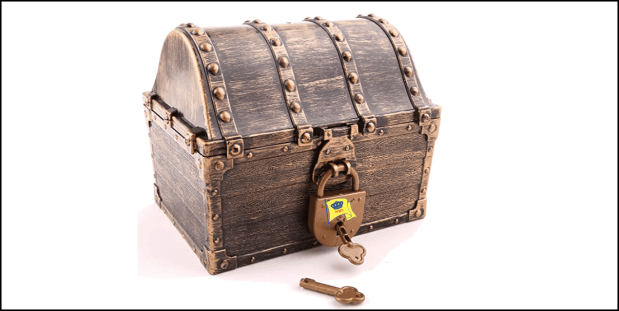
…and as was said,  immediately mamash, today mamash, since all the matters have been completed, and the Beis Hamikdash stands ready Above, and similarly all the matters — “everything is ready for the feast”, everything is ready as if in a closed chest and they have given the chest and its key to every single Jew.  The only thing that we are waiting for — that a Jew will shout another shout, with another request and demand and another reminder: “Ad Mosai“?!…

How long are we prepared to wait?  Ad mosai?!

Mitteler Rebbe Reveals the End Time!

Mitteler Rebbe Reveals the End Time!

ב”ה

Based on “Al Totzar es Moav” את תצר את מואב by the Mitteler Rebbe.  Cited numerous times by the Rebbe, this is an important and very relevant Chassidic discourse (“maamor”) of the Mitteler Rebbe on the subject of the keitz, end of golus, and the Geuloh.  The various opinions in the Gemora regarding how we bring about the Geuloh are explained, analyzed, and ultimately reconciled with amazing depth and chiddushim.  The insights are particularly relevant in our times, as many struggle to understand our present situation standing on the cusp of Geuloh.

 Click to download as PDF


THE MACHLOIKES

The Gemara (Sanhedrin 97b, see end of PDF file) presents a debate regarding the Geuloh.  Rav says that all the end-times (kitzin) have passed, and only through good deeds and Teshuva can the Jewish people bring the Geuloh.  Shmuel says that the suffering of golus is sufficient, “enough that the mourner should get up from his mourning”.  The Gemara continues the subject with a similar dispute between Tanaaim from an earlier generation, R’ Eliezer and R’ Yehoshua.

R’ Eliezer is quoted as saying “If the Jewish people repent they are redeemed, and if not they are not redeemed.”  His opinion is clearly that Teshuva is a prerequisite for Geuloh.  (Let us point out that according to Chassidus, Teshuva is not only to rectify sins, but is also the “return” to closeness with Hashem that is relevant to every neshoma that has descended to this world, even without sin.)  R’ Yehoshua replies: “If they do not repent, will they not be redeemed at all? Rather, the Holy One, Blessed be He, will establish a king for them whose decrees are as harsh as Haman, and the Jewish people will repent.”  Seemingly, this doesn’t contradict R’ Eliezer that Teshuva is required, only that he adds an option for a “push from Above” to bring about that Teshuva.  This will become relevant as we proceed.

The gemara then brings a Beraisa in which the same two sages argue back and forth as to whether Teshuva is required at all.  R’ Eliezer holds, as above, that Teshuva is a prerequisite for Geuloh.  R’ Yehoshua goes beyond what he said above, and makes the claim that there is in fact no need for Teshuva!  They alternatively bring pesukim from the prophets as proof to their position (worthy of noting that they each find support from different pesukim in the very same prophets – Yeshayahu haNovi, and also from Yirmiyahu – which will fit with the Mitteler Rebbe’s explanation).  R’ Yehoshua’s final prooftext is the keitz of Daniel — renders R’ Eliezer silent. Continue reading →

Devarim: Aquiring the Geuloh in the Closed Chest

Devarim: Aquiring the Geuloh in the Closed Chest

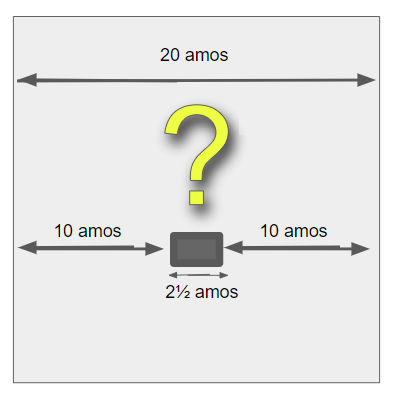
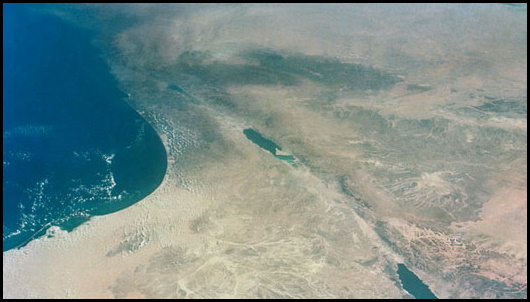
Several times in these talks of 5751-52 the Rebbe states that the “direct way” to bringing Moshiach is through learning the subjects of Moshiach and Geuloh.  Parshas Devarim contains the instruction “do not disturb Moav” (אל תצר את מואב, Devarim 2:9), which is the nation living in one of the three lands “beyond the Yarden river” which were promised to Avraham Avinu and will be inherited in the future.  These lands are called the lands of the Keni, Kenizi,  and Kadmoni (lands of Ammon,  Moav, and Edom (Seir)–see Rashi on Devarim 2:5).

The inheritance of these lands is explained at length in Chassidus as referring to the intellectual faculties (Chochma, Bina) and the super-intellectual level of Kesser (see Lech Lecha 5752, for example), which are part of our spiritual makeup, but we have not “acquired” them yet.  In fact, the names Keni, Kenizi and Kadmoni all contain the letters of “kinyan” (the letters ק – נ – י), acquisition, hinting that these lofty levels must ultimately be “acquired” — internalized in a way where we master them.

With that in mind, note the interesting expression the Rebbe uses in the sicha for parshas Devarim, that all matters of the Geuloh have been completed and are “as if in a closed chest”:

…all the matters have been completed, and the Beis Hamikdash stands ready Above, and similarly all the matters–“everything is ready for the feast”, everything is ready as if in a closed chest and they have given the chest and its key to every single Jew.

What makes this noteworthy is the following halacha of the Rambam in chapter 21 of the laws of Mechira (“Selling”):

If, however, a person tells a colleague: "I will sell you whatever this house contains for this and this amount," "...whatever this chest contains,..." or "whatever this sack contains for this and this amount," the purchaser agrees and performs meshichah, the transaction is not binding. For the purchaser did not make a binding commitment, since he does not know what the receptacle contains, whether straw or gold. This is no more than gambling. The same applies in all analogous situations.

The Rambam rules that one cannot acquire something if he does not know what he is acquiring!  We cannot acquire the “closed chest” which contains the Geuloh until we know what is in it!  Until we know what Moshiach and Geuloh are all about, even if “the closed chest” that contains them has been handed to us along with the keys, we need to learn about it in order to “acquire” it, to internalize it as our own.

And if you will ask: but we have the keys, why not just open the chest and we’ll know exactly what’s in it and that satisfies all requirements for kinyan (acquisition)?

Yes, this is true. But the fact is that the chest and the keys have been given over to every Jew, and yet no one has yet seen fit to open the chest and reveal the Geuloh; thus, it seems that in order to arouse a Jew to do that he has to be motivated to do so by excitement over what is inside the chest that has been given to him.  How will he be motivated to open the chest?  Through fulfilling the Rebbe’s instruction to learn the subjects of Moshiach and Geuloh, to know what is in the chest, and then certainly each one of us will realize the great treasure we have been given and we will rush to open it up — and the sooner the better!

Matos-Masei 5751: The Reason For Golus is Rectified!

Matos-Masei 5751: The Reason For Golus is Rectified!

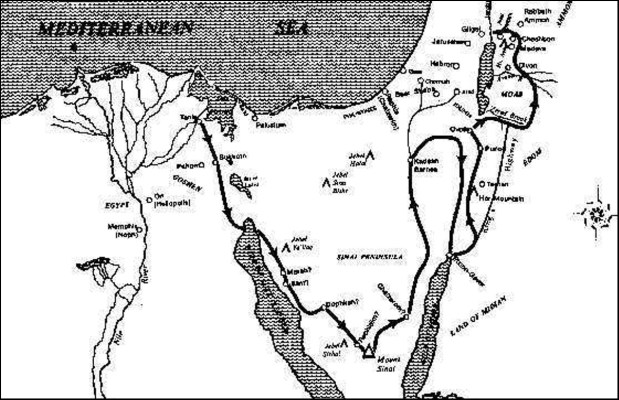
These parshiyos (read together in many years), contain the 42 journeys of Bnei Yisroel in the midbar prior to entering Eretz Yisroel.  These 42 journeys represent our sojourn in golus (both collectively, and individually).  Upon completing these journeys, the birurim of exile, we find ourselves holding at “Yarden Yericho” prepared to enter the land.

This is also the final reading from sefer Bamidbar, upon which the custom is to say “Chazak! Chazak! V’Nischazek!” (a declaration something along the lines of “be strong”).  The Rebbe connects Continue reading →

Pinchas 5751 — A Deeper Look at a “Pnimi”

Pinchas 5751 — A Deeper Look at a “Pnimi”

In this sicha the Rebbe explains that we bring the Geuloh through the avoidah of “making ‘here’ Eretz Yisroel” (מאך דא ארץ ישראל).  This is associated with the avoidah of being a “Pnimi” — one who is completely involved in what he is doing.  The instruction of “making ‘here’ Eretz Yisroel” is explained by the Rebbe: “even when he is found ‘here’, in chutz la’aretz, and in the time of golus — one must make ‘Eretz Yisroel’ [while he is] ‘here’ — in this place and time…seemingly: according to Torah ‘here’ (chutz la’aretz) is not ‘Eretz Yisroel’!”

The way to make “here” (which is not “Eretz Yisroel”) into “Eretz Yisroel” is by being totally involved in the avoidah of the moment, without thinking about what it will lead to, whether it is the main thing or a preparation for something else.  “It is known the saying of the Rebbe Rashab — a Pnimi is one who is completely involved in everything he does.”  Even if what he is doing is a preparation for something else (such as singing the niggun as preparation for hearing a Chassidic discourse from the Rebbe), he is focused on what he is doing and not what it leads to.

A Yid must do his avoidah ‘here’ — in this place and time — with complete perfection (based on his abilities and potentials in his situation) in thought, speech, and action, as a ‘Pnimi‘ who is completely involved in whichever avoidah he is presently doing (and he doesn’t think at the time that he’s doing it about another avoidah later)…he is making in this place (and time) a land in which Yiddishkeit (Yisroel) is openly recognizable. 

Now let’s look deeper.

The repeated references to “here” Continue reading →

Pinchas: Making “Here” Eretz Yisroel

Pinchas: Making “Here” Eretz Yisroel

Let’s begin with a story:

A chosid once asked the Tzemach Tzedek for a brocha to go live in the Holy Land so that he could devote his life there to Torah study and avodas Hashem; the Tzemach Tzedek replied, “R’ Hillel (Paritcher, a legendary chosid called by the Rebbeim “half a Rebbe”) doesn’t lack Eretz Yisroel. Make here Eretz Yisroel.”

In this week’s Dvar Malchus the Rebbe connects this story with the description in parashas Pinchas of the distribution of Eretz Yisroel among the 12 tribes and how it relates to our individual avodah in the last moments of exile.

The purpose of our exile (individual and collective) is to refine and elevate the world at large, transforming it into the level of the Land of Israel, our part in the words of the midrash that in the Time to Come the land of Israel will spread out to all the lands.  However, at the same time Yerushalayim will spread out to all of the land of Israel (Israel remaining on a higher level than the rest of the world) and thus Moshiach will come to gather every Jew and bring him to Eretz Yisroel.

Given this, one might think that Continue reading →

12-13 Tammuz: the Rashbi Connection, the Geuloh Connection

12-13 Tammuz: the Rashbi Connection, the Geuloh Connection

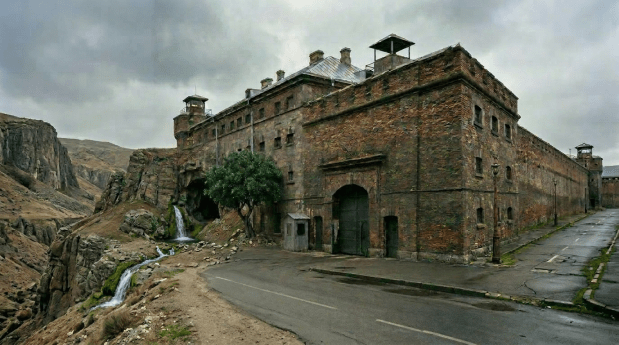
After his arrest by Communist authorities for the “crime” of being involved in spreading Yiddishkeit, the Previous Rebbe was imprisoned under terrible conditions for 18 days in 5687 (1927).1 He was sent to exile in the city of Kostrama on Gimmel Tammuz of that year. Nine days later, on the 12th of Tammuz, he was informed that he would be released from his exile, but due to the official offices being closed the certificate of release did not come until the next day, the 13th of Tammuz. Thus, his release is celebrated as a two-day yom tov: 12-13 Tammuz.

Those are the external causes as they enclothed themselves in this world. But we know from Chassidus that the real reason for events is deeper, sourced in a more spiritual dimension. The “hasgacha protis” that the release of the Previous Rebbe from this ordeal is eternally celebrated on the 12th and 13th of Tammuz should grab our attention. What is this fact coming to tell us?

THE RASHBI CONNECTION

We know that there exists a “Rashbi connection” with Continue reading →

10) Kuntres 12-13 Tammuz: How We Can Burn Down Golus!

10) Kuntres 12-13 Tammuz: How We Can Burn Down Golus!

The maamor released for 12-13 Tammuz 5751 was originally said on 12 Tammuz 5729, a day before the maamor that was released on Yud Alef Nissan, 5751 (three months earlier).  Both maamorim speak about the “prayer of the rich man”.  Here, the Rebbe stresses the the connection between Yisroel and Moshe Rabbeinu, and adds the distinction that Moshe’s connection with Yisroel is his inward dimension (pnimiyus),  and everything else is secondary and external (chitzoniyus).  “All of his levels, including that he was also wealthy in ruchniyus, they are secondary, the external [chitzoniyus] dimension, relative to the fact that he is the shepherd of Yisroel…”  This, of course, is true also of the extension of Moshe in every generation — the Rebbeim — and now the Rebbe explains how this applies to the Geuloh of 12-13 Tammuz (and 19 Kislev):

Through the imprisonments that preceded the Geuloh of 19 Kislev and the Geuloh of 12 Tammuz came a great elevation, which is like the additional light that comes from the darkness.  Seemingly, since as regards the Nessiim it’s not possible to say that even while they were imprisoned there was a state of darkness by them [as the [Rebbe Rayatz] said about the imprisonment of the Alter Rebbe, that it was with his agreement, from which it is understood that by them all the concealments of imprisonment were only in chitzoniyus], then how could there come about an “additional light from darkness”?  We can say that since the main inyan of the Nessiim is that they are the shepherds of Yisroel, therefore, the concealments of the imprisonment as it was experienced by Yisroel is also found by the Nessiim.

This reveals to us how Moshiach can be Continue reading →

Balak 5751: To Recognize the Inner Good

Balak 5751: To Recognize the Inner Good

In the year 5751 the fast of 17th Tammuz fell out on Shabbos parshas Balak.  In this sicha the Rebbe addresses the special quality of a fast that falls out on Shabbos, which causes the fast itself to be pushed off until the next day.

First, we must understand that although the fast itself is a matter of “discomfort which is the opposite of desire and pleasure, but its inner dimension (b’pnimiyus) it is a good thing, as stated in the verse ‘a day of Will to Hashem’.”  More specifically, the fast of the 17th of Tammuz is on the day of the month which has the numeric value (gematria) of “good” (טוב = 17).  The Rebbe finds this completely natural:

Since the intent and ultimate purpose of the churban and the golus is only in order to come to the elevation and perfection of the (true and complete) Geuloh, meaning that the golus is an external matter, and it’s inner dimension is the Geuloh.

From this, we understand that since the time of the churban itself, everything is for the purpose of the Geuloh.

Interesting to note that the Rebbe mentions four times in this sicha that there is an aspect of Geuloh which is to rectify the churban and golus, but additionally there is a higher level: Continue reading →

Chukas: Revealing the Hidden

Chukas: Revealing the Hidden

There is a common thread running through almost all of the Dvar Malchus sichos of 5751-52: the concepts of “ratzo v’shov” (ascending and returning); and the contrast between influence from Above the effort from below. These concepts are explained at great length in the teachings of Chassidus, and they receive added emphasis in Dvar Malchus.

The year this sicha was said (5751) Shabbos parshas Chukas was the 10th of the month of Tammuz. This means it carries the influence of the number seven (Shabbos) and the number ten (10th of the month). The Rebbe explains that seven represents the complete perfection of the world as it is created from Above, exemplified by the Written Torah which was given from Above, the revealed aspect of Torah. The number ten represents the perfection that is attained (and added to) via our effort from below, which finds expression in the Oral Torah, including Pnimiyus Hatorah.  The added quality of ten, deriving from our effort, is that it brings to revelation the “concealed good” which is not openly revealed in the revealed Torah.

The difference between 7 and 10 is 3, which refers to the “moichin“, the three intellectual dimensions of Chochma, Bina and Da’as (Chaba”d).  It is our effort to use our intellectual abilities which brings out the hidden good.  Says the Rebbe here:

To point out that last Shabbos was 3 Tammuz, the beginning of the Geulah. This Shabbos. the 10th of Tammuz, comes after 7 days of the week have passed — the avodah of refining the 7 midos.  Together with this is the avodah of the 3 moichin (of 3 Tammuz) — and this brings about the revelation of the aspect of 10 (of Tammuz)…  

This is the special quality of our effort (3 [moichin]) which adds to the completeness from Above (7 [midos]) and brings to the ultimate completeness and perfection of revealing the hidden good (10).  [This is also connected with our parsha which speaks of the Red Heifer (Pora Adumoh), in which the Torah instructs that the sprinkling of the purifying waters take place on the third day and the seventh day.]

The Rebbe explains further: “through understanding Pnimiyus Hatorah and the soul of the matter, one is able to see there also the hidden good, even though one does not see this revealed, or one even sees the opposite (the opposite of good).”  According to Torah (and emphasized in Chassidus), everything is really good because Continue reading →