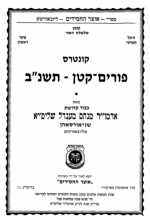
This Maamor was distributed by the Rebbe himself on Purim Koton, 5752, less than two weeks before the dramatic event of 27 Adar I (“Chof Zayin Adar“), making this the “last” Kuntres (so far) that the Rebbe distributed. Combined with the tremendous chiddushim of the maamor, it has earned a special status as a clear guide for how to proceed in our efforts to bring about the true and complete Geuloh.
The Maamor is based on a maamor that the Previous Rebbe said in Russia (“V’kibel HaYehudim”, 5689), and comes to explain the opening verse of Parshas Tetzaveh:
:וְאַתָּ֞ה תְּצַוֶּ֣ה אֶת־בְּנֵ֣י יִשְׂרָאֵ֗ל וְיִקְח֨וּ אֵלֶ֜יךָ שֶׁ֣מֶן זַ֥יִת זָ֛ךְ כָּתִ֖ית לַמָּא֑וֹר לְהַֽעֲלֹ֥ת נֵ֖ר תָּמִֽיד
And you shall command the children of Yisroel, and they shall take to you pure olive oil, crushed for luminary, to kindle the lamps continually.
The Rebbe asks a series of questions on this verse:
- Why does the verse state “You (Moshe) shall command…” when Hashem is the One who commands and Moshe is only the Shliach to carry out the command?
- Why does it state that the Bnei Yisroel should bring the pure olive oil (for the lighting of the Menorah) to Moshe when the Menorah is lit by Aharon haCohen and not Moshe?
- Why does it state “crushed for the luminary”, when we would expect it to say “for the light”?
- Why does it state “to kindle the lights continuously” when in the very next verse it states “from evening until morning”?
In the course of answering these questions, the Rebbe will reveal some astonishing chiddushim that serve as a guidepost for our avoidah in this period.
THE ROLE OF MOSHE RABBEINU
The term Mitzvah (command) Continue reading
 Dvar Malchus 770