
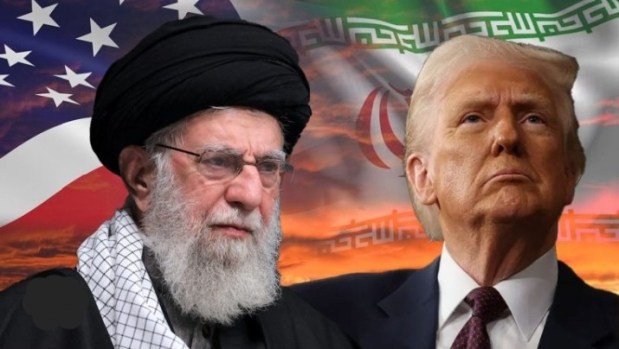
War with Iran is approaching round two – could this be the final groan of golus, the cracking of the shell, the spilling forth of the light of Geuloh that the world is longing for? After all, Iran is simply the preferred modern name of ancient Persia – the very same nation. And we have the testimony of the sages of the Gemara that before Moshiach comes Persia will fall at the hands of Rome![1]
Evidently, we are describing an event of global proportions. But the chess-board of world politics is merely the playing out of an internal spiritual drama of the Jewish people, as Chassidus explains the verse “He gave the world over to their hearts”[2] (גם את העולם נתן בלבם). How should we understand this drama – especially since it is described as being intertwined with the coming of Moshiach?
By attempting to analyze both aspects – both the worldly external events and the inner service of Hashem – based on the words of our sages and the teachings of Chassidus, we will, with Hashem’s help, find them even more significant than we might have thought.
The Fall of Paras: the External Dimension
We will start by mentioning words spoken by the Lubavitcher Rebbe in order to establish the significance of this matter in our generation. The Rebbe told Ron Nachman, mayor of the Israeli city of Ariel, to explain to the Americans that “it is imperative that there be a strong Israel in order to check the spread of the influence of Syria, Iran, and so forth, for they are against the US no less than they are against Israel and maybe moreso.”[3] Clearly, the Rebbe was not discussing with him a sugya in the gemara or esoteric ideas of Chassidus – this is practical advice which even the gentile government in the United States is expected to understand.
Additionally, former Israeli Ambassador Yehuda Avner was interviewed a number of years ago and shared that the Rebbe in the mid-1970s told him (years before the Iranian revolution) that “the emergence of an Islamic Iran carries with it the seeds of jihadism that will spread across the Middle East, threaten Europe, and ultimately the whole of Western Civilization.”[4] We understand clearly that the military threat from Iran is a pressing contemporary issue which in the Rebbe’s view is of the gravest consequence.[5]
Today, it is unfolding before our eyes.
We will now look at the relevant sources in Torah, with hope to gain some small insight into the gravity with which the Rebbe views the developments in Iran (Persia).
The gemara, Yoma 10a, states as follows:
Rebbi said that in the future Rome will fall at the hands of Persia…. Rav said that Persia will fall at the hands of Rome. Rav Kahana and Rav Asi said to Rav: Can the builders [Persia, who permitted the rebuilding of the Holy Temple] fall before the destroyers [Rome, who destroyed the Temple][6]?! He said to them: Yes, it’s a decree of the King.[7]
The commentary of Tosefos[8] clarifies that Persia is the nation destined to fall and adds a critical element: “We were told that in the future Persia will fall at the hands of Rome, that is, in immediate proximity to the coming of Moshiach.” Meaning, it’s not just one of many future events, but an event immediately preceding (-סמוך ל) the coming of Moshiach!
Rome, as we know, is Edom.[9] Edom is commonly understood to mean the Western world in general, and Rome is the center of its financial and military power. Just as Rome was the mightiest and wealthiest world power of its time, so, too, the United States today.
One could, however, ask a question on the relevance of this gemara to our times: Following the first Persian Gulf War, the Rebbe referenced the midrash Yalkut Shimoni that refers to a war in the year Moshiach is revealed and stated that it had been fulfilled that year – what need do we have for Persia to fall at the hand of Rome?! We can answer that the Yalkut Shimoni itself states the difference between “the year Moshiach is revealed” and “the hour Moshiach comes”. The Rebbe stated[10] that the first part – Moshiach was revealed – took place in 5751, and since then we are standing on the cusp of “the hour Moshiach comes”. And further, the Rebbe declares numerous times in these sichos that “kolu kol hakitzin” — “all the end times have passed”! The task of refining the fallen sparks of holiness (avoidas habirurim) has been completed! Consequently the Rebbe expresses his astonishment that “Moshiach still hasn’t come!”
In light of this, we can bring an amazing statement from the sefer Yaaros Dvash:[11]
The gemara states that [Moshiach] ben Dovid doesn’t come until the Persians will fall at the hands of the Romans. And the commentators note that it doesn’t state “before [Moshiach] ben Dovid comes” the Persians will fall at the hands of the Romans, but [rather the exclusionary language of “doesn’t come until”] to teach that even if the end-time will arrive, nevertheless it will be delayed until the Persians will fall at the hand of the Romans…[12]
He is describing a time when the final ketz has arrived (as the Rebbe has stated) and there is a perplexing delay in Moshiach’s coming – exactly our situation as per the Rebbe’s description. And the reason, according to Yaaros Dvash, is the matter of the fall of Persia (Iran) at the hands of the Romans (the most powerful of the Western nations).
However, one could protest that the Rebbe responded to the situation (that all the end times have passed and still Moshiach hasn’t come) with astonishment – not an explanation from the Yaaros Dvash! What connection do we find here to the Rebbe’s astonishment and disbelief?!
With a deeper look at the “fall of Persia”, and how it relates to the Rebbe’s declaration that avoidas habirurim has been completed, and especially the gemara’s expression that the fall of Persia is “a decree of the King” – we may find an answer….
Read the rest in the complete PDF:
The Fall of Iran and Rise of Moshiach
Footnotes:
- Yoma 10a. The sages also quote an opposite opinion: Rome will fall at the hands of Persia, but that opinion is considered to have been rejected.
- Koheles 3:11, and see Sicha Bo, 5751 (ch. 9) and Bamidbar, 5750 (ch. 7).
- Free translation from video at the distribution of dollars on 28 Tishrei, 5752 (6 October 1991).
- Interviewed by JEM for the video presentation “Faithful and Fortified”.
- Let us note that “an Islamic Iran” is a combination of Paras (the nation) and Yishmael (the religion of Yishmael). The Mitteler Rebbe (Shaarei Teshuva, ch. 23, p. 91a) writes that “the main aspect of the Geuloh is dependent upon the fall of the Sar (spiritual source) of Yishmael davka, as stated in the Zohar”. The Maharal writes (Netzach Yisrael, ch. 21) that “malchus Yishmael and malchus Paras are all one malchus.” Furthermore, the expression used is that the Sar of Yishmael must “fall”, which matches the gemara that Paras “falls” at the hands of Rome, and Bereishis 25:18 regarding Yishmael: “before all his brothers he will fall.”
- The Persian kings who ruled at the end of the Babylonian exile gave permission for the rebuilding of the Second Beis Hamikdosh (see Rosh Hashana 3b/4a). Four centuries later, the Roman general Titus destroyed it. In another sense, the spiritual power of Persia (explained below) allows for the construction of the Mikdosh, whereas the power of Rome destroys it.
- Rebbi Yehuda Hanosi was the redactor of the Mishnah. Rav was his student. We must ask why his student rules differently, and specifically why does Rebbi rule that Rome must fall whereas Rav rules that it is Paras that must fall. We might suggest as follows: the gemara in numerous places describes the friendly relationship between Rebbi and the Roman ruler Antoninus. The Yerushalmi (Megillah 1:11) debates whether or not Antoninus actually converted to Judaism (and even if not, “he will be at the head of those who will come to convert in the time to come”). So we see that Rebbi not only lived under Roman rule, but his avoidah included transforming the aspect of Rome from an oppositional force to a friendly force which eventually rejoins the Jewish people (“rejoins” because the ancestor of Rome was Esav, who was a Jew). Rav not only lived in Bavel most of his life, but more importantly he was from the generation that followed the avoidah of Rebbi. His task was to continue to the next stage: the fall of the aspect of Paras as will be explained.
- Tractate Avodah Zora 2b, משכא מלכותייהו. Based on the statement that Moshiach comes only after Rome rules the entire world for 9 months. Maharsha on Yoma 10a also accepts this as the final ruling.
- Rashi on Bereishis 36:43: “Aluf Magdiel, Aluf Iram, these are the chieftains of Edom…” Rashi: “Magdiel this is Rome”. Pirkei d’Rebbi Eliezer ch. 38. Also Radak on Ovadia 1:1 – “What the prophets said regarding the destruction of Edom at the end of days they said about Rome. Radak on Yeshaya 34:1 – “..the kingdom of Rome they are all Edomim who adhere to the xtian religion, Ibn Ezra on Yeshaya 61:1, and the Ramban “Sefer Hageuloh”.
- Dvar Malchus, Parshas Naso 5751.
- Yaaros Dvash chelek 2, 162b, drush 7 Adar.
- Also based on the statement that Rome rules the world for 9 months.
 Dvar Malchus 770