20) Kuntres Yud Shevat 5752: Avoidah, Stage 2

20) Kuntres Yud Shevat 5752: Avoidah, Stage 2

Note: This Maamor is NOT based on the chapter of Bosi Legani that we learn this year.  (Unless you are reading this in the year תשצ”ב)

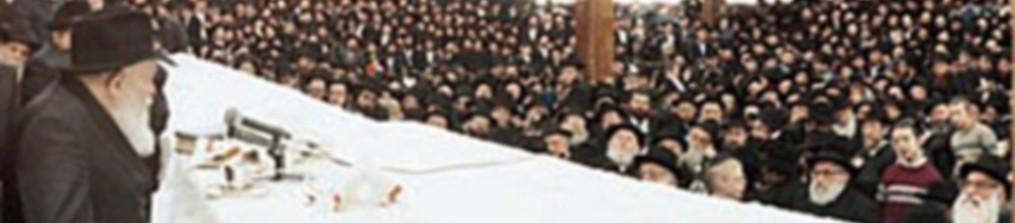
For 40 years the Rebbe would say a Chassidic discourse on one of the 20 chapters of the last maamor (Chassidic discourse) written by the Frierdicker Rebbe, entitled Bosi LeGani.  Every year at the Yud Shevat farbrengen, the Rebbe would say a maamor (sometimes more than one) on that year’s chapter.  Beginning from 5749 the Rebbe did not say a new maamor, instead an edited version of a maamor on that year’s chapter was printed.  The cycle started again in 5751 (addressing chapter 1) and the maamor printed in 5752 can be expected to have added significance, as it was released during the year of Dvar Malchus sichos.  In fact, when looked at in this light one indeed finds a message that fits with the unique chiddushim of 5751-52.

A general point: the edited version of a maamor is often significantly different from the way the Rebbe originally said the maamor.  In some instances, the edited maamor is so different from the original that it presents a completely opposite perspective.  (For example: the Rebbe once said a maamor in which the he spoke about the superiority of Torah over Mitzvos; when edited and published, the maamor addresses the superiority of Mitzvos over Torah!)  In the maamor published for Yud Shevat 5752, it is noteworthy to point out that the relevant “chiddush” is not explicitly stated in the original, unedited version of the maamor which the Rebbe said in 5732 (which can be viewed here), but when edited in 5752 the Rebbe saw fit to state it clearly.  The matter is as follows:

One who has been following Dvar Malchus, or has learned the Rebbe’s sichos and maamorim from all the years, is likely familiar with the concepts of the revelation from Above as opposed to the effort we make from below.  In this maamor, this is associated with Matan Torah (from Above to below) and the Mishkan (the vessel for receiving the revelation of Elokus).  The Rebbe explains that “this that Hashem desired to have a dwelling place down below (“dira b’tachtonim”) is that there will be a revelation of Elokus below via the avoidoh of human beings.”  Thus, the main element is the Mishkan (and Mikdash), where the avoidah of korbanos takes place.

The Mishkan (and by extension, the Mikdash) has two distinct stages.  The first is the making of the Mishkan (עשיית המשכן), the second is the avoidah which takes place in the mikdash — the Continue reading

20) Kuntres Yud Shevat 5752: Avoidah, Stage 2

20) Kuntres Yud Shevat 5752: Avoidah, Stage 2

Note: This Maamor is NOT based on the chapter of Bosi Legani that we learn this year.  (Unless you are reading this in the year תשצ”ב)

For 40 years the Rebbe would say a Chassidic discourse on one of the 20 chapters of the last maamor (Chassidic discourse) written by the Frierdicker Rebbe, entitled Bosi LeGani.  Every year at the Yud Shevat farbrengen, the Rebbe would say a maamor (sometimes more than one) on that year’s chapter.  Beginning from 5749 the Rebbe did not say a new maamor, instead an edited version of a maamor on that year’s chapter was printed.  The cycle started again in 5751 (addressing chapter 1) and the maamor printed in 5752 can be expected to have added significance, as it was released during the year of Dvar Malchus sichos.  In fact, when looked at in this light one indeed finds a message that fits with the unique chiddushim of 5751-52.

A general point: the edited version of a maamor is often significantly different from the way the Rebbe originally said the maamor.  In some instances, the edited maamor is so different from the original that it presents a completely opposite perspective.  (For example: the Rebbe once said a maamor in which the he spoke about the superiority of Torah over Mitzvos; when edited and published, the maamor addresses the superiority of Mitzvos over Torah!)  In the maamor published for Yud Shevat 5752, it is noteworthy to point out that the relevant “chiddush” is not explicitly stated in the original, unedited version of the maamor which the Rebbe said in 5732 (which can be viewed here), but when edited in 5752 the Rebbe saw fit to state it clearly.  The matter is as follows:

One who has been following Dvar Malchus, or has learned the Rebbe’s sichos and maamorim from all the years, is likely familiar with the concepts of the revelation from Above as opposed to the effort we make from below.  In this maamor, this is associated with Matan Torah (from Above to below) and the Mishkan (the vessel for receiving the revelation of Elokus).  The Rebbe explains that “this that Hashem desired to have a dwelling place down below (“dira b’tachtonim”) is that there will be a revelation of Elokus below via the avoidoh of human beings.”  Thus, the main element is the Mishkan (and Mikdash), where the avoidah of korbanos takes place.

The Mishkan (and by extension, the Mikdash) has two distinct stages.  The first is the making of the Mishkan (עשיית המשכן), the second is the avoidah which takes place in the mikdash — the Continue reading