Vayeishev 5752: France is Refined, the World is Refined

Vayeishev 5752: France is Refined, the World is Refined

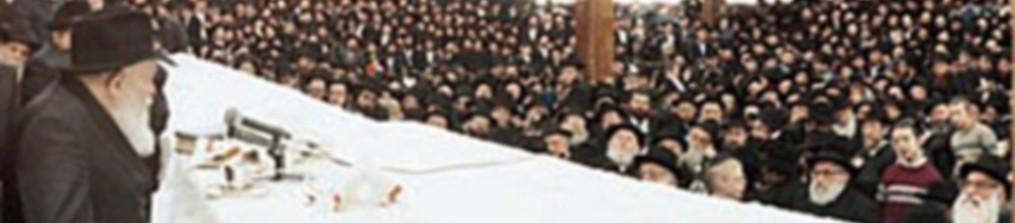
The Rebbe begins this sicha by restating that we are the final generation of exile and, thus automatically, the first generation of Geuloh, because “we have already finished all matters of the avodah and are already standing ready for the true and complete Geuloh through Moshiach Tzidkeinu immediately.”

There is, however, a question from some quarters: the Geuloh is, after all, dependent on the whole world being ready for Geuloh, not just one person or a small number of people — but the entire world.  The Geuloh depends on the gathering of the dispersed Jewish nation from all four corners of the world, and also the refinement of all the nations and all the lands.  So they ask: where do we see a change in the world the indicates that the world is more ready for the Geuloh today than in previous generations?

The Rebbe proceeds to answer by first reminding us of the purpose of golus: the Jewish nation being scattered throughout the world is, on the outside, a descent.  But its inner purpose is that Jews, wherever they find themselves, garb themselves in the ways of that country (as our sages say: “if you go to a place, follow its customs”), thereby refining and elevating the entire land and nation in which they are exiled.

[To note: the Rebbe writes that the dispersal of Israel to different places is for the purpose of “sifting, refining, and elevating (לברר, לזכך, ולהעלות) the sparks found in that place.”  At least 7 times in the sicha the Rebbe recalls this phrase, speaking of how France and the world have been refined, however the Rebbe only mentions the “sifting” and “refining”.  “Elevation” is not mentioned (except in one place in which the Rebbe speaks of what will (future tense) bring about the true and complete Geulah).  For deeper understanding of the meaning of this distinction, see the booklet “Between Golus and Geulah” at MoshiachInDepth.wordpress.com.]

The Rebbe then focuses on the refinement of France (there were guests from France at this farbrengen), reiterating the difficult history of Yiddishkeit in France, in particular the opposition of the Alter Rebbe to Napoleon and the efforts he made to bring about his defeat.  France, and particularly the spirit of the French Revolution, was a klipa that could not be refined in the times of the Alter Rebbe and so he preferred the victory of Czarist Russia (the Czars being no friends of the Jewish nation) over Napoleon, and even risked his life to flee Napoleon’s armies in order not to be under his rule in any way.  [For the whole story, listen here.]  

However, several generations later, the Rebbe Maharash (the 4th Rebbe of Chabad) visited France, indicating the beginning of the refinement of this klipa.  This culminated in the Previous Rebbe visiting France and saying several Chassidic Discourses there, and, even more, sending his own family — his daughter, Rebbetzin Chaya Mushka, and the Rebbe MH”M — to live there for an extended period of time, contributing the “final blow” to this klipah. These efforts sowed the seeds for the tremendous flowering of Jewish life that has taken root in France since that time — to the point where France is not only a mekabel of Torah, but also a mashpia — and which continues to this very day.

Interestingly, the Rebbe points out, “Tzarfas” (צרפת, France in Hebrew) has the numerical value of 770.  The number 770 is of course the number of the Rebbe’s shul (770 Eastern Parkway) and is explained as the complete form of the number 7, reflecting the 7 midos.  The Rebbe says “we can say that this hints that with the refinement of these countries the refinement of the entire world is finished and completed down to the last detail”!  Since France is the lowest place (which could not even be refined in the times of the Alter Rebbe), when it will finally be refined (as the Rebbe says has occurred) — this indicates that everything has been refined.

The Rebbe concludes by pointing out that miracles were generally given minor importance (if at all) by the Rebbeim and the Chassidim over the generations, but despite this it is worthy that the Rebbe devotes an entire farbrengen to discuss France instead of Torah because it is in the category of “publicizing the miracle”.  Recognizing Hashem’s miracles and praising and thanking Hashem for them touches upon and contributes to the coming of Moshiach Tzidkeinu and the true and complete Geuloh.  (Our sages tell us that Hashem wanted to make the King Hizkayahu to be Moshiach, but because his generation did not sing praises to Hashem over the miraculous downfall of the army of Sancheriv, this did not occur.)  The instruction for us is:

Since we have already finished everything, and the Geuloh has still not come — it is most proper to be involved in ‘publicizing the miracle’, to publicize to himself and to others, and in every place, the miracles that the Holy One, Blessed be He, does for us, [and to do so] with the knowledge that the true and complete Geuloh is dependent on this!

This includes, of course, the miraculous transition of the world to a place where Torah and Yiddishkeit can flourish, even places that were not long ago inherently hostile to the spirit of the Jewish faith.  Recognizing this, that the world is ready for Geuloh, and publicizing it and thanking Hashem for it — this itself brings about the true and complete Geuloh through Moshiach Tzidkeinu!

Vayishlach 5752: The Job After the Birurim Are Completed

Vayishlach 5752: The Job After the Birurim Are Completed

The sicha of Vayishlach 5752 contains several threads, each of considerable significance.

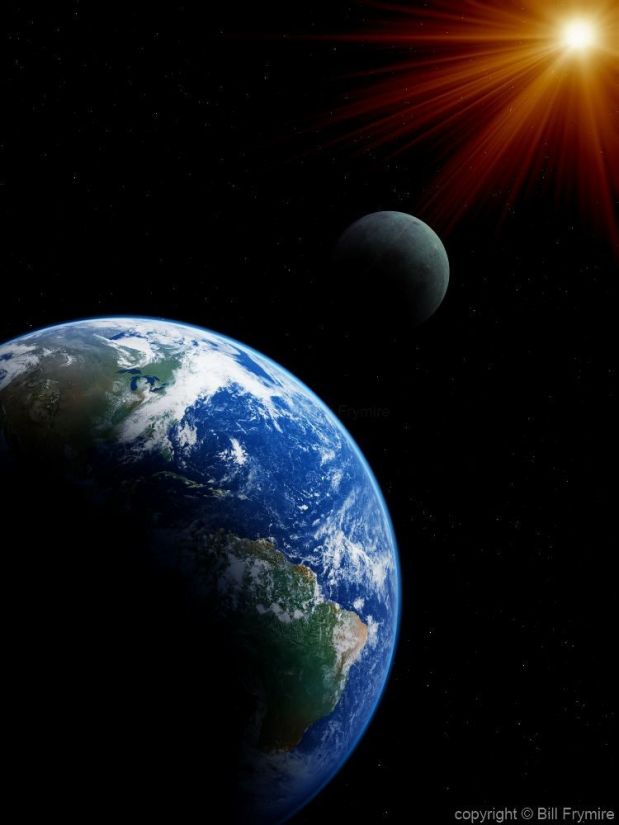
Firstly, the Rebbe explains the concept of the diminution of the moon — that the full moon on the 15th of the lunar month, when the moon fully receives and reflects the light of the sun, is followed by a decrease in the light until it completely disappears from sight. However, this period of diminution of the light of the moon is really only as far as the revelation of the moon is concerned.  But the fact that we continue to count the days up (16th, 17th, 18th, etc.) hints that in fact the moon is really reaching a higher level, coming closer to the sun (the mashpia) until it ultimately unifies with it and becomes a mashpia itself.  “The complete perfection of the moon is when it becomes like the sun and no longer needs to receive the light of the sun.

The unification of the sun and the moon, the mashpia and the mekabel, requires the moon to be completely nullified, resulting in “the essence being revealed” (etzem b’hisgalus).  This is a metaphor for the relationship of the Jewish people to Hashem, that when Yisroel is completely nullified to Hashem they become unified and they themselves become like Him, both being equal “one crown for both of them”.  All this takes place after the process of refinement (avodas habirurim) is completed.

This brings us to the next significant thread of this sicha, where the Rebbe states that the refinement of the sparks of Tohu (related to Esav in our parsha) has been completed, and “all the matters of avodah have been finished and completed, also as regards (and in) the world.”  Although this appears in many of the sichos of Dvar Malchus, in our sicha of Vayishlach the Rebbe addresses the question: if everything has been done, what do we do now?  The answer is found in the conduct of Yaakov towards Esav in our parsha.  Returning from living with Lavan in Charan, Yaakov was ready for Moshiach and anticipated that Esav, too, was ready.  Thus, what Yaakov did is what we are doing.  The verses tell us how Yaakov sent excessive gifts to Esav, and bowed down 7 times.  In Torah Ohr, the Alter Rebbe explains  what this means spiritually, which the Rebbe summarizes as follows:

“Yaakov sent messengers before him to Esav his brother” — that Yaakov, whose source is from the world of Tikkun, sent messengers literally “before him“, to the level that is higher than him, to Esav his brother who has his source in the world of Tohu (since, due to his relationship to Yaakov, we are referring to Esav after he was refined and returned to his source, the transcendent level of Tohu).  This was “in order to draw down the transcendent level of Tohu to him below in Tikkun, which is the aspect of internalized light, that the transcendent will shine forth internally and they will be unified together.  This is also the meaning of the unification of the moon and the sun (Yaakov and Esav, inner light and transcendent light, memaleh kol almin and sovev kol almin), until the moon no longer receives from the sun (since the the refinement of the sparks of Tohu has already been finished and completed,  which was the reason that the moon was originally diminished to be a receiver, as explained earlier in the sicha), but rather the light of the moon becomes like the light of the sun, that both are equal.

(Footnote 89): We learn out from the avodah of Yaakov after he thought that Esav was already refined, and even after the messengers returned and informed him that Esave was not yet refined — he did not get involved in “avodas habirurim” (to refine Esav), but rather he became involved in “the elevation of the ‘lower waters’ to draw down the ‘masculine waters’ of the transcendent level of Tohu‘ [in the original: hala’as ma”n lehamshich ma”d d’makif d’Tohu] via his offering.  [More explanation is required, but time does not allow us to do so here and now.  See Torah Ohr on this week’s parsha.]

The Rebbe continues and connects this with the refinement of the nation of France, in loshon kodesh “Tzorfas” which has the numerical value of 770, that this represents the completion of the process of refining the world.  “From this it is understood that literally in our times we need only to open the eyes and to see the reality b’poel mamash.”  (Footnote 112): “That is to say, not only this that the avodah of refinement has been completed and that we need to bring about a revelation of this in the world, but rather more than this, that there is [such a revelation] already revealed in actuality, and we need only to open the eyes, because already you have been given…eyes to see.'”

16) Kuntres Yud/Yud Daled Kislev, 5752: Reveal the Yechida

16) Kuntres Yud/Yud Daled Kislev, 5752: Reveal the Yechida

Famous are the numerous maamorim over the years explaining the posuk “Padoh v’sholom nafshi“, the verse which the Alter Rebbe was reading when he was notified of his release from Russian prison on Yud-Tes Kislev, 5559.  This verse is also relevant to the release of his son, the Mitteler Rebbe, from arrest on Yud Kislev some 28 years later.  The maamor in this kuntres was said on Yud Kislev 5722 (the 3rd maamor of that farbrengen!) and edited and printed in 5752 in honor of that date (and also in honor of Yud-Daled Kislev, the Rebbe’s wedding anniversary).

The verse states: “He redeemed my soul with peace from the battle that came upon me, because the many were with me.”

The common thread in almost all of the maamorim, beginning with the maamor of the Mitteler Rebbe, focuses on the concept of being redeemed from battle in a way of peace, which is seemingly an oxymoron — if there is peace there is no battle!  The explanation is that in fact there is a battle: a battle between the nefesh Elokis (our G-dly soul) and the nefesh habahamis (our animal soul).  One may attempt to overcome his animal soul using his intellect (the lower levels of his G-dly soul, Nefesh, Ruach, Neshoma), or overpowering it with force of will, ratzon (from the level of Chaya), but in these cases the Animal Soul can fight back with its own intellect and force of will — a battle.  Only when one reveals his yechida, the highest level of his soul, can he nullify the struggle of the Animal Soul and thus win the battle “in peace” —  “Padoh v’sholom”.

In this maamor the Rebbe explains that there are two aspects of “sholom” (בשלום — ב’ שלום): from Above to below, and from below to Above.  When there is a revelation of Ohr from Above which overwhelms and nullifies the Animal Soul, the Animal Soul ceases to oppose the G-dly Soul, but the Animal Soul itself doesn’t change.  The Ohr from Above nullifies, but doesn’t affect change.  The change only occurs through the struggle of the G-dly Soul to overcome and transform the Animal Soul: bringing it to realize on its own terms that it should love Hashem.  But even so, the Animal Soul will still remain a potential adversary.  We should by now be familiar with the Rebbe’s approach: we need both aspects, from Above to below and from below to Above; and not just independently, but a unification of the two lines of influence.

The Rebbe brings the story of the Chossid of the Tzemach Tzedek, who complained in Yechidus (private audience) that others were “trampling on him” in the Beis Midrash.  The Rebbe points our attention to the fact that this Chossid’s self-importance (yeshus) was not only manifesting itself in the “mikdash me’at” of the Beis Midrash, but even in the private chamber of the Rebbe!  Despite the manifestation of the Shechina in those places, this Chossid’s yeshus remained intact.  This illustrates the necessity for avoidah, the work from below to Above (because despite the great revelations from Above a person can remain unchanged).  As expressed elsewhere (see, for example, the sicha of Vayeira): the lofty revelations from Above only become revealed to one who makes himself into a vessel to receive them.

Nitzutzos and Hisnagdus


In the final two oisios of the maamar, the Rebbe explains the continuation of the posuk: “…because the many were with me“.  The intent behind the descent of the nitzutzos, the Divine sparks, below is in order that they will be refined and return to their source (and even higher).  Because of this:

…It is not possible (אין שייך) that there should be any resistance or opposition (from the nitzutzos) to their refinement.  The fact that it is possible for there to be resistance and opposition is only from the side of the person (who is responsible for the refinement), for he has free choice.  But as far as the nitzutzos are concerned — there is no choice involved (they must be refined).

…And more than this: the nitzutzos want and yearn to be refined.  This is the meaning of “the many were with me”, that the nitzutzos found in the aspect of “the many” (רבים — implying those elements in the world which are opposed to G-dliness) yearn for their refinement… It is only because these nitzutzos are in golus in the aspect of “the many” that this is not revealed.  To such a degree that sometimes it appears that the individual and the worldly matters (not only that they don’t assist, but rather) interfere with his avoidas Hashem.  Because the concealment of the nitzutzos is the ultimate concealment, expressed as “a concealment that is not in existence”.  But via the avoidah of “the many were with me”, the awakening of the Yechida, the essence of the soul (עצם הנפש) which is higher than our reality, this “concealment that is not in existence” of the nitzutos is awakened and is revealed, together with their yearning to be refined, and then it is seen openly that the matters of the world (not only do not interfere, but rather) assist in avoidas Hashem.

This awakening of the Yechida contains within it both of the levels that were mentioned earlier: from Above to below and from below to Above, in a way where each one contains an aspect of the other.  Since the nitzutzos have a desire to be refined (from Above) — this is the admixture of “from below” in the revelation of Ohr from Above.  And similarly the refinement from below is in a way where the opposition is nullified (an aspect of “from Above”), for the same reason: the desire of the nitzutzos to be refined. When we awaken our Yechida, we reveal that in truth there is no opposition from the world (including the nations of the world) to a Jew serving Hashem, even if this truth was completely hidden before.

All of this takes place via the revelation of the Yechida, which we can bring about “by thinking about the inyan of the Yechida [and the resolution that his conduct will be fitting with the aspect of Yechida in his nefesh], the redemption of his G-dly soul from the war with the Animal Soul in a way of peace.”  One could say that “thinking about the inyan of the Yechida” is fulfilled by thinking about Moshiach (who possesses a soul which is the “yechida klolis” of the entire Jewish people), and making the commitment to conduct himself as Moshiach desires.  (Obviously, this can be done more completely when one is aware of Moshiach’s identity and aware of his opinion on how a Jew should conduct himself in various matters.)  The Rebbe hints at this explanation in the closing words of the maamor“then (l’asid lavo) there will be the revelation of the Yechida via Moshiach, who is the aspect of the Yechida Klolis…”.  And the work is in our hands!

Vayishlach 5752: The Moon Becomes Like the Sun

Vayishlach 5752: The Moon Becomes Like the Sun

Our sages tell us that the Jewish people are likened to the moon and thus we count according to the moon.  The months of the Jewish calendar begin with the birth of the new moon each month.  This means that the 15th of every month is the date of the full moon.  What is a full moon?  It is the time when the moon reaches the state of maximum revelation, reflecting the light of the sun to its utmost.   This is called shleimus halevana, the moon being “full” and “complete”.  This process of the waxing of the moon until it reaches completeness is illustrated by the increasing number of the day of the month: 1, 2, 3, etc., until the 15th.  The ascending number corresponds to the ascending completeness of the moon’s revelation.

The true completeness of the moon, explains the Rebbe, is not truly found on the 15th of the month (the full moon), because then the moon is is only at maximum capacity as a mekabel, a receiver (and reflector) of light from the sun.  The true shleimus, the true completeness of the moon is when the moon becomes similar to the sun — a mashpia — and no longer needs to receive light from the sun.

By examining the astronomical properties of the movement of the moon we will understand this more deeply: the first half of the month, when the revelation of the light of the moon is increasing daily, the moon itself is actually moving further away from the sun.  The further it gets from the sun, the greater its light.  In the second half of the month it moves closer to the sun, and as it gets closer its visible light diminishes.  This is because the closer the mekabel is to the mashpia, the less he is able to “shine forth”, due to the great self-nullification, bitul, it has in order to receive.  What occurs in the second half of the month, the Rebbe explains, is that the moon comes closer to the sun in order to achieve the union of the two of them in the following month.  While the light of the moon diminishes at this time, in truth light is only a glimmer of the essence.  And as the moon approaches the sun, its essence is coming closer to revelation.  When is the essence revealed?

When the mekabel is unified with the mashpia to such a degree that it also becomes a mashpia, and there ceases to be a relationship of giver/recipient between them, that both of them are equal — then the essence is revealed.

So it turns out that as great as the revelation of the full moon may be, it is only as regards the moon as a mekabel from the sun.  But the true shliemus of the moon begins its approach in the second half of the month — as it comes closer to the sun and is transforming into a mashpia itself.  For this reason, we continue to count up (16, 17, 18, etc.) even as the moon wanes and its illumination diminishes — because on a deeper level it is still climbing to higher levels.

It is for this reason that we find that the holidays of the Torah are on the 15th of the month when the moon is full (or, in the case of Shavuos — in the 1st half of the month, when the light of the moon is increasing).  But Yud Tes Kislev, the Matan Torah of Toras haChassidus, falls out on the 19th, in the second half of the month.  This is because the revelation of Chassidus is a beginning and a taste of the Torah of Moshiach (“Torah chadasha m’iti seitzeh“) which is connected with the revelation of the essence (which is what is taking place by the moon in the second half of the month).

This is also connected with the weekly parsha, where Yaakov has finished refining the sparks of holiness that were trapped in the realm of Lovon his father-in-law and is now going to greet Esav.  This parsha is speaking about the time, at the end of golus, when the avodah of birurim will be finished.  Yaakov is ready for the days of Moshiach,to unify with Esav (representing the unification of the neshoma and the body, and also the Holy One, blessed be He and Yisroel).

Thus the difference between Yaakov as he is involved in the service of refinement and Yaakov as he is prepared for the Redemption, parallels the difference between the moon as it receives light from the sun and as it will be in the Era of the Redemption, when it will be equal to the sun.

When Yaakov confronted Eisav, although Yaakov was prepared for the Redemption Eisav was not, and the task of refining Eisav and the material worlds associated with him had to continue for centuries. In the present age, however, to borrow an expression from the Previous Rebbe, “We have already polished the buttons.” The task of refinement which was entrusted to the Jews has been completed.

Thus we are now living in a new era with a new service. Instead of concentrating on the refinement of the world, our efforts must focus on revealing the Redemption. The Era of Redemption, which is described with the analogy of a feast, is a present reality, all that is necessary is for us to open our eyes and see.

So it turns out that this week’s parsha is speaking directly about our times — the end of golus when we have completed avodas habirurim (work of refinement) and are ready to be transformed from mekabel to mashpia by revealing the unity of the Holy One, blessed be He, and Yisroel.  Furthermore:

From this it is understood that the continuation of the avodah that follows (as long as Moshiach Tzidkeinu is delayed for whatever reason (completely unknown and not understood)) is not avodas habirurim (for avodas habirurim has already been completed and finished) but rather, it is a special avodah to bring the revelation in actuality in the world.

[For those who are familiar with the terminology of Chassidus (explained in Torah Ohr on our parsha), the Rebbe notes (footnote 89) that this present avodah is similar to what Yaakov attempted to do when he went to greet Esav — dividing his camp into two camps, sending abundant gifts to Esav, and bowing before him.  “He did not involve himself in avodas habirurim (to refine Esav), but rather he involved himself in ‘hala’as ma”n to elicit ma”d of Tohu’ via his offering” which he sent to Esav.  This itself is worthy of a separate essay.  But , simply put, he made an effort from below-to-Above in way that it will awaken from the supernal source of Esav an outpouring of the lights of Tohu, recalling the Rebbe’s words of Koach Nissan: that we must drawn down the lights of Tohu into vessels of Tikkun.  All of this requires further explanation.]

The Rebbe continues and connects this with the refinement of the nation of France, in loshon kodesh “Tzorfas” which has the numerical value of 770, that this represents the completion of the process of refining the world.

From this it is understood that literally in our times we need only to open the eyes and to see the reality b’poel mamash.”  (Footnote 112): That is to say, not only this that the avodah of refinement has been completed and that we need to bring about a revelation of this in the world, but rather more than this, that there is already revealed [such a revelation] in actuality, and we need only to open the eyes, because already you have been given…eyes to see.’

Vayishlach 5752 in English

Vayishlach 5752 in Loshon Kodesh

Vayeitzei 5752: Asleep on the Site of the Beis Hamikdash?!

Vayeitzei 5752: Asleep on the Site of the Beis Hamikdash?!

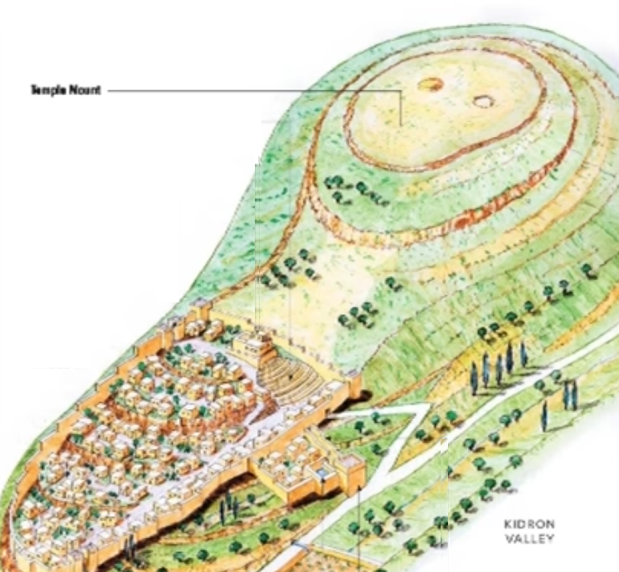
Yaakov Avinu, fleeing the wrath of his brother Esav, arrived in Beis El as the sun was set ting unexpectedly.  As a result of the sudden sunset, he went to sleep there for the night.  The next morning, when he woke up, he realized where he was — Har Hamoriah, the site where the Beis Hamikdash would later be built.  He declared his shock that he had slept in such a holy spot!

In the Dvar Malchus sicha of Vayeitzei, the Rebbe examines Yaakov’s laying down to sleep “‘in that place’ — the place of the Mikdash (מקום המקדש)…”  

This expression “the place of the mikdash” (“מקום המקדש”) should grab our attention — this is the same expression the Rebbe uses in Kuntres Beis Rabbeinu Sh’b’Bavel (which was published and distributed several weeks prior to this sicha).  In that Kuntres, the Rebbe states that 770 is the “place of the Mikdash” (מקום המקדש).  Does the Rebbe want us to realize that we, too, are “sleeping” in the “place of the Mikdash” (מקום המקדש) and don’t realize it?!

Apparently so.

However, the Rebbe explains in this sicha that the seemingly disgraceful “sleeping in the place of the Mikdash” can also be interpreted in a positive fashion: at the time that one lies down to sleep there is equality between the head and the feet.  The entire body is flat, on one level, no part is higher than any other (unlike when standing, when the head is highest, the feet are lowest, etc.).  Although this position is a tremendous descent from the perspective of revealing the ability of the respective parts of the body, since these abilities (thought, speech, sight, hearing, etc.) are not revealed when one is asleep.  But, at the very same time, there is something lofty about this state: it reflects on the revelation of Atzmus — the Essence and Being of Divinity — which transcends all differences such as head and foot, higher and lower, spiritual and physical.  As much as one can display his abilities while he is awake, this display also shows the distance between the various parts of the body.  When one is asleep, and the differences are not apparent, this represents the complete unification of lower and higher — Atzmus.

If so, then maybe we should keep sleeping and not wake up?  Why shatter this revelation of Atzmus that just learned is so essential and transcendent?  Because after sleeping, this level will be drawn also into the revelations of the various abilities mentioned above:

Even when Yaakov “awakens from his slumber” (a hint to the Rebbe’s expressions in the Dvar Malchus sicha of Toldos), and the head then returns to its lofty level compared to the lowly foot, nonetheless the “equality” generated by the revelation of Atzmus — the Essence — remains.  We create a dwelling place down below: a “dira b’tachtonim

This means that our sleeping on the site of the greatest Divine revelations, the place of the Mikdash (מקום המקדש), is not a disgrace, but is actually connected with the revelation of the Divine Essence and Being itself!  And the Rebbe’s call to “open our eyes” (via learning Chassidus and especially the subjects of Geuloh and Moshiach) is not a call to do away with this dimension of sleep, but rather to draw down this dimension (revelation of the Essence) into the awake, physical world, a world which is ready to be a vessel to receive and internalize these revelations!

Vayetzei 5752: We Need Only to Open the Eyes

Vayetzei 5752: We Need Only to Open the Eyes

Thos sicha was said on Shabbos Vayeitze, which corresponded in 5752 to the 9th of Kislev, the birthday and hillula (day of passing) of the Mitteler Rebbe, the 2nd Rebbe of Chabad.

The Alter Rebbe, his father, represented the attribute of Chochma (wisdom), and his son the Mitteler Rebbe represents the attribute of Bina (understanding).  Just as Bina expands and reveals the breadth and depth of Chochma, so, too, the teachings of the Mitteler Rebbe are “wide as a river”, allowing one to drink deeply from the wellsprings of pnimiyus haTorah.  This is significant to bringing the Geuloh, because:

At this time there needs to be…the study of pnimiyus Hatorah as it has been revealed in the teachings of Chassidus, and the fulfillment of the instructions of our Rebbeim.  This includes — learning the subjects of Moshiach and Geuloh, in a way that it opens the heart and the eyes and the ears — so that they will understand, and see and feel the true and complete Geuloh tangibly in the physicality of the world.

Not merely learning as some sort of intellectual exercise, but rather “in a way of seeing, that this [the true and complete Geuloh] is already prepared and ready, and one only needs to open the eyes and then he will see this!

Practically speaking, this means adding in the learning of the Torah of the Mitteler Rebbe, for his teachings are specifically in a way of Bina.  It is through learning in a way of Bina, understanding, where it becomes integrated with a person, that the studies have an effect on the person.  This means an effort to express his “spirituality” and his chassidishkeit in his physical matters, until there will be no divide between his “spiritual” aspect and his physical being.

Furthermore, this can impact the world dramatically, because:

We have completed all the birurim (refinement), including the refinement of “Esav he is Edom”, and how much more so considering that even in the time of Yaakov Avinu he already thought that Esav was refined (and from Yaakov’s level in fact he was).  And all the more so after all of the avodah that has taken place since then (to refine Esav) until we are at the point where Esav is already completely refined, as we see in the conduct in our days (golus Edom) of the nations of the world who are related to “Esav he is Edom”, such as this country, a country of kindness, and such conduct is spreading to other nations, as we see lately.

We find that Yidden are ready, the world is ready, even the nations of Esav are ready.  What remains, then, to be done?

The only thing lacking is — that a Jew should open his eyes properly, and should see how everything is ready for the Geuloh!  There is the “set table” already, and there is already the Leviyoson and the Shor Habor and the aged wine, and Yidden are sitting at the table — “their father’s table”, together with Moshiach Tzidkeinu (as stated in seforim that in every generation there is one of the seed of Dovid who, due to his righteousness, is fitting to be Moshiach), and there is already a “heart to know and eyes to see and ears to hear”.

Let us open up the seforim and open up our eyes and ears and hearts to know the truth of the only one who is fitting to be the redeemer, and in that way we empower him (as the Rebbe said in the sicha of Chayei Sara) to redeem the Jewish nation from golus!

15) Kuntres Rosh Chodesh Kislev, 5752: Great is the Effort From Below

15) Kuntres Rosh Chodesh Kislev, 5752: Great is the Effort From Below

This maamor was said on Shabbos, Erev Rosh Chodesh Kislev, 5745, beginning with the words of the haftorah (“Vayomar lo Yehonoson“) recited on every Shabbos Erev Rosh Chodesh.  The attentive student will recall that a maamor on the very same verse was distributed as Kuntres Erev Rosh Chodesh Iyar, 5751 (seven months earlier), but the content differs significantly.  To recall the verse: “tomorrow is Rosh Chodesh and you will be remembered (nifkadta) because you are missing from your place (ki yipaked moshavecha).”

Erev Rosh Chodesh, when the moon completely disappears from sight, represents the bittul of Yisroel.  Through this bittul they draw down a new revelation that was never in the world before, which manifests as the birth of the new moon on Rosh Chodesh, the level of “nifkadta“.  This “Ohr chodosh” is from a level that is completely above the world, drawn down through the avoidah of bittul, whereas avoidah connected with the existence of the individual  (קשורה עם המציאות שלו) only draws down Ohr on a level that has a connection with the world.

The Rebbe now describes 3 levels of “Awakening from Above” (isarusa della’eila):

  1. The level that is given from Above without any effort from below (because the effort from below (isarusa della’satta) cannot reach it);
  2. The level that comes from Above as a result of the isarusa della’satta;
  3. The level that is given as a gift, meaning that the effort from below can’t teach this level, but it is only given after the lower entities have perfected themselves (made themselves a vessel) and have drawn down the 2nd level.

Having explained the lofty levels that are drawn down from Above in these variety of ways, the Rebbe then states that the revelation of “nifkadta” (the new “Ohr chodosh” of Rosh Chodesh) is greater even than the level that comes from Above as gift.  This demands explanation, because the level that is given as a gift is so lofty that the effort from below can’t reach it, but the level of “nifkadta” (which is higher) can and is drawn down by the bittul of Yisroel?!

To understand this, the Rebbe explains how “nifkadta” is the bestowal (hashpoah) of Z”A* to Malchus, which are represented by Yehonoson and Dovid.  This hashpoah is the inyan of “machar Chodesh”, the new moon.  But since it states “tomorrow (machar) is the new moon”, it must be connected with the previous day, which is Erev Rosh Chodesh, the disappearance of the moon, “you are missing from your place” (yipaked moshavecho).  And based on the sequence of expressions in the posuk, the Rebbe derives that there is a hashpoah (Vayomer lo Yehonoson) which gives the ability for Erev Rosh Chodesh (yipaked moshavecho) which in turn is what generates “nifkadta“.

And further (based on the verse “Yitzchok the son of Avraham, Avraham gave birth to Yitzchok”): the awakening from below (Yitzchok) reaches higher than the place from which the awakening from Above (Avraham) comes from.  Nonetheless, there must first be a bestowal from Above which enables the awakening from below — because the lower entity (the tachton) is unable to elevate itself without this bestowal from Above, which reveals the the power of the tachton to reach even higher than the bestowal from Above.  This really consists of two aspects: giving the power for “yipaked moshavecho“, the bittul and elevation; and for the “nifkadta” (the new Ohr Chodosh) that will come from this.  Both the elevation of the tachton, and the hamshacha that it brings .

Astonishingly, the Rebbe proceeds to state that the elevation of the tachton (erev Rosh Chodesh, bittul) is actually greater than what it draws down (the Ohr Chodosh of Rosh Chodesh, “nifkadta“)! This will only be revealed l’asid lavo (and thus we will say about Yitzchok “you are our father” כי אתה אבינו since the greatest level is the awakening from below itself). This corresponds to Yehonoson and Dovid, Z”A and Malchus, that in the future Malchus will receive directly from Ohr Ein Sof (rather than via Z”A).  This is what is meant by the verse that states that in the ultimate future “the light of the moon will be like the light of the sun: that the moon will illuminate by itself, like the sun (not like the present, when it simply reflects the light it received from the sun).

This elevation of Malchus begins when she nullifies her existence and thus becomes a vessel for even greater elevations, until she becomes a crown אשת חיל עטרת בעלה.  Now, it seems that the bittul of Malchus (erev Rosh Chodesh, yipaked moshavecho) is in order to bring the revelation of the Ohr Chodosh of Rosh Chodesh (nifkadta), as implied in the beginning of the maamor.  But in the future the greatest quality of “yipaked moshavecho” will be that through it is drawn down the revelation of the root of Malchus itself.  All of this also applies on a higher level to Yisroel (Malchus, the moon) and the Holy One, blessed be He (Z”A, the sun):

The bittul of Yisroel brings about that HKBH remembers them, so to speak, and redeems them… And, like the moon which will not need to receive from the sun, through the bittul of Yisroel it becomes revealed that Yisroel and the Holy One are all one ישראל וקודשא בריך הוא כולא חד, and therefore they will not need, so to speak, to receive from the Holy One, blessed be He, for they are truly one.  And more than this, Yisroel are bestowing, so to speak, to the Holy One — the crown of her husband.

All of this comes to explain, in the language of Chassidus, that although we are presently laboring to bring about the revelation of Moshiach in the world (accompanied by the great revelations of the true and complete Geuloh), these revelations (Ohr Chodosh) are not going to be the real chiddush.  The real chiddush and the highest revelation will be the avoidah itself that we are performing now — persisting to labor from below with tremendous bittul for more than 25 years since we last experienced the revealed hashpoah from Above.

Through our efforts to reveal the Rebbe in the world, we are in fact “crowning” the Rebbe with ourselves, with our avoidah, revealing that we are one; and even more: bestowing hashpoah on the Rebbe via our efforts from below.  (See the maamor ואתה תצוה 5752, where the Rebbe explains how Yisroel bring Moshe to a higher level, and other places.)


* “Zeir Anpin”, which refers to the six sefiros from Chesed through Yesod

Toldos 5752: The Essential Existence is Revealed

Toldos 5752: The Essential Existence is Revealed

This week the sicha examines a simple but deep concept: the distinction between “essential existence” (“etzem metzius“) and the revelation of that existence.  This is illustrated by the difference between the birth of a person, the beginning of their essential existence, upon which everything they will do in the future depends, and the actual good deeds that they will do in their life.

Similarly, we find by the moon (this sicha was spoken on the Shabbos following Rosh Chodesh Kislev), that Rosh Chodesh is the “birth” of the new moon. Following its birth, the moon proceeds over the next 15 days to wax greater and greater, increasing the amount of light it shines.  The greatest light that reflects from the moon is on the 15th of the month, representing the fulfillment of its ability to shine (a “full moon”). [There is also a special quality of the 2nd half of the month is explained in the sicha of Parshas Vayishlach].  Yet, even the great light of the full moon derives from the initial revelation of its essential existence on Rosh Chodesh.

In the case of a Yid: the first moment of revelation of his essential existence, etzem metziyuso, is the moment of his birth when the neshoma comes into a physical body.  All of what he will proceed to do afterwards is found in this initial moment of his coming into existence, and this moment is the main thing — “the entire existence of a person over the course of all the days of his life are contained in the moment when he is born and goes out into the air of the world.”  

Everything that proceeds after the birth is simply an expansion and greater revelation of that first moment.  The importance of what follows (his “good deeds”) is that these good deeds bring about the revelation to the world of his essential existence as a G-dly neshoma — and this is the fulfillment of his existence.

Nonetheless, the main thing is that first moment when he comes into existence, birth.  We see this in the birth of a child, which is accompanied by rejoicing and celebration even before the child has done anything.  And more than this, the Rebbe explains:

the main quality of the Jewish people in their essential existence, “Yisroel and the Holy One, blessed be He, are all one”, is intact even without the performance of Torah and Mitzvos, “pleasing ways and good deeds”.  Like the metaphor of a fleshly King who has many sons, that the love he has for his sons is essential love even when they do not possess “pleasing ways and good deeds”.  (And on the contrary: regarding the sons who do possess “pleasing ways and good deeds”, and it is logical to love them, the essential  love is not so evident).

Of course one loves a son who’s ways are pleasing and deeds are good.  But to love a son who lacks pleasing ways and good deeds?  In such a case it is clear that the love derives not from the “nachas” of his behavior, but from his essential existence as the son of this father.

This shows also on the importance of the physical body of a Jew, which has no special quality in and of itself, but nonetheless Hashem chose the Jewish body.  Thus, a Jew’s body expresses Hashem’s essential connection to a Jew even more than the neshoma — because a neshoma has the unique quality of being a “part of G-dliness” (like a son whose ways are pleasing and deeds are good).  By being enclothed in a physical body and doing the work to refine it, the neshoma reveals that it also possess an essential connection to Hashem that is not dependent on its special qualities.

The concept of birth, and of the moon, are directly connected to the Geuloh.  Just as birth, and the birth of the moon, is a moment which contains the entire essential existence of the person, so, too, the moment of the Geuloh is the revelation of etzem haneshoma, the essence of the neshoma, which is higher than any name which we can give it, even higher than the name “Yechida” and “chelek Eloka“.  It is like when a person awakens from sleep, even before he has enough awareness to say “Modeh ani“, thanking Hashem for restoring his soul, he already has awoken to his essential existence.  This is the moment of Geuloh — awakening to our true essential existence.

Not only that, but it is known that every Jew contains within him a spark of Moshiach.  The Geuloh comes when each one reveals the spark of Moshiach within him — the revelation of the essence of the neshoma “etzem haneshoma mamash“.  This is “waking up from sleep”, and this waking up brings about that he will proceed to reveal the essence in actuality, which is the true inyan of the Coming of Moshiach.

So, the question then is: how do we “wake up”?

When the chayus of every single Yid is in the inyan of Moshiach, this brings (automatically) to the state of Yemos Hamoshiach (the Days of Moshiach), that the essence of the Yidden will be revealed in actuality.

This is “breathing the air of Moshiach”, which allows us to feel the “spirit of Melech Hamoshiach” — the essence — which is more fundamental than eating and drinking, and higher than the “light” of Melech Hamoshiach.

The Rebbe concludes the sicha:

…we should have the begining of the true Geuloh, via Moshiach Tzidkeinu — “a king will arise from the house of Dovid, etc.”, until “he will rectify the entire world to serve Hashem together…”  And as hinted at in the end of the haftorah of the previous week…which finishes with the declaration “Yechi Adoni Hamelech Dovid l’Olam” (“Live my master the King Dovid forever”) — the eternality of the Kingship of the house of Dovid…which reaches its perfection via Melech Hamoshiach…the meaning of this declaration is the revelation of the existence of Melech Hamoshiach.  And through this [declaration] comes his revelation before the eyes of all through his activities, etc.”

There is a need to wake up, to declare that there is the existence of Melech Hamoshiach (“Yechi Hamelech”), which is the essence of our own existence.  It is by doing this that we are able to bring about the revelation of Melech Hamoshiach in the world, to bring the Geuloh in actuality.

14) Kuntres Chof Marcheshvan, 5752: The Ohr Chodosh

14) Kuntres Chof Marcheshvan, 5752: The Ohr Chodosh

This maamor was edited and printed in honor of the birthday of the Rebbe Rashab, and it was handed out personally by the Rebbe in 770.*. It discusses deep inyonim of Chassidus, and demands attentive learning.  But here, we will focus only on one point from the maamor, which is overtly relevant to the concepts of Moshiach and Geuloh found in Dvar Malchus.

The Rebbe discusses here the concept of the Divine Light (Ohr) that preceded the tzimtzum (Tzimtzum being  the contraction of light by which it becomes possible to create limited, finite worlds).  This Ohr that existed prior to the tzimtzum possessed two dimensions: unlimited and limited.  These dimensions became the source for the two kinds of Divine revelation that exist now: Sovev (surrounding light, which cannot be grasped and thus is not revealed in the world), and Memaleh (filling light, which is limited and can this be grasped by the lower creatures).

Additionally: through the mitzvos we perform now, there will be the revelation of a new light in the time to come,  an Ohr Chodosh.  This Ohr Chodosh will bring about a new heavens and a new Earth (as stated by the novi Yeshaya).

The Rebbe clarifies: if we are referring to the revelation of the unlimited light that illumined before the tzimtzum (which is presently not revealed in the worlds), this is not truly new (אין זה חידוש אמיתי) — this Ohr was already revealed before the Tzimtzum, and afterwards was concealed from the world.   Thus, when this Ohr will return and be revealed again, it will not truly be something new.  The truly new Ohr Chodosh, which will generate a new heavens and a new Earth, is Ohr that is drawn down by our fulfilling Torah and Mitzvos now, an Ohr that didn’t exist even before the Tzimtzum!

In these words the Rebbe is giving us a small glimpse at the great significantly of the avoidah of a Yid in performing Torah and Mitzvos — it is a complete chiddush, and draws down an Ohr Chodosh that never existed previously!  Here, in the oisios of Chassidus, the Rebbe is explaining the famous words of 28 Nissan (“I’ve done all that I can do, now you must do all that you can do to bring the Geuloh…”) — because it is the avoidah of a Yid, davka, to make this lowest world a “dira b’tachtonim” that draws down the Ohr Chodosh, which is the revelation of the Geuloh.

(Note that  in the kuntres published for Rosh Chodesh Kislev of this year, the Rebbe will elaborate further on this subject, bringing out the point that the avoidah of the Yid is even greater than the Ohr Chodosh that comes from his avoidah!)

* Some want to suggest that perhaps the timing of the distribution of this maamor by the Rebbe served as a “distraction”, so to speak, from the amazing revelations found in the Sicha “Beis Rabbeinu sh’b’Bovel”, which was printed the same week.  (Chassidim had in their hands a maamor given to them personally by the Rebbe and a second kuntres dropped off unceremoniously in 770 — it is obvious which a chosid would learn first.)

Well known is the principle that the first luchos were given with a big “shturem”, but had to be shattered.  The final luchos, to the contrary, were brought down without lightning, thunder, and the sound of the Shofar — but they were not shattered, they endure.  In our case, Chassidim were so excited to learn a maamor that the Rebbe had handed to them personally, from his holy hand, that they didn’t have time to make a big deal overthe other kuntres (“Beis Rabbeinu…”)…  (But what can a goat understand from gazing at the moon…?)

Kuntres Beis Rabbeinu Sh’b’Bavel: The Place of the Beis Hamikdosh in Golus

Kuntres Beis Rabbeinu Sh’b’Bavel: The Place of the Beis Hamikdosh in Golus

“I will be for them a small sanctuary (mikdash me’at) in the lands where they will come.” (Yechezkiel 11:16)

Our sages explain this posuk to mean that even outside of Eretz Yisroel, in the place and time of golus, there is a “small mikdash” which is a scaled-down example of the “great mikdash” in Yerushalayim.  Rebbi Yitzchok in the gemora (Megillah 29a) said that this refers to the shuls and study halls in Bavel (Babylon), and Rebbi Eliezer said that this is “Beis Rabbeinu sh’b’Bavel” — “the house of our Rebbe in Bavel”.

The Rebbe, as might be expected, holds that these two sages do not have an argument, that each one surely agrees with the opinion of the other; the only difference is what they consider to be the main and most important fulfillment of the prophecy of “mikdash me’at“.  Rebbi Eliezer holds that it is the study hall (place of learning) and shul (place of Tefilla) of “Rabbeinu”.  Every shul possesses this quality in a small measure, but the primary and most complete manifestation of it is in the shul and study hall of the Rav whose Torah decisions are followed by the people of the city.  And, in a fuller sense, there is one place which is the main “mikdash me’at” in the time of golus: the shul and study hall of the leader of the generation.

Our sages state that “Everywhere that Yisroel were exiled, the Shechina was exiled with them.”  The sages in our gemora asked where in Bavel is the Shechina to be found?  Abaye answered: in the shul of Hutzal and the shul of Shaf v’Yosiv in Nehardea — sometimes here and sometimes there.  These were two unique shuls in Bavel, the first being close to the study hall of the revered Ezra the Sofer, the second being built from stones that were brought from the Beis Hamikdosh in Yerushalayim and “the Shechina was always found there” (Rashi).   It called “Shaf v’Yosiv” (meaning “uprooted and [re]settled”) to indicate that “the Mikdash travelled and settled there”.  It was literally the Beis Hamidkash of that generation, as “the revelation of the Shechina that was in the Beis Hamikdosh in Yerushalayim (and nowhere else) traveled and settled in this special place in Bavel, in place of the Mikdash in Yerushalayim.

Of course, the Shechina dwells in every shul where Jews gather for Tefillah, and every study hall where they learn Torah, but nowhere is the Shechina more revealed than in the Beis Hamikdosh in Yerushalayim, or (in the time of golus) in these special buildings.   Similarly we find that “in the future the shuls and study halls of Bavel will be established in Eretz Yisroel” — this is true of every shul and study hall, all of which will be connected to the Third Beis Hamikdosh in Yerushalayim.  And when these places are relocated to Eretz Yisroel, the revelation of the Shechina will also return to Eretz Yisroel, and there will no longer be a revelation of the Shechina outside the land of Israel where the “mikdash me’at” stood.  The Rebbe adds (quoting the Maharsha): Continue reading